• Enter your email address to subscribe to this blog and receive notifications of new posts by email.

    Join 241 other subscribers
  • Noshing on

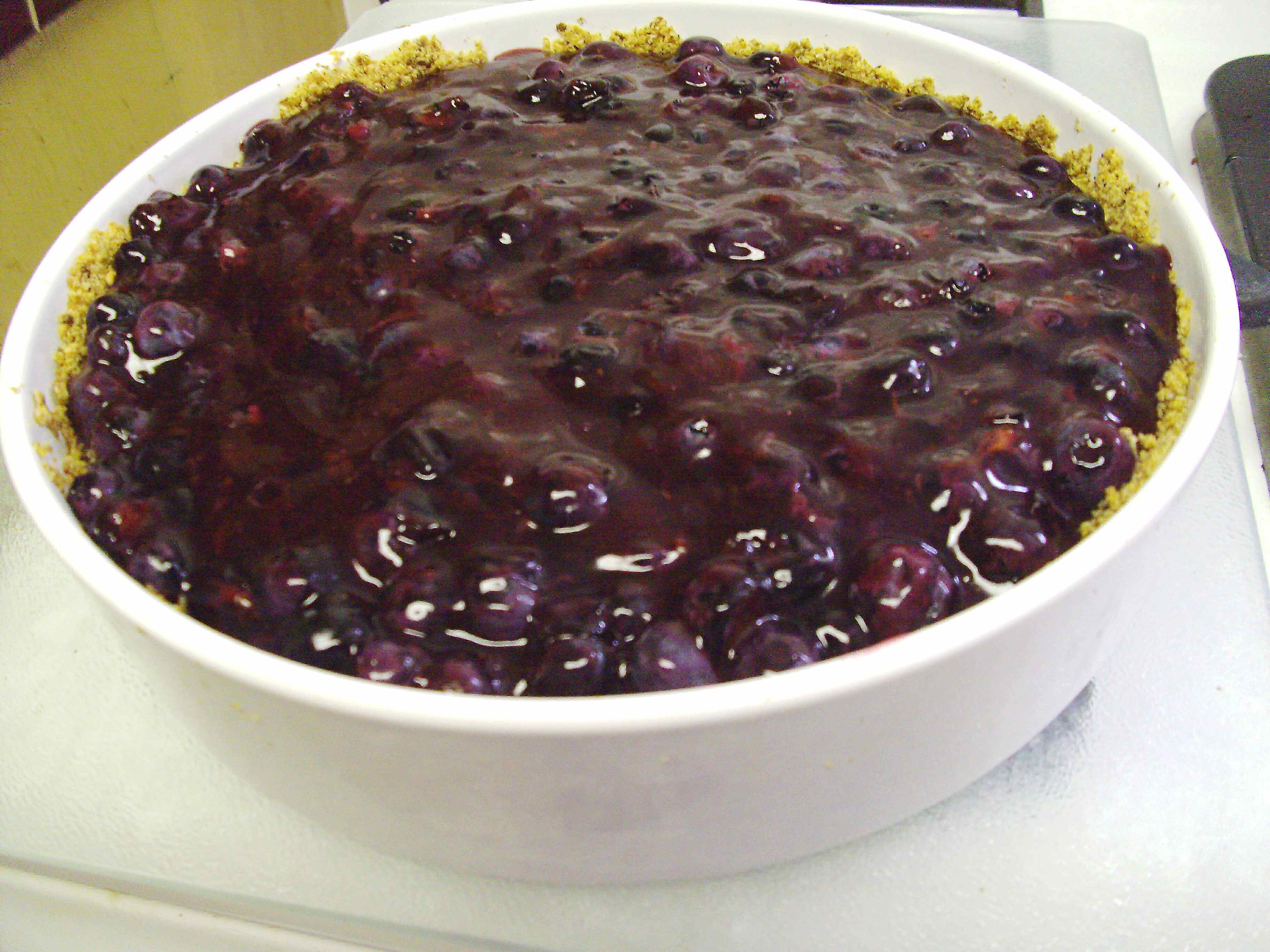
    raw blueberry pie with microwaveable filling and graham cracker crust

    This mostly-raw blueberry pie is a snap to make and very versatile--the filling microwaves in a few minutes, and you don't even have to bake the zippy gingered graham cracker crust--perfect for a hot Fourth of July and all summer long.

  • Recent Posts

  • Contents

  • Archives

  • Now Reading

  • See also my Book Reviews

  • Copyright 2008-2024Slow Food Fast. All writing and images on this blog unless otherwise attributed or set in quotes are the sole property of Slow Food Fast. Please contact DebbieN via the comments form for permissions before reprinting or reproducing any of the material on this blog.

  • ADS AND AFFILIATE LINKS

  • I may post affiliate links to books and movies that I personally review and recommend. Currently I favor Alibris and Vroman's, our terrific and venerable (now past the century mark!) independent bookstore in Pasadena. Or go to your local library--and make sure to support them with actual donations, not just overdue fines (ahem!), because your state probably has cut their budget and hours. Again.

  • In keeping with the disclaimer below, I DO NOT endorse, profit from, or recommend any medications, health treatments, commercial diet plans, supplements or any other such products.

  • DISCLAIMER

  • SlowFoodFast sometimes addresses general public health topics related to nutrition, heart disease, blood pressure, and diabetes. Because this is a blog with a personal point of view, my health and food politics entries often include my opinions on the trends I see, and I try to be as blatant as possible about that. None of these articles should be construed as specific medical advice for an individual case. I do try to keep to findings from well-vetted research sources and large, well-controlled studies, and I try not to sensationalize the science (though if they actually come up with a real cure for Type I diabetes in the next couple of years, I'm gonna be dancing in the streets with a hat that would put Carmen Miranda to shame. Consider yourself warned).

FDA warning on powdered caffeine

The Washington Post carried a story yesterday on a new FDA warning about powdered caffeine’s potential for a lethal overdose. Caffeine is relatively unregulated as a dietary supplement and companies have been selling it mixed into “energy” drinks and “shots”, inhalers and other forms, including pure powder, through Amazon.com and other internet venues.

Most of the stupids (I mean, more politely, naive consumers) who buy caffeine-laced “energy” products are teenage boys and young men–no great surprise. Guys in that age range tend to have trouble getting up in the morning and being alert for class. The proliferation of the iPad, the smart phone, and game apps isn’t helping. A cheap, legal and potent stimulant seems like just the thing to counteract the effect of late nights and early exams. Combine that with a pitch about “energy” and fitness–mostly in the form of weightlifting and bodybuilding, a sector rife with dietary supplement abuse marketing, and wishful thinking about instant “buffness”, as my now-teenage daughter scoffs–and you’ve got a really bad deal.

But it doesn’t take much of the purified caffeine powder to overdose and the difference between stimulated and dead can be as little as a few milligrams–much too hard to measure accurately with a teaspoon or even most kitchen scales.

Caffeine is far from harmless even in limited doses (otherwise, why would we bother to drink coffee?) And it’s definitely a drug–I had to work with it in the lab way back in my radioactive youth. And it’s really inexpensive.

Why the “dietary supplement” label is still allowed to cloak quasi-drug and drug products from FDA control is a mystery to me. It’s a bad deal for everyone eventually, because as more of the supplement compounds are discovered to have harmful effects–think anabolic steroids or some of the “smart” drinks and relaxants added to “energy” drinks over the past decade–Congress ends up having to legislate against them one by one, and the FDA has to go through a torturous combination of warning letters and negotiations with the companies involved and attempt to draw up new regulations–a very expensive and drawn-out process. And it’s usually piecemeal and illogical–caffeine levels in soda are regulated, pure powdered caffeine is not.

In the meantime, hospitalizations from caffeinated energy drinks and other easily abused products have doubled since 2007, and there have been a number of deaths from caffeine overdose, including the Indiana teenager whose parents had no idea he was buying and consuming powdered caffeine when he died at the end of May, and whose case spurred the FDA’s attention this time. The state of Oregon is also currently going after 5-Hour Energy in a lawsuit over false advertising claims about ingredients that actually do nothing much, when the real stimulant effect is due to a dose of caffeine.

But even if you’re not a naive teenage boy, the whole caffeine-laden environment has expanded beyond anything that makes sense. More and more people are finding themselves overdosed (not lethally, usually) but with the shakes or dizziness. Between the Starbucks venti and proliferation of 20-ounce sodas as the new normal serving size, there’s a new source of trouble, because caffeine is showing up in foods we don’t expect to contain it.

Food companies are adding caffeine to candy and snacks these days as never before–even in oatmeal and pancake syrup. The FDA is taking the “negotiate with the companies and hope they back down” approach, as they did with Wrigley for its Alert caffeinated chewing gum a year ago. They don’t currently have the impetus to forbid adding caffeine to foods as they did with alcoholic caffeinated beverages a couple of years ago–the “blackout in a can” as Charles Schumer put it–but they’re at least making noises about getting it back out of foods that children and teenagers are likely to eat. I like the coffee cup graphic up on their Q&A page about it, but will it really change anyone’s mind or make them look harder at the ingredient lists if they’re already buying these products?

Why put caffeine powder in non-coffee foods in the first place? It doesn’t taste like much or stimulate the tastebuds, exactly. But the combination of mental stimulation via caffeine with eating a particular snack food is probably intended to make lackluster processed foods more attractive and even addictive in either the literal or marketing sense. Given the price of caffeine powder compared with almost anything else the companies could add, I’d be willing to lay odds on who’s going to be even more addicted to caffeine than the consumers. Cue the Pavlov effect.

More “breathable foods” weirdness

A couple of days ago, Entertainment Tonight posted a new video tidbit on “breathable” food  from the same Harvard professor, David Edwards, who invented the AeroShot “breathable caffeine” cartridge that has drawn some serious FDA attention of the negative sort.

ET’s anchor breathlessly posed the  question, could this become The Next New Diet Fad in Southern California, when what the LeWhaf vaporizer was invented for was the “aesthetic experience” of breathing food flavors. This according to Edwards, whose Paris-based design lab, Le Laboratoire (names aren’t really his thing?) offers a number of vaporized cocktails at a small sit-down bar.

When I wrote about the first set of inventions, I said I thought it might be an interesting molecular gastronomy-style taste experiment (at least if the flavors were something more sophisticated than “lime,” the flavoring in the AeroShot cartridge), depending on what was being used to create and propel the vapor.

The ET video presents an interview with a young up-and-coming chef who’s offering cocktails of various kinds served in the Le Whaf vaporizers–to be inhaled through a special straw. The accompanying visual looks, frankly, like someone about to use a bong or snort a line of coke, but that could just be the way ET’s camera crew are used to shooting bar scenes…

The chef they interviewed doesn’t serve these vaporized cocktails, not all of which are standard drinks in the daily repertoire (some of them look like beef broth) as a low-cal diet offering but rather as a sideline to enhance some other dish. Very molecular gastronomy. Still he concedes, when pushed, that he can’t see how it would have calories.

(From his doubtful expression, they must have edited out the part where the Barbie Doll reporter shoved a mike in his face repeatedly and insisted with desperation that the vapor must make it calorie-free, it just MUST. She’s the one who tried the AeroShot caffeine spritzer on-camera in the studio to demonstrate the concept, and quickly uttered the dutiful “Mmmm”,  but the video jumped at that point, so I wonder if she really sampled it or not. At least she didn’t start coughing…unless they cut that part too…)

And yet I wonder if ET hasn’t hit on something here–no, not the diet fad. One can’t live on pâté-flavored air alone. One must also vaporize some champagne to go with it, preferably Krug. Could possibly clog the nozzles otherwise.

No. In the frenzy to discover the new French technology that magically removes all calories, ET seems to have let the chef describe the mechanism at the bottom of the vaporizer. Here you are, at a cocktail bar, leaning over the open mouth of a carafe, straw in mouth, ready to inhale cocktail-flavored vapor…produced, about 12 inches from your face, by three ultrasound probes at the bottom of the carafe. Continue reading

FDA: Not such Breathable Foods

Following on NY Senator Charles Schumer’s request last December, the FDA has sent a Warning Letter to Breathable Foods, Inc. for its marketing of the AeroShot caffeine inhaler, which commits a multitude of violations against law and common sense. It’s kind of a long letter, and I hope I’m not the only one here who enjoyed every word as the officer meticulously spells out the difference between inhalation and ingestion in great glottal and epiglottal detail. Just to clarify so they understand that breathing and swallowing aren’t interchangeable to most people.

As I noted earlier in this case, the inventor, David Edwards of Harvard, and the young student who became CEO for the company, Thomas Hadfield, have both seemingly been operating on the blithe assumption that if they didn’t think about safety for more than a few dismissive minutes, neither would anyone else. Unfortunately, given the breadth of the mostly unregulated “dietary supplements” market, they may be partly right. If they weren’t both so high-profile, they might not have been noticed so quickly.

As it is, I would be very surprised if by this time next year, the product, the CEO, or the professor himself weren’t gone with the wind.

Whif? Whaf? The Wonka of breathable food faces FDA review

It looks like a sleek, avant garde  lipstick or  a purse-sized cologne atomizer–one designed by Halston or Calvin Klein. Atomizer is the right word. Only these AeroShot canisters, which got their start at Harvard’s The Laboratory Art/Science project under David Edwards and became available in the US last fall, are packing “breathable caffeine” (plus a couple of B vitamins).

The previous model, aka “le Whif”, packs “breathable” chocolate powder. It was a moderate success in Paris, where Edwards’ Bauhaus-like other lab center (named Le Laboratoire) produced and promoted the experimental chocolate inhalers as an aesthetic experience at celebrity events, and in London, where its spinoff company Breathable Foods now holds court.

Where did this strange, possibly ludicrous idea come from, that it’s a better aesthetic experience to inhale a shpritz of caffeine (please note: flavorless though with a kick, and definitely a drug-I-have-worked-with-in-the-lab-because-it-blocks-G-protein-coupled-receptors) than drink a long, hot cup of intense coffee while reading this blog and contemplate the degree to which your barista still favors you by regarding the temperature and the decoration in the steamed milk foam served on top? Why is it better to puff a little chocolate-flavored powder on your tongue than eat actual chocolate? Somehow, I don’t think the “calorie-free” argument really plays into the decision very strongly, so what’s driving this?

Do we not still have taste buds? Do we not long to extend our coffee break as far from our cubicles as it will stretch? Do we really want our hearts to suddenly kick into overdrive after we have to get back to the office, just when we’re stuck behind the counter, attempting to explain that glitch in the irate customer’s bill? For that matter, do we really want to ingest B vitamins with our caffeine? Or figure out which recycling bin the little plastic aerosolizer goes in when it runs out? Will the aerosolized flavors or food components even still be interesting if we have a stuffy nose?

Do we want to miss out on the gustatory satisfaction of real food?

In the public demos for Le Whif, (according to Edwards’ book, anyway) the French surprisingly enough didn’t mind the fact that many of the chocolate inhalers didn’t work well, or that they started coughing whenever the chocolate powder went the wrong way. They didn’t mind being used as impromptu guinea pigs–or perhaps realize that they were–despite the fact that these products were being tested informally and some of them demonstrated the adverse health risks right away, and that just possibly breathing chocolate-flavored particulates into your lungs might not be all that smart, particularly if you have asthma.

These things obviously didn’t bother the French too much. The packaging was chic, the concept ultramodern, and the activation gestures analogous enough to lighting up a (now-forbidden) cigarette with one’s coffee at a sidewalk café table. And, so the company promised, it was a calorie-free chocolate experience.

Even more surprisingly, it didn’t really matter what kind or quality of chocolate was in the little gadgets, or how it actually tasted in comparison with ordinary solid chocolate. This was closer to participating in Modern Art, or at least in fashion’s idea of modern art. Like a visit to the now-closed El Bulli, which paired some dishes with a side beaker of aromatic vapor, only much less expensive, disposable, and with a simple popular flavor everyone understands. Molecular gastronomy for the common man. Or woman.

Americans of my generation–which also happens to be Edwards’–are a little less sure than the French about the chic value of shpritzing odd substances onto one’s tongue, much less as a high-class cultural or intellectual activity. Our references include tacky mouth spray breath fresheners (made fun of in numerous movies and tv shows over the decades), Bic lighters, Pez dispensers, and asthma inhalers. Kind of low on chic.

So Breathable Foods found the right marketing paradigm–“buzz”–for its target audience:  college students cramming at exam time, athletes who want that Continue reading

Big Food mobilizes against child marketing guidelines

This Washington Post article isn’t the absolute clearest–looks like it was written as a last-minute rush piece, actually, but it’s worth getting to the end.

The basic idea is that in 2009 Congress demanded the CDC, FDA, USDA and FTC come up with a coherent set of voluntary nutrition guidelines for what the food industry can market directly to kids.

I’m not a big fan of voluntary nutrition or safety compliance guidelines for the food industry–mostly because industry players generally feel free to ignore or toy with them and then claim some kind of advertising advantage they haven’t earned. Voluntary guidelines also come with all kinds of soft landings and easy outs, and the proposed guidelines here are no great exception.

But in any case, now the four agencies have done it, and the food and restaurant industry is doing the predictable–throwing big lobbying bucks into a disinformation campaign-slash-tantrum.

How big? The campaign manager won’t say, but the preliminary guidelines report that US food industry marketing to kids 2-17 years old is currently something over $1 billion in three key categories (breakfast foods, restaurant chain food, and snacks).

So it probably won’t surprise you that companies like General Mills, Kellogg, and Pepsico have teamed up with ad-carrying media partners like Viacom (read: Nickelodeon) and Time Warner to try and quash the voluntary industry guidelines. Figure on the campaign to be spending in the mid-millions or more. They’d rather “salt and burn” instead of “cut the salt and learn.” And what a waste.

What will probably surprise you is just who this coalition–calling itself the “Sensible Food Policy Coalition”–?!!–hired to handle the campaign: Anita Dunn, a former Obama communications director whose husband, Robert Bauer, is  still White House counsel. Not a really lovely mashup, there.

Why she’s taking on the food industry campaign so they can keep protecting their ability to market garbage to the young and vulnerable is one question. Why the FDA and FTC, which have the power to decide what nutritional and medical claims, among other criteria, are valid and can be used in advertisements to adults, let alone kids and teens, are bothering with a voluntary measure instead of doing a proposed regulation to limit such marketing to youth is another.

In both cases, the answer is almost certainly money. The food and media industries have it, the federal agencies don’t.

[As it turns out, the FDA and FTC don’t have power to restrict Big Fo0d’s marketing to the under-17 crowd after all. They lost that specific ability in 1981–start of the Reagan administration… Reagan’s “ketchup is a vegetable” declaration was the beginning for drastically lowered nutritional standards and branded fast food concession contracts for public school lunches.]

So the right question under these circumstances is, where do you want to put YOUR money? How about this, if the federal agencies can’t get a decent result and the lobbies are buying off everyone else:

Boycott the Boxes. Hit ’em where it hurts.

Box 1–TV: If you have kids, limit their access to TV, and teach them to turn off the sound during the ads. Do it yourself. Treat the ads like the silly nuisance they are from the minute your kids are old enough to watch. Tell your kids the truth: most of the products advertised on kids’ shows are too shoddy–and overpriced–to market to grownups. The companies make them bright and loud and cheesy because they think kids can be fooled easier (your kids should be beautifully insulted at that if they’re about six or seven years old).  Go with PBS and videos you approve rather than commercial TV as much as you can.

Box 2–Packaged stuff parading as food: Skip almost everything that comes in a cardboard box or a plastic overwrap, or in a can. You can do this. You’ll save an awful lot of money by buying store brands only and cutting out the most pernicious items–sugared and high-salt packaged breakfast cereals, bags of starchy snack extras, and sodas, at least on an everyday basis. Save sodas and chips for parties, not for school lunch or part of dinner.

You’d do even better to go with fresh vegetables and whole fruits for most snacks and make a good habit for relatively cheap. They taste pretty good, don’t take long to fix, last at least a week in the fridge, and your kids won’t get sick overeating them.

There’s a reason the Pringle’s slogan is the very smug  “Betcha can’t eat just one.” No one says that about carrots or broccoli, or even about apples. Ever eaten too many of those in one sitting? Didn’t think so. Vegetables and whole fruits keep you satisfied longer, don’t hyperstimulate your appetite for snacks, and they don’t put on pounds that take a long time to work back off. They don’t promote cavities, either. Even nonsweet junk foods do–all that processed starchy stuff sticks to your molars like glue.

Green Eggs and Salm(onella)

I’m sure that’s not an original title. Bad puns abound. We’re in a situation where the FDA’s longstanding voluntary compliance approach to industrial food production safety has gone incredibly, visibly awry. Mostly because it sorely lacks the funds and the boots-on-the-ground manpower to enforce the regs in person. Also mostly because for a full 10 years, the few attempts made by the FDA to put some teeth into the safety regs for the egg industry were quashed from above. Those years, which ended this summer, were mostly Bush years. It’s probably not a coincidence.

380 million eggs recalled and counting in the past week. That’s a lot of eggs–it’s a lot of chickens too. Possibly some that you yourself bought, if you live anywhere west of the Mississippi River. From companies in Iowa that had a long record of not following standard egg-handling safety practices to prevent the spread of salmonella. They preferred to pay the occasional penalty or fine instead.

If you’re not thrilled with the way this was handled or the fact that it could have been prevented pretty easily, what can you do?

Check the FDA voluntary recall list for the commercial names and serial numbers. If your eggs are on the list, return them to the store. If not, cook your eggs fully anyway. Just because yours weren’t on this week’s list doesn’t mean they’re definitely clean.

Then call or email (or if you want to be especially annoying, fax a copy of the Dr. Seuss bookcover–you know which one) your local Congressional representative or senator to express your disgust demand more enforcement authority and more money for the FDA’s Food Safety Inspection Service.

But that’s not enough. In the past 10 years, the FDA has grown used to doing less. It’s just been a month since Congress passed legislation giving it new rights–but will the FDA use them without a strong push? Ask your congressional representatives to mandate an FDA report on how it’s strengthening its food safety oversight and enforcement under the new laws. A yearly report to Congress might be as much as the agency can handle at the moment, but a twice-yearly report would push them to apply their new oversight powers a little sooner and more vigorously.

Aug. 25–And demand hen vaccination against salmonella as a national requirement for operating any kind of poultry business.

Selling salt, one con at a time

Michael Moss’s new investigative piece,   “The Hard Sell on Salt” at the New York Times, traces the strategies used by the processed food industry over the past 30 years or more to fight any regulation on the amount of salt they dump into everything.

I have wondered for years why TV chefs (Moss ticks Alton Brown on this for having shilled in an ad for Cargill, a major salt producer), the Culinary Institute of America, big-name restaurant chefs and their fans (prominently Michael Ruhlman), and the food processing industry have all pushed salt so hard and why the discussion about reducing salt always, always turns to “what can we substitute” rather than “why not just leave it out.”

It’s not as if any of these players, other than the actual salt production companies, have an intrinsic mission that requires them to sell salt.

Moss turns up a few of the answers. Not surprisingly, products like low-salt tomato sauce require actual fresh ingredients (vine-ripened tomatoes, fresh herbs) to make up the difference in flavor from the current formulas for salted jar sauces, which contain dried herbs and low-grade tomatoes and range from 450-700+ mg. sodium per serving.The low-salt sauces are more expensive to produce. On the other hand, they’re higher quality and they do actually taste good.

But that’s about the simplest case. Tomato sauce actually is made from tomatoes, whether high- or low-grade, and is therefore (if you discount the addition of starch or gum thickeners, sugar or corn syrup, spice “extractives” and preservatives in so many brands) about as close to the actual homemade product as processed food gets. Most of the major processed foods aren’t so recognizable.

Peanut butter should be in the same category as tomato sauce–something with a simple real main ingredient that tastes like what it is. And a number of smaller companies do offer unsalted natural peanut butter–peanuts-only, and it tastes just fine. But the major brands insist that if you take out any of the salt (notably, not “all”) from their formulations, you “have to” add sugar or something else to compensate for the loss of flavor. Read the major brand labels and you realize why: their peanut butters are already mixed with corn syrup sweeteners and solids, gums and emulsifiers and mono- and diglycerides and starches and fillers. The salt is there not so much to highlight the peanuts but to cover all of that extra gunk. You have to wonder whether the nutrition is reduced as well–something like the case of bologna vs. actual meat.

Particularly telling (and entertaining, from my point of view), are the taste consequences of cutting salt in some very popular products:

Even as it was moving from one line of defense to another, the processed food industry’s own dependence on salt deepened, interviews with company scientists show. Beyond its own taste, salt also masks bitter flavors and counters a side effect of processed food production called “warmed-over flavor,” which, the scientists said, can make meat taste like “cardboard” or “damp dog hair.”

I have to admit I really adored that one. My general reaction to things like Lean Cuisine, South Beach Diet, etc microwave meals-for-one is that, with so much sodium per serving (up to 1200 mg or worse) you’d be better off tossing out the “meal” and eating the box. Tastes about the same, salt’s gotta be lower, and at least you’d get some fiber. Now we know it’s true.

As a demonstration, Kellogg prepared some of its biggest sellers with most of the salt removed. The Cheez-It fell apart in surprising ways. The golden yellow hue faded. The crackers became sticky when chewed, and the mash packed onto the teeth. The taste was not merely bland but medicinal.

“I really get the bitter on that,” the company’s spokeswoman, J. Adaire Putnam, said with a wince as she watched Mr. Kepplinger struggle to swallow.

They moved on to Corn Flakes. Without salt the cereal tasted metallic. The Eggo waffles evoked stale straw. The butter flavor in the Keebler Light Buttery Crackers, which have no actual butter, simply disappeared.

Perhaps there’s a lesson here. Kellogg’s certainly not the only company that’s been selling Americans the food equivalent of the Emperor’s New Clothes. Perhaps all the food execs should be required to eat their own products, without “benefit” of salt, and preferably in front of an FDA regulatory panel or a Congressional committee?

FDA Regulation–Too Slow on Salt?

The Washington Post carried a story today that the FDA is finally getting a move on and planning how to regulate salt in processed foods–after numerous and repeated failures of laissez-faire voluntary self-regulation attempts. It’s been a long time coming; the FDA has been petitioned repeatedly by the American Heart Association, the Center for Science in the Public Interest, and many other organizations, both private and governmental, and has always maintained up to this administration that salt was a “generally recognized as safe” ingredient.

So I’m glad that the FDA is finally making some effort to regulate sodium in food and drop the “generally recognized as safe” status. I’m unfortunately not amazed at all that they’re trying to drag it out to a 10-year process. People’s taste for salt can be downshifted significantly in two or three weeks on average, so there’s really no excuse for such a gradual decrease except for the manufacturer’s cost of reformulation. They seem to be pacifying the processed food manufacturers–all the classic  prechewed food industry claims about reduced customer satisfaction appear to be overtaking discussion and usurping the issue of health risk.

But what really gets me is the last quote in the article:

“Historically, consumers have found low-sodium products haven’t been of the quality that’s expected,” said Todd Abraham, senior vice president of research and nutrition for Kraft Foods. “We’re all trying to maintain the delicious quality of the product but one that consumers recognize as healthier.”

Tell the truth: Those foods aren’t really all that delicious now. It’s like admitting that heavy salt is the predominant flavoring (the other being cardboard).

Smart Choices Labeling Program Falls Apart

The FDA’s recent and surprisingly bold scrutiny of the Smart Choices food labeling program, coupled with wide public indignation over the program’s obviously inappropriate awards of healthy food status to processed foods without much actual merit, has left the industry-led nutrition rating effort in shreds.  In a recent followup to his initial article in the New York Times, William Neumann reports that the Smart Choices program has been suspended only about two months after going live, and participants like PepsiCo have pulled out altogether.  Kellogg’s, on the other hand, is “phasing out” its green checkmarked cereal boxes and announced that global marketing officer Celeste Clark  is staying on in good standing after what has amounted to a PR fiasco over Froot Loops. Makes you think they were the ones with the highest investment in the program to begin with, or that perhaps they were the company least likely to admit how transparently flimsy the program’s nutrition criteria had become to the rest of the country.

It’s the first time in quite a while that the FDA has taken on a big household-name food industry target in public without a lot of hemming and hawing and backpedaling and dealmaking. It gives me hope that at least some of the federal government is shifting gears to start serving the public again.

The great surprise for me is how little real effort it took to shut down the food industry’s program. Three or four years ago it might well have prevailed, and the processed food industry might have been able to keep inserting its priorities into the debates over nutrition without any effective logical check. But at a time when the nation’s gotten sick of being lied to so brazenly for so long about so many things–many of them more serious–corporate food tampering and misrepresentation of food quality are becoming hair-trigger topics. Not least because food is the easiest  for ordinary people to judge and to protest safely in the streets.

We can’t organize effectively enough to protect ourselves against the invasive, petty and obscene wastefulness of the Patriot Act as it has actually been applied. We can’t organize effectively enough to demand and get a proper, timely accounting of Guantanamo and the government’s use of torture there and abroad.

But we can talk food and nutrition and sustainability and corporate manipulation until the cows come home.

How else to explain the cult status of Michael Pollan? The rise of Fast Food Nation and Food, Inc.? The fights over school cafeteria vending machines and chain restaurant nutritional stats? The Smart Choices checkmark for Froot Loops, which people buy specifically for the artificial colors and know perfectly well is not really food, touched the match to a very big pile of sawdust.

And now the FDA is also on its way to strengthened oversight powers from Congress, including mandatory food recalls, not just recommendations for recall, to go after contamination of the food supply, and with any luck some extra funding to cover the actual field investigations needed.

It’s long overdue, but somehow it seems to me the FDA is being tasked with something the USDA should have been doing all these years and hasn’t. The USDA has more tools and resources at its disposal for doing food safety checks at the agricultural and manufacturing levels but because part of its mission is to boost agriculture, it has often dismissed these checks as unnecessary and even obstructed them, as in the case of routine meat testing for BSE and other infections.

The FDA is still supposed to protect the nation against food and nutritional claims fraud, though some of its targets appear to be of diminishing significance in comparison with preventing widespread salmonella and E. coli in the food supply. Smart Choices is obviously a big and publicly important target, but on the other hand, it seems to have been exposed and skewered satisfactorily already by public reporting of the Froot Loops fiasco. The FDA can ride the crest and put the final, perhaps critical, touch on it, but the agency’s gotten a huge boost this time around from public opinion.

Maybe that’s saved the FDA and the public some time and taxpayer dollars that won’t have to be spent going to court over it. Maybe it’s given them the nerve to work on the public’s behalf more daringly, knowing that the public actually does give a damn about its own well-being? Maybe things are really going to be different enough that they’ll go after the big offenders even when the public isn’t way ahead of them? We can only hope.

But frankly, I still want to see the USDA fulfill its responsibilities to protect the public and the food supply, and not abandon or subvert them in service to big agriculture and processed food firms. The FDA shouldn’t have to pick up after them.