

So, the party’s over, the halftime show’s over, Denver won, a variety of pop stars are brushing off media criticism over what they wore, and a nation is figuring out how to deal with the caloric aftermath of buffalo wings and a variety of dips and chips. (My biggest excitement: locating the owner of a red Corvette with a leaking gas tank in time to deal with it and avoid a more dramatic spectacle. Luckily it was mid-afternoon and the owner was alert, sober, and not smoking. She also wasn’t whining about having to go out to look at the car. As some of the male guests might have been, Corvette or no.)
Mark Schatzker’s recent book, The Dorito Effect, is an energizing read for those of us who aren’t really into the classics of Superbowl Sunday.
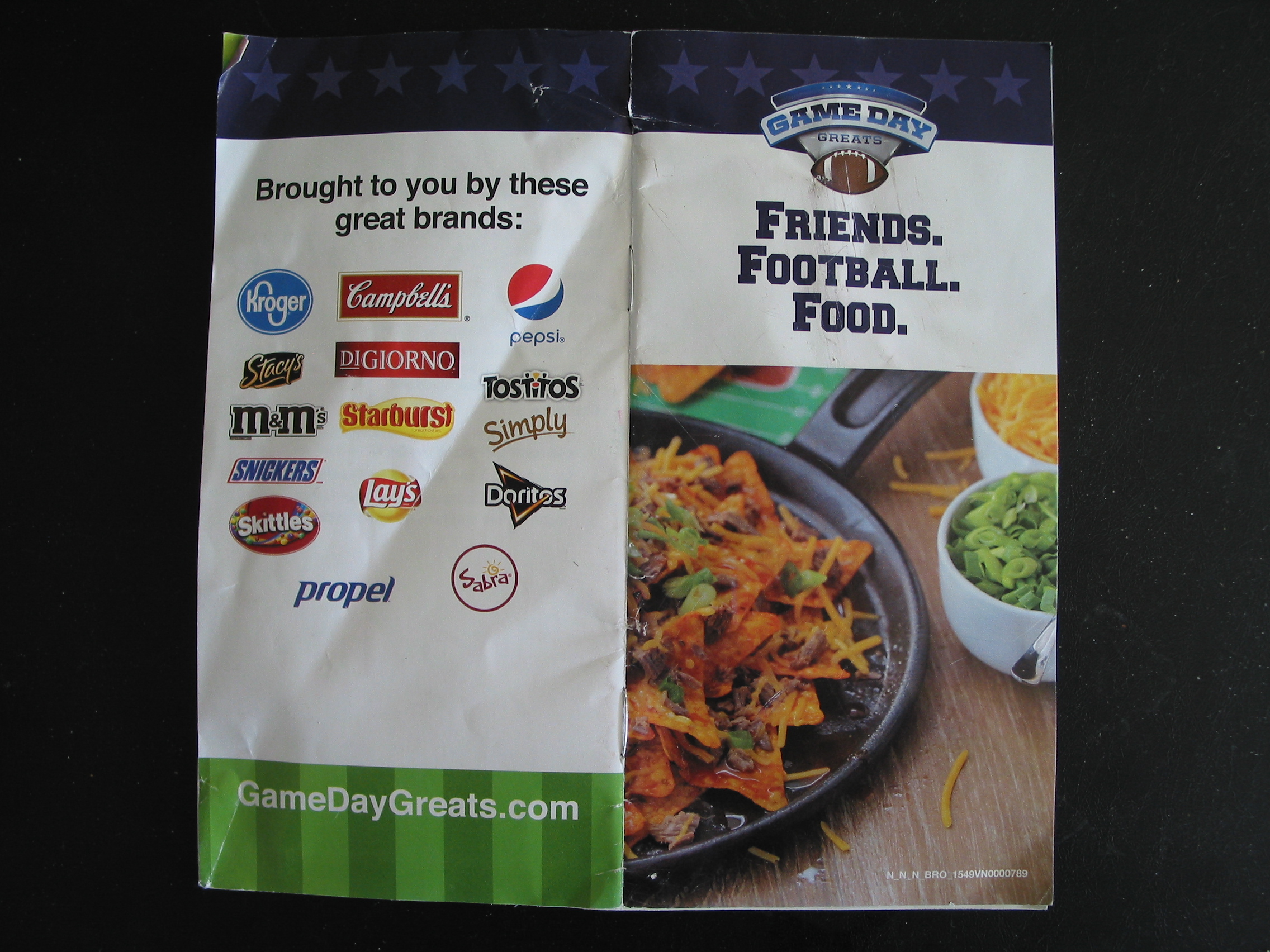
I’ll spare you the inside pages, but the closest to nutritious was Kroger’s own recipe for double-coated baked cauliflower “hot wings”–ingredients: a head of cauliflower, a little flour and water, garlic powder, Kroger’s store-brand hot sauce, and some melted butter to doll up the cauliflower florets before dipping in…ranch dressing.
Not that it’s really so much about Doritos, but rather that it takes the 1960s invention of Doritos–a “taco-flavored” taco chip without any actual meat, cheese or salsa, just what has become known to all as orange cheez dust–as the first serious divorce between food and intrinsic flavor.
It isn’t really the first, of course, and Schatzker traces the history of post-WWII mass agriculture as the story of more food, grown quicker, with less and less flavor. Everything from tomatoes to chickens to broccoli to wheat comes under the microscope lens here. Yes, it’s another Michael Pollan-style examination of some familiar complaints about how and why nothing tastes the same anymore.
He collects reactions from champion kvetchers as diverse as Julia Child (she did it first, he claims, calling modern–1960s–American chicken tasteless and with the texture of “teddy bear stuffing”) to the Slow Food Movement (no relation, ahem!) to Michael Pollan himself, to a variety of old bickering couples who remember the flavor of old long-legged breeds of chickens now relegated to the remote gourmet sidelines of the vast factory-farming chicken industry…
Schatzker tells a fairly entertaining version of this tale–how Big Food and Big Agro convened with flavor chemists to alter the course of human gastronomy in the wake of WWII. As we breed livestock and produce to grow more, bigger, faster, he discovers, we lose not only flavor but nutrients and replace them with water and carbohydrate filler even in things like broccoli and tomatoes. And then we try to make up for that by dousing them in ranch dressing and orange cheez dust and artificial flavorings; hence the title of his book.
Coatings, dressings, artificial flavorings, salt, sugar and oils–these, he says, have become the substitute for intrinsic flavor in real foods, and a mainstay of the unsubstantial snack foods–starting with Doritos–that have pushed out bulk produce and unprocessed ingredients in the American diet.
Schatzker takes it a couple of steps further, though, presenting his theory that the loss of flavor in real foods is the key factor to blame for American overconsumption of calories, and that flavor is one criterion we should work to restore at a national level.
Yes, we’ve read much of this before elsewhere, but his interviews are still eye-opening. He interviews flavor chemists at McCormick, which does a lot more of its work behind the scenes of the restaurant and processed food world than you might think. Those little bottles of herbs and spices on supermarket shelves are just the tip of the iceberg.
Schatzker also profiles one of the original breeders of today’s heavy-breasted, fast-grown, efficient-feeding mass market chickens–though the man is still proud of that early work given the economic pressures on postwar America. He gets the inside story on the decline of flavor and nutrition in broccoli, kale, tomatoes, strawberries and other common produce, and learns why some top agriculture researchers eventually quit the corporate world to try and restore some of the diversity and quality that had been lost during the peak years of their careers. Continue reading
Filed under: books, Dips, Food Politics, haute cuisine, history, meat and poultry, nutrition, unappetizing | Tagged: book reviews, Doritos, food, Food Politics, Mark Schatzker, nutrition | Comments Off on “The Dorito Effect”: Fervor over Flavor
 Slow Food Fast