
• Enter your email address to subscribe to this blog and receive notifications of new posts by email.

    Join 241 other subscribers
  • Noshing on

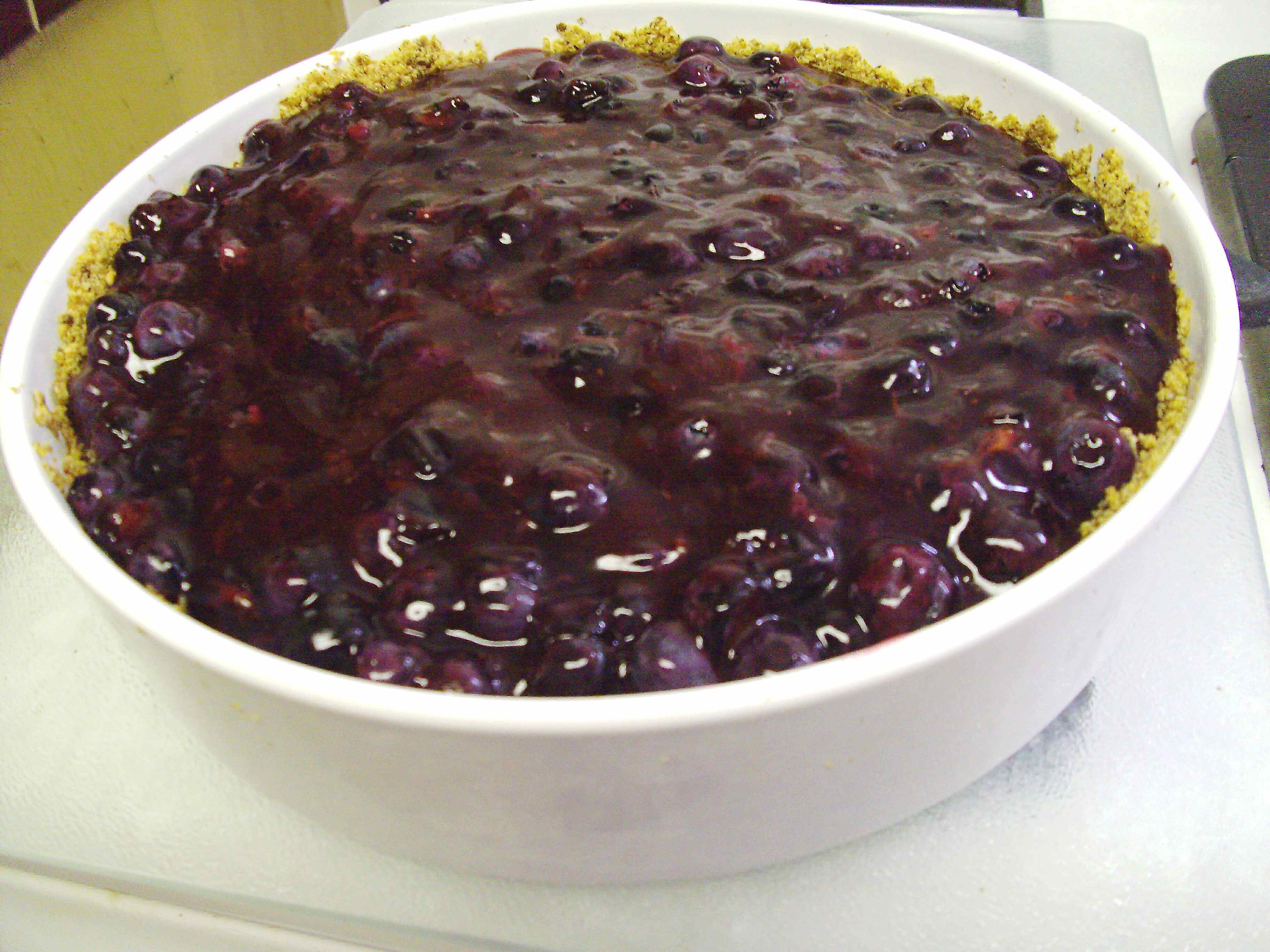
    raw blueberry pie with microwaveable filling and graham cracker crust

    This mostly-raw blueberry pie is a snap to make and very versatile--the filling microwaves in a few minutes, and you don't even have to bake the zippy gingered graham cracker crust--perfect for a hot Fourth of July and all summer long.

  • Recent Posts

  • Contents

  • Archives

  • Now Reading

  • See also my Book Reviews

  • Copyright 2008-2024Slow Food Fast. All writing and images on this blog unless otherwise attributed or set in quotes are the sole property of Slow Food Fast. Please contact DebbieN via the comments form for permissions before reprinting or reproducing any of the material on this blog.

  • ADS AND AFFILIATE LINKS

  • I may post affiliate links to books and movies that I personally review and recommend. Currently I favor Alibris and Vroman's, our terrific and venerable (now past the century mark!) independent bookstore in Pasadena. Or go to your local library--and make sure to support them with actual donations, not just overdue fines (ahem!), because your state probably has cut their budget and hours. Again.

  • In keeping with the disclaimer below, I DO NOT endorse, profit from, or recommend any medications, health treatments, commercial diet plans, supplements or any other such products.

  • DISCLAIMER

  • SlowFoodFast sometimes addresses general public health topics related to nutrition, heart disease, blood pressure, and diabetes. Because this is a blog with a personal point of view, my health and food politics entries often include my opinions on the trends I see, and I try to be as blatant as possible about that. None of these articles should be construed as specific medical advice for an individual case. I do try to keep to findings from well-vetted research sources and large, well-controlled studies, and I try not to sensationalize the science (though if they actually come up with a real cure for Type I diabetes in the next couple of years, I'm gonna be dancing in the streets with a hat that would put Carmen Miranda to shame. Consider yourself warned).

“Healthy” breakfast muffins? Miscalculated.

Julia Moskin’s latest “Recipe Lab” in the New York Times food section revisits one of my (cranky, irascible) pet peeves: the “healthy” muffin. She claims her version, filled with an expensive and lengthy list of the latest buzzword ingredients and yet supposedly lighter-textured than most bakery offerings, is healthy, always a warning sign, especially when paired with the instruction to make sure it’s well-leavened and to use “unprocessed” oils. These are code words for a heavy dose of baking soda and baking powder on the one hand and coconut oil, the newest darling of the hipster food world, on the other.

But–benefit of the doubt–I looked at the recipe and scrolled down to mouse over the nutrition stats. They’re provided in a popup link you can’t copy, with a very faint “i-in-a-circle” watermarked icon below the ingredient list. Not a good sign, generally: hiding the nutrition stats signals that they’re kinda suspish, or at least unflattering. But okay, at least they’re posted here.

Edamam provides the analysis–and per average muffin, 20 to the batch, claims the following stats:

318 cal, 16 g total fat, 1 g saturated fat, 0 trans, 9 g monounsaturated, 4 g polyunsaturated, 39 g carbohydrate, 2 g fiber, 19 g sugars, 4 g protein, 38 mg cholesterol,260 mg sodium

Something didn’t sit quite right with that. I looked up at the ingredient list.

Sure enough, the fat was provided by 1 1/3 cup of coconut oil. Yick. But never mind. The point here is that Edamam lists the saturated fat at a very improbable 1 gram per muffin.

There is–being kind about it–no way this is correct. The only thing I can think of is that Edamam used the soybean or canola oil option for the calculation, but why would that be? Coconut oil is listed as the much-preferred fat. And it’s got more saturated fat per gram than lard. About 82% saturated fat by weight, if you check the most reliable lab analysis at the USDA National Agricultural Library’s nutrient database. And actually, the mono and poly stats suggest something closer to olive oil than soybean or canola.

The correct calculation for 315 ml of coconut oil is 260 grams of saturated fat for the recipe. For 20 muffins, that’s almost 14 grams of saturated fat per muffin, not 1. And 14 grams is pushing the recommended daily max of 20 grams of sat fat for a 2000 calorie-per-day diet. Just for a muffin.

Given the nice way the New York Times provided the grams as well as cups and spoons measures in the recipe, here’s what I came up with, direct from the USDA NAL database and averaging a bit for the different options between apples and carrots and between walnuts and pecans.

  • Total calories for the recipe: 7213, per 1/20th (1 muffin): 361
  • Total saturated fat: 273 g,  per muffin: 13.7 g
  • Total monounsaturated fat: ~50 g, per muffin: 2.5 g
  • Total polyunsaturated fat: ~50 g, per muffin: 2.5 g
  • Total cholesterol: 744 mg, per muffin: 37 mg
  • Total carb for the recipe: 699 g, per muffin: 35 g
  • Total sugars: 390 g, per muffin: 19.5 g
  • Total fiber: 49 g, per muffin, 2.5 g
  • Total sodium: ~4670 mg, per muffin, 234 mg.

And yes, it’s kind of a pain to navigate all the USDA data chart by chart, ingredient by ingredient, put in the actual amounts in grams, have it recalculate the whole chart, add the totals up nutrient by nutrient, and then divide by 20. It would be so nice to find an accurate and complete free recipe-style app to pull all the relevant data and stick it in a single spreadsheet. The myfitnesspal.com recipe calculator is about the best I’ve found so far, but it’s not as complete, and neither unfortunately is the USDA’s Supertracker calculator, as far as I can tell.

How did Edamam and the New York Times Food Section do? The sodium, though a bit much for a single bready item (4 t. baking powder, 1 t baking soda and half a teaspoon of salt on top of that, plus whatever’s in the buttermilk), came out about right at 260 mg (I got 234 per muffin). The carbs are about right too, if kind of a lot. Sugar at 19 grams is about half the total carb and makes it no great bargain (not to mention, brown sugar plus maple syrup? cha-ching, and the maple flavor probably disappears with all the other stuff. Kind of a waste.). This is still a pretty cakey item, despite Moskin’s protestations to the contrary and all the grated carrot and blueberries and multigrain ethos. Edamam’s calorie estimate is a bit low by 40 cal per muffin. You could probably live with that.

But you shouldn’t. Because with the trendy, expensive coconut oil option, the published saturated fat estimate is way, way, way off. Way off. Bizarrely off.

I visited Edamam’s web site to see if I could figure out how they calculated this–whether their own calculator would give me the right result if I input “315 ml. coconut oil,” or whether their API, which features natural language processing, somehow makes  errors this big when it parses a recipe and does the lookup in the USDA database. Did it pull the wrong ingredient, or did the NY Times staff type the wrong thing into their recipe submission? Or what? Continue reading

Fish Tale: Omega-3s and Greenland’s shores

Well…another shining example of “magic bean” and “superfoods” wishful thinking has bitten the dust, thanks to more careful research. It may be a good thing.

In recent years, several reassessments of the heart health benefits of popular fish oil supplements have failed to find a significant protective effect from omega-3 fatty acids. A new genetic study of the Inuit in Greenland revisits the old 1970s finding that started the whole fish oil phenomenon (and salmon farming) and explains a lot of that failure. The researchers found a specific gene variant in almost all the participants but not in other populations.

The gene in question helps package fatty acids from the Inuits’ traditional all-fish-whale-and-seal-meat diet more efficiently to keep blood lipid levels down. Researchers noted another striking effect: participants who have two copies of this particular gene variant are also significantly shorter and ten pounds lighter on average than those without it. And although this gene variant is very common among people of mostly-Inuit descent (today a lot of Greenlanders have mixed Inuit and Danish heritage), the ethnic and racial group with the next highest concentration of this gene variant, as far as it’s been tested, appears to be the Chinese, but only about 25 percent of them have it. People of European descent mostly don’t have this variant.

What does this mean for omega-3s and fish oil supplements in North American popular culture? The New York Times article didn’t go that far, but the implication should be clear: Unless you’re Inuit, you probably don’t have the specific gene variant that helps your body deal with omega-3s, so for you, omega-3s are like most other animal-derived fatty acids–adding more to your diet is just adding more to your blood lipid burden. Rich fish like salmon may taste nice, but lipids are lipids, and calories are calories. Given the likelihood that they’re really not cardioprotective after all, overeating them doesn’t make sense, especially for a population as overweight as ours has become.

Fish oil supplements are probably even less of a good idea, and they don’t even taste good. They won’t really protect your health as claimed, not for omega-3s, anyway (cod liver oil is still probably good for vitamin D, if you can still find it, but most people would probably prefer a mercifully flavorless vitamin pill).  So save your shekels, buy actual salmon once in a while, and enjoy it–but sparingly.

Misunderstanding Salt Research: Bon Appetit’s Shameful “Health Wise” Column

I started this blog last spring more or less just to test out blogging lightheartedly about food. However, I have just read Bon Appetit‘s appalling “Health Wise” column from the May issue, “The Saline Solution” by John Hastings.

I do actually love to cook and eat well, and that’s my main purpose for this blog, but seeing this kind of blithely irresponsible “health” advice on salt makes my blood boil (not appetizing). Worse, it starts dragging me back to my work roots and up on my soapbox (also not appetizing, though kind of fun), because I trained as a biochemist and worked for several years as a science journalist. I worked for the National Heart, Lung, and Blood Institute at NIH at the time some of the bigger studies Hastings refers to were first being published. It was my job to know about them and write about them in plain (and preferably short) English for Congress and the public. To do it I talked to national experts, interviewed the leaders of the National High Blood Pressure Education Program, and combed through a century’s worth of research on salt and high blood pressure.

But you don’t have to be a scientist to find this stuff out. Descriptions of the studies AND their updates AND the reasoning behind the basic public health guidelines calling for Americans to watch their salt AND how to do it without eating a restricted diet of cardboard and baby cereal are all easily available from the NHLBI web site or the American Heart Association.

Hastings, a former editor of Prevention and health column contributor to O, the Oprah Magazine, is someone you’d expect to be reasonably accurate in reporting health research findings. But here he gets the science on salt and high blood pressure just about as backwards and upside down as he possibly can.

Worse yet, he does it in a strangely breezy, cheerleading tone that’s really hard to believe.

Hastings’ argument goes something like this:

…here’s a little secret: salt isn’t a problem. If that sounds crazy, it’s because the public health message about salt causing high blood pressure has been very, very effective, and it’s backed by reams of scientific research…Upon this, nearly everyone agrees. The controversy arises when you ask experts about the connection between salt intake and high blood pressure…All of this is fantastic news for those of us who are already cooking with high-quality meats and farmers’-market produce…

Did you follow all that? Probably you felt like you did for the few seconds you were reading it, but look again and you start to pick out the self-contradictions–“If it sounds crazy” that salt isn’t a problem, “it’s because the public health message that salt causes high blood pressure… is backed by reams of scientific research.”

Well, yes it is. The way Hastings phrases it, you’re supposed to think that was a bad thing, that health research in general and carefully designed tests of the effects of diet on cardiovascular health in particular are part of some kind of unnamed conspiracy against the public’s right to eat every bit of salt it can get.  Personally, I’d rather that broad public health messages were backed by reams of scientific research rather than by some diet guru or brand-name chef’s nutritional fantasy that will help sell his next book or tv program, or–more realistically–by corporate marketing and pressure campaigns from big pharma and big agro. Of course, it’s less profitable if people simply eat less salt–and less processed food–and never develop hypertension in the first place than if they eat salt like it’s going out of style and call it gourmet, and then have to make up for their diet by taking hypertension pills…hmm. Food, Inc., anyone?

“Upon this nearly everyone agrees”, but somehow there’s still a great controversy over it? Really? No. Not really.

The vast majority of salt researchers look at the bulk of the study results and conclude–repeatedly, for decades now–that salt is, in fact, a direct and modifiable risk factor for hypertension (high blood pressure). Which is both a disease in its own right and a leading risk factor for heart disease, stroke, and chronic kidney disease. Combine that with the fact that the average current salt intake is about twice what the consensus guidelines recommend and that more than half the adult population in the U.S. is crossing the line into overweight and obesity–and…well, yes.

Salt IS actually a health problem for most people. Gee.

The Bon Appetit article is a jumble of self-contradictions and serious misinterpretations of the findings from two older salt research studies, one of which has since been revised,  plus a cherry-picking recent review that comes to a different conclusion about salt than most of the other reviews of the same data on diet and health. That one comes from the lab of Mickey Alderman, an otherwise eminent researcher who just happens to be a long-time, much-trumpeted advisor and consultant for the Salt Institute.

Hastings  doesn’t indicate that he interviewed the man or even recognized his name on the journal article, but he should have. Anytime somebody in the media wants to come up with the magical–and really, really popular–conclusion that lots of salt, any day, any time, anywhere, please add more, is perfectly harmless and even good for you, they go to Mickey Alderman because they can paint him as a lone hero against the Food Police (the typical name they give the National Institutes of Health and the American Heart Association in such cases). Because what Alderman will say–with precision, but with disregard for the bigger public health picture–is that high salt intake isn’t directly proven to cause death from cardiovascular disease.

And it isn’t. It can’t be proven directly in a well-controlled diet study large enough to reach statistical significance, because that would require thousands of participants to follow a carefully prepared diet throughout their entire lifetimes, with no deviations for dates, wedding receptions, pizza parties, etc., and it would take 50-75 years to collect the majority of the data. You’d literally have to wait until most of the participants died before you could make a public health recommendation about salt. And the cost of doing that study “right” would run into the billions. It would bankrupt the federal science budget. And maybe a few other budgets as well.

That’s why the NHLBI and the AHA have sponsored studies that look at signs of developing cardiovascular illness–heart attacks, stroke, phlebitis, high blood pressure, kidney disease–rather than death. When you look at these ailments, you find that dietary salt actually matters quite a bit–contrary to what Hastings thought he understood from the studies he mentions.

Continue reading

Impatience is its own reward

I learned to cook at the ripe old age of eleven. My mother had gone back to school, I had a younger sister and brother, and I had a problem. Mom said to make spaghetti–so far, so good–but when I got to the kitchen, I discovered there was no tomato sauce in the house. Luckily, there was a little can of tomato paste, and a cabinet full of dried spices that included the essential garlic powder and oregano, plus a bunch of herbs (they came as a set) that my mother owned but never actually touched. And, as I’ve mentioned, there were two guinea pigs available. Good enough.

I learned to cook again when I hit college and started helping a friend with Friday night dinners at the Hillel House. That’s also where I learned how to keep kosher.

I learned a third time when I moved in upstairs as a resident after my sophomore year–I was working a strenuous lab job on a tight budget–no more than $25 a week for anything–and I walked everywhere. My housemates introduced me to two basic spaghetti sauces–one red, one white–and the rest of the time I ate omelettes because eggs were a dollar a carton. I shudder now to think I got through a carton a week, and didn’t ditch any of the yolks. At the time I reasoned that I wasn’t eating meat–couldn’t get kosher meat easily, and it was beyond my budget. I did lose 20 pounds without realizing it. And I started baking my own bread–challah for Friday nights; pita the rest of the week. No real recipes; I went by feel.

The next time I learned to cook was after college, on a year’s study in Israel. In the kitchens of Kibbutz Ma’agan Michael, everything had to be done in a rush because we were feeding 1000 people a day. But they knew their way around an eggplant or seventy (we used the bread machines to slice them all). Up in Ma’alot, I worked in a clinic with everyone from the surrounding towns–Jewish, Muslim, Christian, and Druse–in one of the few truly friendly workplaces in the country, and I spent afternoons tutoring and being fed in people’s homes or else learning to haggle for vegetables in the Thursday open air market. There I learned how to brew tea with mint (in summer) or sheba (petit absinthe) in winter, how to cook with real garlic, how to use a “wonderpot” on top of a gas ring, and how to eat z’khug (chile-garlic-cilantro paste) with just about everything.

When I returned to the U.S., I had to learn to cook all over again. I started keeping a “blank book” (remember those?) for recipes, and I learned, over the course of twenty years, how to cook real food, better food, from scratch, but faster than the cookbooks called for. When my grandmother had a major stroke, I was still in my mid-20s and realized I probably couldn’t get away with an all-eggs-and-cheese diet. Eventually I went to work up at NIH, and discovered that cutting back on saturated fat, cholesterol, salt, and calories really does help cut the national risk of heart attacks and strokes.

After talking with a nutrition expert there, I learned that our tastebuds can adjust to almost any level of sodium and consider it “normal” within just two weeks. Dangerous if you develop a tolerance for high salt and consider it normal even at really exaggerated levels–as many people do. The good news is that we can retrain our palates downward just as quickly, so I tried a completely salt-free, unprocessed food diet for two weeks–with surprising rewards. Without salt to swamp the taste receptors, the natural flavors of vegetables and fruits seem particularly brilliant and clean.

And then I had a kid. And I had to learn to cook all over again–this time, using a microwave oven, because I didn’t want to leave my kid unsupervised while I stood trapped at the stove. I wanted something that would shut itself off when done. But by now I had gotten used to real ingredients and fresh foods, and I had to come up with microwave methods for them. So I did. This blog is the result.