
• Enter your email address to subscribe to this blog and receive notifications of new posts by email.

    Join 241 other subscribers
  • Noshing on

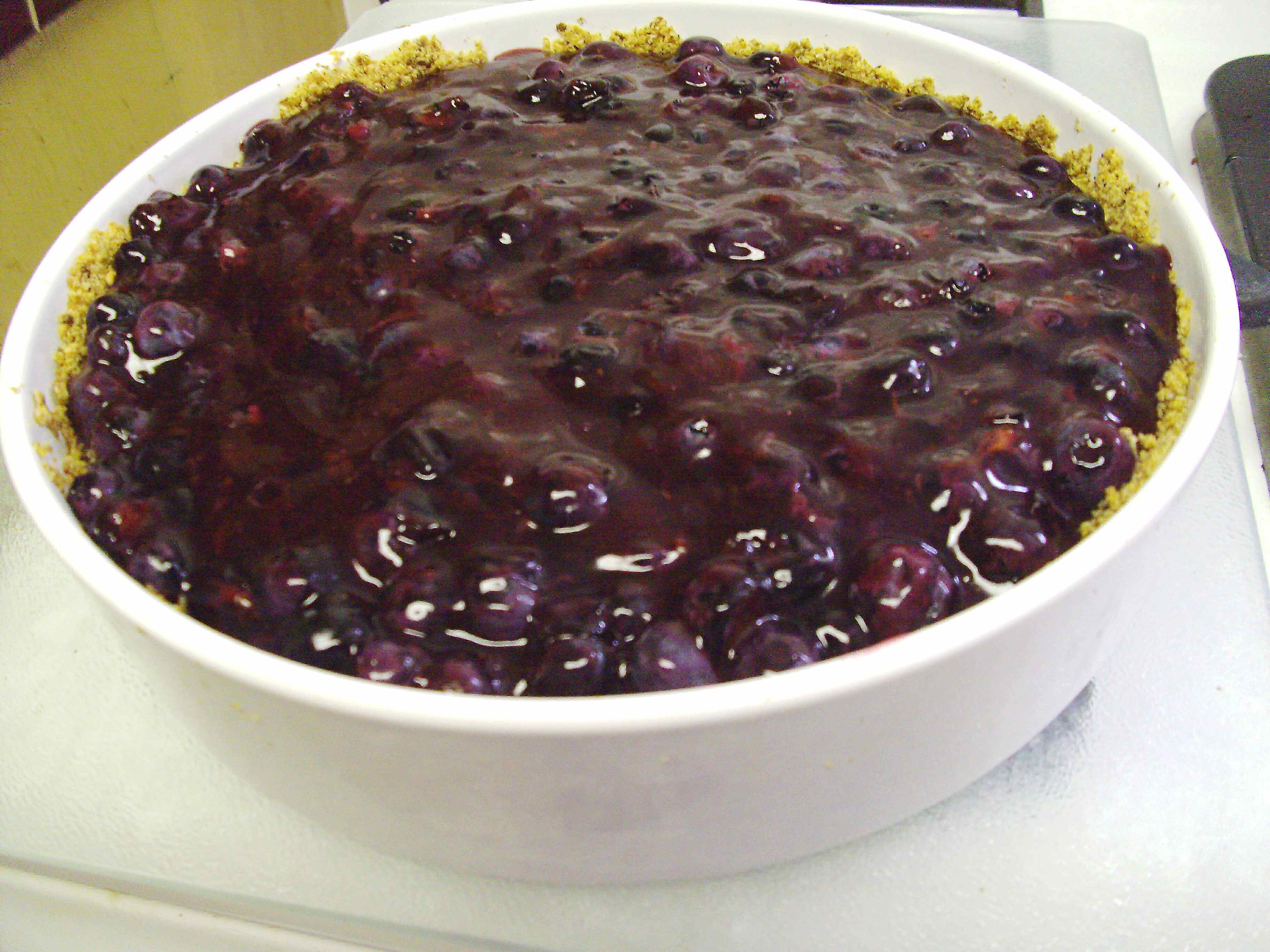
    raw blueberry pie with microwaveable filling and graham cracker crust

    This mostly-raw blueberry pie is a snap to make and very versatile--the filling microwaves in a few minutes, and you don't even have to bake the zippy gingered graham cracker crust--perfect for a hot Fourth of July and all summer long.

  • Recent Posts

  • Contents

  • Archives

  • Now Reading

  • See also my Book Reviews

  • Copyright 2008-2024Slow Food Fast. All writing and images on this blog unless otherwise attributed or set in quotes are the sole property of Slow Food Fast. Please contact DebbieN via the comments form for permissions before reprinting or reproducing any of the material on this blog.

  • ADS AND AFFILIATE LINKS

  • I may post affiliate links to books and movies that I personally review and recommend. Currently I favor Alibris and Vroman's, our terrific and venerable (now past the century mark!) independent bookstore in Pasadena. Or go to your local library--and make sure to support them with actual donations, not just overdue fines (ahem!), because your state probably has cut their budget and hours. Again.

  • In keeping with the disclaimer below, I DO NOT endorse, profit from, or recommend any medications, health treatments, commercial diet plans, supplements or any other such products.

  • DISCLAIMER

  • SlowFoodFast sometimes addresses general public health topics related to nutrition, heart disease, blood pressure, and diabetes. Because this is a blog with a personal point of view, my health and food politics entries often include my opinions on the trends I see, and I try to be as blatant as possible about that. None of these articles should be construed as specific medical advice for an individual case. I do try to keep to findings from well-vetted research sources and large, well-controlled studies, and I try not to sensationalize the science (though if they actually come up with a real cure for Type I diabetes in the next couple of years, I'm gonna be dancing in the streets with a hat that would put Carmen Miranda to shame. Consider yourself warned).

Paula Deen and the diet that bites you back

This week’s “revelation” that Paula Deen, “the Butter Queen” is now a Type II diabetic was a surprise to nearly nobody. Deen, who revealed a harrowing backstory in her memoir of a bootstrapped career in catering, has enjoyed a surprising rise to fame on television. Two weeks ago, following in Emeril Lagasse’s footsteps, she appeared as Grand Marshal for the Rose Parade right here in Pasadena.

Of course, her otherwise ordinary “Southern Cooking” has been exaggerated out of all recognition with extra excess butter and sugar and mayonnaise, and so for years now cads like Anthony Bourdain have called her a scourge on the culinary scene (well, actually, he called her a lot worse than that, but he’s Anthony Bourdain. I’m paraphrasing politely, even though I kind of agree, at least foodwise).

With the revelation that she’s Type II, which everyone knows and fears due to their own increasing girth, Deen is bound to be the butt of predictable jokes this week and next, or until the next big Kardashian “revelation” that newspaper readers apparently care deeply about, or at least they do according to the reality TV networks footing the ad bills. (Even the New York Times has wasted column inches on this kind of drivel this year. Journalistic standards are dropping all over the place, I tell ya.)

But tell the truth, y’all: she ain’t the only one responsible. Not by a long shot. Read any “major” chef’s cookbooks and magazine offerings, other than perhaps those of Nobu, who deals mainly in raw seafood unadorned by carbs or noticeable layers of fat, and you’ll quickly realize that MOST of them exaggerate the salt, sugar and fat content of their dishes well beyond reason. Very few of them deal out plain vegetables on the plate. Very few deal out meats or fish without big sauces.

The other big, big feature stories on food in the New York Times this week:

1. Mark Bittman doing a quasi-deep bankruptcy commentary on Hostess that manages to recount his entire childhood consumption of Twinkies and co. in loving, fine-grained detail. He still attempts to sound self-righteous about it by the end because the ingredients include “ultra-processed flour”.

2. David Tanis of Chez Panisse, waxing lyrical about French lentils (du Puy or Die) as a salad with vinaigrette, hard-boiled eggs (so far, so good), some lettuce and….big fatty slabs of pork belly on top. Five or six of them per plate.

3. “The Miracle of Bo Ssam”–which turns out to be David Chang of Momofuku’s recipe for pork shoulder slathered in salt and brown sugar–twice–and cooked down for six hours in the oven. Caramelized barbecue. In fact, “crack” barbecue, to match Momofuku Milk Bar’s world-famous (to bloggers, anyway) “crack” pie made with most of the same ingredients.

Now people. With all of that going on, with Thomas Keller still boiling his vegetables in brine and poaching his lobster bits in butter, with the Culinary Institute of America instructing its naive young students to salt, salt some more, and salt yet again to achieve that perfect degree of salting in each dish (Coronaries ‘R’ Us), and with Congress sucking its collective thumb about local schools’ move this year to exclude french fries and pizza from the “vegetable” categories in their cafeterias—–

Does anyone really think that Paula Deen is NOT a woman of her time?

She’s nowhere near the worst–she’s just not as fashionable as all the tatted-up young bucks who get picked for Top Chef. She’s also not dishy, like Nigella Lawson, whose cookbooks, which started out about 10-15 years ago emphasizing lighter fare like Vietnamese salads with chiles, have also drifted drastically in the direction of high-calorie “indulgence” foods–some of them utter unmitigated goo-fests (avocado, mayo, roquefort? peanut butter, corn syrup, marshmallow fluff, chocolate bars? puff-pastry chicken pot pies-for-one?). Lawson makes the national news, at least in the UK, when she comes back out in public looking svelte again after puffing up too far past the point where male reviewers are still drooling. Will her next book of recipes slim down commensurately?

Unlike the more fashionable TV chefs on her network, Paula Deen is middle-aged and looks it. She’s fat, she’s gray though beautifully coiffed, she’s politely made up and decently dressed–no orange signature clogs–and she smiles. Maybe a little dippily, but if you didn’t know who she was, Continue reading

Artificial sweeteners–false promise for lower carb counts?

Last Saturday night my family visited a couple from our congregation and had dinner in their sukkah. When we broached the question of what there would be for dinner so my daughter could get an idea of how much insulin to take, the husband announced that he too was diabetic–Type II, for several years. What followed was a bit of a culture clash.

I’m sure he meant to be encouraging as he declared that through a combination of self-discipline and exercise and not eating more than a very limited number of carbs per day (and they really were about half of what our daughter is supposed to eat) that his A1C tests were down in the normal range and he only had to test his blood sugar twice a week. Which of course is fine and nearly ideal for a Type II diabetic if it actually works.

I’m not entirely sure how my daughter took all of this, but he went on to dismiss another Type I diabetic we know as “paranoid and overdoing it” because she tests 6 or 7 times a day, which he assumed was unnecessary since he didn’t need to do that.

He had the shining confidence of someone for whom not much had ever gone awry and, having no idea how lucky he was, assumed it was down to his own skill rather than the fact that he had a working pancreas, wasn’t growing anymore, and wasn’t a girl. All big factors for blood glucose control. Clearly he’d never had a bad low with shakes from an overdose or hormonal surge, or a really sharp unexpected high from a shot that just didn’t get where it was supposed to go.

I was more tactful than I’ve ever been in my life when I pointed these things out. You wouldn’t have recognized me, I swear!

Oddest of all was his insistence that the real secret was his use of artificial sweetener, which let him enjoy all kinds of great desserts. I was puzzled–baked apples sprinkled with xylitol? Surely the apples themselves were pretty carby–as well as pretty sweet on their own. The carb difference between using artificial sweetener, a tablespoon–or even two–of table sugar for the pan, or just leaving the apples to bake without sweetener, would be pretty minimal per serving.

And indeed our host only took two wedges for himself.

The other dessert–and it did taste decent–was chocolate ice cream sweetened with xylitol. Given that the ice cream in question was a plain flavor from my usual brand, I was able to compare it with the ordinary version for carb with reasonable confidence.

It was plenty sweet–maybe sweeter than normal, for that matter. But for carbs?

There was no difference. 17 grams per 1/2 cup serving, xylitol or no.

Which brings up a sobering question: why use artificial sweeteners if they don’t lower the carb count significantly? Continue reading

Steppin’ Out (vicariously) with my Baby

American Diabetes Association 2011 Step Out to Stop Diabetes 5K walk t-shirt

Got the t-shirt

On Sunday morning, my daughter and husband participated in the American Diabetes Association’s Step Out to Stop Diabetes 5K walk in Culver City, the part of LA where Sony keeps its studio headquarters. A friend at our synagogue who’s also Type I diabetic (and she’s an OB/gyn who works crazy MD numbers of hours and does night surgeries as needed) has been incredibly encouraging from the beginning, and she sent my daughter the walk info directly (now that my kid has her own email address and everything–I can’t keep up). And then my kid forwarded it to me. So modern I can’t stand it!

Culver City is on the way out to the Pacific Ocean, and used to be right on my commuter route whenever I was avoiding the 405 freeway (which was nearly every evening) home to Pasadena.  It’s a schlep, in other words. But my 11-year-old got herself up and out in time to get there with her dad, she walked with everyone, got the hat, got the teeshirt, got the gray cat face painted on her arm at the face-painting booth afterward, and I’m just generally proud of her. Also of my husband, who did the schlepping (and of course, he walked too).

Because I couldn’t go this time, I did the other half of the activity–the sponsoring bit. And this year, I’m happy to say, Team USC, made up of my friend’s coworkers, raised the most money of anyone on the LA walk.

If you’d like to join us after the fact, it’s not too late to make a general donation to the ADA, or to donate to a specific walk team in your region. Or to Team USC. Or to my friend’s ADA fundraising page, because without her we wouldn’t have thought of it, and my daughter would probably not yet be as proactive as she is in taking care of herself. When you’re a kid suddenly faced with giving yourself shots and doing fingersticks daily for the  rest of your life, it really helps to know someone encouraging who’s been through it since she was a kid, has been everywhere and done just about everything, and treats the routine as just a normal part of her day.

Weighing in on kitchen scales

Digital kitchen scale

Farhad Manjoo, better known for his columns on computer and phone technology, has now tackled kitchen tech for the New York Times in his  ode to the electronic kitchen scale.

And while I applaud the general idea that it’s a valuable tool–after all, we use ours daily–I’m both stunned and unsurprised at the same time at the limited perspective he shows [chorus, because he’s a boy]. For Manjoo, as for the food bloggers he quotes (J. Kenji Lopez-Alt of Serious Eats, Deb Perelman of Smitten Kitchen), using a kitchen scale is about cooking more precisely and with fewer measuring cups, spoons, bowls, etc. Which is fair enough, I suppose, if you’re really worried about whether you already cook well, or if you have ambitions for exactitude.

But why do most Americans who actually have a kitchen scale get one in the first place? The fact that our kitchen scale came with a “The Biggest Loser” sticker on it might give you a solid clue.

We got our scale because our daughter developed Type I diabetes at age nine. Although we started out with half- and third-cup measures for simple foods like beans or plain pasta, we really needed to be able to calculate how much carbohydrate was in more complex or variable-density foods like breads and baked goods so we could give her the right amount of insulin for them.

Our school office manager said she’d gotten one on doctor’s orders after suffering a stroke in her early 40s, and she swore by it to help her cut back significantly on carbs and get her portions right.

Health concerns, not haute cuisine, are the most urgent reason to learn to use a kitchen scale. Not that better-tasting food isn’t important, but learning how to eat more moderately by measuring and knowing what’s in a serving would help at least two-thirds of Americans back themselves down off the high-BMI, pre-diabetic ledge. Especially since an international diabetes conference just reported something like 350 million people worldwide now have diabetes, double the number from 20 years ago.

Digital scales seem to do the most good, for us at least, in preparing homemade pastries or complex dishes (such as quiches or filled pastas). Our other best use is weighing out complex high-carb foods like pastries and candies that we’ve bought elsewhere, since they can be so variable in density or sugar content.

Unfortunately, weighing out treats is usually a big eye-opener for us as well as our daughter. That blackberry pie my husband lugged home from a specialty bakery run is worth a meal and a half of carbs if you do the picture-perfect wedge. We’ve started to cut our pieces a little thinner not just so our daughter doesn’t feel shortchanged but so we don’t get slapped when we step on the big scales the next morning.

Along the way the scale has helped us learn carb fractions for different foods and figure portions for them so it’s easier to estimate when we eat out.

It’s not so tempting to eat a whole doughnut for Sunday breakfast from the surprisingly good and inexpensive bakery three blocks away when you discover that even the relatively modest sugar twist (a real doughnut utterly unlike Starbucks’) represents 60 grams of carb, worth a whole meal without even accounting for a glass of milk, and the jelly doughnut is something like double that. And once you’ve eaten it, you won’t really feel full. Dangerous goods. Better to split the doughnuts and eat something more substantive with them.

Bonus points for my daughter’s practical algebra skills here: she’s figured out how to calculate carb fractions based on the nutrition labels for her own custom blend of low-carb, high-fiber cereal and ultra-carby granola on regular mornings, and she’s pretty fast by now. The extra flourish on the calculator may make me roll my eyes (and yes, at a certain point I’m always thinking, “Just pour it, already!”) but she’s having fun showing off. Even though she’s done the measurements and calculations often enough to be able to eyeball the amounts in a cup if she wanted to.

Because of course, it can be taken too far…

After all, you can’t lug a kitchen scale to school with you in your backpack every day. Most diabetics of longer experience count by eyeballing and estimating when they eat out rather than agonizing over every gram. You can get a little too involved and dependent on the precision a scale offers and forget how to trust–and train–your innate abilities.

Which brings me back to Farhad Manjoo’s column. There’s nothing actively wrong with the way he’s using his scale, I suppose–except for his exuberance about pouring flour straight from the bag into the mixing bowl, then pouring sugar straight on top of that. If you overpour, you should be taking some back out, but then what? Discard the excess sugar now that it’s contaminated with flour? Ignore the contamination and scoop it back into the sugar sack? Take it from a former lab rat, you’d have done better in the waste-not sense as well as the food safety sense to weigh each separately into a paper cup or onto a plate and then pour it in the bowl.

But that’s for things that really benefit from weighing. Manjoo’s using the scale to figure the exact portion of coffee beans to use each day. One of his interviewees is using the scale to weigh out the exact amount of sugar for his iced tea. These things would do fine by eyeballing–or just using a spoon like a normal person.

Do you really need a kitchen scale to figure out how much grated cheese you want in your mac and cheese? Wouldn’t grating it until it looks and tastes good to you work at least as well?

These guys have lost their trust in their ability to eyeball or cook by feel as they check and recheck their precision on the digital scale. Couple that with the cachet of doing as the French do (that is, when they bother to weigh ingredients instead of cooking by instinct, which they’re inordinately proud of) and you have a new American tech obsession parading itself as competence chic.

It’s like checking your e-mail every 20 minutes. Or bringing your new iPhone to the dinner table and looking up instant info on the Web every time your wife brings up a topic to which neither of you knows the answer. (AHEM!!!) Not that I’ve ever met (or acknowledged meeting) any certain husbands who got that obsessive over their apps. Trust me, it does NOT make them more competent or enjoyable conversationalists…even if they do occasionally bring home some serious pie.

Bravo to LAUSD

Some actual good news on the school lunch front appeared in the LA Times  yesterday:

L.A. Unified removes flavored milk from menu

The Los Angeles public school district, one of the largest in the nation, had to vote its bigger contracts for things like milk early, so they made the announcement yesterday. They’ve also announced they’re going to drop breaded, fried wastes of space like chicken nuggets and offer more vegetarian options, more farm-to-school contracts for actual fresh produce, all the good things we’ve been waiting decades to see again.

This is all in deep contrast with the frosty reception Jamie Oliver’s “Food Revolution” show has received from actual LA schools in the past few months. And there’s a reason for it that you don’t have to dig too deep to get to. A lot of the fine upstanding revisions to the LAUSD school lunch menus and cafeteria revamps have not actually gone through for budget-crunch reasons. Some of the salad bars were never installed and implemented. As with many pieces of legislation, the intentions were good, or sounded good, but the money never showed up. Benefit: zero.

And a friend of ours who’s a school principal says the federal food subsidy program for poor students–there are an awful lot of them in his school, as in many of the LA area schools–is woefully underserving those kids. Some wouldn’t get a meal at all if they didn’t eat at school, and the food they get today is barely worth the name.

If the LAUSD can actually manage this year’s resolutions right, it’ll be a big step forward. The chocolate milk wars in the city board offices have been surprisingly intense–proponents of keeping the sugared chocolate and strawberry-flavored drinks argued that if they were pulled, most kids wouldn’t drink milk at all, 60 percent drink the flavored milks when available and that there’d be a big drop in milk consumption.

Proponents of going to plain (and Lactaid, and soy, to accommodate everyone, this is California after all) countered with the ugly fact that  the amount of sugar in the flavored milks puts them just about in the range of Coke, and argued that if fast food choices weren’t waved so constantly in the kids’ faces and the cafeterias offered real food instead, rather than alongside, the kids would eat more real food. And they’d get used to plain milk quickly enough.

I can attest to this phenomenon. We don’t keep fast food or junk food in the house, and I’ve been serving fresh vegetables and whole foods rather than prepared or processed things out of a box most of my adult life. I don’t get too many complaints, not only because my husband’s no cook, but because that’s what there is to eat and it’s the way we grew up eating at home.

Our daughter came along and started out with plain unsweetened yogurt, vegetables, bread and plain oatmeal or the lower-salt store brand versions of Cheerios. Also, for reasons that aren’t particularly clear even now, she had a thing for Indian food, spices and all. The maitre d’ at our favorite restaurant laughed when he saw this two-year-old kid tucking into a hot cauliflower dish and saag paneer. He remembered me coming in for a serious feast with my husband when I was very, very pregnant and hoping it would either induce labor or at least last me until I was in shape to come back. I’d never considered that she’d like to eat what I ate while pregnant–I’m still not sure it’s true, but I figure Indian families would have more experience with seeing how their kids develop a taste for vegetables and varied spices. Even now, she likes a wider variety of non-sweet flavors than her friends. I like to think it’s because she’s gotten to taste them, and because we like to experiment.

Part of the comparatively low-sugar diet for her was self defense–she was an up-like-the-rocket, down-like-the-stick kind of toddler if she ate many sweets at a time, even then. Years before, my sister’s older son had gotten stuck in a serious chocolate milk habit at that age, because my sister had given it first as a treat, then as a regular drink, then for comforting him or to appease temper tantrums, then to get him to do the things he should have been doing with or without milk. She had a hell of a time getting them both back out of the vicious cycle. I’m not as organized and can’t fool myself, so I took it as a warning.

My daughter got sweets occasionally, but mostly she was eating the kinds of foods we ate and now that she’s diabetic AND eleven at the same time (pity me!), I’m extremely grateful that she got the taste for nonsweet foods early in life. She only really wants junk foods if they’re right in front of her, or hungers out loud for what she knows are exaggeratedly high-carb items if her blood glucose is a bit high. When she’s in good shape, she goes for vegetables and fruits and cheese and Continue reading

Cranberry Sauce Without the Fuss

Cranberry sauce in the microwaveI love homemade cranberry sauce, and not just at Thanksgiving. It makes a pretty good jam for breakfast and (should the need arise) a pretty good tisane for a congested sore throat if you heat a dollop in a mug of water and sip it hot, berries and all. Despite the fact that it’s tart, which you’d think would make your throat hurt more, the cranberries actually contain something soothing that will give you at least temporary relief when you’re in the throes of Los Angelitis and the Tylenol hasn’t kicked in yet (you can trust my expertise on this one, unfortunately). But hopefully you won’t need it for anything medicinal this winter and can just enjoy fresh-made cranberry sauce for its own sake.

A lot of people are convinced that just opening a can is the easiest and least scary way to go. They must have read the package directions and decided it was too much work to make the syrup first (very intimidating-sounding) or that adding the berries and letting them pop was likely to spatter the stove until it looks like a magenta Dalmatian.

But really, you can just microwave cranberry sauce and it works fine. Throw all the ingredients (berries, sugar, water) into a 3-cup pyrex bowl, slap a lid on partway, and nuke it for 5 minutes. That’s it. No preboiling. Don’t even bother mixing it. In five minutes, you’ve got standard fresh-made cranberry sauce in a bowl that can go straight to the fridge once it’s cool. And no saucepan or stove top to wash before your guests arrive.

You can dress it up with some orange peel or juice, or a pinch of clove and cinnamon. You could add a chopped, peeled granny smith apple or a well-scrubbed chopped organic seedless orange with the peel to the berries for cooking, or else stir in a spoonful of Cointreau or Triple Sec after the jam cools, and you’d have something a little more sophisticated, but the basic recipe is worth having as a first run.

And most helpfully, if you’re looking for something less sugared, you can cut the typical cup of sugar per 12-oz bag of cranberries in half and it’ll still gel decently. Or you can do it with no sugar at all, let all the berries pop and thicken up just in water, and sweeten it with your preferred artifice after it’s cooled. It won’t be completely carb-free per tablespoon or so even with no added sugar, but it’ll be pretty low.

Approximate carb counts (total and per tablespoon, counting 1 T as ~1/16th c.):

Cranberry-only version without apple or orange

  • With 1 cup of sugar: 242 g carb per 2.5-3 c. cranberry sauce  or 5-6 g/T.
  • With 1/2 c. sugar: 142 g carb/recipe or ~3 g/T.
  • Artificially sweetened only: 42 g carb/recipe or ~1 g/T.

Cranberry sauce with apple or orange

With a good-sized apple or orange chopped in, figure 25 extra grams of carb per recipe or 0.5 gram extra carb per tablespoon.

Any way you go with it, though, homemade cranberry sauce has a good deal less carb per spoonful than other kinds of commercial jams, and probably a good deal less than the stuff in a can. It’s a lot better tasting too.

Microwave Cranberry Sauce

  • 12-oz package fresh cranberries, washed well
  • 1 c. water
  • 1 c. sugar (standard Thanksgiving back-of-package recipe), 1/2 c. sugar (my version this week, which was plenty sweet enough for me), OR no sugar during cooking but artificial sweetener added afterward to taste

optional additions: chopped peeled apple, finely chopped whole scrubbed organic orange, pinch or so of powdered cloves and/or cinnamon, a little grated orange or lemon peel, or a spoonful of orange liqueur or brandy

Put the cranberries, sugar if using, water, and apple or orange if using in a 3-cup pyrex bowl, cover loosely with a microwaveable lid so steam can escape but it won’t spatter, and microwave on HIGH 5 minutes. (If you’ve added an apple or orange, you might need an extra minute to account for the extra fruit.) Keep an eye on it toward the end, but it probably won’t boil over.

The mixture should already be thickening to a sauce/jam consistency (it’ll thicken more as it cools), and most of the berries should be popped. Stir well and microwave a minute or so more with a vented lid if you want it thicker. Let cool to room temperature and, if using artificial sweetener, sweeten to taste. Other flavorings–you could add grated lemon or orange peel (sparingly) or clove or cinnamon before cooking, but save any alcohol-based flavorings for after the jam has cooked so they don’t just evaporate in the microwave.

Rising Expectations for Rosh Hashanah

Just a quick word to say L’Shanah Tova U’metuka! May you have a good and sweet New Year!

Here’s what my daughter and I baked the afternoon before the start of Rosh Hashanah. You can find the basic recipe here.

Crown challah for Rosh Hashanah

Crown challah for Rosh Hashanah

It’s the first time I’ve baked bread since my daughter became diabetic in February, but by now, six months along, we both feel like we have the approximate carb counts down well enough. I tend not to make my challah very sweet anyway, but this year I also left out the raisins, which are about a gram of carb each, to make things a little easier until we were sure we knew how to figure portions. It still came out pretty and tasted good.

Without raisins, we figure, a baked piece of challah is like most other bread, about 50% carb by weight in grams, and it seems to work. Using a simple ratio like this is a lot easier (when we’re home and have a scale handy, anyway) than worrying about exactly how many cups or grams of flour I put in the dough and calculating exact portion carbs–something I still tend to do for desserts and treat foods like berry scones since they’re so variable. Or as our endocrinologist said, “Everyone guesses wrong for birthday cake.” Next time, we’ll try it with raisins and see how it goes.

Challah birds

One thing we like to do with the extra dough–I make sure there is some–is to let my daughter make challah birds. Usually we shape these by making a small 6-inch rope of spare challah dough and tying it into an overhand knot. You can press a raisin into one of the ends for an eye, and the other end becomes the tail, which you can leave alone, stretch out a bit, or score with a knife tip for “feathers”. This year, my daughter went free-form so the rolls came out looking more like bollilos, but she liked them, which is the important thing.

Mine: A lot of people make spiral challahs for Rosh Hashanah with a single thick rope curled around in a turban shape. Tunisians and some other North African and Mizrahi Jews shape the top end into a hand shape. I like to braid my round challahs into a crown, though I admit they’re not always the most even at the joined end. They still seem to even out as they rise to the occasion.

Braided crown challah rising in the oven for Rosh Hashanah

Braided crown challah rising in the oven for Rosh Hashanah

Challah dough is so easy to put together (2 minutes by food processor, plus cleaning, or 5-7 minutes by hand and letting it rise right in the mixing bowl) that if you get the dough ready in the morning and have a couple of hours in the afternoon free for braiding (10-15 minutes unless you’re having too much fun), the second rise (40ish) and baking (another 40ish), it’s a lot of fun and less expensive than store-bought, and more individual too.

B’te’avon! (bon appétit!)

Unappetizing: Nutrition “Awareness” on Top Chef

Perhaps it’s a futile attempt to understand how restaurant chefs think about food and nutrition, but lately I’ve been watching the very warped “Top Chef” episodes for the last couple of seasons–easy to do online. I can’t help wondering not only at the contestants, all of whom seem to display basic ignorance of what used to be called the “Four Food Groups,” but at some of the judges who fault them on nutritional challenges.

In this season there have been two, the School Lunch Challenge and–not that the judges even thought about it as a nutritional challenge, which they should have–the Baby Food Challenge. In both, the judges seemed at least as lacking in nutritional knowledge as the contestants, and in some aspects even worse.

The School Lunch Challenge brought out scathing comments on the show and on a number of blogs, particularly when the bottom-ranked chef, who went home for her gaffe, attempted to make a banana pudding palatable by adding sugar. Tom Colicchio made a big deal of her adding two pounds of sugar to the pudding–which was to feed 50 students.

And admittedly it’s not great for nutrition, but it was hardly the disaster he and the other judges made out. If anyone had bothered to whip out a calculator and known how to use it for pounds-to-kilos conversions, they’d have discovered that the two pounds of sugar amounts to 0.91 kilos. Or 909 grams, to be a little more precise (which we shouldn’t, the chef was eyeballing what she added). Divide by 50 and you get 18 grams per serving or about 4 teaspoons–not all that surprising an amount of sweetener in any prepared dessert. Add that to the starch already present as thickener and the sugars from the milk and bananas and you probably have 30-40 grams of carb or thereabouts per half cup of pudding.

It would be a lot for someone diabetic, like my daughter, but not disastrous as long as she knew how much carb was in it, and it certainly wouldn’t be disastrous for most school kids if the rest of the meal was balanced with low-fat protein and vegetables and not too much other starch.

But actually, most of the lunch entries were pretty starchy. The fact that they didn’t all have as much noticeable added sugar is almost immaterial–starches break down into sugars. You have to count them all.

What really stood out was the pathetic nature of the criterion “to include a vegetable.” One that was most-praised–a slab of caramelized (talking of sugar) sweet potato under a chocolate sorbet as a dessert–was mostly a starch, though in its favor it had vitamin A and fiber. Another team served celery (no vitamins and very low fiber, despite the stringiness) with a peanut-butter mousse (why, oh lord, not just peanut butter? chef-think at work?) piped out directly onto the celery, supposedly so kids would eat it. No one liked the mousse because it looked Continue reading

Measuring when you have to be right

I’ve been cooking by hand for most of my adult life, and I cook by eye as well. This mostly comes out in the form of measuring by pouring things like baking soda or ginger into the palm of my hand rather than fishing around in the silverware drawer for a quarter-teaspoon or tablespoon. Too much fuss, I always thought, and it was a point of pride to be able to do without it.

It turns out a lot of people think measuring by hand is the mark of a chef: almost every one of the rising food stars who’ve broken into print insists in their “restaurant hints for home cooks” that you should measure salt “by feel” or the like while seasoning food in several stages during cooking.

But suddenly having to calculate in grams of carbohydrate per serving for my daughter has meant buying a new set of cup and spoon measures as well as an electronic food scale and really measuring, the official kind of measuring, instead of just eyeballing.

In making the comparison, I’ve discovered a number of unpleasant truths about the by-hand method. Most of which boil down to IT’S NOT ACCURATE. AT ALL. And I’m not talking a little 20 percent error here.

Try the following:

Cup your hand and pour a pre-measured level quarter-teaspoon of table salt into it. Go on and look hard, try to memorize how high it rises on your palm, what a quarter-teaspoon of salt looks like. Now dump it, wipe off your hand, Continue reading

You want fries with that?

You have no idea how much I’m looking forward to tomorrow at 8:35 a.m. That will be a good five minutes after the start of the parental summer relief program known best as Back to School. I’m counting down the minutes as we speak.

With the return to school, public debates over what children should eat and how parents should or shouldn’t step in have intensified. Obesity, the selling out of school cafeterias, new restrictions on sodas and junk food in said cafeterias, and the diet of choice at home are the topics of the day–all underlined with a sense of rising panic.

This year more than any other I can remember, reporters, bloggers, doctors, models, political figures, and just about everyone else has jumped on the bandwagon to report the ugly facts that were excused for years.

All the statistics are in–or pretty much so, and they boil down to this: We’re facing a tidal wave of blubber.

With it comes a tidal wave of early heart disease, diabetes, kidney disease, and more. How early? Physicians are seeing a rise in the diseases of middle age–something that, 20 years ago, had been successfully pushed back by an average of 10 years, from age 50 or so to age 60 and up for a first heart attack. We thought we were making progress. But for the past 10 to 15 years,  these diseases have started popping up in school children–Type II diabetes, kidney stones, high blood cholesterol and high blood pressure. No way should a 10-year-old be facing these threats.   No wonder parents and everyone else are panicked–the studies we have aren’t giving us a single, easy-to-deal-with  definitive  guide on how to stop the juggernaut. They mostly tell us that it keeps on rolling.

But the mystery of what to do really isn’t that mysterious. Take for example the responses to Frank Bruni’s recent article in the New York Times on feeding children. Some come from doctors on the front lines, others from nutritionists and fresh-food-in-schools activists, discussing different facets of the problem, but they come to a number of sensible recommendations you could probably have named yourself without much struggle.

The conclusions?

Sodas should be cut out altogether from children’s (and probably everyone’s) daily diet. Not just for calories (250ish for a 20-oz bottle–and why is it 20 0z these days? used to be 12 was the standard) but for sodium (about 100 mg per 12-oz can, whether full-cal or diet, 200+ for the 20-oz).

Fruit juices with a pretty picture on the box are nowhere near qualifying as actual fruit. Not even with added vitamin C.

And exercise time, including outdoor recess–something most schools have cut back in the past decades–makes a big difference that’s generally overlooked in the school lunch debates.

So far, no great surprises. But they do mention one more item, also no great surprise–fast food in the school cafeterias.  Nobody seems to have trouble zeroing in on french fries as the worst offender. Are they right or is this a replay of the cupcake wars? Is the french fry being unjustly accused, as the vendors claim?

Continue reading