
• Enter your email address to subscribe to this blog and receive notifications of new posts by email.

    Join 241 other subscribers
  • Noshing on

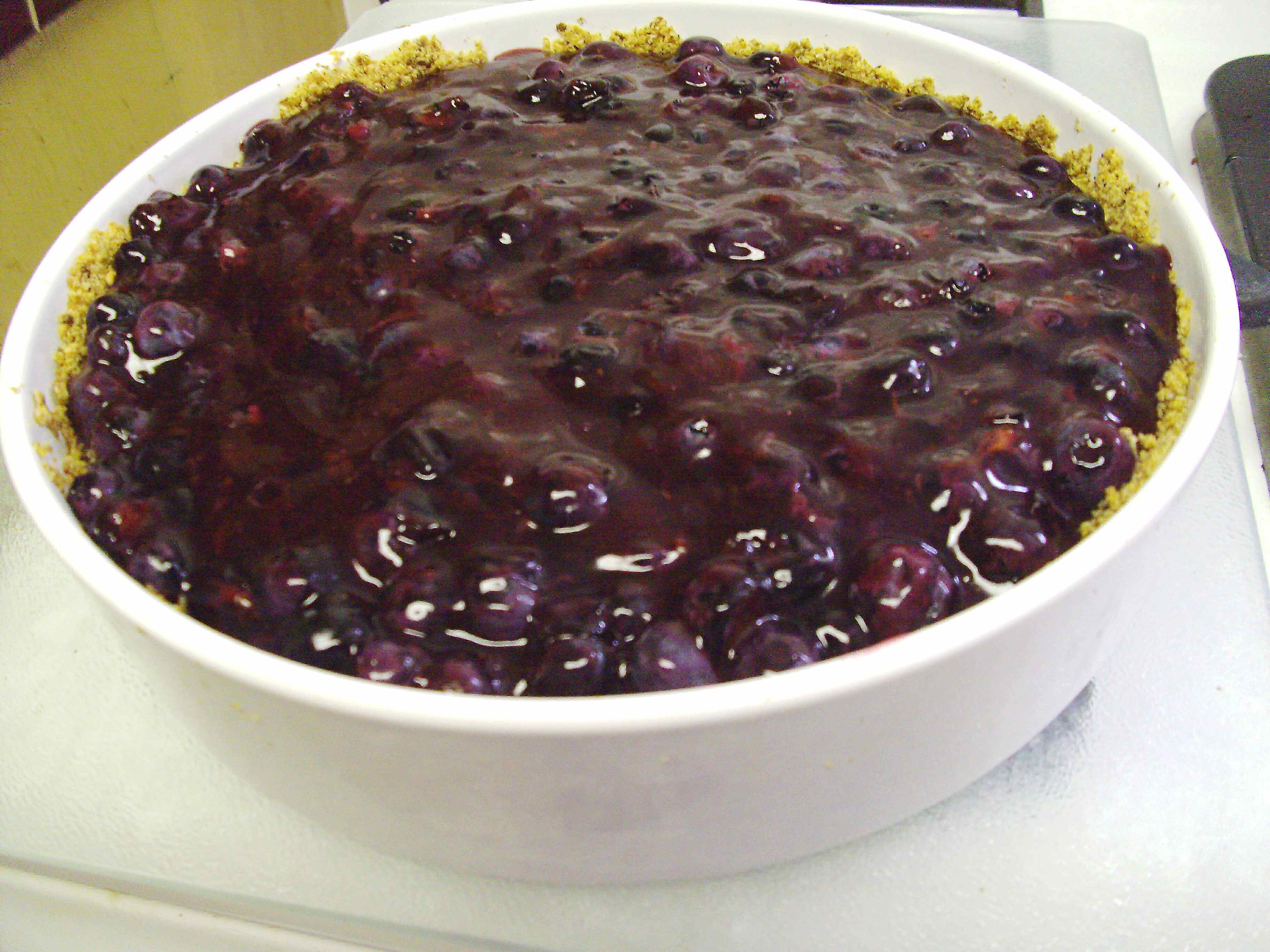
    raw blueberry pie with microwaveable filling and graham cracker crust

    This mostly-raw blueberry pie is a snap to make and very versatile--the filling microwaves in a few minutes, and you don't even have to bake the zippy gingered graham cracker crust--perfect for a hot Fourth of July and all summer long.

  • Recent Posts

  • Contents

  • Archives

  • Now Reading

  • See also my Book Reviews

  • Copyright 2008-2024Slow Food Fast. All writing and images on this blog unless otherwise attributed or set in quotes are the sole property of Slow Food Fast. Please contact DebbieN via the comments form for permissions before reprinting or reproducing any of the material on this blog.

  • ADS AND AFFILIATE LINKS

  • I may post affiliate links to books and movies that I personally review and recommend. Currently I favor Alibris and Vroman's, our terrific and venerable (now past the century mark!) independent bookstore in Pasadena. Or go to your local library--and make sure to support them with actual donations, not just overdue fines (ahem!), because your state probably has cut their budget and hours. Again.

  • In keeping with the disclaimer below, I DO NOT endorse, profit from, or recommend any medications, health treatments, commercial diet plans, supplements or any other such products.

  • DISCLAIMER

  • SlowFoodFast sometimes addresses general public health topics related to nutrition, heart disease, blood pressure, and diabetes. Because this is a blog with a personal point of view, my health and food politics entries often include my opinions on the trends I see, and I try to be as blatant as possible about that. None of these articles should be construed as specific medical advice for an individual case. I do try to keep to findings from well-vetted research sources and large, well-controlled studies, and I try not to sensationalize the science (though if they actually come up with a real cure for Type I diabetes in the next couple of years, I'm gonna be dancing in the streets with a hat that would put Carmen Miranda to shame. Consider yourself warned).

Halloween Candy Carb Guide

Halloween is coming…if you have a diabetic kid, as I do, it’s more difficult than Valentine’s Day to deal with the ups and downs. This year my daughter is in college and making her own decisions, but we’ve been strategizing since her first Halloween with T1D (Type 1 diabetes, the kind that requires insulin round the clock) about how to handle the (several pounds of) candy haul safely without spoiling all the fun.

She will tell you I spoiled it by throwing out one or more pounds (out of 3, more than we even handed out) behind her back a couple of years later, and she still feels ripped off. I will tell you that she eked out at least 2 of her 3 pounds of junk for over a month of getting to eat a piece or two every day with a meal, so what’s she complaining about?

Now of course she prefers actual chocolate, high-percentage, with some actual chocolate flavor instead of light-brown oversweetened waxy mush. But the appeal of trick-or-treating lasted a long time and is probably still going strong.

The point being, people with Type 1 diabetes still like candy and can in fact eat some of it with insulin to cover it, just “in moderation” as the Juvenile Diabetes Research Foundation puts it. In moderation meaning a little at any one time, preferably not on its own but with an actual meal that contains protein and vegetables and fiber to help de-spike it (for Halloween, I suppose I should say, “defang it”). And always with known and limited carb counts and the right amount of insulin to cover it.

Regular candy bars come with nutrition labels and carb counts, and you usually only buy one at a time, but Halloween throws everything off. The little minis and fun-sized and so on? And artificial sweeteners aren’t really the answer, especially not for kids, because there are some emerging health issues. If your kid (or you) have a candy haul with no labels, how do you carb count?

There are three ways to deal and you’ll want them all.

Start with the eyeball method

This is good for when you’re still on the street or at a party, or whenever you don’t have better measurement methods or official info handy…

If it’s a chocolate, the square minis (less than an inch on a side) are about 5 grams of carb apiece, and so are the small wrapped hard candies (“boiled sweets” in the UK) like Brach’s or Kraft peppermints and butterscotch, regular-sized thin 1″ plain lollipops and so on.

The slightly bigger 1 1/2″ long by 1/2″-5/8″ rectangles of standard chocolates are about 8-11 grams apiece.

The JDRF’s annual official guide to Halloween candy carbs

Once you get your haul home, or if you have a smartphone on you, use the official carb counts for any common candies with brand names. The  JDRF Halloween Candy Carb Guide is a PDF list you can print out and stick on the fridge or keep handy on your smartphone. They update it every year to keep it current.

When in doubt, weigh it out

Your best bet for any candy without a label–gummy worms, home-made or unwrapped chocolates, candy-bowl candy, etc.–is to weigh it on a scale that shows grams. Almost anything but sesame halvah (which you’re unlikely to pick up trick-or-treating) will be more than 85% carb by weight. (Halvah is about 50% by weight because it’s half sesame paste, half sugar syrup, but really. It’s kind of the exception.) Regular fudge is similar in texture but in terms of carb, it’s right up there around 90% like most commercial candies.

Most mass-market chocolate candy (i.e., Mars and Hershey, not the high-percentage bars) is 85-95% carb by weight, so if you weigh it in grams, multiply by 0.9 and you’ve got a pretty good estimate at least in reasonable single portions (1-2 pieces of candy, half an ounce or so). Hard candies like peppermints or butterscotch, Jolly Rancher, Lifesavers, etc. are basically 100% carb, so whatever they weigh in grams is the number of grams of carb. Jelly beans and gummy worms are in-between but figure 90-100% carb by weight.

Those percentages are a bit finicky and not everyone needs to know the carb to within a gram or so. If you don’t have a head for math or a calculator handy, just weigh it and figure it’s all carb, keep the portions limited to half an ounce (15-20 grams of candy) and and you won’t be off by more than 1-2 grams of carb.

For more tips on helping a young kid deal with diabetes and candy at Halloween, and more on general carb counting by weight for regular foods, check out the Carb Counts page (or just click the tab at the top of the blog).

Diabetes meets ethnic foodways in new ADA series

Just in at my library are two new cookbooks from the American Diabetes Association. Indian Cuisine Diabetes Cookbook by May Abraham Fridel (©2017, ADA, Inc.)  and The Italian Diabetes Cookbook by Amy Riolo (©2016, ADA, Inc.)  are written by two food authorities in their respective home cuisines. The books are bright, they’re attractive, the food looks decent and authentic.

But what makes them “diabetes cookbooks”? What have they changed–or not–about the recipes and what was the ADA’s role other than simply publishing them? Above all, how helpful are they to an average diabetes or prediabetes patient?

Both books start out with an explanation of their food traditions and what’s generally healthy about them. Both include a variety of food categories for different meals, from appetizers or chaats to mostly-protein “main” dishes to mixed casserole-type dishes to salads, breads, soups, cooked vegetables, fruits, baked sweets and drinks. The Indian cookbook also includes some useful spice mixes and tips on how to handle them, and the Italian one includes some traditional menu choices and tips on choosing wine.

The recipes are generally very DASH Diet-able with an emphasis on a variety of vegetables, beans, whole grains, low-fat dairy, whole fruits and nuts, along with smaller portions of meat and cheese and less added sugar for desserts.

On a closer read, the adaptations to recipes mainly look like sane portion sizing for starches and sweets, reducing or substituting poly- and monounsaturated fats for some of the saturated fats, cutting down excess sugars in sweets and desserts, adding fruit and vegetables, and substituting almond flour and dried fruits for standard flour and sweeteners. The recipes are adjusted just enough to be low in sodium and saturated fat, reasonable on calories, total carbohydrates and added sugars. The portion sizes listed are smaller than what you’d get at an American restaurant or see on a magazine cover these days but they’re close to the amounts people traditionally serve.

So the nutrition stats are a general improvement compared with most current cookbook-style recipes for equivalent dishes, and it looks like the nutrition guides at the bottom of each recipe are relatively accurate given the ingredients. So far so good. If this was the ADA’s doing, I’m all for it.  But it seems obvious to me that it would be better to trust the ADA reviewers’ understanding of diabetes nutrition than either cookbook author’s.

I was surprised to find that the ADA let each of the authors go her own way on the introductions, and that the health explanations tend to be vague and cultural rather than practical. In the Indian cookbook, Fridel describes ayurvedic dietary principles rather than talking about nutrients. Riolo also veers off into a discussion of which appetizer traditionally goes with which first course and how to choose Italian wines in a way that doesn’t really have anything to do with target carb counts or  exchanges for a meal either.

You can discount or admire these things as you please, but you can’t really learn a lot from them diabetes-wise. They’re not really directed toward helping patients put together balanced, carb-controlled meals from the nutrition stats given with the recipes.

Moreover, the ADA’s particular nutrition stats system lists “carbohydrate exchanges” separately from “starch,” “fruit” “vegetable” and “dairy” exchanges, even though most of the ingredients that fall into those categories contain significant carbohydrates. All of them have to be counted for diabetes management.

It’s not clear why their system differs so much in this regard from the Academy of Nutrition and Dietetics’ standard “Choose Your Foods” exchanges system for carb count approximations. It works okay for figuring out standard servings definitions for the major food groups if you’re following the DASH Diet or USDA/HHS MyPlate plans, but it’s not really in keeping with the way endocrinologists and certified diabetes educators train Type I diabetes patients. It makes carb counting and carb planning for meals more complicated than it has to be. That can’t be a good thing.

Also, simply giving the nutrition and exchanges stats for each recipe as it shows up in the book is not the same as teaching a new patient how to carb count or set up a balanced plate. Most of the dishes are mixtures of carb-containing and noncarb-containing ingredients–casseroles, soups with beans, meat and vegetables, biryanis, meatballs containing breadcrumbs, and so on. Those are some of the most difficult foods to estimate carbs for by eye, and it’s not visually obvious–or discussed in any detail–what the authors and their nutrition consultants at the ADA did to adjust these specific recipes.  In this regard the ADA books are no worse than most “diabetes diet” cookbooks and magazine recipe collections, but they’re also not much clearer.

Beginners really would do better to start with the carb and noncarb foods separated on the plate, at least until they get a feel for what to count and how much food to serve.

What both of these books–and any others in the ADA series–could use is a short, clear explanation for how to work through the nutrition stats they give in each recipe and how to plan a nutritionally balanced meal around that dish to reach a target total amount of carbohydrate. A two-page standard ADA primer with a basic diabetes meal plan diagram, some suggested per-meal carb counts or carb exchanges, a balanced-nutrition plate à la ChooseMyPlate.gov,  examples of where to look in the recipes for serving sizes and how to create a full meal from them, how to add things up for a meal’s total carb, etc., would help a lot. It might also be helpful to point out how to rework the meal plan if someone wants more than the standard serving amount or takes second helpings.

All in all, these two cookbooks aren’t terrible as cookbooks, but they’re not nearly as helpful as they could be as diabetes guides.

BMI criticized again…by psychologists?

The International Journal of Obesity has just released a short article by Janet Tomiyama (UCLA) and Jeffrey Hunger (UC-Santa Barbara) et al–a team of psychologists. They analyzed NHANES data from 2005-2012 for about 75,000 individuals, and concluded that BMI status doesn’t correlate well with six concrete markers of cardiovascular and metabolic health–blood pressure, blood triglycerides and cholesterol, blood glucose, insulin resistance, and C-reactive protein. Extrapolating a bit from the NHANES study participant numbers, they conclude that millions of Americans–54 million–have been misclassified as unhealthy due solely to their BMI numbers.

According to their analysis, 47% of the overweight people in the study had healthy status (0-1 of 6 markers) other than their weight. About 30% of obese and even 16% of morbidly obese people had healthy status according to their protocol, whereas about 30% of those in the healthy BMI range had more than one actual cardiovascular or metabolic disease marker that would be ignored if only BMI is considered.

Is this really the death-knell for public concern over weight? Should it be?

Here’s how the UCLA press release puts it (with my emphases in italics):

But a new study led by UCLA psychologists has found that using BMI to gauge health incorrectly labels more than 54 million Americans as “unhealthy,” even though they are not.  […]

“Many people see obesity as a death sentence,” said A. Janet Tomiyama, an assistant professor of psychology in the UCLA College and the study’s lead author. “But the data show there are tens of millions of people who are overweight and obese and are perfectly healthy.”

Incorrectly labels? Perfectly healthy?

The definition for “healthy” used in this study is 0 to 1 known risk factor for CVD and diabetes. But clinically, one risk factor is often enough to be of acute concern, especially if it’s untreated high blood pressure or blood glucose. Those generally need treatment sooner rather than later.

Furthermore, the study as posted on Hunger’s web page excludes obesity and overweight a priori from that count of risk factors for CVD and diabetes. I don’t know the absolute latest research consensus, other than what was in the Dietary Guidelines for Americans Advisory Committee’s report last February, but my general understanding is that weight does show some statistically independent influence on CVD at least. That picture may be changing as we learn more about its interactions with other risk factors, but if it’s still valid, weight should have been counted as one of the existing “known risk factors” along with the other markers and that would have skewed Tomiyama and Hunger’s analysis considerably.

Even without those considerations, the different weight groups classified by BMI cutpoints do in fact show a significant increase in health risk from one category to the next. Turn Hunger and Tomiyama’s percentages around and you see that 70% of people in the 18.5-24.9 healthy BMI range have 0-1 risk marker other than weight; 53% in the 24.9-29.9 overweight range have more than 1 marker, 70% in the 30-35 range have more than 1 marker, and 84% in the 35 and over BMI range have more than one marker other than weight.

Plot those crude percentages and you’ll see a very sharp rise in risk incidence between the healthy and overweight categories, a reversal of fortune from “most people healthy” to “more than half at risk,” with further solidification of “most people at risk” as you venture further into obese and morbidly obese. There’s really no debating that trend, even given the narrow way this team has defined “healthy.” To say nothing of “perfectly healthy.”

Researchers in biomedicine (i.e., physical as opposed to psychological medicine) have recently reexamined whether the current BMI cutpoints defining healthy, overweight, obese and morbidly obese are in the right places to describe most people’s 10-year risk of overt CVD events (heart attacks and stroke), diabetes, or all-causes mortality, or whether BMI is just a continuous gradient of increased risk without definable cutpoints. At last count, the conclusion was that the current statistical best-fit cutpoints are pretty much correct, even though the data for individuals have a pretty big spread (and that each BMI step or number still has incrementally higher risk than the one below).

The upshot: BMI categories are still a pretty good marker of the overall health status of Americans when you’re talking about trends. Crude, yes. Exceptions for athletes with much more muscle than fat, yes. But the numbers are still strongly in favor of using BMI as a general warning flag to check for more specific cardiovascular and metabolic disease markers in individuals.

It’s very odd to see a paper like this coming from a team of behavioral psychologists, which Tomiyama and Hunger are. They’re at least nominally outside their field here, doing a statistical analysis on physical health data, and the paper’s methodology and definitions (along with some of their position statements in the American Journal of Public Health and elsewhere) show a specific agenda toward deconsecrating BMI and downplaying overweight and Continue reading

Frittata on the Rebound

Dr. Lustig’s “Teaching Breakfast” clinical teaching program for families with obese or diabetic children posed a question for me that I didn’t get a chance to test out until this morning. If something with balanced protein and vegetables–say, an omelet–is a better choice than most breakfast cereal, or poptarts, or doughnuts, or whatever most kids are eating before they go to school, how do you get that to be affordable and quick to prepare on a schoolday?

The easiest way to do eggs for several people at a time without overdoing the cholesterol is probably to do a big omelet or scramble and take out some of the yolks. But you might not have time  to do it at the optimal time for the gourmet–that is, right before you’re going to eat it. Not if you’re heading your kid(s) out the door with the daily litany to grab socks, shoes, homework and lunches and not to worry about what color lipstick (or hairstyle, or comic book, depending on age and taste) because you’re going to be late and come on, already.

We didn’t have this problem in my childhood; you either got out to the bus stop on time by yourself or you walked to school in disgrace, because my mother was not going to make our breakfast or lunch (for which we were immensely grateful), or do any big rescues for “emergencies” based on footdragging. And staying home was not an option we wanted to explore. My sister and I could count on the other one telling on us, not to mention the prospect of running into Mom if she came home early or picked up a phone call from the school attendance clerk. Motivation is everything…

But grownups have these dilemmas too. Who wants to be messing about with a frying pan and washing up when you’re trying to get to work? So many of my daughter’s teachers last year could be spotted out in the parking lot of the school right before the first bell, standing by their cars and bolting down an egg mcmuffin-type thing from a fast food drive-through (drive-thru? hate that commercial spelling) with a cup of coffee in the other hand. Quick, seemingly nutritious, but actually horribly high-salt-and-fat-and-calorie-for-what-it-is, and quite expensive too. Not a good daily habit. If you can do eggs and coffee from scratch at home, you’re bound to do them better and a lot cheaper. You could probably save up for a new tablet or pair of theater tickets within weeks, and you might even lose a bit of weight.

So eggs. A frittata has a lot more vegetation in it than a classic French-style omelet, and it’s more sturdy–look at the very solid, nearly stiff Spanish potato-filled version; always served at room temperature in cubes or wedge slices, almost as some kind of potato kugel.

Well, okay, you don’t want a potato frittata if you’re trying to get the nutrition up to snuff without tons of calories or grams of carb. You want some lighter but substantial vegetables so you don’t end up feeling like you swallowed a lead balloon for the rest of the day.

But the good news is that you don’t have to cook and serve it right on the spot. You can do it ahead and stick it in the fridge. If you do it the night before, you can cut it into wedges and microwave one on a plate for 15-30 seconds and you’re ready to go. Or, of course, you can serve it cold–kind of like the classic cold pizza for breakfast, only  better balanced. And most frittatas go well with salsa.

I am not a fan of the kind of isn’t-it-rustic-Italian-or-Provençal glossy magazine frittata instructions that call for frying first and then running under a broiler or what have you. That takes time and heats up the house ( bad in Los Angeles) and probably calls for expensive stovetop-to-oven-friendly cookware, which is usually not [sorry, forgot the “not” when I first posted this] nonstick. A lot of excess fuss for an effect you can perfectly well achieve in an ordinary nonstick frying pan in a couple of minutes on the stovetop, which is how most people who make frittatas at home “authentically” in tiny Italian or Provençal kitchens actually make them. Unless you’re doing a fancy brunch service for 20 diners at a time, in which case it might actually be quicker to do a baked eggs thing in a big casserole and skip the frying. But then I’d hope you were getting paid through the nose for that. Little chance of collecting caterer’s fees at home.

As for the vegetables, cauliflower and zucchini are both very good low-carb, low-calorie stand-ins for potato, and they’re pretty inexpensive and easy to prepare, especially if you have a microwave so you can parcook them on a plate for a minute or so before adding them to the frying pan. That gives you a chance to soften them through quickly and at the same time drain off some of the liquid–they’ll fry faster and won’t make the frittata soggy.

Cauliflower has more fiber, vitamin C and calcium than zucchini, and it’s a bit firmer as well. Zucchini is milder and easier for kids (or adults) who aren’t yet used to eating a variety of vegetables. A frittata like this is also the ideal way to use up that scary-big overgrown zucchini your enthusiastic gardening neighbor gifted you with. Or that someone anonymous parked on your doorstep in the middle of the night.

…It is getting to be the season for that sort of reverse larceny, now that I think about it. Someday I feel it would be right to invent a spring-loaded, siren-enhanced trap for stealth zucchini donors. Something involving on-the-spot forced acceptance of a large cafeteria-style green or orange jello mold with canned fruit cocktail floating in it, faded-pink “cherries” and all, as the price of escape…  Or maybe I’ve just been watching too much “Big Bang Theory” with my daughter this weekend and have started to channel my inner Sheldon. And really, I don’t mind stealth zucchini nearly as much as gifted Meyer lemons.

Okay. Back to the frittata–after all, if you already know how to make a basic omelet, this post is mostly just for entertainment, a mere vehicle for shocking photos of various vegetables that have been foisted off on us by well-meaning friends. It’s enough to make you feel like Wallace & Grommit in “The Curse of the Were-Rabbit”:

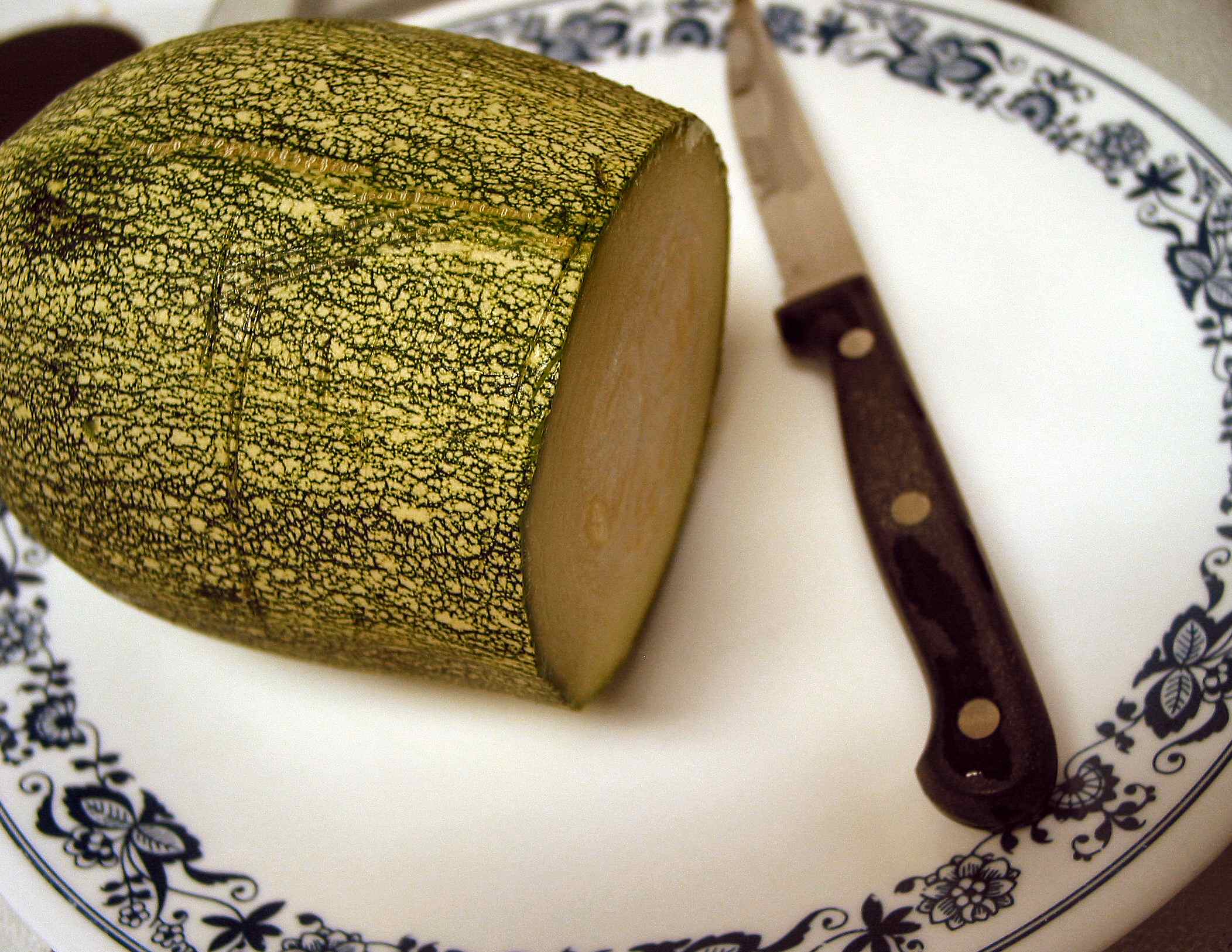
Monster zucchini half

Monster zucchini. This is a dinner plate and steak knife we’re talking about here. And only half the zucchini. The other half of which I’m sure is still stalking the neighborhood in the wee hours of the night.

IMG_8903

Breaking down a zucchini (well, how would YOU go about it? I didn’t have a wooden stake or silver bullet or anything) for a monster omelet.

Continue reading

Artificial sweeteners causing glucose intolerance

A new study on artificial sweeteners published in Nature goes a long way toward explaining one of the most puzzling findings about sweetened drinks in recent years: that regular consumption of even diet sodas is associated with an increased incidence of obesity and Type II diabetes. Surely, if the sweeteners have no calories and negligible carbohydrate, this shouldn’t be happening? Surely people should be losing weight? But the national statistics have shown that it is, and they’re not.

According to a news summary in The Scientist (Sugar Substitutes, Gut Bacteria, and Glucose Intolerance), researchers at the Weizmann Institute of Science in Rehovot, Israel, demonstrated that repeatedly consuming zero-calorie sweeteners like saccharin, sucralose and aspartame (e.g., Sweet ‘N’ Low, Splenda, and NutraSweet) increases a person’s glucose intolerance by causing changes to his or her gut bacteria.

The researchers did extensive testing on mice first–fed them artificially sweetened water for several weeks and compared glucose tolerance and gut flora with those of control groups that received either glucose solution or plain water. The experimental mice had much higher rates of glucose intolerance than either of the control groups, including the one that was fed glucose solution.

They also had very different gut bacteria composition, which the researchers thought might be causing the changes in glucose tolerance. Wiping out the gut bacteria of control mice with antibiotics and then repopulating with the gut bacteria from sweetener-fed mice caused glucose intolerance in the normally fed mice.

The researchers repeated their experiments on healthy human subjects, and they got the same dramatic results. The timeframe for measurable changes in glucose tolerance was within as little as six days for one of the tests.

Admittedly, the researchers were dosing their subjects with sweetener concentrations at the highest levels currently deemed safe by the FDA. So if you only consume these sweeteners occasionally and in small quantity–say, chewing sugarless gum once in a while–you might not be causing a drastic change in your gut bacteria or glucose tolerance.

But so many people in the US consume diet sodas and artificially sweetened teas and so on in large quantity on a daily basis that it’s possible they’re coming close to the levels used in these experiments. If you consume even half the maximum defined “safe” daily level, you might well be impairing your glucose tolerance significantly. But there may not be a safe level. There’s no saying what level–if any–of sweetener per day is low enough not to change gut bacteria and raise glucose intolerance–it may be a matter of dose or it may be a matter of how long and how regularly people consume these sweeteners.

Glucose tolerance is a measure of your body’s ability to supply insulin quickly and at the right level whenever you eat or drink something with starches or sugars. Part of the gut’s function is to release glucose into the bloodstream, but Continue reading

Beating sugar shock

A new dietary sugar intake study from the University of Utah shows what happens when mice eat the kind of diet many Americans now eat:  25% of total calories in added sugars and high-fructose corn syrup (HFCS). The results were chilling: females died at twice the rate of controls, while males lost fertility and territorial instinct. And as the researchers pointed out when the corn and sugar associations tried to downplay the significance and shuffle blame, city mice tend to eat what humans near them eat. Yeah.

So of course, as the mother of a diabetic kid with a known and prominent sweet tooth (that goes for both of us, but we also love vegetables, or we’d never survive), I have to ask, how do you keep your added sugar calories under maybe 13% instead of 25%?

I don’t have a simple answer to this, particularly as I’ve discovered that most of my friends don’t cook anymore, if they ever did. Most of them think making soup means opening a can and dinner means ordering pizza. Snack, and occasionally breakfast too, is a power bar (shudder). All vegetables are precut, and many die in the fridge of sad neglect. They have good intentions; Whole Foods rubs its hands with glee when they see them wander in.

And although they’re smart, they have a very hard time wrapping their heads around the differences between added sugar, “naturally”-sourced or “unprocessed” brown sugar, sugars naturally present in whole unprocessed foods…agave syrup, power bars, “sugar-free” cookies…blah blah blah…all the gimmicks, in other words.

They don’t really understand the noncommercial measure that counts most for actual diabetics: total grams of carbohydrate in the current meal. Because that’s what you have to calculate and dose insulin for. Not just the sugars.

But even then, you don’t calculate for the whole day’s eating and just give one big dose based on a guess of what you might eat later. You calculate meal by meal and give a dose of short-acting insulin for that meal.

Calculating added sugar calories against total calories in a day is really difficult when you’re the mouse, so to speak. That’s the way nutrition researchers think about measuring the effects of your diet. It’s not the way people think as they’re getting ready to eat.

Especially if you’re eating out or you don’t have every food label right in front of you or you don’t walk around every minute with a meticulous food diary.  It’s like doing taxes when all you want to do is choose and eat a decent lunch.

WHAT DOES WORK?

I’d say, thinking like a diabetic. Or rather, in this case, like a diabetic’s mom.

  • First, definitely go meal-by-meal. Be sane.
  • Second, in any given meal–or snack–estimate the sugar grams as a fraction of the total carb grams, not the total calories, which can come from fat as well as carb. Too confusing.
  • Third, just count all the sweet stuff together. The whole idea of comparing added sugar vs. total consumed sugar is a pain in the tush to figure out. Once it’s in your system, it’s all sugar, and popular New Age-y fantasies about agave syrup and Hawaiian brown sugar and palm sugar being “natural” and “healthier” tend to fog things even worse.
  • Count fresh fruit, plain milk and yogurt-these are also in the form of sugar, not starch–and just figure that fresh fruit, milk and yogurt are the best choices (duh) per serving because they’re less concentrated in sugars than candy, pies, cakes, cookies, snack bars, power bars and …. syrup.
  • And then really look at the nutrition labels for anything packaged or processed. Including vegetables. If nothing else, it’ll be obvious why I rant against carrot juice instead of whole carrots, for example…

The first step for any of this, though is to know how much carb you’re actually eating.

Step 0. Know thou thy carbs. Continue reading

Pinned for Purim!

Thanks to Yael Shuval for choosing my Low-Carb Hamantaschen for her board at Pinterest.com.

Three years ago I developed almond-meal based hamantaschen for my daughter, who had been diagnosed with Type I diabetes only a couple of weeks earlier and needed something that was low enough in carb that (at the time, anyway) she could actually have one or two when all the other kids were having theirs and without having to get an extra shot of insulin.

Almond meal has only about one-fourth as much carbohydrate per cup  as wheat flour, so it seemed like a good substitute. To our surprise, although the dough was a little finicky to work with, the hamantaschen came out tasting pretty good, and they were indeed pretty low carb, about 4-5 grams per mini-hamantaschen. Granted, they were also pretty small, but it was a symbolic triumph in the first few weeks and made us all feel like being diabetic wasn’t going to be the end of having fun.

Now that my daughter is on an insulin pump, getting an extra shot is no big deal, though in our experience the pitfall is that it’s now just a little too easy, especially for a preteen, to “eat anything you want, at any time, without thinking about it, as long as you program the insulin for it” which is one of the less responsible marketing messages in Medtronic’s brochure for teenagers (note: the pump itself is pretty good, but it still doesn’t mean you don’t have to be careful about what you’re eating). Those sour gummy heart candies the teacher handed out for snack earlier this week and left on my daughter’s desk, for instance….well, candy never seems like as much food as it really is, and I think my daughter gained a valuable lesson when she added up what she’d really eaten…she wouldn’t be the first one.

It’s always good to have a general plan in place for holiday eating so you don’t overdo the treats or eat an entire meal’s worth of carb in just a few cookies or candies or whatever…what can I say, we’re working on it.

Still. In the last year or two I’ve mostly gone back to making standard hamantaschen based on Joan Nathan’s classic cookie-dough recipe, which I like a lot and which looks and tastes much, much better than the dry, pasty-white horrors at the annual Purim carnival.

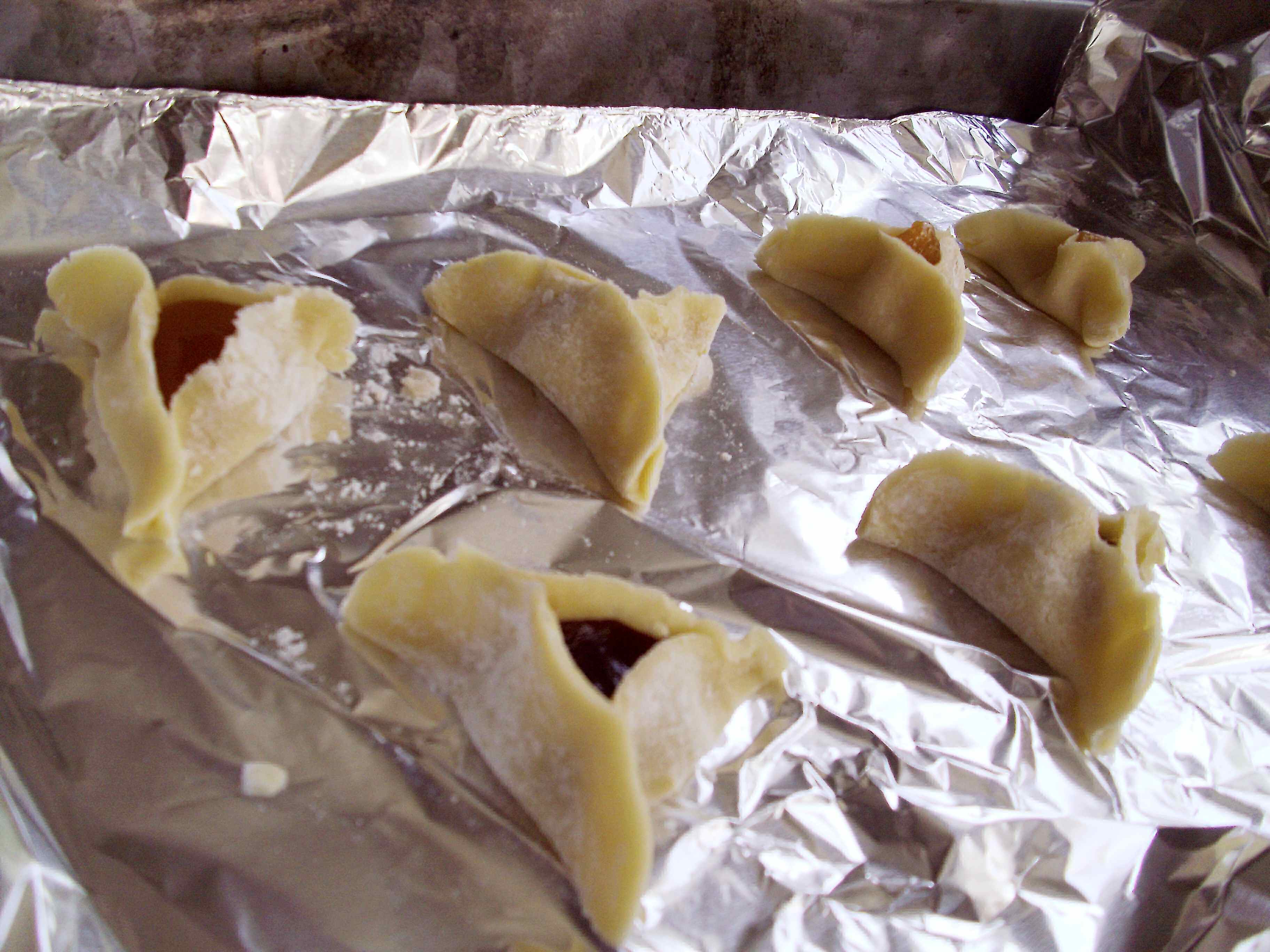
hamantaschen1

What I like about the standard flour-based recipe, other than that it tastes and looks good and is easy to work with, is that I can roll the dough out very thin and get crisp, delicate hamantaschen that are a decent cookie size but still hold together nicely and are not extravagantly carb-laden, particularly if the fillings are reasonable and you don’t eat ten at a time (the big challenge). They’re not as low-carb as the almond meal ones, but they still work out okay–about 7 grams apiece for a 1.5-2″ cookie. They taste good even made with pareve (nondairy) margarine instead of butter.

The LA-area idea of hamantaschen usually involves M&Ms, colored sprinkles, anything completely artificial. I bet gummy sour hearts (this afternoon’s culprit) would be a huge hit too. I don’t think they’ve heard of either prune or poppyseed out here in at least a generation.

Traditional fruit or nut fillings are a much more decent bet for carb, and they taste better (and look nicer too, because I’m not 6 years old and don’t insist on rainbow colors anymore). They’re also easy to make from scratch in a microwave or on the stove top so that you can decide how much sugar to put in them. Continue reading

Paying the piper too young

This winter break we traveled east to celebrate with friends who are as close as family. Our daughters hit it off immediately as they do every couple of years when we manage to get back together. But the contrast between them had become striking in only two years away: our daughter, although (or perhaps because) she’s Type I diabetic and has to pay attention to what she’s eating, is growing up basically healthy. Our friends’ daughter, a few months older, is shorter but 25 pounds heavier and her mother told me she’s spent the past year taking her to a slew of medical specialists to figure out why she’s suddenly having so much pain in her legs and feet.

This girl is wonderful and energetic, full of beans, a live wire, and smart as a whip, but she doesn’t last long on the the gym floor at school, and worse yet, she had to leave the dance floor at her own celebration just as the dj was getting started because her feet and legs started hurting so much she had to sit down within minutes. The night before, she’d taken four ibuprofens for pain in a single day–just from walking around at school and later at the hotel.

So far nobody’s found much except low vitamin D and iron. The spine guy, the neurologist, nobody’s found anything they think could be doing this. The pain clinic is apparently all too ready to dish out a laundry list of pills nobody should be taking at age 13–among them antidepressants, despite the fact that they haven’t found a cause for what is obviously physical pain, and that nobody’s actually diagnosed major clinical depression. My friend is beyond worried for her daughter and exasperated at what is looking like the classic runaround from an otherwise very highly regarded medical system.

Continue reading

New York big-soda ban, long overdue

All the food behavioral experts on both coasts seem to be whining that New York City’s new ban on oversized sodas “won’t work”. Well, all the experts in New York and LA. Even Michelle Obama has backed off delicately from taking a position on it. Oy. People!

The Washington Post‘s columnists Ruth Marcus and Alexandra Petri have two different takes–one more serious but employing Yiddish to describe the psychology of the whole protest, the second, despite lack of Yiddish, funnier about people who insist on their right to drink a whole tubful of soda at a go. So I’m going to take the middle road–oh, screw it, I’m going to use Yiddish if I feel like it and still be hilarious despite my gravitas. Because it really is hilarious. If only it weren’t so sad.

Jon Stewart is quoted as kvetching that Mayor Bloomberg’s proposed ban is the only thing that can make him agree with conservatives. David Just, partner expert to Brian Wansink, says people “want” their big drinks and will surely just find a way to work around the restrictions.

Well, maybe a few will really want 20+ ounces of soda at a sitting badly enough to go back to the concession stands and wait in line three times to get 3 separate drinks of 8 ounces or so. Or juggle 3 small bottles back to wherever they’re drinking it all. But I’m betting most people won’t.

Why do people supposedly “want” such huge drinks in the first place? The oversized Big Gulp-style cups were a marketing ploy that started about 15-20 years ago at the burger franchises and the 7-Elevens. They were supposed to look like a huge bargain–for an extra however many cents, they’d double the amount of soda they gave you. What a deal! And the ploy worked–created a habit.

Most people don’t really need or even want that much soda, but as many of my coworkers–women especially–used to say, shrugging helplessly, “Well, I don’t really want this much, but this is the only size they sell.” And you really can’t split a 20-ounce with ice back at the office unless you have cups. Everyone will wonder whether you got tempted on the way back and started sipping from it. Eeeewww. You can’t save it in the fridge for later either because it goes flat pretty quickly.

The soda companies got the concessions for school cafeterias–why not brand the captive audience early–in exchange for money the schools have lost from their cities and states anytime those governments wanted to hand out tax relief to corporations–like soda bottling plants. A different version of “eat local”.

By now, people are so used to the soda bloat they’ve started to decide it’s their right to drink bigger than their stomachs–or bladders–can handle. And it is–you’re allowed to be stupid if you want to.  Only problem is, did the soda companies also offer to build more bathrooms to handle the outflow?

So I say Mayor Bloomberg, who’s in charge of the biggest city in America, is doing his city a huge favor by trying to get the soda industry’s claws back out of them. There’s no way the industry will scale back its sizes voluntarily, especially not if they can get experts like David Just to voice their incredible “the-consumer’s-the-one-who-wants-the-elephant-sized-drinks-we’re-just-providing-it-for-them” act.

When you get the big gulp-style Coke, how much of it are you really tasting? Maybe the first third of it? Maybe less. After that, are you drinking it while reading your computer screen? Driving? Watching tv or a movie? Would you really want someone to film–and then post on YouTube–footage of you slurping mindlessly throughout the day?

If you’re not paying attention to what you drink, is it worth drinking just because it’s there? Same for eating. And David Just and Brian Wansink–weren’t these the guys who did all that people-eat-30-percent-more-when-parked-in-front-of-a-tv-screen-than-at-the-table research? I do believe they were.

So getting back to a small Coke that you’ll actually pay enough attention to to taste? That might be worthwhile. Then you can think about what you’re tasting and decide if it’s good enough to keep drinking. Or whether, like me, you’d rather wait until next Passover, when Coke and other big soda manufacturers put out limited editions made with cane sugar instead of corn syrup.

I haven’t been a big soda drinker for years, and I usually don’t miss it at all. It was astoundingly easy to give up, and my teeth have thanked me ever since. On the rare occasion when I have a little at a party, my preferred soda is and always was definitely root beer or ginger ale, not cola, and usually I can only take about half a glass–it’s all way too sweet, even with ice. So I’m not the right person to sympathize with habitual soda drinkers–I just can’t get into it, and diet is gross.

But having tasted the sugar version of both Coke and Pepsi, I can say the difference it makes to both versions is amazing–much cleaner flavor, and a little is enough to be happy with it.

Meanwhile, a better idea would be to drink water instead of the big-3 flavors and save your shekels for small niche sodas with better, realer, more interesting flavors as an occasional treat.

Case in point: a summer soda tasting event in Los Angeles to raise money to reopen exhibitions from the shuttered Southwest Museum in Highland Park. The Southwest museum had wonderful Native American collections–kachinas, headdresses, Bakelite jewelry of the 1930s, photos, and much more. It was taken over by the Autry Museum a couple of years ago, but has remained dormant since then with a lot of its collections in storage and out of the public eye. I was fortunate enough to have taken my husband and daughter there about 10 years ago, before it closed.

Galco’s Soda Pop Stop, an independent soda market run by curator John Nese in Highland Park, is hosting the soda tasting–his second–with something like 500 different small brands, including plenty of nostalgia brands (though no NeHi Grape–don’t know if they’re still around) and imports.

According to a profile of Nese in The Quarterly Magazine, Galco’s motto is “Freedom of Choice”, with flavors like coffee, bananas, spruce, cucumber, mint julep, and many others–check out their huge soda list, which includes ingredients, prices and bottle sizes! Amazing. Maybe that’s the kind of freedom soda fans should be going for. Amazingly enough, most of these flavors don’t come in 20-ounce monstrosities, or even in plastic.

If you’re in Los Angeles on July 22, check it out–tickets are only $12 in advance, $15 the day of the event, and you can get them at Galco’s on York Blvd. or through the Friends of the Southwest Museum web site.

Raw Dough Carbs: Playing for Pizza, Calculating for Calzone

calzone

Calzone–one of my favorite Italian dishes–is extremely easy to make once you’ve got some basic pizza or bread dough risen and ready to shape. Flatten out individual rounds of dough, mix up a ricotta-based or roasted vegetable filling, fill and fold the dough over into half-moons, crimp the edges, brush with olive oil, and bake on a sheet in a hot oven until they’re puffed and golden. A satisfying but fairly light supper dish, especially if you have a good thick spicy tomato sauce to go with it and a salad on the side.

But even if you don’t, they’re a good consolation on a Sunday night for a kid with frustratingly advanced math homework the teacher didn’t quite prepare himself or the class for (11th-grade precalculus techniques popping up in a sheet of homework for 11-year-olds? The dangers of pulling your homework handouts from a math site on the internet. I keep reminding myself that he’s young yet). All I can say is, you know you’re in trouble when the heartburn is coming from the homework and not the food.

Grrrr. I’m almost over it. Anyway, here’s a much easier calculation trick that doesn’t require factorials…

The trick about making dinner from homemade dough is that the kid in question is diabetic and needs to know how many grams of carb she’s going to get in her calzone. Pizza, calzone, any kind of handmade entrée with dough plus noncarb ingredients, is tricky to calculate carbs for because you can’t easily tell by eye how much bread you’re getting in a serving. Check out any of the commercial pizza companies’ nutrition stats per slice–they’ll often state carbs as a range rather than a set value. How thick the dough is, how large the slice, etc, can really throw things off. Most people don’t need to know more precisely than “35-50 grams per slice”, but diabetics really do. Fifteen grams is a pretty big variation.

So how do you deal with it at home? If you’re making lasagne or stuffed shells or spanakopita, you can calculate the carb by counting the noodles or sheets of fillo dough you use and looking on the package nutrition label, then figuring a total carb count for the tray and dividing by the number of portions. A little tedious, but manageable.

Bread that’s already baked is also easy enough to calculate for–just weigh it out on a food scale in grams and figure 50 percent carb by weight. Most nonsweetened bread is pretty consistent, whatever density its texture. Weigh out a 70-gram piece of bread, and you’re usually looking at 35 grams of carb.

But for calzone or pizza you’re dealing with a bowl of wet dough to start, and once the dish is baked, it’s got lots of other stuff on or in it so you won’t be able to weigh it cooked and really know what carbs you’ve got. You need to test a portion of your raw dough, only raw dough is heavier than it will be once baked. Depending how wet the dough is, the proportion of carb could vary from a little less than half to a lot less.

Weighing a sample of raw dough to figure carbs after baking

Weighing a sample of raw dough to figure carbs after baking

The only thing to do is test a bit of dough by weighing it out raw, then reweighing it once it’s baked. Doing this in a conventional oven just for a single test ball of dough can be time-consuming unless you’re already heating it for the main event. Still, you want to get ahead with making the actual calzone so dinner will be sometime before midnight.

Enter the microwave. Yes, really. A nectarine-sized ball of dough, say 100 grams raw weight, will cook through lightly in 40-50 seconds in the microwave if you put it on a saucer and punch the “nuke” button. It’ll still be white and pale, but it’ll have risen fairly well to the size of a large dinner roll and won’t have gooey raw spots (you can check by breaking it open, just watch out for steam). Then just pop it in the toaster oven for about 5 minutes and it’s browned and baked through. When you reweigh it, you’ll know how much a 100-gram ball of your dough weighs cooked, and then figure 50 percent of that weight for carbs.

Aside: This nuke-and-toast scheme works pretty well for making a fast sandwich roll from a bowl of dough in the fridge. When I first came up with the idea, it was with great reluctance, because my only previous experience with microwaving bread had been the horrible, horrible mistake of Continue reading