
• Enter your email address to subscribe to this blog and receive notifications of new posts by email.

    Join 241 other subscribers
  • Noshing on

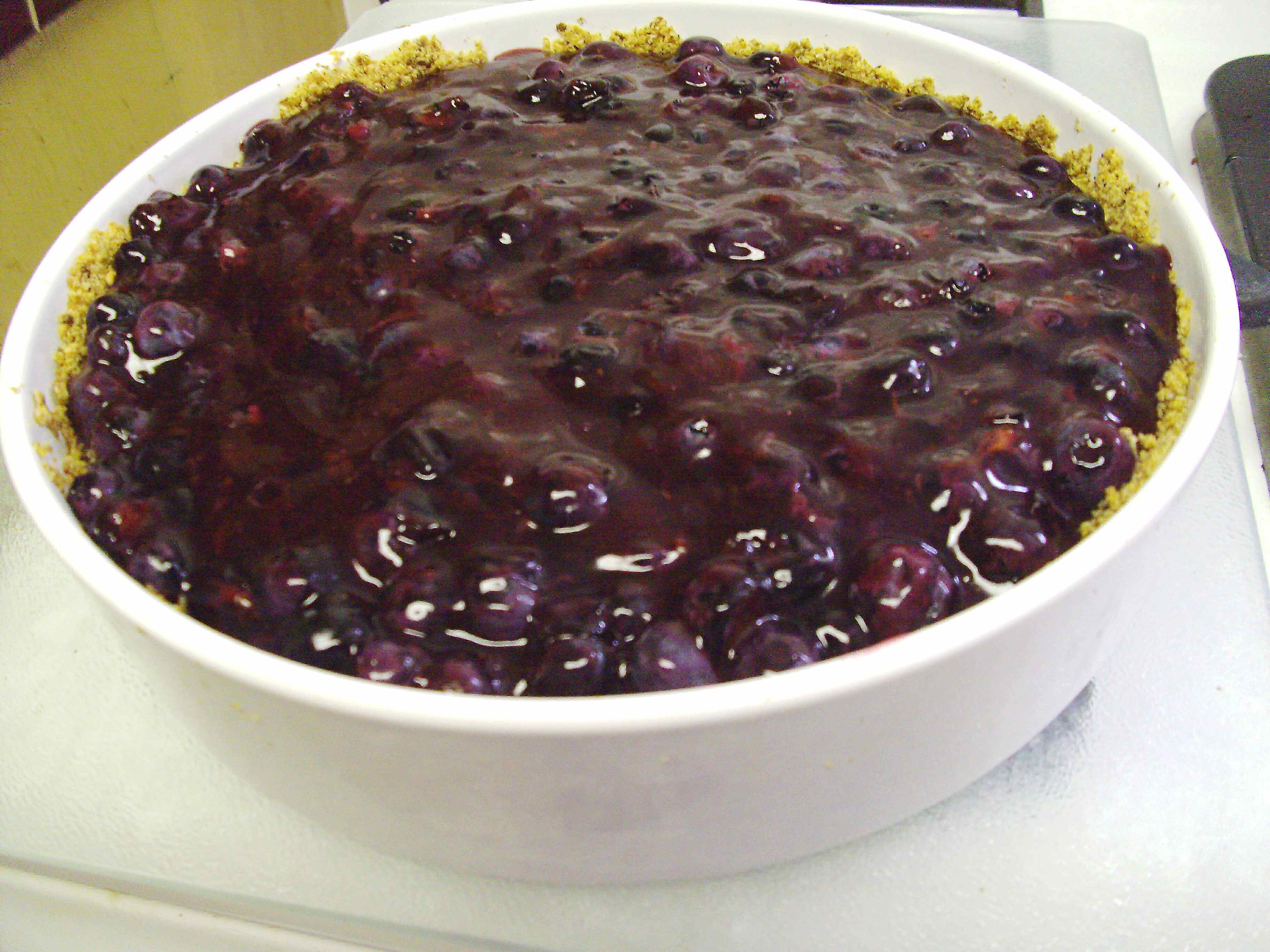
    raw blueberry pie with microwaveable filling and graham cracker crust

    This mostly-raw blueberry pie is a snap to make and very versatile--the filling microwaves in a few minutes, and you don't even have to bake the zippy gingered graham cracker crust--perfect for a hot Fourth of July and all summer long.

  • Recent Posts

  • Contents

  • Archives

  • Now Reading

  • See also my Book Reviews

  • Copyright 2008-2024Slow Food Fast. All writing and images on this blog unless otherwise attributed or set in quotes are the sole property of Slow Food Fast. Please contact DebbieN via the comments form for permissions before reprinting or reproducing any of the material on this blog.

  • ADS AND AFFILIATE LINKS

  • I may post affiliate links to books and movies that I personally review and recommend. Currently I favor Alibris and Vroman's, our terrific and venerable (now past the century mark!) independent bookstore in Pasadena. Or go to your local library--and make sure to support them with actual donations, not just overdue fines (ahem!), because your state probably has cut their budget and hours. Again.

  • In keeping with the disclaimer below, I DO NOT endorse, profit from, or recommend any medications, health treatments, commercial diet plans, supplements or any other such products.

  • DISCLAIMER

  • SlowFoodFast sometimes addresses general public health topics related to nutrition, heart disease, blood pressure, and diabetes. Because this is a blog with a personal point of view, my health and food politics entries often include my opinions on the trends I see, and I try to be as blatant as possible about that. None of these articles should be construed as specific medical advice for an individual case. I do try to keep to findings from well-vetted research sources and large, well-controlled studies, and I try not to sensationalize the science (though if they actually come up with a real cure for Type I diabetes in the next couple of years, I'm gonna be dancing in the streets with a hat that would put Carmen Miranda to shame. Consider yourself warned).

“Deli Man” is out on DVD

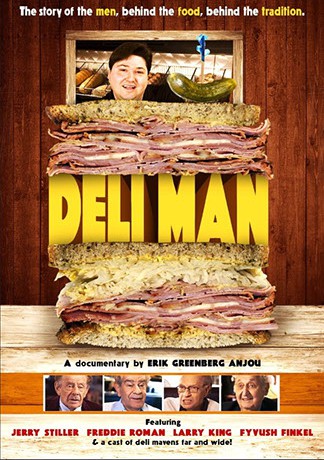
"Deli Man" DVD

Source: Cohen Media Group, delimanmovie.com

Well–that’s it, really. Need I say more? Actually, yes, there are a few new things to say other than to keep recommending that you see Deli Man by getting yourself a copy of it and screening it with all your favorite people who didn’t get to see it last spring.

In the half a year or so since it started showing up in theaters, David “Ziggy” Gruber (the deli owner whose story anchors the film) and director Erik Greenberg Anjou have done a lot of interviews together to promote it–they did one on Fox News Radio early on, and then more recently a long, in-depth interview on YouTube with Judith Gelman Myers, film critic for Hadassah Magazine.

Gruber in particular emerges in these interviews as an insightful observer on modern Jewish food and culture, its history and the history of the restaurant business as a whole. It’s an overtly intellectual and analytical side of him that wasn’t as apparent in the film.

Deli Man focused primarily on his daily life, the stresses and rewards of running a deli, his sense of humor and his gift for schmoozing with his customers. To provide a national context in the documentary, Anjou filmed and cut in interviews with the owners and customers of the historic big-name New York delis, and two or three of the younger generation of deli men from Toronto and San Francisco. Much of the historical perspective and big-picture analysis he assigned to David Sax, Michael Wex, and Jane Ziegler, three prominent authors on Jewish immigrant culture. But Anjou seems to recognize that if he hadn’t divided up the roles in service to the pace and emotional/informational balance of the film, Gruber could easily have taken a seat amongst the trained historians.

Like most of the other deli owners featured, Gruber is not an academic by inclination–too much personality and too little sitzfleisch. As he tells Myers, he knew from a very young age that he wanted to be a cook and from his high school grades he was not necessarily ever going to be college material. He’s underselling himself a little here (well–not in every respect; there are a few moments in the interview where he breaks out and guarantees the audience that if they try his blintzes they’ll be hooked for life, or words to that effect).

But when he gets serious, which is often, the interviews bring out his head for detail and his broad-based perspective on Jewish food culture and the restaurant industry as a whole. These are things he knows a great deal about, both intellectually and as an active participant, but didn’t always get a chance to voice in the film, and which weren’t brought out by the other commentators. You’re suddenly reminded that he did intensive training at one of the best culinary schools in Europe and worked in a Michelin-starred restaurant in France for several years before coming back to the US, and he’s been keeping a keen eye on market trends, business and people ever since.

So the interviews, which might otherwise have been standard pleasant-but-bland film recaps, become much more engaging and worth a listen even if you’ve already seen Deli Man. And doing them in tandem with Gruber is one of the smartest things Anjou could have done.

Movie and a Pickle: “Deli Man”

About a week ago, my husband and I decided we were finally grown up enough to take ourselves out to a movie (and leave our slightly attitudinal teenager home to watch some sort of awful teen tv series without us). We’d heard from friends about a documentary called Deli Man that was showing at reasonable hours downtown, and it sounded not bad. We found parking at the bookstore next to the theater, ignored most of the threatening new signs about being towed if we didn’t shop the bookstore and get back out within 90 minutes (it was a Sunday evening, and the bookstore was closing early), and walked into a sparsely attended theater.

Which (the sparseness, I mean) was a shame for the theater and everybody who wasn’t there more than it was for us, because Deli Man is terrific.

You’ll laugh, you’ll cry, you’ll wonder what a Cordon Bleu-trained chef is doing in Houston kibbitzing with his customers in a strip mall deli while sweating the details behind the counter and agonizing over the memory of his grandfather’s idyllic but lost gravy recipe as he serves up gargantuan matzah balls, stuffed chops, and sandwiches you need to be a python to get your jaws around. Cue Jerry Stiller, Fyvush Finkel, Larry King and other New Yawk old-timers, the local Jewish community fans in Houston, and some of the best–and hopefully not last–deli men in the business.

See the trailer on YouTube.com


In between the semi-humorous profile of David “Ziggy” Gruber, third-generation deli man and one of the last under 50, plus (of course) all the kibbitzing from family and friends who wonder when and if he’s ever going to be marriage material, you get interviews with the old hands who themselves are sons and grandsons of the original great deli owners.

Sarge’s, 2nd Avenue Deli, Stage Deli, Carnegie Deli, Ben’s Best–most of the guys who are still in business and some who aren’t. They’re famous, they’re well-established, they dress nice…they’re still working backbreaking hours themselves and pushing their kids to get out and go to law school or into engineering because it’s such a hands-on business and training juniors with the right attitude is so difficult. And attitude is what counts.

David Sax (Save the Deli), Jane Ziegelman (97 Orchard) and Michael Wex (Born to Kvetch and Just Say Nu) trace the roots of the deli through the waves of Jewish immigration on the Lower East Side, the move to Jewish-style as opposed to kosher, and the decline in our times of a great old-neighborhood tradition as the old urban neighborhoods changed hands and Jews struck out for the suburbs.

You get a chillingly clear picture of why the number of Jewish delis has shrunk from thousands in New York alone after WWII to only about 150 nationwide today. At the same time you see why the deli guys hang in there–and so do their customers.

Jewish delis, kosher or not, are not the usual kind of American casual restaurant. They’re extremely personal and familial, as Jews still tend to be with each other. The old-style Jewish waiters would argue a lot; sometimes they’d tell you rather than ask what you were going to eat, and it became a classic shtick. But as Gruber pointed out on Alan Colmes’ Fox News Radio interview (and no, I can’t believe I’m providing a link to anything Fox either, but it was a good interview), the days of the cranky waiter are more or less gone.

And on the other hand, delis still deliver more for the money than the nouveau-hip places with $50 plates and $18 drinkies. The regular customers expect more–not necessarily more food (though that’s an impression you might get from the outsized portions), but for the deli owners and waiters to know them, talk with them, argue even–and remember exactly how they like their food.

We come from a culture that thrives on argument as a form of intimacy. If you’re not arguing (lightly, not nastily) with your wife, husband, kids, friends, shul members, and pretty much everyone else you care about…how can they be sure you’re really paying attention? It’s become a lost art, though–even Jews of my generation cringe when we hear our parents bellowing cheerfully up and down the stairs at each other. I had to train my genteelly brought up husband that there’s a huge difference between yelling out to him from the far end of the house and yelling at him, and I expected him to just yell back the answer and not get mad or insulted. He’s almost got it by now…

That kind of personal is what makes the give and take between kvetchy customers and ebullient owners work so well and it adds ta’am, flavor, to the whole experience of going to a deli. They know you, and they pay attention whether you’re a CEO or an average Joe.  You can’t get that in a chain restaurant; you don’t get it at a three-star haute palace.

Delis have also, at their best, been the kinds of places where seemingly hard-nosed owners were known to sustain their neighborhoods in hard times, sometimes secretly comping a free meal if a customer was out of work.

Deli Man is deliberately and intelligently personal even as it traces the history, the economics, the fans among the Broadway stars, and the paradoxical Americanness of the Jewish deli. There are plenty of old black-and-white vintage photos, a bittersweet tour of the Lower East Side and its remnants, and klezmer music from one of the modern greats. Far from becoming a Ken Burns wannabe, though, it’s funny, wry, well-paced, modern–and most of all, it gets to the heart of what makes a deli matter. From start to finish, this is a documentary that cuts the mustard. In fact, my only serious kvetch is this: too much pastrami, not enough corned beef.

Or pickles. So in honor of this movie I’m trying out a long-planned jar of pickled green tomatoes, something I remember with fondness and bemusement from my childhood. Whenever my grandparents would come down to Virginia to visit us, they’d schlep bags stuffed with good tough breads, real bagels, packets of corned beef and pastrami. Along with precariously packed containers–were they plastic tubs, or were they, as I remember, merely stapled glassine Continue reading