
• Enter your email address to subscribe to this blog and receive notifications of new posts by email.

    Join 241 other subscribers
  • Noshing on

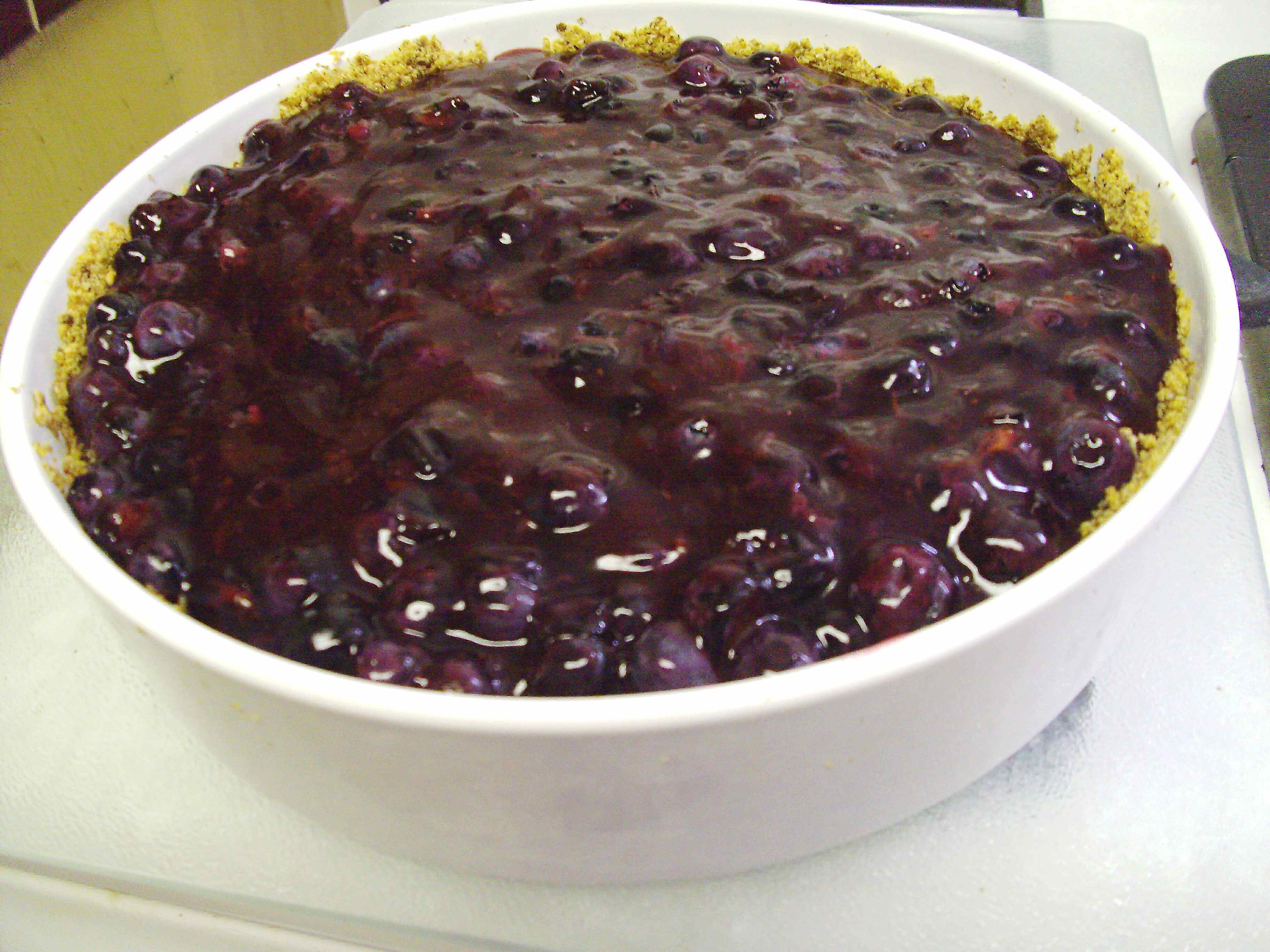
    raw blueberry pie with microwaveable filling and graham cracker crust

    This mostly-raw blueberry pie is a snap to make and very versatile--the filling microwaves in a few minutes, and you don't even have to bake the zippy gingered graham cracker crust--perfect for a hot Fourth of July and all summer long.

  • Recent Posts

  • Contents

  • Archives

  • Now Reading

  • See also my Book Reviews

  • Copyright 2008-2024Slow Food Fast. All writing and images on this blog unless otherwise attributed or set in quotes are the sole property of Slow Food Fast. Please contact DebbieN via the comments form for permissions before reprinting or reproducing any of the material on this blog.

  • ADS AND AFFILIATE LINKS

  • I may post affiliate links to books and movies that I personally review and recommend. Currently I favor Alibris and Vroman's, our terrific and venerable (now past the century mark!) independent bookstore in Pasadena. Or go to your local library--and make sure to support them with actual donations, not just overdue fines (ahem!), because your state probably has cut their budget and hours. Again.

  • In keeping with the disclaimer below, I DO NOT endorse, profit from, or recommend any medications, health treatments, commercial diet plans, supplements or any other such products.

  • DISCLAIMER

  • SlowFoodFast sometimes addresses general public health topics related to nutrition, heart disease, blood pressure, and diabetes. Because this is a blog with a personal point of view, my health and food politics entries often include my opinions on the trends I see, and I try to be as blatant as possible about that. None of these articles should be construed as specific medical advice for an individual case. I do try to keep to findings from well-vetted research sources and large, well-controlled studies, and I try not to sensationalize the science (though if they actually come up with a real cure for Type I diabetes in the next couple of years, I'm gonna be dancing in the streets with a hat that would put Carmen Miranda to shame. Consider yourself warned).

Unappetizing: Nutrition “Awareness” on Top Chef

Perhaps it’s a futile attempt to understand how restaurant chefs think about food and nutrition, but lately I’ve been watching the very warped “Top Chef” episodes for the last couple of seasons–easy to do online. I can’t help wondering not only at the contestants, all of whom seem to display basic ignorance of what used to be called the “Four Food Groups,” but at some of the judges who fault them on nutritional challenges.

In this season there have been two, the School Lunch Challenge and–not that the judges even thought about it as a nutritional challenge, which they should have–the Baby Food Challenge. In both, the judges seemed at least as lacking in nutritional knowledge as the contestants, and in some aspects even worse.

The School Lunch Challenge brought out scathing comments on the show and on a number of blogs, particularly when the bottom-ranked chef, who went home for her gaffe, attempted to make a banana pudding palatable by adding sugar. Tom Colicchio made a big deal of her adding two pounds of sugar to the pudding–which was to feed 50 students.

And admittedly it’s not great for nutrition, but it was hardly the disaster he and the other judges made out. If anyone had bothered to whip out a calculator and known how to use it for pounds-to-kilos conversions, they’d have discovered that the two pounds of sugar amounts to 0.91 kilos. Or 909 grams, to be a little more precise (which we shouldn’t, the chef was eyeballing what she added). Divide by 50 and you get 18 grams per serving or about 4 teaspoons–not all that surprising an amount of sweetener in any prepared dessert. Add that to the starch already present as thickener and the sugars from the milk and bananas and you probably have 30-40 grams of carb or thereabouts per half cup of pudding.

It would be a lot for someone diabetic, like my daughter, but not disastrous as long as she knew how much carb was in it, and it certainly wouldn’t be disastrous for most school kids if the rest of the meal was balanced with low-fat protein and vegetables and not too much other starch.

But actually, most of the lunch entries were pretty starchy. The fact that they didn’t all have as much noticeable added sugar is almost immaterial–starches break down into sugars. You have to count them all.

What really stood out was the pathetic nature of the criterion “to include a vegetable.” One that was most-praised–a slab of caramelized (talking of sugar) sweet potato under a chocolate sorbet as a dessert–was mostly a starch, though in its favor it had vitamin A and fiber. Another team served celery (no vitamins and very low fiber, despite the stringiness) with a peanut-butter mousse (why, oh lord, not just peanut butter? chef-think at work?) piped out directly onto the celery, supposedly so kids would eat it. No one liked the mousse because it looked Continue reading

Prunes, Lentils, and “Cookin’ Cheap”

When I was a kid, PBS, which had made a gourmet name for itself with The French Chef, decided that if one chef was good, six or seven had to be better. Suddenly the public and cable airwaves were  bursting with the Frugal Gourmet, the Galloping Gourmet, Yan Can Cook, Cookin’ Cajun, various shows with Pierre Franey and Jacques Pépin, and one…ummm…less glamorous show called Cookin’ Cheap.

This was hosted by Larry Bly and Earl “Laban” Johnson, Jr. out of Roanoke, VA–-not too far from where I grew up–and featured two viewer-submitted recipes per episode, which the guys bravely cooked and sampled on the air. At the end of each show, just like Julia Child, they sat down at the table for the tasting… and decided whose recipe had come off worse.

Now, Cookin’ Cheap was not for tenderfoots–if you couldn’t handle ingredient lists that included whole sticks of margarine and self-rising flour, or bring yourself to shop in one of the ordinary supermarket chains that had never heard of organic anything (this was the South in the ’80s), you would have done better not to watch. But if down-home cooking delivered with a touch of schadenfreude was your thing, it was a great little show.

Unfortunately, my favorite early episode doesn’t seem to be available anywhere on the ‘net. But the clip above, the Cookin’ Cheap 2.0 (YouTube) version of about a third of Episode #609, will give you some idea. (see copyright disclaimer below…)

In my actual favorite episode, Bly and Johnson hit their personal limit with a recipe that had them both making faces and apologizing to the audience that “there’s cheap… and then there’s too cheap.”

The dish in question was “Lentils ‘n’ Prunes” (you can guess the entire ingredient list). And it was indeed cheap. Unfortunately lentils, though incredibly cheap and nutritious, cook up kind of gray, especially on a semi-rural public TV station with early-’80s (i.e., yellow-ocher) set lighting. Trust me when I say the addition of mashed prunes did nothing for them aesthetically or otherwise. How on earth could they have put this on the air?

Of course, these guys didn’t have to take the blame for the recipe, and it was great entertainment to see some of the strange things your neighbors might be cooking at home and writing in to the show about with high hopes of being selected. I understand the Food Network is now copying Bly and Johnson’s reality-cooking formula shamelessly for the fall lineup…

[Actually, I didn’t realize the show had such a good run, but it started locally in 1981 and only ended its nationally syndicated run in 2002. Johnson passed away a few years before the end, but he managed to publish the Cookin’ Cheap Cookbook in 1988. Bly kept the show going with Johnson’s friend and successor Doug Patterson and has since made a couple of rescued episodes available on DVD. And the show still has fans on YouTube and — surprisingly just this March–in the New York Times.

Disclaimer: YouTube removed the first clip I linked to for copyright violation–so my apologies to Bly; the intent in linking here isn’t to rip anyone off but to highlight a too-little-known show. Because the original Roanoke station managers were too shortsighted to save the episodes (they apparently trashed them!), Bly was only able to rescue a couple of episodes for the DVD, and I think some of the others posted at this point were recorded at home from TV.]

Ah, well. Times change, horizons broaden, and we aim to challenge our palates in a sophisticated world beat kind of way even with limited cash and ingredients. The wolf may be at the door, we may be on the rice and beans yet again to make up for unreimbursed conference travel, but we are determined to do it in style–that means Indian, Moroccan, Mediterranean–French? Well, at least by not mixing plain lentils and prunes together in a hideous gray mash.

…I’m not actually sure how the French feel about lentils with prunes, or what they’d do about it if you suggested it. But I have a huge bowl of cooked lentils to deal with from a 1-lb. bag at $1.29. And a 1-lb. bag of non-sorbate pitted prunes at $2.99. Less than $5 total. And a number of ideas about how to deal with each of them, separately or together. Enough ideas that I’m probably going to have to split this post so it doesn’t turn into War and Prunes.

This, I think, is going to become my How to Cook a Wolf Challenge, 21st Century Edition.

Because I have fantasies (not many, and relatively tame though entertaining) of the Iron Chef America and Top Chef hosts announcing, for the next quickfire competition, a challenge to find three or four good ways to combine lentils and prunes in dishes where they’re the main ingredients and for which the total bill for the tasting menu comes to something like $10, including spices (prorated as used…) Can’t you just see the contestants’ faces? Take a moment to enjoy their obvious panic. The restaurant industry hasn’t trained them for this.

But seriously. What was actually behind this Cookin’ Cheap dealbreaker, other than the obvious frugality factor plus the even more obvious digestive humor that follows prunes and lentils wherever they roam?

Is there any way on earth that prunes and lentils could really go together?

Well…yes, as a matter of fact. You don’t run across prune and lentil recipes everyday, but good-tasting and intriguing variations, or at least the components of them, exist in a number of respected cuisines around the globe. Even French. For very little more than it cost the Cookin’ Cheap guys, Continue reading