• Enter your email address to subscribe to this blog and receive notifications of new posts by email.

    Join 241 other subscribers
  • Noshing on

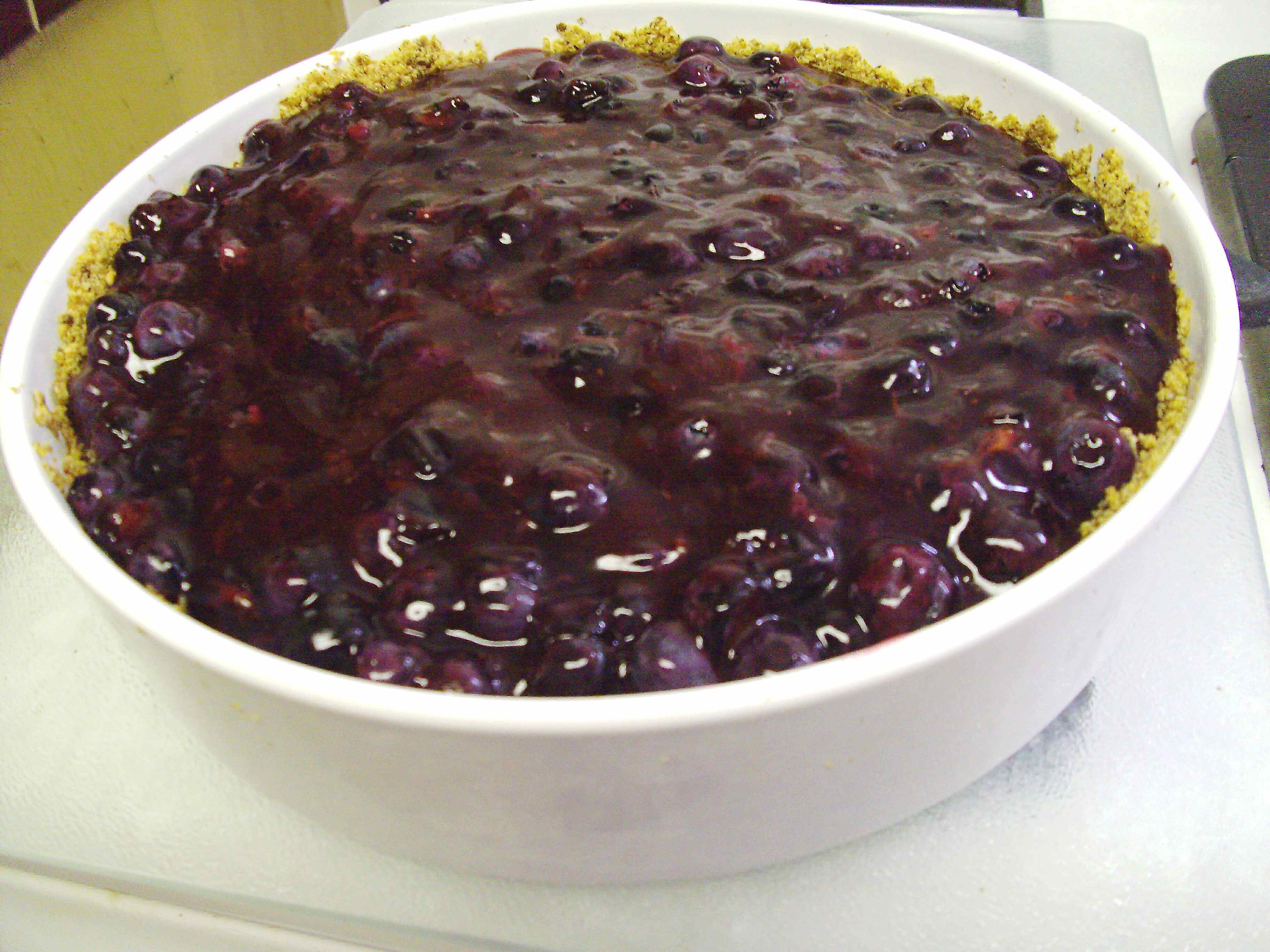
    raw blueberry pie with microwaveable filling and graham cracker crust

    This mostly-raw blueberry pie is a snap to make and very versatile--the filling microwaves in a few minutes, and you don't even have to bake the zippy gingered graham cracker crust--perfect for a hot Fourth of July and all summer long.

  • Recent Posts

  • Contents

  • Archives

  • Now Reading

  • See also my Book Reviews

  • Copyright 2008-2024Slow Food Fast. All writing and images on this blog unless otherwise attributed or set in quotes are the sole property of Slow Food Fast. Please contact DebbieN via the comments form for permissions before reprinting or reproducing any of the material on this blog.

  • ADS AND AFFILIATE LINKS

  • I may post affiliate links to books and movies that I personally review and recommend. Currently I favor Alibris and Vroman's, our terrific and venerable (now past the century mark!) independent bookstore in Pasadena. Or go to your local library--and make sure to support them with actual donations, not just overdue fines (ahem!), because your state probably has cut their budget and hours. Again.

  • In keeping with the disclaimer below, I DO NOT endorse, profit from, or recommend any medications, health treatments, commercial diet plans, supplements or any other such products.

  • DISCLAIMER

  • SlowFoodFast sometimes addresses general public health topics related to nutrition, heart disease, blood pressure, and diabetes. Because this is a blog with a personal point of view, my health and food politics entries often include my opinions on the trends I see, and I try to be as blatant as possible about that. None of these articles should be construed as specific medical advice for an individual case. I do try to keep to findings from well-vetted research sources and large, well-controlled studies, and I try not to sensationalize the science (though if they actually come up with a real cure for Type I diabetes in the next couple of years, I'm gonna be dancing in the streets with a hat that would put Carmen Miranda to shame. Consider yourself warned).

Smart Choices Checkmarks–Corrupt Before They Ever Hit the Cereal Box?

William Neumann of the New York Times takes a hard look at “Smart Choices”, the new food industry-sponsored common nutrition labeling program, which makes its debut in supermarket packaged food aisles. The coveted green checkmark comes with a hefty license fee–toward the $100,000 mark per item–for food companies that want to qualify, but apparently qualifying is a little easier than you might expect. The new program, headed by a nutritionist with impressive enough credentials,  has awarded healthy choice status to heavily sugared cereals like Froot Loops because, as she explains, they’re a better breakfast choice than, say, doughnuts. For sure.

How could any reputable nutritionist blurt something like that out to a New York Times reporter? Does she really use doughnuts as a benchmark for comparison when the question is “what should I feed my kid for breakfast?”

More to the point, how could items like Froot Loops end up qualifying as a smart choice? Apparently, the FDA is wondering the same thing.

Take a look at the Smart Choices program nutrition criteria. Under the program, a given processed food product qualifies as a “smart choice” if:

1. Its nutrition stats fall within consensus-defined limits for carbs, added sugars, fats, cholesterol, and sodium. But the criteria are not particularly consistent about whether these nutrition stats count for a single serving or a meal, or perhaps multiple servings throughout the day, and the upper limits shift between categories of foods. And some of the criteria have been muted, dropped, or subordinated according to the preferences of food industry members over the protests of the nutrition scientists.

2. It contains at least one positive nutrient from an industry-accepted list of vitamins, minerals, fiber, and protein. The positive nutrient can be an additive, and it can be added to an otherwise nutritionally useless food product.

3. Alternatively to the positive nutrient criterion, the product can contain or represent some aspect of the category “food groups to encourage”: fruits, vegetables, whole grains and low fat or non-fat milk. How much of any of these ingredients must be present, what their original source is, and whether the final food product retains any reasonable or comparable amount of the nutrition found in an unprocessed fruit, vegetable, grain, or dairy item which it claims to include are all a bit vague. Processed cheese is technically considered dairy, for example, even though it may contain mostly vegetable oils, starches, and emulsifiers, not milk.

Not all food categories seem to require both nutrient-of-concern limits and positive characteristics.

Finally, the instructions to companies wishing to qualify a given food product state: “Qualifying your products for the Smart Choices Program is quick and simple. Product review is typically completed in 24 – 48 hours.”

Pretty much says it all. And doesn’t really support the “science-based, consistent, reliable” claims the program presents to consumers and the media.

For further mirth and bemusement, check out Marion Nestle’s account of her discussions with Neumann and with the Kellogg’s VP for global nutrition on her blog.

Misunderstanding Salt Research: Bon Appetit’s Shameful “Health Wise” Column

I started this blog last spring more or less just to test out blogging lightheartedly about food. However, I have just read Bon Appetit‘s appalling “Health Wise” column from the May issue, “The Saline Solution” by John Hastings.

I do actually love to cook and eat well, and that’s my main purpose for this blog, but seeing this kind of blithely irresponsible “health” advice on salt makes my blood boil (not appetizing). Worse, it starts dragging me back to my work roots and up on my soapbox (also not appetizing, though kind of fun), because I trained as a biochemist and worked for several years as a science journalist. I worked for the National Heart, Lung, and Blood Institute at NIH at the time some of the bigger studies Hastings refers to were first being published. It was my job to know about them and write about them in plain (and preferably short) English for Congress and the public. To do it I talked to national experts, interviewed the leaders of the National High Blood Pressure Education Program, and combed through a century’s worth of research on salt and high blood pressure.

But you don’t have to be a scientist to find this stuff out. Descriptions of the studies AND their updates AND the reasoning behind the basic public health guidelines calling for Americans to watch their salt AND how to do it without eating a restricted diet of cardboard and baby cereal are all easily available from the NHLBI web site or the American Heart Association.

Hastings, a former editor of Prevention and health column contributor to O, the Oprah Magazine, is someone you’d expect to be reasonably accurate in reporting health research findings. But here he gets the science on salt and high blood pressure just about as backwards and upside down as he possibly can.

Worse yet, he does it in a strangely breezy, cheerleading tone that’s really hard to believe.

Hastings’ argument goes something like this:

…here’s a little secret: salt isn’t a problem. If that sounds crazy, it’s because the public health message about salt causing high blood pressure has been very, very effective, and it’s backed by reams of scientific research…Upon this, nearly everyone agrees. The controversy arises when you ask experts about the connection between salt intake and high blood pressure…All of this is fantastic news for those of us who are already cooking with high-quality meats and farmers’-market produce…

Did you follow all that? Probably you felt like you did for the few seconds you were reading it, but look again and you start to pick out the self-contradictions–“If it sounds crazy” that salt isn’t a problem, “it’s because the public health message that salt causes high blood pressure… is backed by reams of scientific research.”

Well, yes it is. The way Hastings phrases it, you’re supposed to think that was a bad thing, that health research in general and carefully designed tests of the effects of diet on cardiovascular health in particular are part of some kind of unnamed conspiracy against the public’s right to eat every bit of salt it can get.  Personally, I’d rather that broad public health messages were backed by reams of scientific research rather than by some diet guru or brand-name chef’s nutritional fantasy that will help sell his next book or tv program, or–more realistically–by corporate marketing and pressure campaigns from big pharma and big agro. Of course, it’s less profitable if people simply eat less salt–and less processed food–and never develop hypertension in the first place than if they eat salt like it’s going out of style and call it gourmet, and then have to make up for their diet by taking hypertension pills…hmm. Food, Inc., anyone?

“Upon this nearly everyone agrees”, but somehow there’s still a great controversy over it? Really? No. Not really.

The vast majority of salt researchers look at the bulk of the study results and conclude–repeatedly, for decades now–that salt is, in fact, a direct and modifiable risk factor for hypertension (high blood pressure). Which is both a disease in its own right and a leading risk factor for heart disease, stroke, and chronic kidney disease. Combine that with the fact that the average current salt intake is about twice what the consensus guidelines recommend and that more than half the adult population in the U.S. is crossing the line into overweight and obesity–and…well, yes.

Salt IS actually a health problem for most people. Gee.

The Bon Appetit article is a jumble of self-contradictions and serious misinterpretations of the findings from two older salt research studies, one of which has since been revised,  plus a cherry-picking recent review that comes to a different conclusion about salt than most of the other reviews of the same data on diet and health. That one comes from the lab of Mickey Alderman, an otherwise eminent researcher who just happens to be a long-time, much-trumpeted advisor and consultant for the Salt Institute.

Hastings  doesn’t indicate that he interviewed the man or even recognized his name on the journal article, but he should have. Anytime somebody in the media wants to come up with the magical–and really, really popular–conclusion that lots of salt, any day, any time, anywhere, please add more, is perfectly harmless and even good for you, they go to Mickey Alderman because they can paint him as a lone hero against the Food Police (the typical name they give the National Institutes of Health and the American Heart Association in such cases). Because what Alderman will say–with precision, but with disregard for the bigger public health picture–is that high salt intake isn’t directly proven to cause death from cardiovascular disease.

And it isn’t. It can’t be proven directly in a well-controlled diet study large enough to reach statistical significance, because that would require thousands of participants to follow a carefully prepared diet throughout their entire lifetimes, with no deviations for dates, wedding receptions, pizza parties, etc., and it would take 50-75 years to collect the majority of the data. You’d literally have to wait until most of the participants died before you could make a public health recommendation about salt. And the cost of doing that study “right” would run into the billions. It would bankrupt the federal science budget. And maybe a few other budgets as well.

That’s why the NHLBI and the AHA have sponsored studies that look at signs of developing cardiovascular illness–heart attacks, stroke, phlebitis, high blood pressure, kidney disease–rather than death. When you look at these ailments, you find that dietary salt actually matters quite a bit–contrary to what Hastings thought he understood from the studies he mentions.

Continue reading

How to Cook a Wolf, 21st Century Version

Two years ago, my husband and I took our young daughter to Paris during an engineering conference. It was our first time there, and in about five days, we spent the equivalent of 10 weeks’ grocery money on food. Just food. We couldn’t cook there, and even modest cafés charged such ridiculously high prices for mediocre food–$14 for a potato omelet or a tuna sandwich? $6 for lemonade or a bottle of water?!–that we had little money to spare for anything else. The next 10 weeks, I told our friends, we were going to be living on beans and rice. I was only joking a little.

Back in 1942, in How to Cook a Wolf, MFK Fisher’s idea of how to cook cheap was to use one’s last few francs to make a pasty, flavorless mixture of ground beef and barley-the cheapest high-nutrient ingredients she could think of at the time-and eat it sparingly throughout the week. It was not her idea of how to eat when you had the choice of anything–anything–better, but it would serve when the wolf was well and truly at your door.

Today, gas prices are double what they were two years ago. The housing market is on the edge of collapse. As a result, the once-insulated and well-educated middle class is closer than ever to the edge of poverty but almost completely unschooled in how to cope. All you have to do is look at the average ratio of credit card debt to savings.

Hence a new trend in food activism-the Food Stamp Challenge. Heartening? Disturbing? You make the call. First taken by a panel of congressmen last spring to “research” the food stamp program monthly allowances for individuals and families, the Food Stamp Challenge tests your ability to stretch $514-the amount currently allotted by the ever-generous federal food aid program–to feed a family of four for a month.

The congressmen couldn’t do it at all. Continue reading