
• Enter your email address to subscribe to this blog and receive notifications of new posts by email.

    Join 241 other subscribers
  • Noshing on

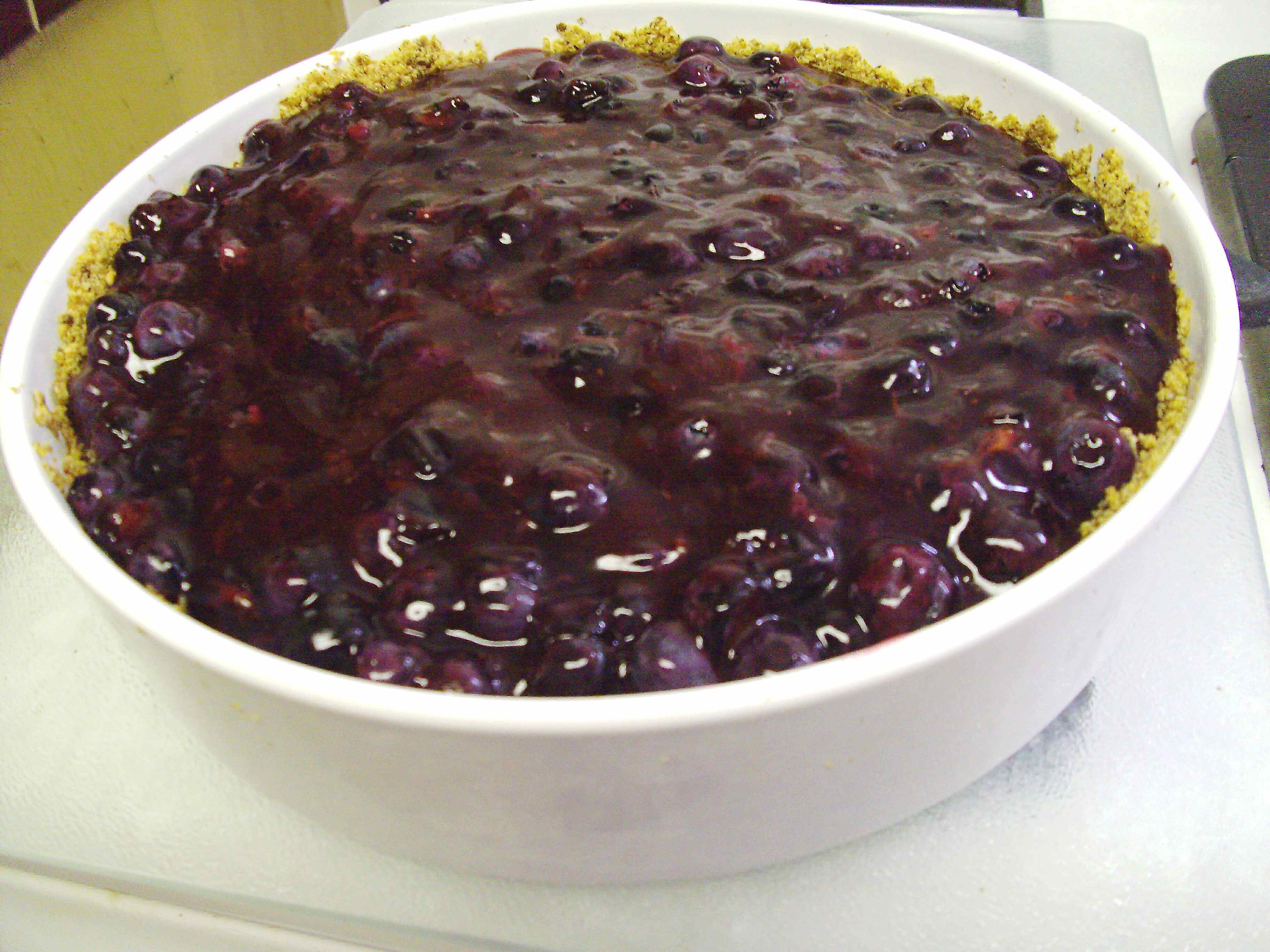
    raw blueberry pie with microwaveable filling and graham cracker crust

    This mostly-raw blueberry pie is a snap to make and very versatile--the filling microwaves in a few minutes, and you don't even have to bake the zippy gingered graham cracker crust--perfect for a hot Fourth of July and all summer long.

  • Recent Posts

  • Contents

  • Archives

  • Now Reading

  • See also my Book Reviews

  • Copyright 2008-2024Slow Food Fast. All writing and images on this blog unless otherwise attributed or set in quotes are the sole property of Slow Food Fast. Please contact DebbieN via the comments form for permissions before reprinting or reproducing any of the material on this blog.

  • ADS AND AFFILIATE LINKS

  • I may post affiliate links to books and movies that I personally review and recommend. Currently I favor Alibris and Vroman's, our terrific and venerable (now past the century mark!) independent bookstore in Pasadena. Or go to your local library--and make sure to support them with actual donations, not just overdue fines (ahem!), because your state probably has cut their budget and hours. Again.

  • In keeping with the disclaimer below, I DO NOT endorse, profit from, or recommend any medications, health treatments, commercial diet plans, supplements or any other such products.

  • DISCLAIMER

  • SlowFoodFast sometimes addresses general public health topics related to nutrition, heart disease, blood pressure, and diabetes. Because this is a blog with a personal point of view, my health and food politics entries often include my opinions on the trends I see, and I try to be as blatant as possible about that. None of these articles should be construed as specific medical advice for an individual case. I do try to keep to findings from well-vetted research sources and large, well-controlled studies, and I try not to sensationalize the science (though if they actually come up with a real cure for Type I diabetes in the next couple of years, I'm gonna be dancing in the streets with a hat that would put Carmen Miranda to shame. Consider yourself warned).

Veg-phobia II: Summer Edition

My daughter is at camp for two weeks, the longest she’s been away from home, learning to deal with meals and insulin on her own (with the camp nurse’s help). After six months of calculating and eight weeks of giving herself shots, I know she’s ready to do it, and the nurse is ready, and her counselors are ready. And I overprepared and brought more supplies than she’ll need (my daughter has nicknamed this “Mom-anoia”).

I brought everything and a little bit more–including carrots and celery sticks and low-fat cheese sticks, and a loaf of whole wheat bread for activity carbs. I felt like I was turning into my grandmother, who used to bring shopping bags full of real bagels and corn rye on the plane with her from New York whenever she and Grandpa visited us in small-town Virginia.

But really. The nurse laughed at first when I asked a couple of weeks ago if the camp kitchen had vegetables as an option for campers who needed a non-junk snack (I’d looked at the sample menus online and they looked a bit Boy-Ar-Dee to me), but then she admitted the camp doesn’t really serve a lot of vegetables and suggested I bring them for her to store in the infirmary fridge. They don’t have anything whole wheat either. I think she stopped laughing and started sounding rueful about a third of the way through her reply. “We have fruit,” she said half-heartedly, knowing immediately that it wouldn’t really do for a diabetic.

The food at camp is a smack in the face with the wet rag of reality: this is how the rest of the country eats today. And don’t get me wrong, it’s a great camp in every other respect, with a long track record all over the Americas and people of my generation who still feel immensely grateful to have gone as kids. We were very fortunate to get a scholarship for it.

So what’s gone wrong with the food? It’s like school cafeteria food in the ’70s, but without the kale or the stewed tomatoes, the half-hearted iceberg lettuce salads or the lima beans. Take all that away and you have spaghetti, turkey burgers, the occasional chicken or tuna fish, grilled cheese, pizza, some form of potatoes or corn, and fruit. Some protein, a surprising amount of fat, hidden and otherwise, highish salt and a lot of starches on top of starches. It’s also “all you can eat.” But what are you really getting that’s worth seconds? No fiber. No vitamins. Few minerals. Nothing green. Per the Sylvia cartoons, “We feature all-white meals.”

Vegetables? Salad if you’re lucky. Broccoli? Nearly unheard of. Tomatoes? only occasionally. Red cabbage, carrots, celery or any other noshing vegetable of worth? Um, not this summer.

And it is summer. Best time of year for greens. This is when it’s all happening at the farmers’ markets all over the country, and your local newspaper is probably exhorting you to get out there and try it. And did I mention this is California, prime place for vegetabalia all year round?

How did this happen? To a well-educated, professional and middle-class part of the population, no less? The nurse tried to explain to me, “This is what they’re used to at home. The kitchen figures the kids won’t eat them.”

Disheartening in the extreme. But she’s right about the way families tend to eat these days. We saw it firsthand when some dear friends of ours came to visit Continue reading

Is Extra-Virgin Just a Fancy Label?

The UC-Davis Olive Center has just released a report of its chemical and sensory tests on 10 California and 14 imported brands of supposedly “extra-virgin” olive oil. It concluded that many of the nationally available brands don’t meet the International Olive Council’s or the USDA’s quality standards for extra-virgin status.

The research team also reported that some newer chemical markers of fat oxidation being used in Germany and Australia matched sensory measures of low quality (fusty or rancid smell and taste) better than the standard IOC methods. It was a result almost guaranteed to raise hackles abroad.

The researchers compared the accepted IOC/USDA tests for oxidation and breakdown products with sensory panel evaluations (smell/taste/look/texture) and with a couple of new chemical assays from Germany’s and Australia’s government food quality labs. They had an Australian lab accredited for IOC tests conduct some of their assays.

Nine of the 10 California olive oils were evaluated as authentic extra-virgin oils by the sensory panels and had corresponding assay stats to confirm it.

Almost 70% or about 10 of the 14 international brands, most at least nominally Italian, failed the sensory panel evaluation and had some assay stats outside the acceptable limits for extra-virgin olive oil. Major brands that were deemed lower than extra-virgin quality in at least 2 of 3 sensory panel tests included:

Bertolli, Filippo Berio, Carapelli, Pompeiian, Colavita, Mezzetta, Mazola, Rachael Ray, Newman’s Own Organics, Safeway Select, and Whole Foods’ 365 house brand.

Surprisingly enough, Star and Kirkland Organics fared pretty well. No word yet on Trader Joe’s “Trader Giotto” olive oil–at those prices, though, I’m not holding my breath.

The producers of brands exposed by the report, along with the IOC itself, which was created by the UN in 1959 and is based in Spain, protested the research team’s methodology. Mostly they claimed that too few samples were tested to get statistically significant results, and that IOC tests find only 1% of more than 200 brands they test each year fall below extra-virgin standards. But the brands tested represent most of the common offerings for olive oil in American supermarkets, and results were reported separately for samples of each brand acquired in several cities apiece.

I don’t think, at least on a cursory glance, that the test parameters set for the study or the interpretation of assay results have been skewed purposely to favor Californian olive oils over Italian ones. Results for both were mixed and the researchers reported variations in results within the same brand–for example, some olive oils showed lowered quality in the Sacramento sample but not the San Francisco or Los Angeles ones.

What the researchers at UC-Davis found was not so much evidence of tampering (adulteration with cheaper oils like canola, though there might have been tampering with lower-grade olive oil), but rather higher than acceptable fat oxidation and rancidity due to aging, light exposure, poor (high-temperature) storage and shipping conditions, and possibly poor quality olives to start with.

What I would object to if I were going to find fault is that the study was funded by several members of California’s olive oil industry. Certainly if this were a clinical trial for a new drug instead of a food quality study, the fact that two of the study sponsors are also the producers of brands being studied would make me look twice at favorable results.

Where I think the study favors California olive oils over Italian ones is in the purchasing itself. It should be no great surprise if the imports on American shelves have been sitting there longer and were shipped under more damaging conditions and at higher cost than the California olive oils. It would also be no great surprise if many of them tested in better condition in the European labs before export than at UC-Davis’ labs months (or even longer) after they’d arrived in the US.

If the researchers had express-shipped pre-import samples of this year’s production from Europe to their labs at UC-Davis and their partners in Australia, and tested those results against similarly fresh California oils, the results might have been more to the IOC’s liking–or perhaps not. EU labeling rules allow Italy to claim that olive oil was produced there even if the olives or olive oil lots were acquired from other countries such as Tunisia or Morocco. I’m not knocking North African olives except to observe that they’re probably a lot cheaper than those grown in Italy. But even if they’re of equal quality, each delay in pressing or processing a harvest–not to mention repeat exposure to heat and light during shipping and warehousing from country to country–contributes to the breakdown of olive oil’s flavor components.

However, even if all the olive oil was pristine when tested in its country of origin, such a scrupulous comparison wouldn’t have reflected the real experience of California shoppers trying to get decent olive oil without having to drive out to an olive producer’s farm. Unfortunately, the California olive oils are not widely available in Los Angeles supermarkets (the researchers were stuck with Sacramento and San Fran for those) and most are not really being produced on a large enough scale to become national brands either. The imports are. If most of those really are losing quality through shipping and warehousing, should we be paying extra-virgin prices for them? Or should the companies ship and store them more carefully–and for less time?

Prunes, Lentils, and “Cookin’ Cheap”

When I was a kid, PBS, which had made a gourmet name for itself with The French Chef, decided that if one chef was good, six or seven had to be better. Suddenly the public and cable airwaves were  bursting with the Frugal Gourmet, the Galloping Gourmet, Yan Can Cook, Cookin’ Cajun, various shows with Pierre Franey and Jacques Pépin, and one…ummm…less glamorous show called Cookin’ Cheap.

This was hosted by Larry Bly and Earl “Laban” Johnson, Jr. out of Roanoke, VA–-not too far from where I grew up–and featured two viewer-submitted recipes per episode, which the guys bravely cooked and sampled on the air. At the end of each show, just like Julia Child, they sat down at the table for the tasting… and decided whose recipe had come off worse.

Now, Cookin’ Cheap was not for tenderfoots–if you couldn’t handle ingredient lists that included whole sticks of margarine and self-rising flour, or bring yourself to shop in one of the ordinary supermarket chains that had never heard of organic anything (this was the South in the ’80s), you would have done better not to watch. But if down-home cooking delivered with a touch of schadenfreude was your thing, it was a great little show.

Unfortunately, my favorite early episode doesn’t seem to be available anywhere on the ‘net. But the clip above, the Cookin’ Cheap 2.0 (YouTube) version of about a third of Episode #609, will give you some idea. (see copyright disclaimer below…)

In my actual favorite episode, Bly and Johnson hit their personal limit with a recipe that had them both making faces and apologizing to the audience that “there’s cheap… and then there’s too cheap.”

The dish in question was “Lentils ‘n’ Prunes” (you can guess the entire ingredient list). And it was indeed cheap. Unfortunately lentils, though incredibly cheap and nutritious, cook up kind of gray, especially on a semi-rural public TV station with early-’80s (i.e., yellow-ocher) set lighting. Trust me when I say the addition of mashed prunes did nothing for them aesthetically or otherwise. How on earth could they have put this on the air?

Of course, these guys didn’t have to take the blame for the recipe, and it was great entertainment to see some of the strange things your neighbors might be cooking at home and writing in to the show about with high hopes of being selected. I understand the Food Network is now copying Bly and Johnson’s reality-cooking formula shamelessly for the fall lineup…

[Actually, I didn’t realize the show had such a good run, but it started locally in 1981 and only ended its nationally syndicated run in 2002. Johnson passed away a few years before the end, but he managed to publish the Cookin’ Cheap Cookbook in 1988. Bly kept the show going with Johnson’s friend and successor Doug Patterson and has since made a couple of rescued episodes available on DVD. And the show still has fans on YouTube and — surprisingly just this March–in the New York Times.

Disclaimer: YouTube removed the first clip I linked to for copyright violation–so my apologies to Bly; the intent in linking here isn’t to rip anyone off but to highlight a too-little-known show. Because the original Roanoke station managers were too shortsighted to save the episodes (they apparently trashed them!), Bly was only able to rescue a couple of episodes for the DVD, and I think some of the others posted at this point were recorded at home from TV.]

Ah, well. Times change, horizons broaden, and we aim to challenge our palates in a sophisticated world beat kind of way even with limited cash and ingredients. The wolf may be at the door, we may be on the rice and beans yet again to make up for unreimbursed conference travel, but we are determined to do it in style–that means Indian, Moroccan, Mediterranean–French? Well, at least by not mixing plain lentils and prunes together in a hideous gray mash.

…I’m not actually sure how the French feel about lentils with prunes, or what they’d do about it if you suggested it. But I have a huge bowl of cooked lentils to deal with from a 1-lb. bag at $1.29. And a 1-lb. bag of non-sorbate pitted prunes at $2.99. Less than $5 total. And a number of ideas about how to deal with each of them, separately or together. Enough ideas that I’m probably going to have to split this post so it doesn’t turn into War and Prunes.

This, I think, is going to become my How to Cook a Wolf Challenge, 21st Century Edition.

Because I have fantasies (not many, and relatively tame though entertaining) of the Iron Chef America and Top Chef hosts announcing, for the next quickfire competition, a challenge to find three or four good ways to combine lentils and prunes in dishes where they’re the main ingredients and for which the total bill for the tasting menu comes to something like $10, including spices (prorated as used…) Can’t you just see the contestants’ faces? Take a moment to enjoy their obvious panic. The restaurant industry hasn’t trained them for this.

But seriously. What was actually behind this Cookin’ Cheap dealbreaker, other than the obvious frugality factor plus the even more obvious digestive humor that follows prunes and lentils wherever they roam?

Is there any way on earth that prunes and lentils could really go together?

Well…yes, as a matter of fact. You don’t run across prune and lentil recipes everyday, but good-tasting and intriguing variations, or at least the components of them, exist in a number of respected cuisines around the globe. Even French. For very little more than it cost the Cookin’ Cheap guys, Continue reading

The Dirty Roots of Veg-phobia

In one of my favorite Doonesbury cartoons, a very old one from the early 1970s when hippies still had a trace of hip about them, it’s Zonker’s turn to cook dinner, and he serves his housemates a big bowl of salad.

Mike Doonesbury peers into the bowl suspiciously and says, “Hey Zonker, the lettuce is dirty!”

“Yes, but it’s clean dirt! Ecologically pure dirt! No chemical additives–you’ll love it!”

Mike and Bernie opt for McDonald’s.

Somehow, though, the way they agree on it suggests the understanding of the early 1970s: McDonald’s was cheap, it was easy to find in your town, but it wasn’t really dinner, it was what you did when there was nothing decent in the fridge.

For decades now, government health agencies, the American Cancer Society, the American Heart Association, and whole parades of morning talk show guests have been advocating that Americans eat at least five servings of fruits and vegetables a day, and juices don’t count. The studio audience members, mostly soccer mom-looking women, only with impeccable makeup and pristinely unwrinkled clothes, bob their heads on cue at this wisdom.

But nobody’s gotten serious about how veg-phobic most people suddenly become when they actually approach the vegetable aisle in the supermarket, and no one’s taking enough pictures of what’s really in the fridge or on the cutting board most nights in most houses. All I can say is that many, many of them, if they buy vegetables at all, buy prepared or precut vegetables instead of bulk. Why?

Bulk vegetables–a whole head of cabbage or lettuce or broccoli or cauliflower, a bunch of celery or carrots–are bulky. Heavy. Hard to lift and hard to maneuver into those thin plastic produce bags.

They’re also round. They take up a lot of space in the refrigerator. They don’t stack neatly and they don’t necessarily fit into the shallow, measly vegetable drawer that comes with today’s Lean Cuisine-friendly slimline refrigerators.

They require washing, and here I wonder if we’re getting to the part people are most squeamish about. There’s…there’s (I can’t say it) … there’s DIRT on them!

Why washing it off scares people so much these days I have no idea, but maybe it’s all that liquid hand sanitizer and overly perfumed liquid hand soap that have poisoned the atmosphere this past 10 years or so. When your soap company can convince you to buy watered-down soap in a decorator squirt bottle, your friendly produce-packing plant can probably sell you overpriced broccoli florets in a small plastic bag.

Selling salt, one con at a time

Michael Moss’s new investigative piece,   “The Hard Sell on Salt” at the New York Times, traces the strategies used by the processed food industry over the past 30 years or more to fight any regulation on the amount of salt they dump into everything.

I have wondered for years why TV chefs (Moss ticks Alton Brown on this for having shilled in an ad for Cargill, a major salt producer), the Culinary Institute of America, big-name restaurant chefs and their fans (prominently Michael Ruhlman), and the food processing industry have all pushed salt so hard and why the discussion about reducing salt always, always turns to “what can we substitute” rather than “why not just leave it out.”

It’s not as if any of these players, other than the actual salt production companies, have an intrinsic mission that requires them to sell salt.

Moss turns up a few of the answers. Not surprisingly, products like low-salt tomato sauce require actual fresh ingredients (vine-ripened tomatoes, fresh herbs) to make up the difference in flavor from the current formulas for salted jar sauces, which contain dried herbs and low-grade tomatoes and range from 450-700+ mg. sodium per serving.The low-salt sauces are more expensive to produce. On the other hand, they’re higher quality and they do actually taste good.

But that’s about the simplest case. Tomato sauce actually is made from tomatoes, whether high- or low-grade, and is therefore (if you discount the addition of starch or gum thickeners, sugar or corn syrup, spice “extractives” and preservatives in so many brands) about as close to the actual homemade product as processed food gets. Most of the major processed foods aren’t so recognizable.

Peanut butter should be in the same category as tomato sauce–something with a simple real main ingredient that tastes like what it is. And a number of smaller companies do offer unsalted natural peanut butter–peanuts-only, and it tastes just fine. But the major brands insist that if you take out any of the salt (notably, not “all”) from their formulations, you “have to” add sugar or something else to compensate for the loss of flavor. Read the major brand labels and you realize why: their peanut butters are already mixed with corn syrup sweeteners and solids, gums and emulsifiers and mono- and diglycerides and starches and fillers. The salt is there not so much to highlight the peanuts but to cover all of that extra gunk. You have to wonder whether the nutrition is reduced as well–something like the case of bologna vs. actual meat.

Particularly telling (and entertaining, from my point of view), are the taste consequences of cutting salt in some very popular products:

Even as it was moving from one line of defense to another, the processed food industry’s own dependence on salt deepened, interviews with company scientists show. Beyond its own taste, salt also masks bitter flavors and counters a side effect of processed food production called “warmed-over flavor,” which, the scientists said, can make meat taste like “cardboard” or “damp dog hair.”

I have to admit I really adored that one. My general reaction to things like Lean Cuisine, South Beach Diet, etc microwave meals-for-one is that, with so much sodium per serving (up to 1200 mg or worse) you’d be better off tossing out the “meal” and eating the box. Tastes about the same, salt’s gotta be lower, and at least you’d get some fiber. Now we know it’s true.

As a demonstration, Kellogg prepared some of its biggest sellers with most of the salt removed. The Cheez-It fell apart in surprising ways. The golden yellow hue faded. The crackers became sticky when chewed, and the mash packed onto the teeth. The taste was not merely bland but medicinal.

“I really get the bitter on that,” the company’s spokeswoman, J. Adaire Putnam, said with a wince as she watched Mr. Kepplinger struggle to swallow.

They moved on to Corn Flakes. Without salt the cereal tasted metallic. The Eggo waffles evoked stale straw. The butter flavor in the Keebler Light Buttery Crackers, which have no actual butter, simply disappeared.

Perhaps there’s a lesson here. Kellogg’s certainly not the only company that’s been selling Americans the food equivalent of the Emperor’s New Clothes. Perhaps all the food execs should be required to eat their own products, without “benefit” of salt, and preferably in front of an FDA regulatory panel or a Congressional committee?

Sorry, Starbucks, no doughnut

On Sunday mornings, my daughter likes to drag her father out around the corner without me to the local Starbucks so he can buy himself coffee and get her some kind of small baked good that I’m not supposed to know about. Because I am, in fact, generally opposed to “doughnuts for breakfast” and both of them know it. It’s a ritual that had to be suspended for a while this spring, until we could figure out what kind of treat had how many grams of carbohydrate and how much of it she could eat and still eat something else more nutritious as the majority of breakfast.

Most of the pastries will never be what I consider top baking, but it’s not me who’s going to eat them. And my daughter wanted a doughnut, or part of a doughnut, if she could make it work out.

So–I went online to the Starbucks web site to try and hash out the vagaries of “petite” mini scones, mini doughnuts, coffee cake slices, and all the rest of it. Starbucks markets itself to the upscale, the midscale, and the would-be midscale of my town with all kinds of brochures about fair trade and global responsibility, and their web site is not much different. The do-right message is right up there with the latte of the week, and you’d expect the nutrition info to be present and helpful without the usual twisty chain-restaurant disguises and trickery.

Or would you? Starbucks got its tail caught several years ago when numerous commentators, among them its own employees, let the public know that some of the lattes and other mixed coffee drinks were topping out at over 700 calories per, with more fat than some burger chain offerings. Since then Starbucks has offered more health-conscious choices below the pastry case and taken a pro-active posture on nutrition and informing the customer and so on. But how do they really feel?

The nutrition info page falls under the “menus” navigation item at the top. OK. It’s readable, not a shrunken PDF file–good. You find a long scrolling list of each of the bakery items with calories, fat, carbs, and proteins. Doughnut, doughnut–old-fashioned glazed doughnut…440 calories, 21 grams of fat (10 saturated), 57 grams of carb…Ouch. Well, she could have half of one, I suppose, with a small bowl of oatmeal and some milk, and eat something better at lunch…but wait a minute. Where’s the sodium info?

All I could find about sodium was a little note about “healthy choices”, in which the Starbucks nutrition page asserts that such items have fewer than 10 grams of fat and fewer than 600 mg sodium. A stunner–that’s more than the classic 500-mg bowl of Campbell’s Tomato Soup that caused all the corporate protests against the NIH dietary salt guidelines in the 1980s. Who on earth would claim 600 mg sodium for a single snack or breakfast item was “healthy”–especially with the growing public and government concern over excessive salt in restaurant food?

And I still couldn’t find any specific sodium stats for doughnuts or mini scones or the other things my daughter was hoping for, much less an ingredients list. So I searched a variety of diet and nutrition web sites that catalog such things. The closest I could get to a current verified  standard nutrition label was from livestrong.com (accessed 5/3/10):

Starbucks Top Pot Old-Fashioned Glazed Doughnut

Serving Size: 1 Pastry (113g) Calories 480 Calories from Fat 210

  • Total Fat 23g 35%
  • Saturated Fat 9g 45%
  • Trans Fat 0g
  • Cholesterol 20mg 7%
  • Sodium 410mg 17%
  • Total Carbohydrate 64g 21%
  • Dietary Fiber 0.5g 2%
  • Sugars 39g
  • Protein 4g 8%
  • Vitamin A0%
  • Vitamin C 0%
  • Calcium 2%
  • Iron 10%

Est. Percent of Calories from: Fat 43.1% Carbs 53.3% Protein 3.3%

These stats are higher than what’s stated at the Starbucks page (see below). And the sodium in a single doughnut is pretty high. So’s the carb. So’s the fat. So’s the increase in size and calorie stats and so on from the glazed doughnuts they were offering in 2006, according to archived nutrition labels on a number of older diet web sites. Continue reading