• Enter your email address to subscribe to this blog and receive notifications of new posts by email.

    Join 241 other subscribers
  • Noshing on

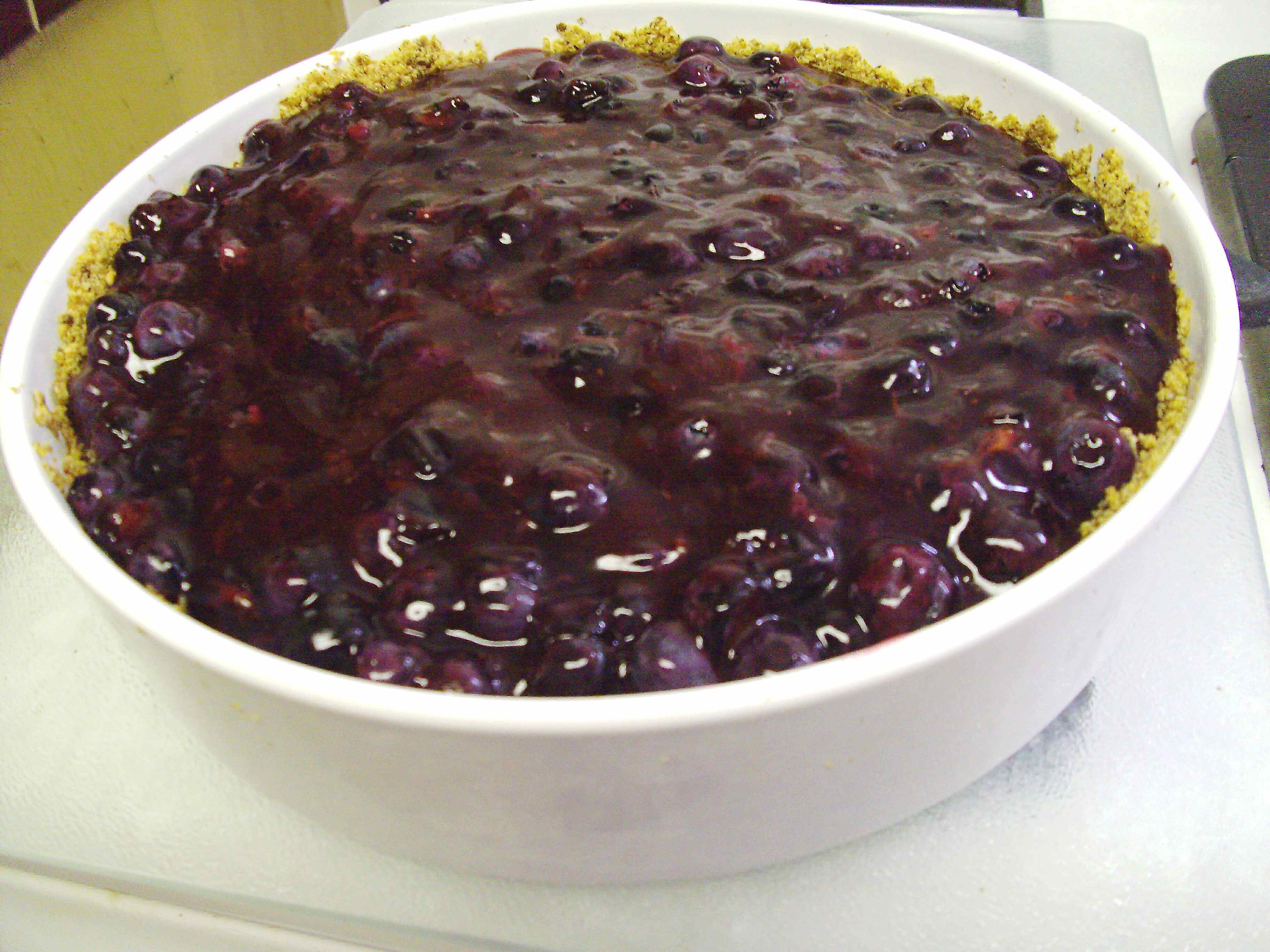
    raw blueberry pie with microwaveable filling and graham cracker crust

    This mostly-raw blueberry pie is a snap to make and very versatile--the filling microwaves in a few minutes, and you don't even have to bake the zippy gingered graham cracker crust--perfect for a hot Fourth of July and all summer long.

  • Recent Posts

  • Contents

  • Archives

  • Now Reading

  • See also my Book Reviews

  • Copyright 2008-2024Slow Food Fast. All writing and images on this blog unless otherwise attributed or set in quotes are the sole property of Slow Food Fast. Please contact DebbieN via the comments form for permissions before reprinting or reproducing any of the material on this blog.

  • ADS AND AFFILIATE LINKS

  • I may post affiliate links to books and movies that I personally review and recommend. Currently I favor Alibris and Vroman's, our terrific and venerable (now past the century mark!) independent bookstore in Pasadena. Or go to your local library--and make sure to support them with actual donations, not just overdue fines (ahem!), because your state probably has cut their budget and hours. Again.

  • In keeping with the disclaimer below, I DO NOT endorse, profit from, or recommend any medications, health treatments, commercial diet plans, supplements or any other such products.

  • DISCLAIMER

  • SlowFoodFast sometimes addresses general public health topics related to nutrition, heart disease, blood pressure, and diabetes. Because this is a blog with a personal point of view, my health and food politics entries often include my opinions on the trends I see, and I try to be as blatant as possible about that. None of these articles should be construed as specific medical advice for an individual case. I do try to keep to findings from well-vetted research sources and large, well-controlled studies, and I try not to sensationalize the science (though if they actually come up with a real cure for Type I diabetes in the next couple of years, I'm gonna be dancing in the streets with a hat that would put Carmen Miranda to shame. Consider yourself warned).

What not to put in your cake

Marijuana use is being legalized–or sought out for legalization–in an increasing number of states, despite the federal government’s stance against it. The key argument in favor is a plea for the well-being of those whose terminal or debilitating illnesses–or the drug regimens for treating them–cause pain and nausea that respond better to marijuana than anything else on the market.

But who’s fooling whom? Along with the increase in legalization and dispensaries comes a host of new products to capitalize on the expanding market: candies, cakes and other sweets laced with tetrahydrocannabinol (THC). You can’t tell me that’s exclusively, or even mostly, for medical use.

And–no surprise here–most of them are being mislabeled.

Marijuana is not a well-characterized, easily dosable drug. It’s a whole-plant or at least whole-leaf drug, with hundreds of chemical compounds in both the leaves and the smoke. Even THC, its primary active ingredient, appears difficult to measure and dose correctly given that its signal effect is a general distortion of sensory perception and mental function, not stimulation or blockage of a specific molecular receptor or other well-defined cellular target.

Given the vagueness of both dosing and effect, it’s not really a surprise that standardization and labeling are still inaccurate at best. Which is now a relevant issue: if you’re going to call marijuana a pharmaceutical in order to get it legalized, you’re going to have to treat it by the same standards and be able to quantify it. That could be a challenge–especially given the professionalism and laboratory expertise with which it’s typically handled.

The current attempts are not particularly encouraging, if a recent article in the Journal of the American Medical Association is any indicator. About 75 percent of the product labels are off; 15 percent or so underestimations and the rest overestimations of THC dose per serving.

Add to that the products themselves–pink and green-colored pound cakes (at least as shown in the article in The Scientist). Who but a stoner–or worse, a little kid who happened upon them–could find those appetizing, even without the added attraction?

And you can see the key problem here–it’s bad enough that people who take marijuana in any form are likely to get the munchies and be completely indiscriminate about what they eat while high. It’s a lot worse if the food available is also laced with yet more THC. Or if an adult buys a colorful cake product and leaves it where a kid can get at it.

And yes, I am being intentionally insulting about it. I’ve worked as a lab tech in pharmacology and natural products research labs and interviewed numerous experts in pharmaceutical and diagnostics industries as well as medical and forensic toxicologists. It’s time for the marijuana legalization proponents and industry to grow up, pull up their socks, and stop potschkying around. Or sampling their own wares.

If you’re serious about treating THC as a respectable therapeutic pharmaceutical, and not just a recreational drug accompanied by a wink and a sheepish laugh, then put up or shut up. Treat it as a proper drug and keep it in a recognizably unappetizing drug form–a plain pill would do–and make sure the dosing is precise and minimal. And that access is limited to patients who actually need it and that the effect is genuinely beneficial. That requires clinical trials.

We don’t put methotrexate or doxorubicin, two of the major chemotherapy drugs, in candies for cancer patients. We don’t put morphine or antibiotics in cake or leave them around casually on a kitchen counter. There’s a serious reason for that.

[Note: I’ve turned comments off for this post, not because I don’t usually welcome comments–and even arguments–but because the ones I’ve seen so far appear to be using the opportunity to recommend their preferred homebrew remedy–not really relevant to the question: “Do drugs belong in cake?”]


Chain-restaurant excess strikes again

The Center for Science in the Public Interest has found itself swamped for choice in its 2015 Xtreme Eating “awards” list.

What’s the highest calorie chain-restaurant meal in America? (LA Times online, 6/3/15)

The entries are frightening–typically 1-2 days’ worth of calories, 3 days’ worth of saturated fat and sodium, huge oversized amounts of food. One steakhouse platter with so much hamburger meat–not even steak–seven burgers, each piece topped with cheese or at least cheez–it’s like eating several Double Whoppers at once. Ice cream float-type concoctions with no actual pie but pie crust pieces crumbled on them. They start at 32 ounces. Which is clearly the new 20 ounces if you actually read through the horrible meal descriptions, because another chain’s sweet tea is only offered in a 32 oz size as well. That’s a quart. For one person. There’s a 900-calorie margarita in there somewhere at 24 ounces.

I’m sure Michael Jacobson, CSPI’s president, never dreamed there’d be something fully twice as bad on any restaurant menu as fettucine Alfredo, which he termed “a heart attack on a plate” only what, 20 or so years ago?

What the hell is going on here?  The chains may be cutting down slightly on artificial colors and trans-fats and GMO ingredients, but they’re serving meals with an entire day’s worth of calories embedded in the endless parade of glop that is routinely slathered on otherwise reasonable-sounding main ingredients like chicken breast (note: a top offender for hidden sodium in the “healthy” chain offerings, especially on salads). “Special” sauces, breadings, cheese, frying oil, stuffings, dips, and less-announced coatings (the problem with the chicken) that add surprising amounts of sweet, salt and/or fat. Chipotle isn’t on CSPI’s wall of shame over this, but it’s just as true of them as of any of the others–their meals typically run 500-800 calories for a burrito without chips, guacamole or salsa (not to mention sour cream and added cheese), and the same number of milligrams of sodium.

The meal insults listed on CSPI’s site consist of huge portions that could more normally serve four people, not one. Dishes are never less than 3″ high and cover every square millimeter of the plate. Burgers are multiplied–if one or two are okay, six or seven must be even better. Vegetables have disappeared, of course.

Accessories double or triple the calorie, fat and sodium counts of the full “meal”: caesar salad, fries, biscuits, half-gallon drinks, whole quarts of ice-cream-related desserts. Why is this gargantuan approach even appealing?

They didn’t list Baskin-Robbins 31 Flavors, but maybe they should have–a couple of years ago I took my daughter there for a post-diabetes-diagnosis ice cream cone so we could do something normal for summer, albeit with a shot of insulin (it was a new experience) and we got the entire brochure of offerings when we asked for the nutrition info. The single cone, no lightweight for any of the flavors at about 250-300 calories (double or triple what it would be for Dreyer’s/Edy’s half-the-fat, our standby) and 25-30 grams of carb (also double the D/E per serving), turned out to be a best bet. Some of the sundaes were getting to the 20 oz. range, with over 1500 calories and two days’ worth of carb and fat. The soft serves were actually the worst nutritionally, much higher in calories, carb and fat than they look for the volume you get–and especially given how plain the flavors always are.

Overall, the picture of chain food is not lookin’ good. It’s a nightmare of shameful, pointless stuntlike excess, the stuff parodied in Wall-E and Idiocracy among other movies from the past decade. Only as one of the CSPI judges remarked, it’s become the new normal, and much faster than the screenwriters imagined. Maybe we should all look at the before pictures of the participants on The Biggest Loser, as shown in all the accompanying guidebooks (see your local Friends of the Library bookstore) and ask ourselves if we really want to do that. Because that’s a lot of work.

Media misread on the new USDA dietary guidelines

The new USDA public nutrition guidelines are being updated again, as scheduled, and the Dietary Guidelines Advisory Committee’s version now says some egg yolks are okay and to limit carbs and sugar instead. A variety of media commentators have jumped all over that, even though it’s not very different from what the guidelines have been emphasizing for years. Now, if anything, I would have hoped that most of the commentaries in the newspapers of record would be critical of the industry influence on the USDA’s nutrition guidelines for the general public each time, but no.

The most prominent commentators, notably Nina Teicholz, whose op-ed in last Sunday’s New York Times really bothered me, are well-educated and should know how to “read a french fry” as it were. But instead of looking at the likely effect of loosened USDA dietary limitations on a public that has gone so seriously overboard on calorie-dense food, they’ve taken the opposite tack. Mostly to declare self-righteously that the new relaxation of standards really means all the previous recommendations to limit saturated fat and cholesterol were bunk and a waste of time based on “uncertain” and “weak” or even “junk” science.

Which is untrue. Epidemiologic research–large observation studies and surveys, like the NHANES diet and cardiovascular health survey series from the 1970s onward, and the big Framingham Heart Study of the 1950s onward, are not junk science. They do what clinical feeding trials can’t: they look for the contribution of individual dietary risk factors to chronic and complex-origin health conditions like heart disease and stroke across very large population groups. Both the processed food industry and people like Teicholz claim that clinical feeding trials are the only legitimate way to provide “proof” of cause and effect, but the cost of conducting them carefully long enough and with a big enough participant pool for meaningful results would bankrupt the nation halfway through.

Epidemiologic findings matter on the large public scale. Not every specific applies absolutely and equally to every single person, but that’s not what population-wide studies are for. The big studies, loose as they might seem compared with DNA fingerprinting and perfectly demonstrated cause-and-effect kinds of lab workups for individual cases, give best-bet recommendations for most people to reduce their risk.

Your genetics determine how well that works for you specifically, but most of us don’t have access to DNA testing on that level, and the “big six” lifestyle risk factors (high sat fat, high blood cholesterol and blood pressure, overweight, lack of exercise and smoking) are a lot easier to change and get some control over. After all, you can’t change your genetics much (and yes, my daughter is quite disgruntled that she can’t pick cooler parents. But tough. We couldn’t pick ours either).

So anyway, I know I’m unusually irritated with any news about USDA dietary guidelines–I used to work at NIH, and some of my colleagues had attempted to serve on the dietary guidelines committee and ended up completely frustrated at how “bought” the process became. The USDA has always had a conflict of interest when it comes to public health recommendations because its main mission is support of US agriculture, and public health always comes a distant second to big business. The committees have repeatedly subverted and weakened the scientific nutrition panelists’ best-finding recommendations by including food industry participants and weighting toward industry priorities in the consensus mix. There’s no great reason to expect the food industry isn’t still playing and winning the same game on the same committee this time around. [Update: the meat industry has just asked for an additional 75 day comment period].

But the main problem I see at this point is how poorly mainstream journalists and editors have handled the announced overhaul. None really seem to have dug into the comparison between current and previous issues of the guidelines, much less compared the USDA’s final takes with dietary guidelines from the DGAC, a combined group of more purely biomed/scientific research experts representing HHS (including NIH) and the FDA, or those of the major health advocacy organizations such as the American Heart Association.

And declaring that it’s now fine for anyone to eat all fats without limitation is nonsense and a misread. The USDA guidelines don’t say that–the DGAC draft guidelines certainly don’t say that. And if the USDA does attempt to drift in that direction for the final release, as some of the director’s announcements suggest, given the participation of Big Food and Big Agriculture hoping to sell the public more meat, eggs, and cheese, along with more profitable processed goods, would you necessarily believe them?

Is it really the fault of the scientists on the panels over the years, as Teicholz claims (“How did they get it so wrong?”), that the epidemiology findings they relied on for previous rounds of recommendations weren’t borne out by much smaller and less conclusive clinical studies?

Maybe the role of saturated fat is less apparent in a clinical study. I don’t doubt that. But as noted above, the statistical power of the comparatively short-term clinical trials for cardiovascular disease effects is bound to be a lot lower than in a long-term population-wide study, even if the controls are tighter. There are so many interfering factors–other dietary and lifestyle factors, and so many varieties of genetic risk factors within and among different population groups, genders, and age groups, that you need the big numbers and the large timescale to see effects above the noise. Meta-analysis of a lot of limited clinical studies with iffy results doesn’t make up for that. If anything, it compounds their individual uncertainties.

[And in fact it turns out that much of Teicholz’s assumption on that point is based on a very poorly conducted, much criticized meta-analysis of studies on saturated fat and cardiovascular disease published last spring. Most inclusive meta-analyses performed using standard stats analysis best practices actually show reductions of between 14 and 26% in CV events and deaths when subjects cut their saturated fat intake below 10% of calories and ate more vegetables instead of carbs, or else substituted polyunsaturated fats for them.]

Teicholz’s op-ed had carefully modulated but still overt indignation at the imperfect scientific basis behind previous recommendations to cut saturated fat and limit egg yolks and other high-cholesterol foods. What should be there and isn’t is the acknowledgement that when those recommendations were first announced to the public–by the AHA, the CDC and the USDA in the late 1960s, population trend studies over the next 10 years showed a stark drop in the rate of heart attacks–about a 30 percent drop. In other words, it worked. Big time.

And the broad peak of the population curve for a first heart attack shifted to the right by 10 years–that is, the average age for men went from about 50 to about 60, and for women from about 60 to 70. These were huge improvements in public health overall, and they were achieved partly because the public believed and paid attention, and partly because the nutrition and health experts hadn’t given up and abdicated responsibility in the face of industry pushback.

Clearly these results didn’t last; but is that the fault of the studies that identified saturated fat and cholesterol as things to reduce (note: not eliminate completely, just reduce)? The 1980s ushered in a long Republican-led era of unfettered, uncritical support of corporate priorities over public health, Reagan’s “ketchup is a vegetable” quip and the conversion of school lunches to chain restaurant concession contracts, a popular nose-thumbing at so-called “food police” health recommendations, the rise of high-fat-and-sugar-and-oversized-portion “comfort” and “indulgent” foods in restaurants and food magazines, and an entrenched anti-science bias in Congress that still haunts us today.

Not that much has changed from Reagan’s time in office–including the sad observable fact that most Americans for the past decade or so clearly aren’t paying serious attention to or even attempting to follow those modest earlier USDA recommendations, particularly the recommendations to eat more vegetables rather than more boxed, labeled namebrand processed foods, whether Big Macs or Ding Dongs or Froot Loops…

So few Americans today eat any vegetables at all compared with people of the same ages in the 1970s. As I’ve mentioned before, a shocking number of my friends, in their 40s and 50s already, do not cook at all. They have advanced degrees, if mostly in the humanities. They nervously repeat but don’t understand how to  read between the lines of whatever diet and health claims are in the news, and they’ve come to think cooking is too hard. They have a lot of takeout menus on their iPhones.

There is just one more factor to mention here: the profit motive. Teicholz, a former contributor to NPR, Gourmet and Men’s Health, wrote that op-ed in part to promote her new book, The Big Fat Surprise, which claims that diets high in meat, butter, Continue reading

2000-calorie meals in pictures

The New York Times has just posted a very clear picture-it chart of how people get to 2000 calories in a single meal, sometimes even a single dish, without realizing it when they eat out. Not just at Burger King, Denny’s or IHOP, either–some of the upscale chains’ ordinary dishes are just as devastating. If you’re having trouble figuring out your own diet, you might take a look and see What 2,000 Calories Looks Like.

One thing I like about the restaurant-by-restaurant feature is the breakdown of calories for each item in the meal, so you can see how you might do better while eating out.

One obvious takeaway–so to speak–is that fries, shakes, full dinner plates of pasta with cream sauce (or any sauce, really), and slices of cake as big as your head–topped with caramel goo!–are a bad deal for excess calories, lack of nutritional value, and are basically not really necessary.

The other obvious takeaway is that for things like sandwiches, burritos, burgers and similar protein-containing main dishes, you probably don’t want to be eating more than about 500 calories at lunch or maybe 600ish at dinner. Preferably 350-450, to give yourself some room for a salad or fruit. So the hoagies and double cheeseburgers at 900-1100 calories should really be split in two–maybe three. Share one with a friend unless you’re actually a linebacker in training. Or else get rid of the cheese, the excess meat, the bacon, the mayo-based sauces. Go back to a single burger with ketchup and mustard and a couple of pickle slices. And maybe you shouldn’t eat anything else with one of those but a plain apple or orange or some tomatoes or carrot sticks.

The other thing I like is the set of pictures at the bottom–whole days’ worth of decent food from home that are worth 2000 calories per day, and they look a whole lot better than what you get at the restaurants. For the same money or less, and with a microwave, maybe even in less time. A lot more vegetables and fruits, a decent amount of meat and fish and dairy, a lot less in the way of french fries, milkshakes, salad dressing, breadings, special sauces, burger buns and unlimited pasta.

New hope for lowering arsenic levels in rice

A new study has identified a key protein in rice plants that allows some varieties to keep any absorbed arsenic safely contained in a separate part of the plant from the grain itself. The authors are hoping to introduce the gene for this highly effective transporter protein into plant strains that don’t have much of it and see whether the new genetic hybrids can reduce the arsenic level in major rice crops.


Artificial sweeteners causing glucose intolerance

A new study on artificial sweeteners published in Nature goes a long way toward explaining one of the most puzzling findings about sweetened drinks in recent years: that regular consumption of even diet sodas is associated with an increased incidence of obesity and Type II diabetes. Surely, if the sweeteners have no calories and negligible carbohydrate, this shouldn’t be happening? Surely people should be losing weight? But the national statistics have shown that it is, and they’re not.

According to a news summary in The Scientist (Sugar Substitutes, Gut Bacteria, and Glucose Intolerance), researchers at the Weizmann Institute of Science in Rehovot, Israel, demonstrated that repeatedly consuming zero-calorie sweeteners like saccharin, sucralose and aspartame (e.g., Sweet ‘N’ Low, Splenda, and NutraSweet) increases a person’s glucose intolerance by causing changes to his or her gut bacteria.

The researchers did extensive testing on mice first–fed them artificially sweetened water for several weeks and compared glucose tolerance and gut flora with those of control groups that received either glucose solution or plain water. The experimental mice had much higher rates of glucose intolerance than either of the control groups, including the one that was fed glucose solution.

They also had very different gut bacteria composition, which the researchers thought might be causing the changes in glucose tolerance. Wiping out the gut bacteria of control mice with antibiotics and then repopulating with the gut bacteria from sweetener-fed mice caused glucose intolerance in the normally fed mice.

The researchers repeated their experiments on healthy human subjects, and they got the same dramatic results. The timeframe for measurable changes in glucose tolerance was within as little as six days for one of the tests.

Admittedly, the researchers were dosing their subjects with sweetener concentrations at the highest levels currently deemed safe by the FDA. So if you only consume these sweeteners occasionally and in small quantity–say, chewing sugarless gum once in a while–you might not be causing a drastic change in your gut bacteria or glucose tolerance.

But so many people in the US consume diet sodas and artificially sweetened teas and so on in large quantity on a daily basis that it’s possible they’re coming close to the levels used in these experiments. If you consume even half the maximum defined “safe” daily level, you might well be impairing your glucose tolerance significantly. But there may not be a safe level. There’s no saying what level–if any–of sweetener per day is low enough not to change gut bacteria and raise glucose intolerance–it may be a matter of dose or it may be a matter of how long and how regularly people consume these sweeteners.

Glucose tolerance is a measure of your body’s ability to supply insulin quickly and at the right level whenever you eat or drink something with starches or sugars. Part of the gut’s function is to release glucose into the bloodstream, but Continue reading

FDA warning on powdered caffeine

The Washington Post carried a story yesterday on a new FDA warning about powdered caffeine’s potential for a lethal overdose. Caffeine is relatively unregulated as a dietary supplement and companies have been selling it mixed into “energy” drinks and “shots”, inhalers and other forms, including pure powder, through Amazon.com and other internet venues.

Most of the stupids (I mean, more politely, naive consumers) who buy caffeine-laced “energy” products are teenage boys and young men–no great surprise. Guys in that age range tend to have trouble getting up in the morning and being alert for class. The proliferation of the iPad, the smart phone, and game apps isn’t helping. A cheap, legal and potent stimulant seems like just the thing to counteract the effect of late nights and early exams. Combine that with a pitch about “energy” and fitness–mostly in the form of weightlifting and bodybuilding, a sector rife with dietary supplement abuse marketing, and wishful thinking about instant “buffness”, as my now-teenage daughter scoffs–and you’ve got a really bad deal.

But it doesn’t take much of the purified caffeine powder to overdose and the difference between stimulated and dead can be as little as a few milligrams–much too hard to measure accurately with a teaspoon or even most kitchen scales.

Caffeine is far from harmless even in limited doses (otherwise, why would we bother to drink coffee?) And it’s definitely a drug–I had to work with it in the lab way back in my radioactive youth. And it’s really inexpensive.

Why the “dietary supplement” label is still allowed to cloak quasi-drug and drug products from FDA control is a mystery to me. It’s a bad deal for everyone eventually, because as more of the supplement compounds are discovered to have harmful effects–think anabolic steroids or some of the “smart” drinks and relaxants added to “energy” drinks over the past decade–Congress ends up having to legislate against them one by one, and the FDA has to go through a torturous combination of warning letters and negotiations with the companies involved and attempt to draw up new regulations–a very expensive and drawn-out process. And it’s usually piecemeal and illogical–caffeine levels in soda are regulated, pure powdered caffeine is not.

In the meantime, hospitalizations from caffeinated energy drinks and other easily abused products have doubled since 2007, and there have been a number of deaths from caffeine overdose, including the Indiana teenager whose parents had no idea he was buying and consuming powdered caffeine when he died at the end of May, and whose case spurred the FDA’s attention this time. The state of Oregon is also currently going after 5-Hour Energy in a lawsuit over false advertising claims about ingredients that actually do nothing much, when the real stimulant effect is due to a dose of caffeine.

But even if you’re not a naive teenage boy, the whole caffeine-laden environment has expanded beyond anything that makes sense. More and more people are finding themselves overdosed (not lethally, usually) but with the shakes or dizziness. Between the Starbucks venti and proliferation of 20-ounce sodas as the new normal serving size, there’s a new source of trouble, because caffeine is showing up in foods we don’t expect to contain it.

Food companies are adding caffeine to candy and snacks these days as never before–even in oatmeal and pancake syrup. The FDA is taking the “negotiate with the companies and hope they back down” approach, as they did with Wrigley for its Alert caffeinated chewing gum a year ago. They don’t currently have the impetus to forbid adding caffeine to foods as they did with alcoholic caffeinated beverages a couple of years ago–the “blackout in a can” as Charles Schumer put it–but they’re at least making noises about getting it back out of foods that children and teenagers are likely to eat. I like the coffee cup graphic up on their Q&A page about it, but will it really change anyone’s mind or make them look harder at the ingredient lists if they’re already buying these products?

Why put caffeine powder in non-coffee foods in the first place? It doesn’t taste like much or stimulate the tastebuds, exactly. But the combination of mental stimulation via caffeine with eating a particular snack food is probably intended to make lackluster processed foods more attractive and even addictive in either the literal or marketing sense. Given the price of caffeine powder compared with almost anything else the companies could add, I’d be willing to lay odds on who’s going to be even more addicted to caffeine than the consumers. Cue the Pavlov effect.

Tipping the scales at Whole Foods

From The Los Angeles Times today:

Whole Foods paying $800,000 for overcharging in California

Pricing violations included not zeroing out the container weight when weighing prepared items from the food bar, shorting weights on packaged goods, and other problems.

This of course is bad practice toward consumers, but it doesn’t really address the critical issues with Whole Foods.

Yes, Whole Foods has been fined for pricing violations in California. The court injunction will mean five years of oversight and audits. But the real problem is beyond court remedies: everything’s overpriced and the customers seem to like it that way.

Produce prices that can rise to $10/lb for things like cherries when other nearby supermarkets are charging maybe $4-5. Fish prices in the $30/lb range. Whole Foods trades on a reputation for sourcing more variety than the average chain supermarket, and it does achieve that, but not everything it carries is really so exclusive that it justifies a higher price tag.

And in any case, the real money (other than the food bar, which is up to about $8/lb. across the board, whether for roasted eggplant and peppers or for things like canned kidney beans and flaked tuna and cucumber slices) is in cosmetics and pharmaceuticals parading as dietary supplements (and vice versa). Whenever I go into Whole Foods for a small coffee and a roll, the person ahead of me in line is inevitably ringing up more than 100 bucks worth of things like holistic soap bars at $5-10 apiece (compare “Ivory” bath bar 10-pack at about $6 at the local Ralph’s/Kroger’s) and cases of “vitamin waters” at about $4 per bottle, and dietary supplements with a $40-50 fantasy surcharge per bottle. And maybe a scrawny bunch of kale that they’re not sure how to deal with.

The Devil’s Food is in the Details

Melissa Clark has published an over-the-top cake recipe for the New York Times this week with two frostings and a demo video in her usual breezy style. The devil’s food cake, one of my favorite kinds, is pretty enough, and it looks like a fun idea, but… two homemade buttercream-type frostings? What kind of cake recipe is she using, and how does it compare with my usual (dare I say it) Duncan Hines?

I checked out the recipe itself and did a quick back-of-the-envelope calculation on the basic nutrition stats–carbs, fat, sodium, calories–then stared at it for a minute and wondered if I could possibly have been right.

Because the total I was coming up with was scary:  more than 1000 calories per serving for 10 servings. Half a day’s calories crammed into one piece of chocolate cake. It was about twice what I would have estimated looking at the photo. I mean it LOOKS pretty standard, if a little tall, on that cake stand. But 1000-plus calories per slice? Are you kidding? Had to be wrong.

So I went to the recipe nutrition calculator at myfitnesspal.com and tried it again. And it confirmed again that the recipe is indeed over-the-top, and over 1000 calories per tenth of the cake. What’s gone wrong here?

Here’s Clark’s recipe in the New York Times online for reference:

Devil’s Food Cake With Black Pepper Buttercream

and here’s what I saved off the nutrition calculator for everything–the cake plus both frostings:

Nutrition stats for Melissa Clark's 2-frosting devil's food cake for 10

Nutrition stats for Melissa Clark’s 2-frosting devil’s food cake for 10 people Calculated using myfitnesspal.com, 5/5/2014. Click the image to enlarge as needed, the numbers are still pretty scary.

My crude estimates, based on experience from having to calculate carbs in baked goods for a diabetic kid, were very close to the online calculator totals, within about 2o calories per serving and within 2-5% for each of the other stats.

And although it’s good to know my arithmetic and skepticism skills haven’t gotten rusty in the past month or so of trying hard not to bake, I think the nutrition chart above really tells you what’s going on in the world of popular recipe publishing today, particularly for American baking.

So let’s hit it over the head once more, because it’s still ridiculous: The first thing to think is, geeeeeeezzzzzz, over 1000 calories per serving.

How does Clark keep so thin? Did she actually eat a whole piece of this thing, or just pose for the photographer?

A 1/10th wedge of cake is a pretty big slice to begin with, and this cake is six layers tall–three full pans, cut crosswise in halves–for a standard-diameter round cake. In the accompanying demo video, Clark explains that the extra layers give you more room for frosting. “And isn’t that the best part?” she quips.

Well–I guess if you really like buttercream. She’s got both a vanilla-and-black-pepper buttercream AND a whipped chocolate ganache frosting. Does devil’s food cake really need so much dressing up to be good?

But here’s the added cost per serving: 111 grams of carb (about 2 meals’ worth), 86 grams of which are sugar. That’s 21 teaspoons of sugar per slice. A full day’s worth. 71 grams of mostly-saturated fat. Three full days’ worth.

Pro chefs excuse themselves for this kind of thing by calling their food “indulgent” or “decadent”. But this isn’t just excess, it’s mindless excess that doesn’t really add to the flavor or quality of the kind of dessert it’s supposed to be.

If you look at just the frosting ingredients, we’re talking 4 sticks of butter and 2 1/2 cups of sugar. The cake itself contains another stick-plus of butter and almost another two cups of sugar. So 5 sticks of butter and 4 1/2 cups of sugar total, or about half a stick of butter and half a cup of sugar per person, if you serve 1/10th cake as suggested. That puts it way into Paula Deen territory. Maybe even beyond Paula Deen.

I have to ask: Can’t we do a little better and still be decadent? Do we really need all that excess goo for it to be an okay cake?

It’s not that the frostings or even the cake are terrible-tasting or artificial or bland–she uses a whole real vanilla bean in the buttercream.  But it’s an awful lot of fat and sugar piled up with cake included merely as the excuse for the frosting.

That kind of tells you that the cake itself isn’t so hot. I’d rather have a smaller piece of a really good, really chocolate cake with more intense flavor per bite and no actual need to rely on frosting for interest. Something like Alice Medrich‘s revamped, lower fat Reine de Saba-style cakes (“Fallen Chocolate Soufflé Cake” and “Bittersweet Deception,” neither of which contain any butter) from Bittersweet, which she’s just reissued as Seriously Bittersweet. Or even David Lebovitz’s chocolate-butter-sugar-eggs flourless chocolate cake, which he’s dubbed “Chocolate Idiot Cake.”

If the cake’s just there as a frosting vehicle, why not be honest? I’d rather skip the cake and make dessert some intense ganache truffles to eat in smaller quantity with strong coffee. And even then I’d cut back on the fat and sugar so I could concentrate on the flavor.

If you are going to try and make some version of Melissa Clark’s cake, you really need to cut it down to size. In my two public performances exploring Continue reading

Leftover Logic

Two weeks ago The Guardian‘s business section published the following salvo against glam-food waste: “Food’s latest hot trend: leftovers”. Some of the interviewed chefs, who grew up eating leftovers in the ’70s, have apparently joined forces with the Women’s Institute in York (shades of “Calendar Girls” and Helen Mirren’s shaky attempt at a Yorkshire accent) for a project to reduce food waste as supermarket prices continue to rise and rise.

Some interesting quotes in the article, and interesting questions on frugality–the columnist claims household food waste is down about 13 percent in the UK since last year, which is pretty telling about the economy. She and the people she quotes attribute the current lack of knowledge on how to use leftovers to a sharp decline in cooking skills that coincides with the surging popularity of perfect, coffee-table-worthy food fantasy cookbooks.

Is it really the fault of photo-heavy cookbooks, food magazines, blogs and tv cooking shows that only perfect produce makes the cut, and everything with a blemish on it must automatically be thrown out? Possibly…but the article also cites another trend–the heavy push of boxed microwave-meals-for-one that leads so many people to fear cooking and believe they could never be talented enough to cook from scratch.

Of course, if you never touch an uncooked bulk vegetable or a piece of raw meat, you never risk making a mistake in the kitchen. But the other side of the coin is that the produce in the magazines will never show up on your table. Because the frozen tv dinners really don’t come out looking or tasting as good as the pictures in the magazines.

If you do cook, the idea of using up what you have in the fridge can be nearly as daunting as having to pay for fabulous (and expensive) first-rate pre-sorted extra-polished pre-cut vegetables. In a branded bag. Can you eat less-than-perfect-condition food mag-quality decorator vegetables and still be safe?

Yes, you can. Obviously, when you go to buy vegetables, you want the best and freshest ones you can get for a reasonable price. Nothing you buy should be leaking or moldy or worm-ridden or otherwise clearly spoiled. But short of that, quite a lot of produce can be eaten just fine without having to be picture-perfect.

No one in the professional or amateur food enthusiast world ever talks about how to handle imperfect, wrinkled or slightly old vegetables, but they should. Because no matter how they look when you buy them, if you actually buy enough vegetables and enough variety for a week, some of your produce is going to start drying out or going a little less crisp or whatever in the later days. And you don’t necessarily need to throw it out because of that. Most of it you can probably still use and it will still be fine.

Local corner greengrocers often sell the oversized, undersized, riper or otherwise less-perfect-looking vegetables for a fraction of what they go for in big chain supermarkets. Customers at my local Armenian grocery routinely stagger out with huge bags of red peppers, onions, green beans, cabbages, eggplants, zucchini…all at a dollar a pound or less. Probably most of those vegetables are less than shiny-perfect. It doesn’t matter. The customers who lug them home are going to cook them up in large batches and short of actual spoilage, they’ll use them up.

And I myself did it today–foraged around in the fridge for the eggplants I bought last week. They were just starting to show brown dimples at the flower end. Not lovely but not a disaster. Then I found the less-than-great winter Roma tomatoes, a few of which were already starting to show little smudges of black at the stem ends because I’d had to store them in the fridge–no room on the counter, and I had them in a plastic bag that kept the moisture in more than was really good for them. Damn! I weeded out two that were clearly beyond saving–cracked and leaking slightly, not good–and took the others out to inspect. How bad were they?

Now the eggplants were only a little bruised or dimpled in a few places. Peeling off a little of the skin at those points revealed that the flesh inside was still okay. No worse than a bruised apple. Cut them up, microwave them, drain off the juices and fry them for eggplant-and-chickpea stew, and they’re just fine.

The tomatoes are a little scarier, no question. No one wants mold on their vegetables. But except for showing the tiny beginnings of mold at the stem ends, the six tomatoes I had left seemed fine and firm, dry and uncracked. Throw out six tomatoes at this time of year? I decided not to. I washed them carefully on the theory that the peel, if it’s unbroken, is working hard to seal out dirt and contamination and any mold spores on the surface can therefore be washed off. I sliced off the tops about half an inch below the stem ends–giving them a margin of safety at least in my mind.  Then I dared to taste a bit of the tomato below that. Also fine–or as fine as winter tomatoes get, anyhow. No sight, smell or taste of bitterness anywhere, and not mushy or discolored, and they tasted reasonably fresh. So I cut up the tomatoes and put them in the stew.

And everything was fine, and no one got sick or started convulsing (or screeching at the top of their larynxes) like Robert Plant at the height of his Led Zep days. This was fortunate, because we don’t yet have the larynxes back in shape after Losangelitis week, not to mention the stomach muscles, the tight jeans (well, the jeans are a little tight but not on purpose–we’re workin’ on it! hate those sit-ups) or the massive and tossable hairdo. Then again, neither does Robert Plant these days. So I don’t feel that bad about it. And neither should you.