
• Enter your email address to subscribe to this blog and receive notifications of new posts by email.

    Join 241 other subscribers
  • Noshing on

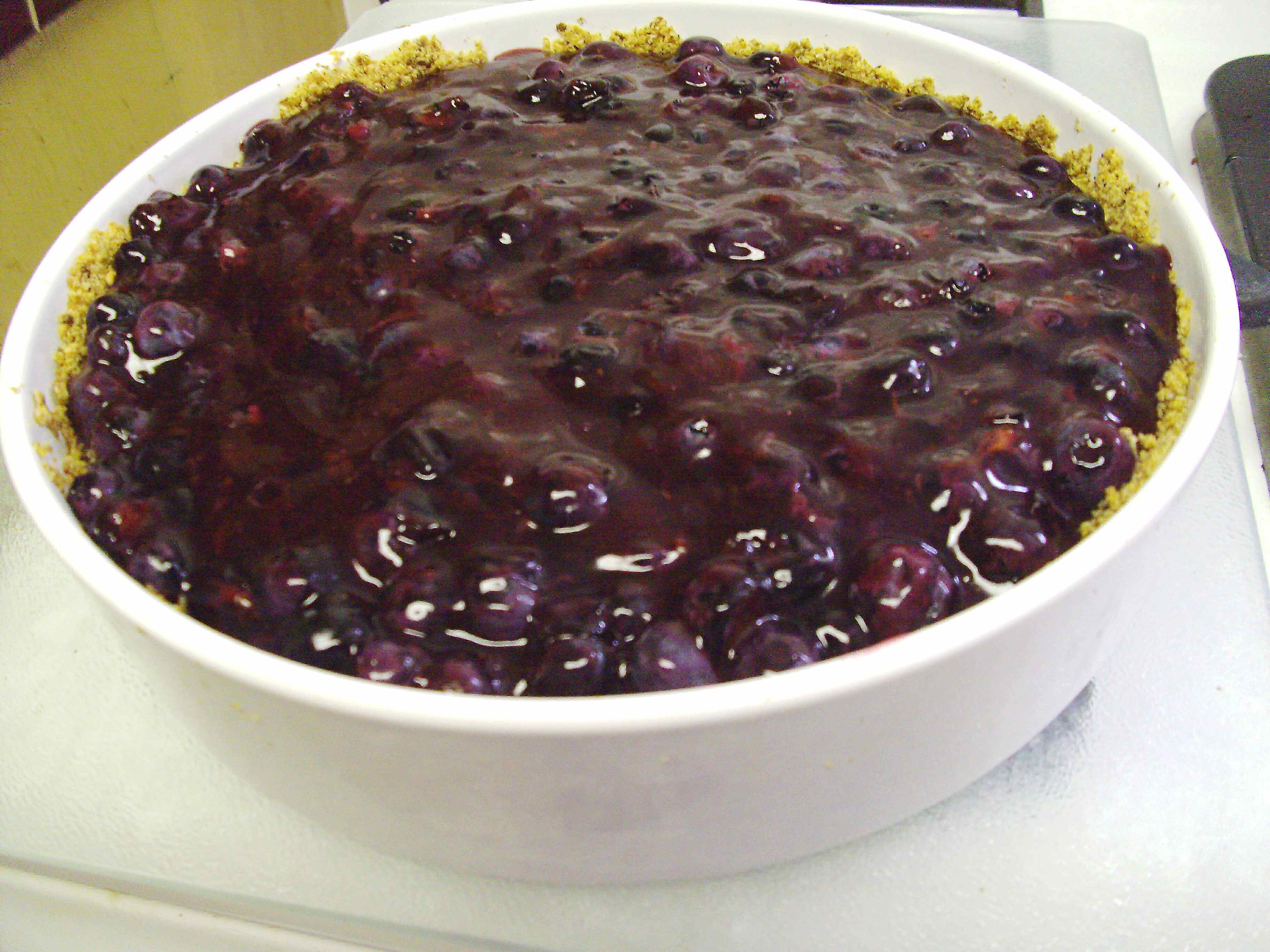
    raw blueberry pie with microwaveable filling and graham cracker crust

    This mostly-raw blueberry pie is a snap to make and very versatile--the filling microwaves in a few minutes, and you don't even have to bake the zippy gingered graham cracker crust--perfect for a hot Fourth of July and all summer long.

  • Recent Posts

  • Contents

  • Archives

  • Now Reading

  • See also my Book Reviews

  • Copyright 2008-2024Slow Food Fast. All writing and images on this blog unless otherwise attributed or set in quotes are the sole property of Slow Food Fast. Please contact DebbieN via the comments form for permissions before reprinting or reproducing any of the material on this blog.

  • ADS AND AFFILIATE LINKS

  • I may post affiliate links to books and movies that I personally review and recommend. Currently I favor Alibris and Vroman's, our terrific and venerable (now past the century mark!) independent bookstore in Pasadena. Or go to your local library--and make sure to support them with actual donations, not just overdue fines (ahem!), because your state probably has cut their budget and hours. Again.

  • In keeping with the disclaimer below, I DO NOT endorse, profit from, or recommend any medications, health treatments, commercial diet plans, supplements or any other such products.

  • DISCLAIMER

  • SlowFoodFast sometimes addresses general public health topics related to nutrition, heart disease, blood pressure, and diabetes. Because this is a blog with a personal point of view, my health and food politics entries often include my opinions on the trends I see, and I try to be as blatant as possible about that. None of these articles should be construed as specific medical advice for an individual case. I do try to keep to findings from well-vetted research sources and large, well-controlled studies, and I try not to sensationalize the science (though if they actually come up with a real cure for Type I diabetes in the next couple of years, I'm gonna be dancing in the streets with a hat that would put Carmen Miranda to shame. Consider yourself warned).

School lunch vs. Congress: Ketchup all over again

The House and Senate’s reconciled spending bill–surprise, surprise–now strips out the new USDA rules on school lunches. You know, the new rules to lower sodium, limit potatoes as in french fries, and debunk the idea that the smear of tomato paste on a commercial frozen pizza slice sold to the school through a fast food concession contract somehow counts as a vegetable. Those rules.

The spending bill is due for a final vote later this week and you won’t be surprised at all to find that the “no new lunch” provisions come primarily from the hands of a number of Republicans in both houses. Worse, one of their chief arguments is that because vegetables other than potatoes, corn and other starches are expensive, the schools shouldn’t have to comply.

But who made–and keeps making, take a look at the other parts of the spending bill–greens so much more expensive to grow than wheat, corn, soy, potatoes…the big heavily-subsidized commodity crops? You got it.

The shamelessness is everywhere though. While trying to verify the details of the bill in the Washington Post article, I looked up “House Budget Committee” (which isn’t exactly it; the official spending bills for the House come from the Appropriations Committee, but I wasn’t thinking official terminology first thing before coffee this morning).

I was disgusted to find an official House committee page apparently dedicated to singing the outsized praises of one party’s platform rather than to presenting actual public business–bill texts and status, committee assignments and mandate–conducted by and representing the work of all the members of the committee, whatever their party affiliations.

The Budget Committee’s chair, Paul Ryan, has commissioned a web site so grossly propagandist and silly it should be a public embarrassment. Go visit it. Am I wrong? Or does almost every single item on the front page mention Paul Ryan prominently in tones that suggest he led the Battle of the Bulge or launched NASA or some equally visionary achievement?

Given his performance in the GOP debates and the many polls that show his true popularity among voters, I shudder to think how much he had to spend out of the committee budget to get someone to put up such a flattering page.

If the House wants budget cuts, maybe this is where the supercommittee (and is that ever an overrating) should start. And then they should get back to work and put some actual food on the tables in public schools. $6.8 billion to improve school lunches and the federal breakfast program for low-income students is a pittance. It’s not enough to do everything students need, but it would do a lot if it weren’t wasted battling the processed food lobbyists over salt, potatoes, pizza, tomato paste and ketchup.

As it is, the food lobbies are likely to win this round in the legislature, or so the newspapers predict.

What power is left? Your purse. Your vote. Your phone calls to your senators and congressional representatives.

Likewise your ability not to pay for garbage. Boycott frozen pizza. Boycott french fries. Boycott soda. Stop buying this stuff for home and tell your kids why. These shameful food substitutes are a lot more expensive than they look. Pack your kids a real lunch–it could be leftovers or a sandwich, but pack something with protein, a little whole-grain starch, and actual vegetables. Maybe a fruit. Keep it cheap and whole–apples/oranges, not passionfruit.

I would also like to see students whose families can afford it to chip in by bringing a bag of apples to school, or a bag of carrot sticks, or a can of tuna, or a pound of cheese or a loaf of bread. Not every day, but every week or month. I have the idea that if all of that donated food went into a kitty for the low-income students, they might eat better than the way they do now.

Artificial sweeteners–false promise for lower carb counts?

Last Saturday night my family visited a couple from our congregation and had dinner in their sukkah. When we broached the question of what there would be for dinner so my daughter could get an idea of how much insulin to take, the husband announced that he too was diabetic–Type II, for several years. What followed was a bit of a culture clash.

I’m sure he meant to be encouraging as he declared that through a combination of self-discipline and exercise and not eating more than a very limited number of carbs per day (and they really were about half of what our daughter is supposed to eat) that his A1C tests were down in the normal range and he only had to test his blood sugar twice a week. Which of course is fine and nearly ideal for a Type II diabetic if it actually works.

I’m not entirely sure how my daughter took all of this, but he went on to dismiss another Type I diabetic we know as “paranoid and overdoing it” because she tests 6 or 7 times a day, which he assumed was unnecessary since he didn’t need to do that.

He had the shining confidence of someone for whom not much had ever gone awry and, having no idea how lucky he was, assumed it was down to his own skill rather than the fact that he had a working pancreas, wasn’t growing anymore, and wasn’t a girl. All big factors for blood glucose control. Clearly he’d never had a bad low with shakes from an overdose or hormonal surge, or a really sharp unexpected high from a shot that just didn’t get where it was supposed to go.

I was more tactful than I’ve ever been in my life when I pointed these things out. You wouldn’t have recognized me, I swear!

Oddest of all was his insistence that the real secret was his use of artificial sweetener, which let him enjoy all kinds of great desserts. I was puzzled–baked apples sprinkled with xylitol? Surely the apples themselves were pretty carby–as well as pretty sweet on their own. The carb difference between using artificial sweetener, a tablespoon–or even two–of table sugar for the pan, or just leaving the apples to bake without sweetener, would be pretty minimal per serving.

And indeed our host only took two wedges for himself.

The other dessert–and it did taste decent–was chocolate ice cream sweetened with xylitol. Given that the ice cream in question was a plain flavor from my usual brand, I was able to compare it with the ordinary version for carb with reasonable confidence.

It was plenty sweet–maybe sweeter than normal, for that matter. But for carbs?

There was no difference. 17 grams per 1/2 cup serving, xylitol or no.

Which brings up a sobering question: why use artificial sweeteners if they don’t lower the carb count significantly? Continue reading

Weighing in on kitchen scales

Digital kitchen scale

Farhad Manjoo, better known for his columns on computer and phone technology, has now tackled kitchen tech for the New York Times in his  ode to the electronic kitchen scale.

And while I applaud the general idea that it’s a valuable tool–after all, we use ours daily–I’m both stunned and unsurprised at the same time at the limited perspective he shows [chorus, because he’s a boy]. For Manjoo, as for the food bloggers he quotes (J. Kenji Lopez-Alt of Serious Eats, Deb Perelman of Smitten Kitchen), using a kitchen scale is about cooking more precisely and with fewer measuring cups, spoons, bowls, etc. Which is fair enough, I suppose, if you’re really worried about whether you already cook well, or if you have ambitions for exactitude.

But why do most Americans who actually have a kitchen scale get one in the first place? The fact that our kitchen scale came with a “The Biggest Loser” sticker on it might give you a solid clue.

We got our scale because our daughter developed Type I diabetes at age nine. Although we started out with half- and third-cup measures for simple foods like beans or plain pasta, we really needed to be able to calculate how much carbohydrate was in more complex or variable-density foods like breads and baked goods so we could give her the right amount of insulin for them.

Our school office manager said she’d gotten one on doctor’s orders after suffering a stroke in her early 40s, and she swore by it to help her cut back significantly on carbs and get her portions right.

Health concerns, not haute cuisine, are the most urgent reason to learn to use a kitchen scale. Not that better-tasting food isn’t important, but learning how to eat more moderately by measuring and knowing what’s in a serving would help at least two-thirds of Americans back themselves down off the high-BMI, pre-diabetic ledge. Especially since an international diabetes conference just reported something like 350 million people worldwide now have diabetes, double the number from 20 years ago.

Digital scales seem to do the most good, for us at least, in preparing homemade pastries or complex dishes (such as quiches or filled pastas). Our other best use is weighing out complex high-carb foods like pastries and candies that we’ve bought elsewhere, since they can be so variable in density or sugar content.

Unfortunately, weighing out treats is usually a big eye-opener for us as well as our daughter. That blackberry pie my husband lugged home from a specialty bakery run is worth a meal and a half of carbs if you do the picture-perfect wedge. We’ve started to cut our pieces a little thinner not just so our daughter doesn’t feel shortchanged but so we don’t get slapped when we step on the big scales the next morning.

Along the way the scale has helped us learn carb fractions for different foods and figure portions for them so it’s easier to estimate when we eat out.

It’s not so tempting to eat a whole doughnut for Sunday breakfast from the surprisingly good and inexpensive bakery three blocks away when you discover that even the relatively modest sugar twist (a real doughnut utterly unlike Starbucks’) represents 60 grams of carb, worth a whole meal without even accounting for a glass of milk, and the jelly doughnut is something like double that. And once you’ve eaten it, you won’t really feel full. Dangerous goods. Better to split the doughnuts and eat something more substantive with them.

Bonus points for my daughter’s practical algebra skills here: she’s figured out how to calculate carb fractions based on the nutrition labels for her own custom blend of low-carb, high-fiber cereal and ultra-carby granola on regular mornings, and she’s pretty fast by now. The extra flourish on the calculator may make me roll my eyes (and yes, at a certain point I’m always thinking, “Just pour it, already!”) but she’s having fun showing off. Even though she’s done the measurements and calculations often enough to be able to eyeball the amounts in a cup if she wanted to.

Because of course, it can be taken too far…

After all, you can’t lug a kitchen scale to school with you in your backpack every day. Most diabetics of longer experience count by eyeballing and estimating when they eat out rather than agonizing over every gram. You can get a little too involved and dependent on the precision a scale offers and forget how to trust–and train–your innate abilities.

Which brings me back to Farhad Manjoo’s column. There’s nothing actively wrong with the way he’s using his scale, I suppose–except for his exuberance about pouring flour straight from the bag into the mixing bowl, then pouring sugar straight on top of that. If you overpour, you should be taking some back out, but then what? Discard the excess sugar now that it’s contaminated with flour? Ignore the contamination and scoop it back into the sugar sack? Take it from a former lab rat, you’d have done better in the waste-not sense as well as the food safety sense to weigh each separately into a paper cup or onto a plate and then pour it in the bowl.

But that’s for things that really benefit from weighing. Manjoo’s using the scale to figure the exact portion of coffee beans to use each day. One of his interviewees is using the scale to weigh out the exact amount of sugar for his iced tea. These things would do fine by eyeballing–or just using a spoon like a normal person.

Do you really need a kitchen scale to figure out how much grated cheese you want in your mac and cheese? Wouldn’t grating it until it looks and tastes good to you work at least as well?

These guys have lost their trust in their ability to eyeball or cook by feel as they check and recheck their precision on the digital scale. Couple that with the cachet of doing as the French do (that is, when they bother to weigh ingredients instead of cooking by instinct, which they’re inordinately proud of) and you have a new American tech obsession parading itself as competence chic.

It’s like checking your e-mail every 20 minutes. Or bringing your new iPhone to the dinner table and looking up instant info on the Web every time your wife brings up a topic to which neither of you knows the answer. (AHEM!!!) Not that I’ve ever met (or acknowledged meeting) any certain husbands who got that obsessive over their apps. Trust me, it does NOT make them more competent or enjoyable conversationalists…even if they do occasionally bring home some serious pie.

Pyrex and Anchor Hocking now both unsafe for cooking

I’m not sure how I happened upon Consumer Reports’ disturbing feature from January on exploding glassware cooking accidents in both Pyrex and Anchor Hocking tempered glassware. Since a lot of my microwave directions call for Pyrex bowls, I thought I’d better post about it asap.

Here’s the link explicitly:

http://www.consumerreports.org/cro/magazine-archive/2011/january/home-garden/glass-cookware/glass-cookware/index.htm

Because I’ve used my current Pyrex bowls and bakeware for more than 10 years, I’ve been looking recently to replace and/or add to my collection. But every time I’ve looked for it in the past year or so, I’ve hesitated–the stuff on sale is a blueish color. Or it’s a little thinner than I remember. Or it doesn’t feel or even sound right when I pick it up. And the cardboard overwrap has a lot of new warnings about when and how you can or can’t use it that are different than the old classic Pyrex. It’s confusing–can I use it the way I’m used to or not?

So even though the casseroles and pie plates are bright and shiny and new and usually on sale at my local supermarket and the Target, I’ve passed them up, thinking, “I’ll do it next time.”

According to the Consumer Reports piece, it’s a damn good thing I did. Read the article. Now. Please. Before you put any of this generation of Pyrex in an oven or microwave. Before you give a set to some newlywed as a kitchen gift.

And don’t buy this stuff. If you did, don’t use it for any kind of heating up, conventional oven or microwave (I know, so what good is it if you can’t heat stuff up in it? Wasn’t that the whole point?)

Apparently both companies are claiming that the explosions–which have caused burns and lacerations when the victims took a hot casserole out of the oven or microwave and set it down–are the result of misuse, or perhaps the glassware had gotten dinged or scratched and therefore the flaws had weakened it, and that it was a rare phenomenon. The article authors estimated a fairly high number of incidents in the past few years based on hospitalization records and other outside evidence.

Consumer Reports debunked the companies’ blame-the-victims ploy by testing both brands of glass cookware at various temperatures and setting the pans down on a variety of typical kitchen surfaces.

The results were not pretty–Pyrex had a slight temperature range advantage over Anchor Hocking, but a fairly high percentage of both broke or exploded if they weren’t used exactly within the laundry list of restrictions on the cardboard overwrap that came with the new bakeware.

Altogether, conducting the tests and videorecording them took more guts than I would have without lexan armor and a full face shield.

But, as I’ve said, I’ve been using my mixing bowls and pie plates for years without problems. What’s going on?

The article authors did track down a probable explanation for all this breakage in what’s supposed to be very durable glassware. Both brands have recently switched to a cheaper formulation for their glass. Pyrex–note, no longer made by Corning–at least used to be borosilicate glass but now uses soda lime glass, as does Anchor Hocking’s tempered glass. Borosilicate is the standard for laboratory grade glassware; it’s stronger and somewhat more expensive to produce–probably the mineral shortages of the past few years have made it more so.

Technically, you can temper soda lime glass, but even when tempered it’s not as strong as the old classic tempered borosilicate. It also seems to be less uniform–and the little unevennesses in the material create local instabilities that can cause cracks and even explosions when subjected to rapid or uneven heating and cooling. It only takes a split second in some cases.

Borosilicate is almost certainly what my old Pyrex standbys are made of, and I’m standing by them. I just wish I could have bought more at the time, or that someone else made them now. I wish Pyrex’s current manufacturers in particular had not ruined their product by changing glass to reduce costs, and that their managers weren’t scrambling to deny it.

For now, I’d say please DON’T use the newer Pyrex or tempered glass bakeware items for microwaving. They’re just not the same anymore. Use microwave-safe ceramic instead.

Who the federal spending cuts are hurting: Food pantries

The LA Times reported today on Southern California’s food pantries.  Demand in Los Angeles and Orange County has gone up 70 percent since 2008. Between LA and OC, the food banks are reaching more than half a million people. The LA Regional Food Bank alone is serving something like 1.25 million pounds of food a week. They’ve received increased contributions in that time from the USDA and FEMA, quite a change from the shameful 50 percent cuts the USDA made to food bank aid in the mid-2000s during the Bush administration, but that’s being considered emergency funds, not standard support. Ripe for cutting the moment Obama decides to try and look flexible with the Republican House leaders once again.

And thanks to the repeated budget cuts to domestic federal spending while military spending and bank bailouts continue to be preserved, even that emergency aid is now down considerably from last fall. But the demand isn’t.

The shortfall has to be made up in private contributions. But a lot of the shortfall is just that–shortfall.

Too big to fail? Too good to pay taxes?

Source: Library of Congress

Every so often I review books and movies on Slow Food Fast, but as of yesterday, I’ve dropped my affiliate links to Amazon.com. In the past few weeks they’ve decided to fight tooth and nail not to pay sales tax like everybody else and support the states where they sell. First they cut off any Californians who had joined their affiliate seller program, which is annoying and kind of insulting. Not that I’d been getting anything much out of it, but I’ve also been a customer for years.

They’re even lobbying right now to add a ballot measure reversing California sales tax law for internet businesses. Their excuse is that they’ve built their empire on a tiny profit margin and paying sales tax will ruin the penny-seller pyramid. At the same time, they seem to believe they’ve got favored trading status and that any minor threat to their current model can be countered by threatening to withdraw their hiring. Forget that.

I live in a state that’s bent over backwards to court big business and internet retailers, given them all kinds of tax incentives and concessions for years so they wouldn’t move to Nevada or Delaware, and as a result has been absolutely gutted budgetwise. California takes in about a quarter of the nation’s new immigrants each year, has higher unemployment figures than most of the country, LA County alone has more than 300,000 women and toddlers enrolled in the not-very-generous WIC program,  and basic services are being cut right and left to meet the state’s budget deficit. The poor–and that’s starting to include more of the middle class here too–are paying for Amazon.com’s free ride.

And yet Californians represent one of Amazon.com’s biggest markets.

Even the (now former) California affiliates are thinking Amazon should be ponying up like the rest of us. If you sell here, you should be paying sales tax here.

And our sales taxes have finally gone down recently. For years they were up to 9.75 percent. Two days ago I bought a pair of jeans and was shocked–8.75 percent. Apparently that’s dropping further into the 7 percent range for online purchases.

But Amazon’s looking to sue, as they did (and lost at trial) in New York.

Where can you get the books I recommend on this site? Alibris pays sales tax in California, and I’d recommend them.

Or, if you’re in Southern California, head to Vroman’s in Pasadena. Not only is Vroman’s a century-old independent bookstore, both branches are well stocked for hip, academic and traditional booklovers. And the staff are personable, they do lots of readings events, have a huge cooking section, and do online orders if you need something special. The bigger branch on Oak Knoll has a nice café as well.

Big Food mobilizes against child marketing guidelines

This Washington Post article isn’t the absolute clearest–looks like it was written as a last-minute rush piece, actually, but it’s worth getting to the end.

The basic idea is that in 2009 Congress demanded the CDC, FDA, USDA and FTC come up with a coherent set of voluntary nutrition guidelines for what the food industry can market directly to kids.

I’m not a big fan of voluntary nutrition or safety compliance guidelines for the food industry–mostly because industry players generally feel free to ignore or toy with them and then claim some kind of advertising advantage they haven’t earned. Voluntary guidelines also come with all kinds of soft landings and easy outs, and the proposed guidelines here are no great exception.

But in any case, now the four agencies have done it, and the food and restaurant industry is doing the predictable–throwing big lobbying bucks into a disinformation campaign-slash-tantrum.

How big? The campaign manager won’t say, but the preliminary guidelines report that US food industry marketing to kids 2-17 years old is currently something over $1 billion in three key categories (breakfast foods, restaurant chain food, and snacks).

So it probably won’t surprise you that companies like General Mills, Kellogg, and Pepsico have teamed up with ad-carrying media partners like Viacom (read: Nickelodeon) and Time Warner to try and quash the voluntary industry guidelines. Figure on the campaign to be spending in the mid-millions or more. They’d rather “salt and burn” instead of “cut the salt and learn.” And what a waste.

What will probably surprise you is just who this coalition–calling itself the “Sensible Food Policy Coalition”–?!!–hired to handle the campaign: Anita Dunn, a former Obama communications director whose husband, Robert Bauer, is  still White House counsel. Not a really lovely mashup, there.

Why she’s taking on the food industry campaign so they can keep protecting their ability to market garbage to the young and vulnerable is one question. Why the FDA and FTC, which have the power to decide what nutritional and medical claims, among other criteria, are valid and can be used in advertisements to adults, let alone kids and teens, are bothering with a voluntary measure instead of doing a proposed regulation to limit such marketing to youth is another.

In both cases, the answer is almost certainly money. The food and media industries have it, the federal agencies don’t.

[As it turns out, the FDA and FTC don’t have power to restrict Big Fo0d’s marketing to the under-17 crowd after all. They lost that specific ability in 1981–start of the Reagan administration… Reagan’s “ketchup is a vegetable” declaration was the beginning for drastically lowered nutritional standards and branded fast food concession contracts for public school lunches.]

So the right question under these circumstances is, where do you want to put YOUR money? How about this, if the federal agencies can’t get a decent result and the lobbies are buying off everyone else:

Boycott the Boxes. Hit ’em where it hurts.

Box 1–TV: If you have kids, limit their access to TV, and teach them to turn off the sound during the ads. Do it yourself. Treat the ads like the silly nuisance they are from the minute your kids are old enough to watch. Tell your kids the truth: most of the products advertised on kids’ shows are too shoddy–and overpriced–to market to grownups. The companies make them bright and loud and cheesy because they think kids can be fooled easier (your kids should be beautifully insulted at that if they’re about six or seven years old).  Go with PBS and videos you approve rather than commercial TV as much as you can.

Box 2–Packaged stuff parading as food: Skip almost everything that comes in a cardboard box or a plastic overwrap, or in a can. You can do this. You’ll save an awful lot of money by buying store brands only and cutting out the most pernicious items–sugared and high-salt packaged breakfast cereals, bags of starchy snack extras, and sodas, at least on an everyday basis. Save sodas and chips for parties, not for school lunch or part of dinner.

You’d do even better to go with fresh vegetables and whole fruits for most snacks and make a good habit for relatively cheap. They taste pretty good, don’t take long to fix, last at least a week in the fridge, and your kids won’t get sick overeating them.

There’s a reason the Pringle’s slogan is the very smug  “Betcha can’t eat just one.” No one says that about carrots or broccoli, or even about apples. Ever eaten too many of those in one sitting? Didn’t think so. Vegetables and whole fruits keep you satisfied longer, don’t hyperstimulate your appetite for snacks, and they don’t put on pounds that take a long time to work back off. They don’t promote cavities, either. Even nonsweet junk foods do–all that processed starchy stuff sticks to your molars like glue.

Acai, African mangoes, and the ‘tiny belly’ con

The Washington Post:  ‘tiny belly’ online ad part of scheme, government says

Acai berry distributors have been under scrutiny from the FTC since the spring, but the “tiny belly” and “1 weird old tip” ads that flood the margins of your online newspaper are part of an elaborate scheme to sell you fake diets based on acai, African mangoes, hCG (placenta extract), and other snake oil.

According to the FTC, though, the true objective may be something else–the “free samples” require you to register your credit card.

Google and the other main ad server claim they’re weeding out bad ads, but this one is so prominent on so many sites you just have to wonder what kind of cut they’re getting from it. Because the same damn wiggling abdomen cartoon is everywhere, used over and over, it should be a snap to eliminate.

File this under: unappetizing.

Who’s dissing the lentil?

red lentils

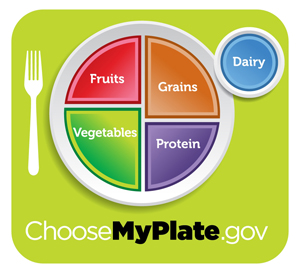
One more point on reactions to the new USDA MyPlate icon, this from foodnavigator.com:

Whether the new food icon was an ‘economic plate’ however, remained to be seen, said Drewnowski. “It’s great that dietary guidelines say we should eat fresh , minimally processed fruits and vegetables, fresh fish and lean meat, but these cost money. Are we asking low income people to adopt a high income diet?

“It’s easy for people to say that people on low incomes should boil up a big lentil and vegetable soup and make it last all week, but who wants to do that?”

Actually, I would. Because it’s really cheap and easy, and you can do it in a microwave, or at least partly. Also because most people used to make some kind of lentil or bean soup on a weekly basis, and in Los Angeles, particularly among the Latino and Armenian communities, a lot of families still do, and do it well. Here are three of my earlier posts, including the first of the infamous “War and Prunes” trilogy (I got a little carried away last summer. What can I say?)


The new MyPlate icon–fantastic or plastic?

Everyone in the food press seems to be weighing in on the new replacement for the much-cursed USDA Food Pyramid in all (both?) its glorious confusion and obfuscation of real nutritional goals that might have (and should have) undermined the beef, corn, pork, corn, sugar, corn, and soy industries if they’d ever been presented honestly.

So where does that leave us? With ears of fresh corn that are more than 50 cents apiece in Los Angeles supermarkets, and the new…

USDA MyPlate logo

Already, the USDA’s MyPlate web site is in a certain amount of branding trouble (and of course, that’s what counts most in America): the Texas DMV had already bagged “MyPlates.com” for its vanity license plate division (highly unappetizing), and Livestrong.com already has its own well-established “MyPlate” food calculator and fan base. And those items come up first on Google searches. As in, the whole first page or more. The government site ranks way down the list and had to water down the impact of its original name choice with “choose” just to get a URL. Can it elbow out the competition just by bolding the “MyPlate” part?

What really counts are the food and nutrition opinion maker comments, though. And a lot of those are detracting in a nitpicking way that I think kind of misses the point.

The first thing they all have to say is that the plate looks dumbed down. Forgive me, but wasn’t the Food Pyramid’s unreadable and unusable design a large part of the problem? The MyPlate icon is simpler and more direct, and it names real food groups, not “Big Mac” or, on the haute side of things, any of Ferran Adrià’s foams. No wonder foodies and populists alike are wondering what it has to do with them.

A small sampling of the main arguments:

MyPlate: The Food Pyramid for dummies? (LA Times): Dr. Andrew Weil and others discuss what’s still wrong with the new icon. Weil says “fruits” could still include fruit juice, which is usually a useless sugar bomb in comparison with whole fruit, and he worries that the protein section, which comes with a guideline to eat 8 oz. of fish per week, might encourage unthinking people to increase their mercury intake since swordfish is on the guideline menu, as are some of the generally overfished popular species of fish. Weil’s not wrong about the fruit juice vs. actual fruit, but his hand-wringing about fish is really geared for well-off readers who can afford to eat much of it. All the fishes he names are Continue reading