• Enter your email address to subscribe to this blog and receive notifications of new posts by email.

    Join 241 other subscribers
  • Noshing on

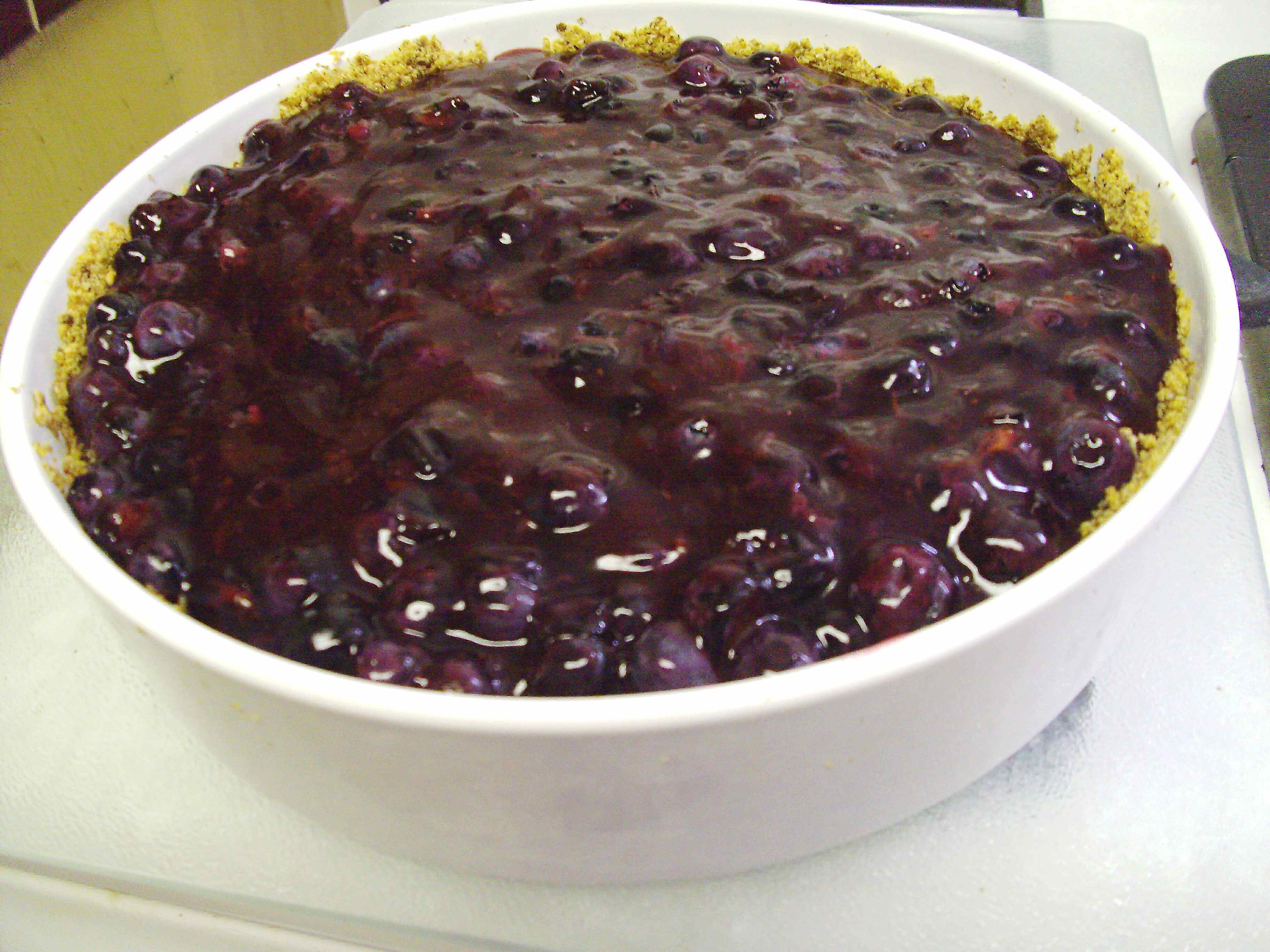
    raw blueberry pie with microwaveable filling and graham cracker crust

    This mostly-raw blueberry pie is a snap to make and very versatile--the filling microwaves in a few minutes, and you don't even have to bake the zippy gingered graham cracker crust--perfect for a hot Fourth of July and all summer long.

  • Recent Posts

  • Contents

  • Archives

  • Now Reading

  • See also my Book Reviews

  • Copyright 2008-2024Slow Food Fast. All writing and images on this blog unless otherwise attributed or set in quotes are the sole property of Slow Food Fast. Please contact DebbieN via the comments form for permissions before reprinting or reproducing any of the material on this blog.

  • ADS AND AFFILIATE LINKS

  • I may post affiliate links to books and movies that I personally review and recommend. Currently I favor Alibris and Vroman's, our terrific and venerable (now past the century mark!) independent bookstore in Pasadena. Or go to your local library--and make sure to support them with actual donations, not just overdue fines (ahem!), because your state probably has cut their budget and hours. Again.

  • In keeping with the disclaimer below, I DO NOT endorse, profit from, or recommend any medications, health treatments, commercial diet plans, supplements or any other such products.

  • DISCLAIMER

  • SlowFoodFast sometimes addresses general public health topics related to nutrition, heart disease, blood pressure, and diabetes. Because this is a blog with a personal point of view, my health and food politics entries often include my opinions on the trends I see, and I try to be as blatant as possible about that. None of these articles should be construed as specific medical advice for an individual case. I do try to keep to findings from well-vetted research sources and large, well-controlled studies, and I try not to sensationalize the science (though if they actually come up with a real cure for Type I diabetes in the next couple of years, I'm gonna be dancing in the streets with a hat that would put Carmen Miranda to shame. Consider yourself warned).

This always happens right before vacation…

Finally, finally, we are going to the East Coast. We’ve had to put off seeing my mom and my sister (and assorted boys) twice since December due to incessant snow, none of which hit Los Angeles in the slightest. So as soon as school lets out, we’re packing for an ungodly wake-up call the next morning and getting out of SoCal for a bit more than a week. The cat gets a hotel/spa vacation without all the schlepping around between Bahston and New Yawk. We get the do-we-have-enough-clean-undies-to-make-it version.

So good, already. But as in many of my tangled big-event preparation schemes, I have a slight problem with the fridge:

Stuffed fridge right before traveling

The problem, part I…Note the tomatoes: 10+, excessively ripe, and the invisible 6 or so red peppers behind them. Not to mention the huge bag with 7-8 bunches of fresh herbs…

fridgedoor

Part II, the door…Note the huge bag of nectarines, lower left, the chiles just behind the mushrooms and two bags of apricots at right, just because…

AAAgh…just a little insane. Suffice it to say, it’s been an enthusiastic week or so vegetable-shopping-wise because the Fresno tomatoes are back in my local greengrocer’s, along with a lot of other produce, and I’ve gone overboard on a number of items, not least of which are lemon basil, mint, dill and tarragon (which I haven’t even decided if I like). The market beckons, the low prices for herbs and vegetables even more so, and the sun’s finally come out again after a month of gray days. And I’m a purple thumb as a gardener, so the greengrocer’s wares beckon even more strongly. How could I not want it all? But a little thought for the calendar might not have gone amiss.

So I’m in trouble again. We leave in 4 days. There are a maximum of three humans in the house (depends how we’re behaving at any given moment). Nobody but me really gets into gazpacho the way they should–though they will go with salads (the coarse-cut version of gazpacho). And it’s a sorry day when you have to threaten people with apricots and nectarines three meals a day. We should be reveling in the produce section, not roiling in it. If we were staying here, this would be an ideal scenario for the next week and a half, Continue reading

Parsley Doesn’t Count

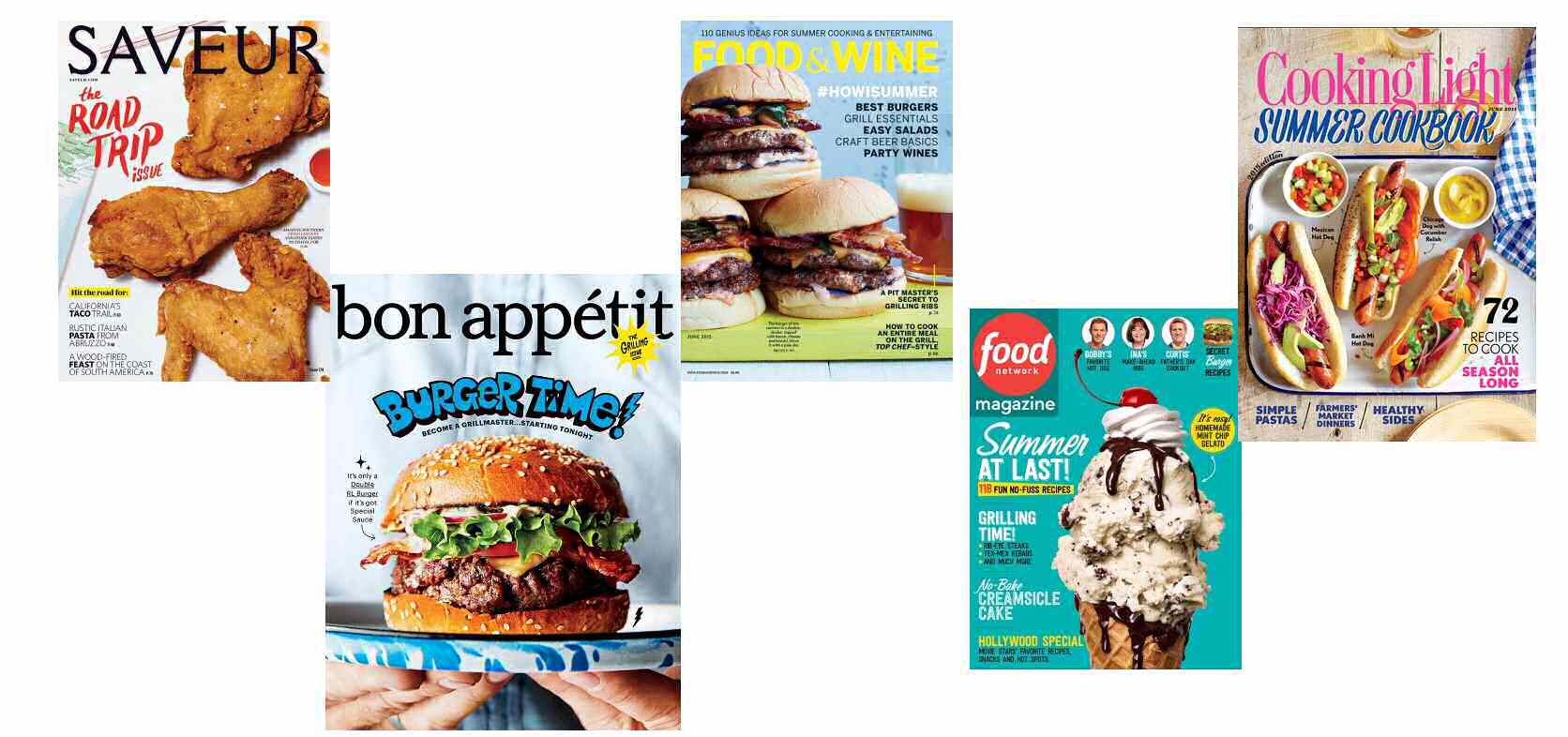
It’s nearly June, the big northeast snowfest that lasted into April is pretty much over, and all the May and June issues of the big food magazines are showing…almost no fresh vegetables on the covers. Or inside. Oh, you do see some green–but it’s garnish. Flat-leaf parsley, a little cilantro, a sprig of basil maybe, chopped or torn over the cover dish to make it pretty. But very few actual vegetables–take a little walk with me down the newsstand for a sec.

magcovers

All magazine cover thumbnails shown have been lifted shamelessly–they’re not mine, they’re the property of their respective publishers–and pasted together here solely for parody value and critical review of the food literature.

Saveur? Fried chicken. Seriously. Cooking Light? Hotdog special–one with a slice of pickle and tomato, another with avocado, to represent Vietnamese and Mexican, respectively.  Whoo-don’t you feel like a world traveler now. Food and Wine? Burgers by Bobby Flay. Bon Appétit? Another burger. Food Network? They don’t even pretend. Ice cream cone. With whipped cream and a cherry on top. On a cone.

The women’s mags are leaning toward desserts: Martha Stewart–cake. Southern Living, Allrecipes–pie. Better Homes & Gardens and BHG Diabetic Living both feature watermelon and ice cream or sorbet assortments. All of it very pink.

Eating Well cover Vegetarian Times cover

But even EatingWell and Vegetarian Times aren’t doing all that much vegetabalia on their green-looking covers. EW has a vegetable serving platter with a nice looking bunch of raw green beans and tomatoes at the bottom, but more than half of the platter is canned  beans or dip. Not that I’m against those, but they really aren’t fresh veg.  VT has a grilled veg and quinoa salad platter that looks wholesome enough, but if you zoom in for a closer look you realize it’s not mostly veg either. If you took a quarter of it for yourself, you’d only get 3 or 4 thin slices of pepper and zucchini on your plate along with the grain. Most of the green you see in the picture is a token sprinkling of arugula and basil sprigs strewn over the top–a strategy that’s being used and abused in the less veg-forward pubs to make steak or pork loin or mac ‘n’ cheese look like they have something fresh and healthy about them.

Lucky Peach and Cook’s Illustrated both go for graphics rather than photos. LP has a cartoony poster graphic of garden lushness for “The Plant Issue”–do they really have vegetabalia inside? Cook’s Illustrated has a pastel of radishes.

It’s as though they all decided to try to look summery without  including actual bulk greens–the signature of summer (well, other than watermelon). I’ve complained about this before, I know, but back then I was talking about friends who don’t cook much and are somewhat veg-phobic, not about upscale food media. For years the food glam world has been touting local sourcing, farmers’ markets, heirloom this and that, Provençal and Spanish and Italian and Middle Eastern cuisines, which are full of vegetables one way and another. But they really are no longer practicing what they preach. They’ve shrunk their focus down to the meager American fast food paradigm while pretending otherwise. And charging you between 4 and 10 dollars an issue.

But vegetables are so easy to ruin, you say. The green ones turn brownish olive if you hold them too long after cooking. If you’re going to hang around a whole hour waiting for the photographer to get the right shot, you’re going to have to cook a couple of batches in a row. Strewing a couple of sprigs of cilantro or parsley over something is so much easier!

The other reason we’re not seeing vegetables on the magazine covers: editorial production lag. Monthly magazines typically take anything from 2-6 months to produce from start to finish, so they work ahead. The May and June issues probably went to press two months ago, when it had barely stopped snowing in the northeast (per my mother and sister). Summer vegetables are not bountiful in March and April under those conditions–at least not in New York and Boston. But the editors could have put together something decent and thematic for the covers if they wanted to–I’m pretty sure I could have sent them a likely looking CARE package from my local greengrocer’s if they’d only asked and were willing to foot the overnight shipping.

A weekly haul from my greengrocer's comes in under $30 even with coffee, spices and special items.

Eat your heart out, foodie magazines! Time to gloat. A typical weekly haul from my greengrocer comes in at under $30 even with a pound of coffee or tehina or yogurt (not shown, obviously), bagged spices, dried beans, and  specials on fruit or nuts. When the tomatoes are better I stagger out the door with 5-10 lbs. at a time, but on the other hand the snow peas were a serious bargain this time around.

There are plenty of good vegetables around. Fresno tomatoes are back in my Armenian grocery (for which, oh! be joyful), we have green and romano beans, we have lettuces and purslane and bunches of fresh basil and dill and mint and za’atar (and yes, parsley, Continue reading

2000-calorie meals in pictures

The New York Times has just posted a very clear picture-it chart of how people get to 2000 calories in a single meal, sometimes even a single dish, without realizing it when they eat out. Not just at Burger King, Denny’s or IHOP, either–some of the upscale chains’ ordinary dishes are just as devastating. If you’re having trouble figuring out your own diet, you might take a look and see What 2,000 Calories Looks Like.

One thing I like about the restaurant-by-restaurant feature is the breakdown of calories for each item in the meal, so you can see how you might do better while eating out.

One obvious takeaway–so to speak–is that fries, shakes, full dinner plates of pasta with cream sauce (or any sauce, really), and slices of cake as big as your head–topped with caramel goo!–are a bad deal for excess calories, lack of nutritional value, and are basically not really necessary.

The other obvious takeaway is that for things like sandwiches, burritos, burgers and similar protein-containing main dishes, you probably don’t want to be eating more than about 500 calories at lunch or maybe 600ish at dinner. Preferably 350-450, to give yourself some room for a salad or fruit. So the hoagies and double cheeseburgers at 900-1100 calories should really be split in two–maybe three. Share one with a friend unless you’re actually a linebacker in training. Or else get rid of the cheese, the excess meat, the bacon, the mayo-based sauces. Go back to a single burger with ketchup and mustard and a couple of pickle slices. And maybe you shouldn’t eat anything else with one of those but a plain apple or orange or some tomatoes or carrot sticks.

The other thing I like is the set of pictures at the bottom–whole days’ worth of decent food from home that are worth 2000 calories per day, and they look a whole lot better than what you get at the restaurants. For the same money or less, and with a microwave, maybe even in less time. A lot more vegetables and fruits, a decent amount of meat and fish and dairy, a lot less in the way of french fries, milkshakes, salad dressing, breadings, special sauces, burger buns and unlimited pasta.

What happens when you age champagne?
A couple of weeks ago on a Friday evening, the week before our anniversary, my husband and I were scrambling to find a bottle of kosher wine in the house for the Shabbat blessings and coming up empty. We didn’t even have grape juice. I took one more look in the last-chance box and realized one of the bottles was kosher after all. It was a bottle of Yarden 2000 champagne I’d picked up on an after-Passover sale several years ago (our local Kroger affiliate supermarket has a not-quite-tuned-in approach toward Jewish holiday ordering; sometimes the matzah boxes arrive and disappear a week before Passover; sometimes they hang around for months, and sometimes they sell good wines at a fire-sale bargain because of the kosher label).

I’d saved that bottle for a special kosher-requiring occasion that never quite arrived. Vintage 2000–definitely the oldest bottle I’ve ever opened at home. As old as our daughter. Has it really been that long since 2000???

(OK, given the sorry yet predictable result of the mid-term elections, I have to say it hasn’t been long enough. But still.)

The bottle was QUITE dusty–almost a prerequisite for experimentation.

Neither my husband nor I are usually all that impressed with champagne–even the expensive mid-level ones, at $40-100 a bottle. Not that we’re usually in a position to sample those at home, but sometimes people splurge on them at Thanksgiving, New Year’s, etc., and we wonder why. They’re usually not as good as the cheaper Spanish cavas–if I had to buy champagne-style wine, I’d rather go with something like Freixenet, not to be cheap but because it’s closer to that bone-dry, yeasty, buttered-toast style I prefer to all the more acidic and flat-flavored mid-level champagnes out there. Taittinger and Moët et Chandon both come to mind as severe disappointments at the $45ish level. Their top-level champagnes might be quite different, but these just seem to be trading on the brand name and pricetag for the naive American market.

For that kind of money, I’d rather have a good, deeply-flavored still chardonnay than almost any of the usual fizzy lifting drinks, and you can get a pretty decent bottle of chard for under $20. Actually, most of the time I’d rather have a decent red.

And frankly nothing is as good as the (once-only) bottle of Dom Perignon my husband brought home 17 years ago, when we finally decided to get engaged after all those years of dodging family and friends, celebrating with some couples and outlasting others. After a lackluster and slightly glum Sunday afternoon discussion that ended with, “Well…okay,” we called each other at work the next morning and agreed we should probably do a little better than that. We were getting married, after all. Oy. We clearly needed some bolstering before we broke the news and faced the inevitable hocking from our families.

A really nutritious dinner consisting solely of Dom Perignon and a (smallish) box of Godiva truffles, each of which looked exactly like Miracle Max’s big chocolate pill from The Princess Bride, seemed to do the trick.

Of course, under the influence of the DP and chocolate, we decided we could do the parts of the wedding we liked (huppah, food, klezmer music, line dancing, ketubbah signing, friends and family, more food, more dancing) and just skip the stereotypical parts we found laughable, uncomfortable or downright detestable in other people’s weddings and wedding-themed tv ads (tux, white puffy dress, veil, speeches, first waltz, which neither of us knew how to do, tiered wedding cakes, arguing with either of our mothers over invitation fonts, color-coordination of any sort or description…)

We ended up having fun at our own wedding, which never really seems to be the primary goal somehow, we only decided where to go on our honeymoon the next morning while sitting around in our pjs, and I maintain that we’ve just kept getting weirder ever since.

Which brings us back to the Yarden 2000. To be fair, Yarden has been making some very decent kosher wines the last 10-20 years. But kosher or not, 14 years for any champagne below the DP level?

Champagne is supposed to be the only white wine that can age–maybe it’s all the trapped carbon dioxide fending off oxidation, but I’d never gotten close enough to try it out. The chemist in me has been waiting for another crack at mad scientist status for a couple of years now, so this was it. Plus it was getting after sunset already and we were hungry and there was no regular grape juice in the house.

Well…if we were daring enough risk our stomach linings and our eyesight by trying mead that had been sitting around for more than a year, we could probably risk a 14-year-old bottle of kosher champagne, once I got the major dust coat off it, anyhow. I found a deep enough pot to improvise an ice bucket but didn’t really have enough time or patience to chill the bottle well.

“Do you want a towel for the cork? It’s probably lost all its zuzz, you know,” my husband said.

Just in case it hadn’t, I opened the bottle carefully and with approved champagne-opening technique (the point-away-from-people-and-twist-the-bottle-gently-away-from-the-cork routine, not the find-the-Napoleonic-era-saber-up-in-the-attic version). The cork actually made a proper popping sound and the usual CO2 fumes rose up. It wasn’t dead after all! (“It was only mostly dead,” I hear you chime in. Stop digging around in that Godiva box already, willya? We already took the good ones.)

Then we poured it, and it foamed up–zuzz intact. So we made the blessing over the wine, and my husband very generously said he’d let me take the first sip. Which I did, but…

“You haven’t gone blind yet, have you?”

I glared at him. Or at what I thought was his general direction.

Continue reading

New hope for lowering arsenic levels in rice

A new study has identified a key protein in rice plants that allows some varieties to keep any absorbed arsenic safely contained in a separate part of the plant from the grain itself. The authors are hoping to introduce the gene for this highly effective transporter protein into plant strains that don’t have much of it and see whether the new genetic hybrids can reduce the arsenic level in major rice crops.


Testing salt reduction on a really large scale

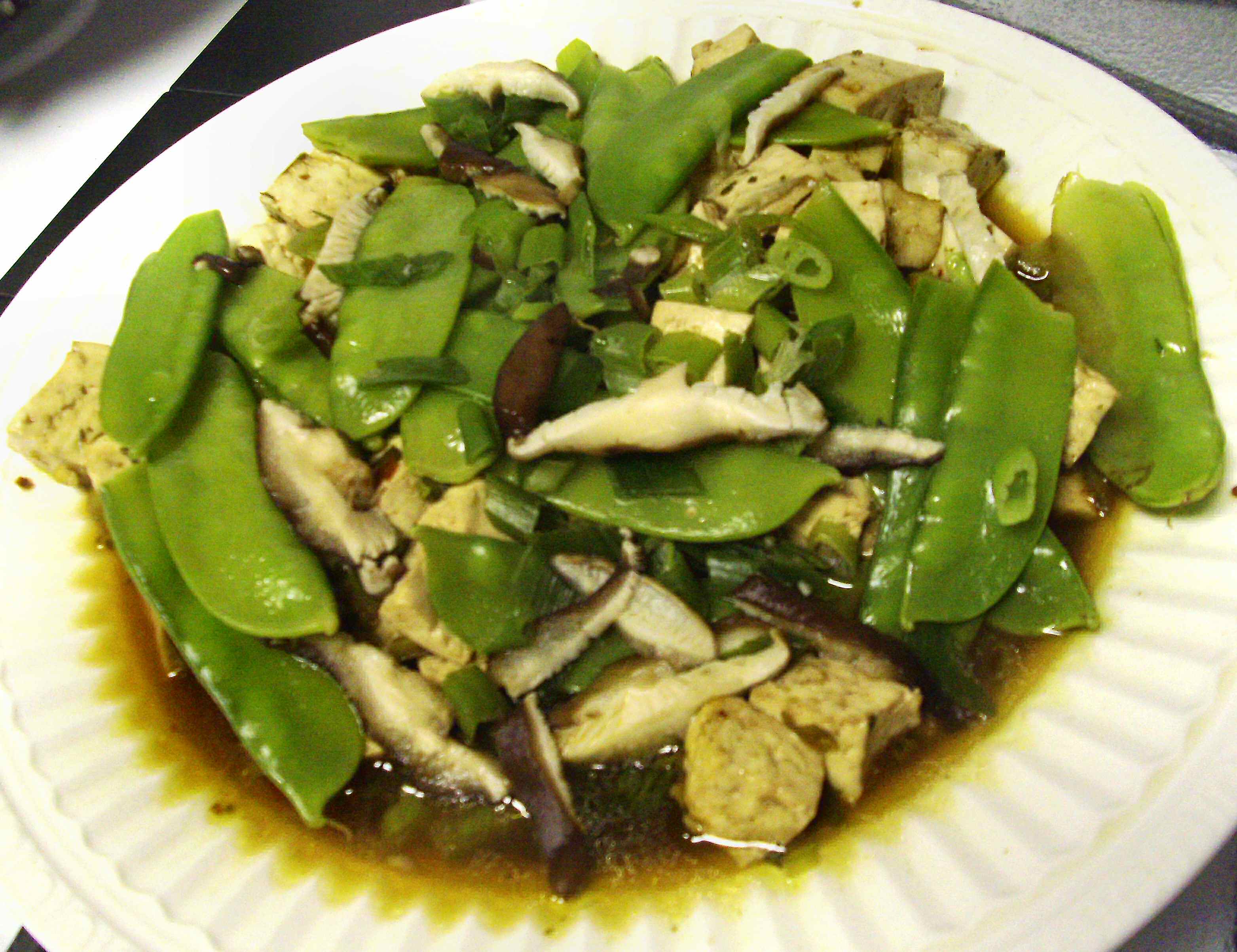
Microwaved platter of low-sodium tofu with snow peas

This tofu dish with snow peas and shiitake mushrooms uses low-sodium dipping sauce ingredients as its base rather than soy sauce or oyster sauce. It’s also microwaveable from start to finish and takes about 10 minutes total.

If you have a big enough–and motivated–study population, even modest reductions in daily sodium intake can make a big difference in preventing strokes and heart attacks. Last month, cardiovascular researchers from Beijing and Sydney announced a new 5-year diet trial in Science to do just that (see the general overview article, “China tries to kick its salt habit”).

China’s northern rural poor eat an estimated 12 grams of salt a day on average, considerably more than Americans’ 9 grams a day (which is still over the top) and more than twice the WHO’s recommended 5 grams or less. An estimated 54%, more than half, of Chinese adults over 45 have high blood pressure these days, and the Chinese government is taking practical steps to provide antihypertensive medications and shift the tide back–but that’s an awful lot of prescriptions.

Given the cost of antihypertensive drugs for such a huge population, and the cost of dealing with side effects and consequences of untreated or undertreated high blood pressure, prevention seems the better way to go. The researchers project that reducing the national average by even 1 gram of salt a day would save 125,000 lives a year in China. So they’ve recruited 21,000 villagers so far in China and Tibet, and plan to provide test groups with nutrition counseling plus a lower-sodium salt substitute for cooking, then compare their sodium intakes and rates of heart attack and stroke with those for a control group.

Most Chinese still do their own cooking at home, especially outside the big cities.  If lowering the sodium content of the salt they use works, it has the potential to get an awful lot of people off daily hypertension medication and reverse a major health threat. But will people do it if they’re not in the trial, or once it ends? Will it catch on? And is it the right answer in the long run?

Salt substitutes, with potassium chloride replacing some of the usual sodium chloride, have been tried by heart patients in the US since the 1970s or so. They’re a little more expensive than table salt or kosher flake salt, at least in the US, but they’re not all that expensive. But they’ve never really caught on here with most consumers.

Similarly, a few decades ago, a big public health campaign in Japan to reduce the high rate of stroke led to the introduction of low-sodium soy sauces, with about half the sodium content per tablespoon of traditional ones.

Not much market research is available on how many people have been buying low-sodium vs. regular soy sauce in Japan since its introduction. From the few current market reports I could find–one of them an executive report from Kikkoman–it looks like low-sodium is still a smaller if steady fraction of their business in Japan, and that it’s more popular in Europe and the US than at home.

It’s important to have a low-sodium line for reasons of corporate responsibility and even prestige, but there was no mention of its percentage of total domestic or worldwide sales. Traditional soy sauces, which can range from 14-18% sodium concentration w/v, are still apparently preferred for taste, and the Kikkoman executives attribute much of their expected taste appeal to salt rather than the other flavors in each one’s profile.

That’s kind of discouraging to me. The Japanese are known for more refined and sensitive palates on average than Americans, and their range of soy sauces and tamaris for specific food combinations is much broader and more sophisticated. The higher-quality low-sodium soy sauces are produced by ion filtration to get sodium out rather than simply diluting them with water, so most of the flavor that’s actually flavor remains. I would have hoped the key flavor signature of each match was the actual flavor of the brewed soy sauces, not the saltiness.

It’s likely, though, that the Japanese are just as susceptible as the rest of the world to the sodium tolerance phenomenon–the more sodium you eat habitually each day, the more you expect and consider normal in your food, and you almost stop even noticing it as a separate flavor.

The overall Chinese market for soy sauce is currently estimated at $20 billion and grew about 23.4 percent over the past 5 years, mostly due to population growth. The stakes are pretty high for China, but the government has tighter control of its salt and soy sauce producers than other countries do, and the will to make a broad change seems to be present, at least at a government level, and if the new study is anything to go by, among ordinary villagers as well. So maybe this time it will catch on once the study’s over.

But obviously, if you’re starting out at a 12-gram-a-day salt habit, the best way to reduce sodium in home-cooked food would be to cut back hard on salt and salted items altogether. That takes time, practice, awareness and deciding that it’s worth going through that first couple of weeks until your palate readjusts to a lower-sodium diet (which it will, but it takes a couple of weeks and a little patience).

Can cutting the salt be done with Chinese food? Not American souped-up chain restaurant caricatures of Chinese dishes, which are hideously over-the-top and greasy as well, but actual home cooking? I’ve done low-sodium Continue reading

Microwave tricks: 5-Minute Plum Jam for Fall

Italian prune or blue plums

These Italian prunes are some of the fresher, better-looking specimens from my greengrocer’s bin this week. But overripe plums work fine too.

Italian blue or prune plums are probably the last round of plums to appear at my local greengrocers for the year (well, until they start getting in carboys of plums and peaches from Chile). Prune plums aren’t much to look at–well, okay, they have a graceful enough elongated shape, but cut into one and you won’t be terribly impressed–the peel is thick and slightly bitter, the flesh is yellow-brownish, not very juicy, and a bit stickier and less brilliantly flavored than the red and black plums of summer, to say nothing of the gorgeous green and mottled dinosaur and Santa Rosa plums we can get here in LA. Many of the fresh prunes end up overripe and still untaken at the end of the day.

Which, I’ve discovered this week, is actually quite a shame. Because if you buy them early and firm, while there’s still a tint of reddish purple about them, they’re closer to regular plums–crisper, juicier and livelier tasting raw. Still not the ideal eating plum, but not bad.

And if you take the ones that are fully ripe and disappointing and bland and not too pretty, cut them up and microwave them, suddenly everything transforms. Italian prune plums make a gorgeous, rose-red, vibrantly flavored low-sugar jam. A lot like cranberry sauce in both color and flavor, but somehow a little mellower, with the bitter edge off, and a hint of spicy perfumed depth.

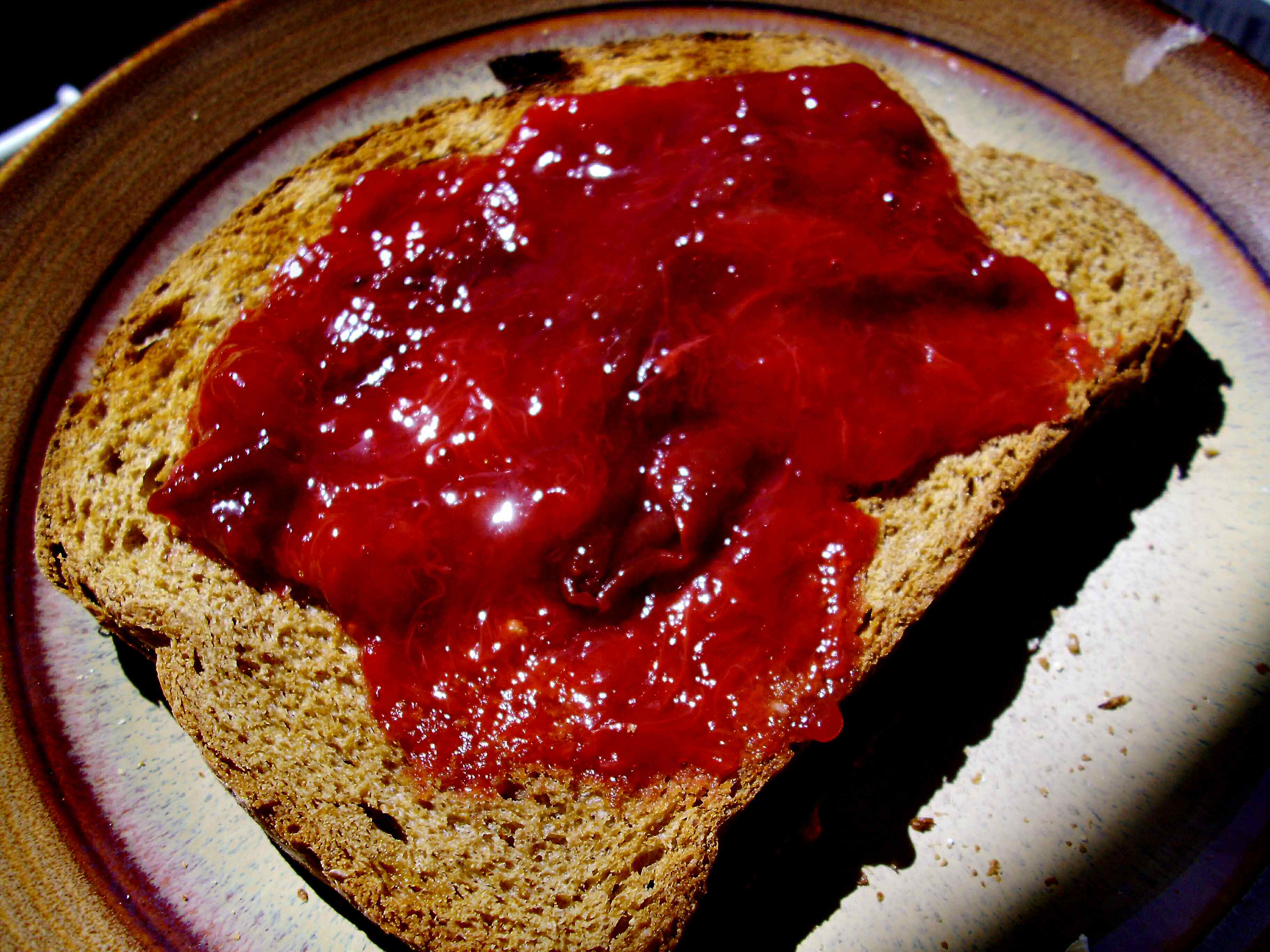
Microwave plum jam on wholewheat toast

Five minutes in the microwave, and everything changes.

Many stone fruits react this way to heat–sometimes sugar too, but mostly it’s the heat. Even very bland, mushy pale apricots seem to bloom into vibrant flavor and acidity when baked or simmered, and sour cherries go from slightly bitter and dull raw to world-famous classic pie filling with a strong almond aroma. I’ve rescued bland, spongy supermarket nectarines and peaches by microwaving them into fruit spreads with real flavor, but obviously good fruit makes even better jams and compotes. It’s just that when the fruit is good raw, I’d usually rather eat it raw, because the season is short.

The prune plums I bought this past week don’t provoke that dilemma of choice; they’re definitely better turned into a quick fruit spread, and maybe I’ll freeze a second batch for later. These plums would also make a great pie filling, like the zwetchgenkuchen that Joan Nathan first published as a traditional German Jewish dessert for Rosh Hashanah in The Jewish Holiday Kitchen. Baked conventionally, the quartered prune plums would probably hold their shape somewhat in the crust and look beautiful.

In the microwave, the plums quickly break down to a bubbling mass and gradually take on color from the peel–at first, bronze with a hint of pink, and after a minute or two the color spreads and deepens to cranberry red (as does the flavor). Sugar just to taste, a tiny squeeze of lemon, and a pinch each of clove and ginger balance out the tartness, and after a day in the fridge, the jam has mellowed and integrated beautifully.

The accents of brandy, cinnamon, nutmeg and lemon peel in Nathan’s recipe make me want to run back to the store and try it this instant, but after a week of baking challah for the high holidays and prospects for 100 degree temperatures yet again, I’m not sure today’s the day. Maybe for Sukkot, which starts later this week.

But the combination of plums with aromatic spices is right on, and if you’re adventurous you could always take this fruit spread one step further and add a small spoonful of brandy, a few shakes of cinnamon and an even tinier hint of nutmeg, even a little grated lemon peel. The simple version below is good on toast, delicious with Greek yogurt and plenty complex enough for me before or after the second cup of coffee.

However, the full-on dressed-up version would probably be a wonderful accent for goat cheese tartlets or a baked brie if you were doing swanky appetizers for a dinner party. I’d test-taste a small batch of the jam first just to make sure it wasn’t too rich with the brandy and nutmeg, because a little goes a long way, but otherwise, let ‘er rip. The plum-jam-with-cheese appetizers would also be an unexpectedly good accompaniment to mead, sherry or other apéritifs for fall.

5-Minute Microwave Plum Fruit Spread (makes about a cup)

  • 5-6 ripe Italian blue or prune plums (or any other plums), washed, pitted and cut up
  • 2-3 T sugar (or more to taste–I like mine less sweet, more fruit)
  • squeeze of lemon juice
  • pinch of cloves (maybe 1/8 t, probably a little less)
  • pinch of powdered ginger (a little less than 1/8 t)

Put all ingredients in a microwaveable ceramic bowl big enough to hold them with a couple of inches to spare, because the plum mixture will bubble up as it cooks. Remember to handle the edges of the bowl with a towel or oven mitt or something (folded paper sandwich bags also work okay in a pinch) because this will heat long enough for the bowl itself to get hot.

Microwave 1-2 minutes on HIGH (I have an 1100 W oven, so adjust times to whatever works for you if yours is older and lower power). The plums should be starting to break down and just starting to color pinkish. Stir the mixture and microwave another minute or so, stir again. If it’s not cooked as much as you think it should be, microwave another minute or so but be prepared to hit the stop button if you see it start to boil over. If it’s fully colored and broken down to a fruit spread, take a small spoonful, let it cool, and taste carefully. It will probably taste a lot like not-very-sweetened cranberry sauce. If it’s not sweet enough for you, add a little more sugar to taste, and maybe another squeeze of lemon, then let it cool all the way covered and refrigerate. It will thicken a little further and mellow overnight and taste more like plums, especially with the clove and ginger notes.

You can, obviously, also boil the ingredients a few minutes in a saucepan on the stovetop if you prefer. If you want it completely smooth, cool it and put it through a food mill or food processor.

This isn’t canned, so store it in the fridge for up to a week or freeze it for later. When you thaw it, taste it again–you might need to add another squeeze of lemon and/or reheat in the microwave just a minute or so to refresh it.

Artificial sweeteners causing glucose intolerance

A new study on artificial sweeteners published in Nature goes a long way toward explaining one of the most puzzling findings about sweetened drinks in recent years: that regular consumption of even diet sodas is associated with an increased incidence of obesity and Type II diabetes. Surely, if the sweeteners have no calories and negligible carbohydrate, this shouldn’t be happening? Surely people should be losing weight? But the national statistics have shown that it is, and they’re not.

According to a news summary in The Scientist (Sugar Substitutes, Gut Bacteria, and Glucose Intolerance), researchers at the Weizmann Institute of Science in Rehovot, Israel, demonstrated that repeatedly consuming zero-calorie sweeteners like saccharin, sucralose and aspartame (e.g., Sweet ‘N’ Low, Splenda, and NutraSweet) increases a person’s glucose intolerance by causing changes to his or her gut bacteria.

The researchers did extensive testing on mice first–fed them artificially sweetened water for several weeks and compared glucose tolerance and gut flora with those of control groups that received either glucose solution or plain water. The experimental mice had much higher rates of glucose intolerance than either of the control groups, including the one that was fed glucose solution.

They also had very different gut bacteria composition, which the researchers thought might be causing the changes in glucose tolerance. Wiping out the gut bacteria of control mice with antibiotics and then repopulating with the gut bacteria from sweetener-fed mice caused glucose intolerance in the normally fed mice.

The researchers repeated their experiments on healthy human subjects, and they got the same dramatic results. The timeframe for measurable changes in glucose tolerance was within as little as six days for one of the tests.

Admittedly, the researchers were dosing their subjects with sweetener concentrations at the highest levels currently deemed safe by the FDA. So if you only consume these sweeteners occasionally and in small quantity–say, chewing sugarless gum once in a while–you might not be causing a drastic change in your gut bacteria or glucose tolerance.

But so many people in the US consume diet sodas and artificially sweetened teas and so on in large quantity on a daily basis that it’s possible they’re coming close to the levels used in these experiments. If you consume even half the maximum defined “safe” daily level, you might well be impairing your glucose tolerance significantly. But there may not be a safe level. There’s no saying what level–if any–of sweetener per day is low enough not to change gut bacteria and raise glucose intolerance–it may be a matter of dose or it may be a matter of how long and how regularly people consume these sweeteners.

Glucose tolerance is a measure of your body’s ability to supply insulin quickly and at the right level whenever you eat or drink something with starches or sugars. Part of the gut’s function is to release glucose into the bloodstream, but Continue reading

FDA warning on powdered caffeine

The Washington Post carried a story yesterday on a new FDA warning about powdered caffeine’s potential for a lethal overdose. Caffeine is relatively unregulated as a dietary supplement and companies have been selling it mixed into “energy” drinks and “shots”, inhalers and other forms, including pure powder, through Amazon.com and other internet venues.

Most of the stupids (I mean, more politely, naive consumers) who buy caffeine-laced “energy” products are teenage boys and young men–no great surprise. Guys in that age range tend to have trouble getting up in the morning and being alert for class. The proliferation of the iPad, the smart phone, and game apps isn’t helping. A cheap, legal and potent stimulant seems like just the thing to counteract the effect of late nights and early exams. Combine that with a pitch about “energy” and fitness–mostly in the form of weightlifting and bodybuilding, a sector rife with dietary supplement abuse marketing, and wishful thinking about instant “buffness”, as my now-teenage daughter scoffs–and you’ve got a really bad deal.

But it doesn’t take much of the purified caffeine powder to overdose and the difference between stimulated and dead can be as little as a few milligrams–much too hard to measure accurately with a teaspoon or even most kitchen scales.

Caffeine is far from harmless even in limited doses (otherwise, why would we bother to drink coffee?) And it’s definitely a drug–I had to work with it in the lab way back in my radioactive youth. And it’s really inexpensive.

Why the “dietary supplement” label is still allowed to cloak quasi-drug and drug products from FDA control is a mystery to me. It’s a bad deal for everyone eventually, because as more of the supplement compounds are discovered to have harmful effects–think anabolic steroids or some of the “smart” drinks and relaxants added to “energy” drinks over the past decade–Congress ends up having to legislate against them one by one, and the FDA has to go through a torturous combination of warning letters and negotiations with the companies involved and attempt to draw up new regulations–a very expensive and drawn-out process. And it’s usually piecemeal and illogical–caffeine levels in soda are regulated, pure powdered caffeine is not.

In the meantime, hospitalizations from caffeinated energy drinks and other easily abused products have doubled since 2007, and there have been a number of deaths from caffeine overdose, including the Indiana teenager whose parents had no idea he was buying and consuming powdered caffeine when he died at the end of May, and whose case spurred the FDA’s attention this time. The state of Oregon is also currently going after 5-Hour Energy in a lawsuit over false advertising claims about ingredients that actually do nothing much, when the real stimulant effect is due to a dose of caffeine.

But even if you’re not a naive teenage boy, the whole caffeine-laden environment has expanded beyond anything that makes sense. More and more people are finding themselves overdosed (not lethally, usually) but with the shakes or dizziness. Between the Starbucks venti and proliferation of 20-ounce sodas as the new normal serving size, there’s a new source of trouble, because caffeine is showing up in foods we don’t expect to contain it.

Food companies are adding caffeine to candy and snacks these days as never before–even in oatmeal and pancake syrup. The FDA is taking the “negotiate with the companies and hope they back down” approach, as they did with Wrigley for its Alert caffeinated chewing gum a year ago. They don’t currently have the impetus to forbid adding caffeine to foods as they did with alcoholic caffeinated beverages a couple of years ago–the “blackout in a can” as Charles Schumer put it–but they’re at least making noises about getting it back out of foods that children and teenagers are likely to eat. I like the coffee cup graphic up on their Q&A page about it, but will it really change anyone’s mind or make them look harder at the ingredient lists if they’re already buying these products?

Why put caffeine powder in non-coffee foods in the first place? It doesn’t taste like much or stimulate the tastebuds, exactly. But the combination of mental stimulation via caffeine with eating a particular snack food is probably intended to make lackluster processed foods more attractive and even addictive in either the literal or marketing sense. Given the price of caffeine powder compared with almost anything else the companies could add, I’d be willing to lay odds on who’s going to be even more addicted to caffeine than the consumers. Cue the Pavlov effect.

Tipping the scales at Whole Foods

From The Los Angeles Times today:

Whole Foods paying $800,000 for overcharging in California

Pricing violations included not zeroing out the container weight when weighing prepared items from the food bar, shorting weights on packaged goods, and other problems.

This of course is bad practice toward consumers, but it doesn’t really address the critical issues with Whole Foods.

Yes, Whole Foods has been fined for pricing violations in California. The court injunction will mean five years of oversight and audits. But the real problem is beyond court remedies: everything’s overpriced and the customers seem to like it that way.

Produce prices that can rise to $10/lb for things like cherries when other nearby supermarkets are charging maybe $4-5. Fish prices in the $30/lb range. Whole Foods trades on a reputation for sourcing more variety than the average chain supermarket, and it does achieve that, but not everything it carries is really so exclusive that it justifies a higher price tag.

And in any case, the real money (other than the food bar, which is up to about $8/lb. across the board, whether for roasted eggplant and peppers or for things like canned kidney beans and flaked tuna and cucumber slices) is in cosmetics and pharmaceuticals parading as dietary supplements (and vice versa). Whenever I go into Whole Foods for a small coffee and a roll, the person ahead of me in line is inevitably ringing up more than 100 bucks worth of things like holistic soap bars at $5-10 apiece (compare “Ivory” bath bar 10-pack at about $6 at the local Ralph’s/Kroger’s) and cases of “vitamin waters” at about $4 per bottle, and dietary supplements with a $40-50 fantasy surcharge per bottle. And maybe a scrawny bunch of kale that they’re not sure how to deal with.