• Enter your email address to subscribe to this blog and receive notifications of new posts by email.

    Join 241 other subscribers
  • Noshing on

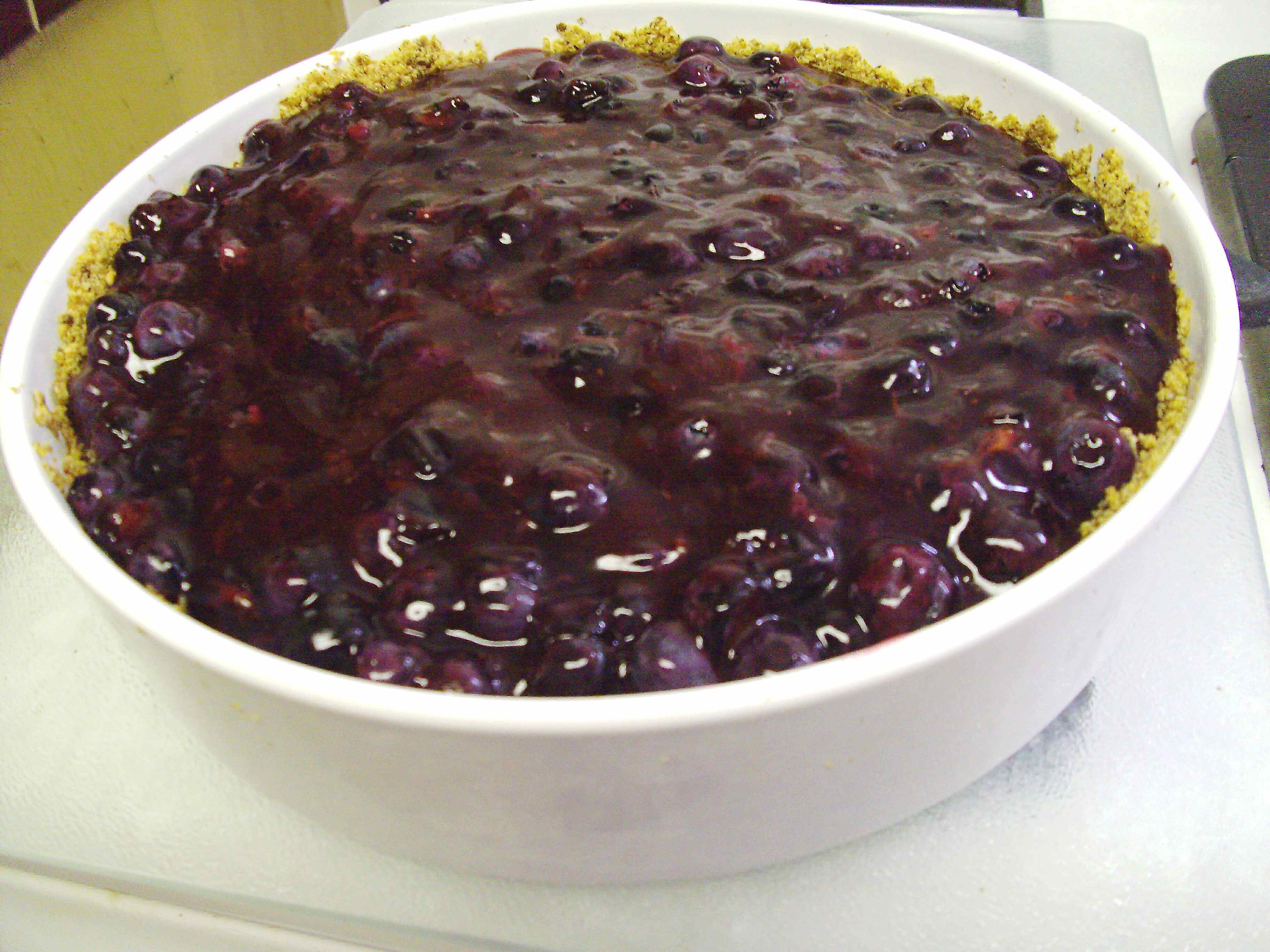
    raw blueberry pie with microwaveable filling and graham cracker crust

    This mostly-raw blueberry pie is a snap to make and very versatile--the filling microwaves in a few minutes, and you don't even have to bake the zippy gingered graham cracker crust--perfect for a hot Fourth of July and all summer long.

  • Recent Posts

  • Contents

  • Archives

  • Now Reading

  • See also my Book Reviews

  • Copyright 2008-2024Slow Food Fast. All writing and images on this blog unless otherwise attributed or set in quotes are the sole property of Slow Food Fast. Please contact DebbieN via the comments form for permissions before reprinting or reproducing any of the material on this blog.

  • ADS AND AFFILIATE LINKS

  • I may post affiliate links to books and movies that I personally review and recommend. Currently I favor Alibris and Vroman's, our terrific and venerable (now past the century mark!) independent bookstore in Pasadena. Or go to your local library--and make sure to support them with actual donations, not just overdue fines (ahem!), because your state probably has cut their budget and hours. Again.

  • In keeping with the disclaimer below, I DO NOT endorse, profit from, or recommend any medications, health treatments, commercial diet plans, supplements or any other such products.

  • DISCLAIMER

  • SlowFoodFast sometimes addresses general public health topics related to nutrition, heart disease, blood pressure, and diabetes. Because this is a blog with a personal point of view, my health and food politics entries often include my opinions on the trends I see, and I try to be as blatant as possible about that. None of these articles should be construed as specific medical advice for an individual case. I do try to keep to findings from well-vetted research sources and large, well-controlled studies, and I try not to sensationalize the science (though if they actually come up with a real cure for Type I diabetes in the next couple of years, I'm gonna be dancing in the streets with a hat that would put Carmen Miranda to shame. Consider yourself warned).

New hope for lowering arsenic levels in rice

A new study has identified a key protein in rice plants that allows some varieties to keep any absorbed arsenic safely contained in a separate part of the plant from the grain itself. The authors are hoping to introduce the gene for this highly effective transporter protein into plant strains that don’t have much of it and see whether the new genetic hybrids can reduce the arsenic level in major rice crops.


Testing salt reduction on a really large scale

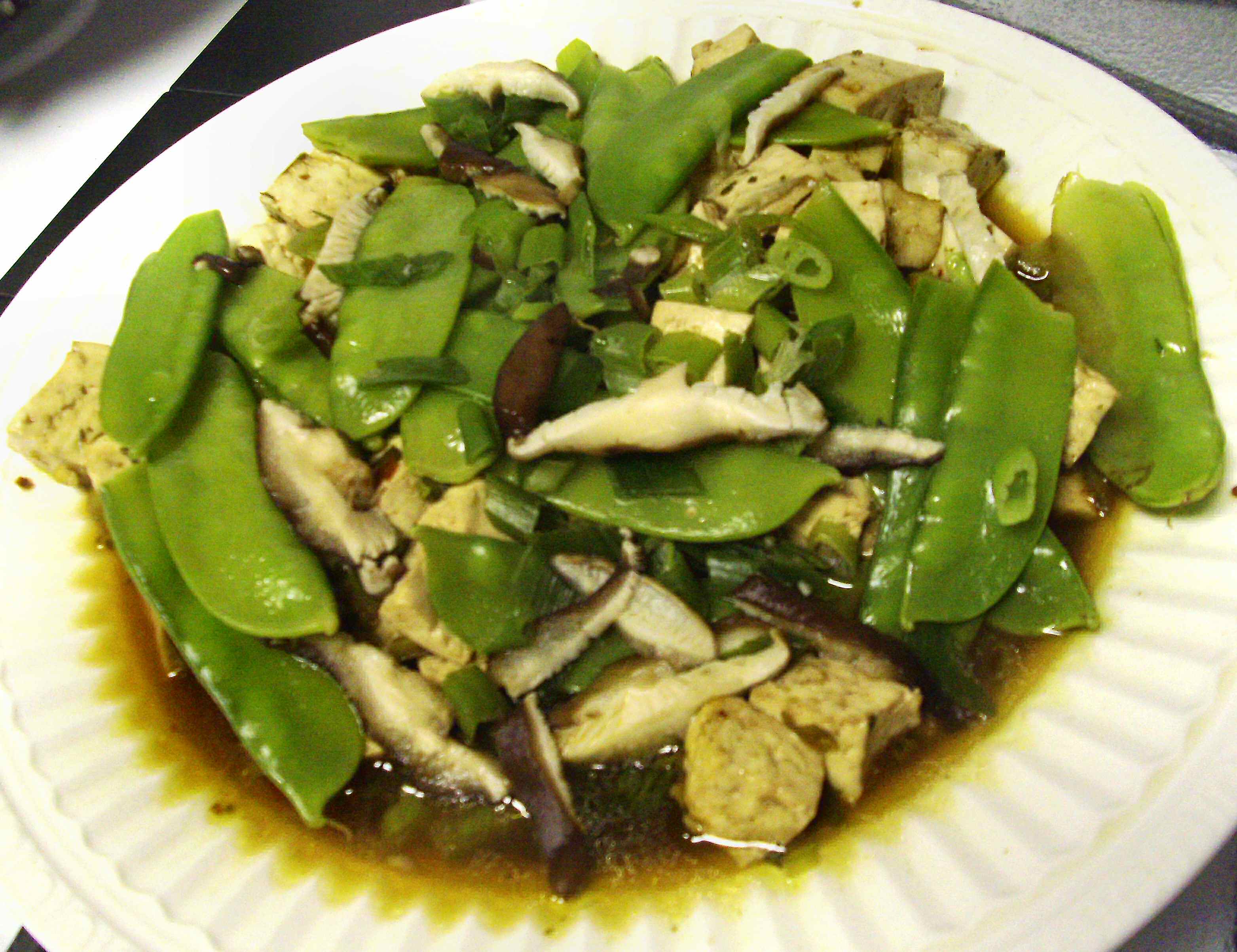
Microwaved platter of low-sodium tofu with snow peas

This tofu dish with snow peas and shiitake mushrooms uses low-sodium dipping sauce ingredients as its base rather than soy sauce or oyster sauce. It’s also microwaveable from start to finish and takes about 10 minutes total.

If you have a big enough–and motivated–study population, even modest reductions in daily sodium intake can make a big difference in preventing strokes and heart attacks. Last month, cardiovascular researchers from Beijing and Sydney announced a new 5-year diet trial in Science to do just that (see the general overview article, “China tries to kick its salt habit”).

China’s northern rural poor eat an estimated 12 grams of salt a day on average, considerably more than Americans’ 9 grams a day (which is still over the top) and more than twice the WHO’s recommended 5 grams or less. An estimated 54%, more than half, of Chinese adults over 45 have high blood pressure these days, and the Chinese government is taking practical steps to provide antihypertensive medications and shift the tide back–but that’s an awful lot of prescriptions.

Given the cost of antihypertensive drugs for such a huge population, and the cost of dealing with side effects and consequences of untreated or undertreated high blood pressure, prevention seems the better way to go. The researchers project that reducing the national average by even 1 gram of salt a day would save 125,000 lives a year in China. So they’ve recruited 21,000 villagers so far in China and Tibet, and plan to provide test groups with nutrition counseling plus a lower-sodium salt substitute for cooking, then compare their sodium intakes and rates of heart attack and stroke with those for a control group.

Most Chinese still do their own cooking at home, especially outside the big cities.  If lowering the sodium content of the salt they use works, it has the potential to get an awful lot of people off daily hypertension medication and reverse a major health threat. But will people do it if they’re not in the trial, or once it ends? Will it catch on? And is it the right answer in the long run?

Salt substitutes, with potassium chloride replacing some of the usual sodium chloride, have been tried by heart patients in the US since the 1970s or so. They’re a little more expensive than table salt or kosher flake salt, at least in the US, but they’re not all that expensive. But they’ve never really caught on here with most consumers.

Similarly, a few decades ago, a big public health campaign in Japan to reduce the high rate of stroke led to the introduction of low-sodium soy sauces, with about half the sodium content per tablespoon of traditional ones.

Not much market research is available on how many people have been buying low-sodium vs. regular soy sauce in Japan since its introduction. From the few current market reports I could find–one of them an executive report from Kikkoman–it looks like low-sodium is still a smaller if steady fraction of their business in Japan, and that it’s more popular in Europe and the US than at home.

It’s important to have a low-sodium line for reasons of corporate responsibility and even prestige, but there was no mention of its percentage of total domestic or worldwide sales. Traditional soy sauces, which can range from 14-18% sodium concentration w/v, are still apparently preferred for taste, and the Kikkoman executives attribute much of their expected taste appeal to salt rather than the other flavors in each one’s profile.

That’s kind of discouraging to me. The Japanese are known for more refined and sensitive palates on average than Americans, and their range of soy sauces and tamaris for specific food combinations is much broader and more sophisticated. The higher-quality low-sodium soy sauces are produced by ion filtration to get sodium out rather than simply diluting them with water, so most of the flavor that’s actually flavor remains. I would have hoped the key flavor signature of each match was the actual flavor of the brewed soy sauces, not the saltiness.

It’s likely, though, that the Japanese are just as susceptible as the rest of the world to the sodium tolerance phenomenon–the more sodium you eat habitually each day, the more you expect and consider normal in your food, and you almost stop even noticing it as a separate flavor.

The overall Chinese market for soy sauce is currently estimated at $20 billion and grew about 23.4 percent over the past 5 years, mostly due to population growth. The stakes are pretty high for China, but the government has tighter control of its salt and soy sauce producers than other countries do, and the will to make a broad change seems to be present, at least at a government level, and if the new study is anything to go by, among ordinary villagers as well. So maybe this time it will catch on once the study’s over.

But obviously, if you’re starting out at a 12-gram-a-day salt habit, the best way to reduce sodium in home-cooked food would be to cut back hard on salt and salted items altogether. That takes time, practice, awareness and deciding that it’s worth going through that first couple of weeks until your palate readjusts to a lower-sodium diet (which it will, but it takes a couple of weeks and a little patience).

Can cutting the salt be done with Chinese food? Not American souped-up chain restaurant caricatures of Chinese dishes, which are hideously over-the-top and greasy as well, but actual home cooking? I’ve done low-sodium Continue reading

Artificial sweeteners causing glucose intolerance

A new study on artificial sweeteners published in Nature goes a long way toward explaining one of the most puzzling findings about sweetened drinks in recent years: that regular consumption of even diet sodas is associated with an increased incidence of obesity and Type II diabetes. Surely, if the sweeteners have no calories and negligible carbohydrate, this shouldn’t be happening? Surely people should be losing weight? But the national statistics have shown that it is, and they’re not.

According to a news summary in The Scientist (Sugar Substitutes, Gut Bacteria, and Glucose Intolerance), researchers at the Weizmann Institute of Science in Rehovot, Israel, demonstrated that repeatedly consuming zero-calorie sweeteners like saccharin, sucralose and aspartame (e.g., Sweet ‘N’ Low, Splenda, and NutraSweet) increases a person’s glucose intolerance by causing changes to his or her gut bacteria.

The researchers did extensive testing on mice first–fed them artificially sweetened water for several weeks and compared glucose tolerance and gut flora with those of control groups that received either glucose solution or plain water. The experimental mice had much higher rates of glucose intolerance than either of the control groups, including the one that was fed glucose solution.

They also had very different gut bacteria composition, which the researchers thought might be causing the changes in glucose tolerance. Wiping out the gut bacteria of control mice with antibiotics and then repopulating with the gut bacteria from sweetener-fed mice caused glucose intolerance in the normally fed mice.

The researchers repeated their experiments on healthy human subjects, and they got the same dramatic results. The timeframe for measurable changes in glucose tolerance was within as little as six days for one of the tests.

Admittedly, the researchers were dosing their subjects with sweetener concentrations at the highest levels currently deemed safe by the FDA. So if you only consume these sweeteners occasionally and in small quantity–say, chewing sugarless gum once in a while–you might not be causing a drastic change in your gut bacteria or glucose tolerance.

But so many people in the US consume diet sodas and artificially sweetened teas and so on in large quantity on a daily basis that it’s possible they’re coming close to the levels used in these experiments. If you consume even half the maximum defined “safe” daily level, you might well be impairing your glucose tolerance significantly. But there may not be a safe level. There’s no saying what level–if any–of sweetener per day is low enough not to change gut bacteria and raise glucose intolerance–it may be a matter of dose or it may be a matter of how long and how regularly people consume these sweeteners.

Glucose tolerance is a measure of your body’s ability to supply insulin quickly and at the right level whenever you eat or drink something with starches or sugars. Part of the gut’s function is to release glucose into the bloodstream, but Continue reading

The CDC tries defining “powerhouse” veggies

carrotsareveryhealthytom-ABS“Carrots are very healthy!” “Mmmhm, very healthy, Tom. Good for your eyes. Vitamin A I think.” A six-year-old’s view of carrots and nutrition, courtesy of my daughter from several years ago, and (obviously) influenced by the best of the cartoon world…

The Centers for Disease Control seems to have taken up the nutrition density scoring gauntlet to rate high-value fruits and vegetables for their “powerhouse” value. A research paper in this month’s Preventing Chronic Disease journal derives a nutrient density formula that’s not a million miles away from the ANDI scoring scheme Whole Foods was touting a couple of summers ago. The author presents a table of 41 plain, raw and unadorned fruits and vegetables that made the cut by delivering more than 10 percent of your recommended daily value of a combo of 17 major nutrients for 100 grams of raw weight and/or (this part wasn’t quite as clear) 100 kcal worth of food.

The fact that the CDC is now publishing this kind of study lends nutrient density scoring more legitimacy than perhaps it really deserves.

On the plus side:

  • The author, Jennifer Noia of William Paterson University in New Jersey, is an actual trained nutrition researcher with a Ph.D. in the field.
  • She’s not making a pitch or selling special dietary supplements. Her stated goal is to help the CDC develop practical guidelines for public health reduction of cancers and cardiovascular disease by rating vegetables and fruits for their general nutrition-worthiness.
  • She doesn’t bias her formula in favor or disfavor of her favorite name-dropping superfoods or taboos, as Joel Fuhrman and the admirers who started the ANDI scoring empire did.
  • Avocado doesn’t score big; it’s not even included (too caloric for what it delivers).
  • Noia does not include trendy components with questionable or untested nutritional value, things like  selenium, antioxidants (unspecified groups of) and phytochemicals (unspecified groups of) among the 17 well-tested nutrients she counts in for the composite formula.

So far, so good.

But the specific method she derives is still kind of muddled, and the logic behind the nutrient density comparisons is too.

First, are we going for 100 grams or 100 kcal (also known outside the lab as “100 calories”) as the standard amount of each food for comparison? The article switches back and forth without clarifying and the formula does not normalize to one or the other as a uniform standard.

Second, how does that amount, whichever one is in use, compare with a likely normal serving of the specific fruit or vegetable? Arugula’s way up near the top for nutrient density–but if you ate 100 grams of it, or worse yet 100 calories’ worth, at a sitting, you’d be trying to eat an entire plateful or maybe several platefuls of it. Very bitter. Most people include a small handful, maybe a quarter cup per serving, in a mixed salad for interest, or (as I do) on a sandwich. With mustard or vinaigrette and some other veggies.

Same for watercress. And both are expensive per serving compared with romaine, bok choy, Chinese cabbage, turnip greens…parsley??? Who’s going to eat 100 grams OR 100 calories’ worth of parsley? Scallions? Maybe if you grill them, but then again, 100 grams? 100 calories?

The list is also a little arbitrary and incomplete in terms of what’s included. Green beans make no appearance on the list, for good or ill. Maybe it’s because they don’t deliver a ton of vitamins per se, even though they have some fiber and potassium and are low in calories. Mostly, though, they don’t happen to fit into one of the four broad categories (cruciferous, leafy greens, citrus, and yellow/orange) included in the selected list. That’s not a nutrition criterion, it’s a plant classification criterion, even though it is based on some generalizations that those four categories are the most nutrient-dense of the common vegetables and fruits. But at least the author acknowledges that limitation in her study and isn’t saying green beans have no worth in one’s diet.

Of what is included in the list, the rankings by nutrient density score are a bit counterintuitive. Broccoli and cauliflower are, perhaps disappointingly, rated a lot lower on the scale than watercress–in the 20-25  range, not the 100 (maximum score). So are carrots and tomatoes.

One of the reasons for this is, as Dr. Noia writes, “As some foods are excellent sources of a particular nutrient but contain few other nutrients, percent DVs were capped at 100 so that any one nutrient would not contribute unduly to the total score.”

So the scoring formula is purposely handicapped toward well-rounded performers. Is that realistic or meaningful? Some of the foods that scored lower within each of the four broad categories  may provide large amounts of one critical nutrient–vitamin C or A, or fiber, or potassium, or iron–but perhaps not loads of B vitamins or calcium.

Well–that’s the way it is. Very few single vegetables–and almost no fruits–deliver so many different nutrients at high density in an edible portion. It’s why we eat a variety of vegetables and fruits and don’t just gravitate toward one impossible or hard-to-eat-exclusively jack-of-all-trades food.

And that’s the major flaw in this approach to defining nutrient-worthiness through a catch-all formula. The author of this study, the ANDI Score folks, Dr. Fuhrman and countless others really are looking for a magic bean. They want “AND”, not “OR”, a vegetable or fruit that delivers everything by itself. Even if they think they’re making it simpler for the average consumer to get better nutrition advice, they’re working from a false premise.

Still, at least Dr. Noia isn’t overreaching as much as the commercial popularizers of “superfoods” schemes. She admits the list is limited, and that the formula she’s derived from previously validated major studies is still preliminary. The correlation between her nutrient density score and established nutrients with some cardiovascular disease and/or cancer-prevention effect is predictably high–well, there’s a lot of overlap to begin with, so what it really tells you isn’t a great deal.

But there is some value in looking at the list of what scored at least a 10 out of 100. What can you really learn from this list?

First, “Bitter is Better.” Sort of, anyway. You wouldn’t want to make a whole dish of arugula or watercress, but you might want to throw a good handful or so into your salad or sandwich or pasta.

Notably, though, “More Expensive and Trendy isn’t Necessarily More Nutritious.” Kale isn’t as high up on the list as ordinary unglamorous spinach or turnip greens, or even darker leafy lettuces–isn’t that interesting?

Third, “Green is Good.” Darker greens are closer to the top of the list, and even between broccoli and cauliflower there’s a slight pan-nutrient decrease, though it’s not meaningful enough to start shunning cauliflower. Which I happen to like nearly as much as broccoli, and sometimes in combination with it. And although brussels sprouts are marginally more nutritious than cauliflower, they’re also more of a pain to peel and trim, and there’s a lot more waste.

The real Green Effect here has to do with calories. You notice that none of the citrus or berry fruits are up in the top 10 in the list. Apples and bananas don’t make the list at all, and melon is right out. So are summer stone fruits. Even apricots, which have a fair amount of vitamin A. That’s because the greens on the list are very low-calorie, with almost no carbohydrate or sugar. And because the nutrient density scoring formula accounts for nutrients per 100 calories (at least sometimes, when there are countable calories involved), fruits are naturally going to score lower.

From the perspective of diabetes prevention and weight control, this is a reasonable way of looking at how we get critical vitamins and minerals. The common phrase “fruits and vegetables” leads people to assume that fruits should be thought of first when you shop, and vegetables are kind of an afterthought. But it’s obvious from this kind of scoring that fruits should be considered dessert rather than the major source of vitamins and minerals.

However–given that citrus fruits, berries and stone fruits deliver large doses of vitamins C and A respectively, plus potassium and vitamin E and fiber on occasion, they shouldn’t be shunned for not “doing it all” and doing it carb-free. We need some carbohydrates, and if you eat an orange, a half a grapefruit, or even a nectarine at breakfast instead of a piece of coffeecake, so much the better. Just notice that you’re also eating some carbohydrate in the form of fruit and don’t eat three at a time. Or dump sugar and butter on it and still think it’s righteous because it’s nominally fruit.

I think we can all handle that. Even without calling anything a superfood.

The Devil’s Food is in the Details

Melissa Clark has published an over-the-top cake recipe for the New York Times this week with two frostings and a demo video in her usual breezy style. The devil’s food cake, one of my favorite kinds, is pretty enough, and it looks like a fun idea, but… two homemade buttercream-type frostings? What kind of cake recipe is she using, and how does it compare with my usual (dare I say it) Duncan Hines?

I checked out the recipe itself and did a quick back-of-the-envelope calculation on the basic nutrition stats–carbs, fat, sodium, calories–then stared at it for a minute and wondered if I could possibly have been right.

Because the total I was coming up with was scary:  more than 1000 calories per serving for 10 servings. Half a day’s calories crammed into one piece of chocolate cake. It was about twice what I would have estimated looking at the photo. I mean it LOOKS pretty standard, if a little tall, on that cake stand. But 1000-plus calories per slice? Are you kidding? Had to be wrong.

So I went to the recipe nutrition calculator at myfitnesspal.com and tried it again. And it confirmed again that the recipe is indeed over-the-top, and over 1000 calories per tenth of the cake. What’s gone wrong here?

Here’s Clark’s recipe in the New York Times online for reference:

Devil’s Food Cake With Black Pepper Buttercream

and here’s what I saved off the nutrition calculator for everything–the cake plus both frostings:

Nutrition stats for Melissa Clark's 2-frosting devil's food cake for 10

Nutrition stats for Melissa Clark’s 2-frosting devil’s food cake for 10 people Calculated using myfitnesspal.com, 5/5/2014. Click the image to enlarge as needed, the numbers are still pretty scary.

My crude estimates, based on experience from having to calculate carbs in baked goods for a diabetic kid, were very close to the online calculator totals, within about 2o calories per serving and within 2-5% for each of the other stats.

And although it’s good to know my arithmetic and skepticism skills haven’t gotten rusty in the past month or so of trying hard not to bake, I think the nutrition chart above really tells you what’s going on in the world of popular recipe publishing today, particularly for American baking.

So let’s hit it over the head once more, because it’s still ridiculous: The first thing to think is, geeeeeeezzzzzz, over 1000 calories per serving.

How does Clark keep so thin? Did she actually eat a whole piece of this thing, or just pose for the photographer?

A 1/10th wedge of cake is a pretty big slice to begin with, and this cake is six layers tall–three full pans, cut crosswise in halves–for a standard-diameter round cake. In the accompanying demo video, Clark explains that the extra layers give you more room for frosting. “And isn’t that the best part?” she quips.

Well–I guess if you really like buttercream. She’s got both a vanilla-and-black-pepper buttercream AND a whipped chocolate ganache frosting. Does devil’s food cake really need so much dressing up to be good?

But here’s the added cost per serving: 111 grams of carb (about 2 meals’ worth), 86 grams of which are sugar. That’s 21 teaspoons of sugar per slice. A full day’s worth. 71 grams of mostly-saturated fat. Three full days’ worth.

Pro chefs excuse themselves for this kind of thing by calling their food “indulgent” or “decadent”. But this isn’t just excess, it’s mindless excess that doesn’t really add to the flavor or quality of the kind of dessert it’s supposed to be.

If you look at just the frosting ingredients, we’re talking 4 sticks of butter and 2 1/2 cups of sugar. The cake itself contains another stick-plus of butter and almost another two cups of sugar. So 5 sticks of butter and 4 1/2 cups of sugar total, or about half a stick of butter and half a cup of sugar per person, if you serve 1/10th cake as suggested. That puts it way into Paula Deen territory. Maybe even beyond Paula Deen.

I have to ask: Can’t we do a little better and still be decadent? Do we really need all that excess goo for it to be an okay cake?

It’s not that the frostings or even the cake are terrible-tasting or artificial or bland–she uses a whole real vanilla bean in the buttercream.  But it’s an awful lot of fat and sugar piled up with cake included merely as the excuse for the frosting.

That kind of tells you that the cake itself isn’t so hot. I’d rather have a smaller piece of a really good, really chocolate cake with more intense flavor per bite and no actual need to rely on frosting for interest. Something like Alice Medrich‘s revamped, lower fat Reine de Saba-style cakes (“Fallen Chocolate Soufflé Cake” and “Bittersweet Deception,” neither of which contain any butter) from Bittersweet, which she’s just reissued as Seriously Bittersweet. Or even David Lebovitz’s chocolate-butter-sugar-eggs flourless chocolate cake, which he’s dubbed “Chocolate Idiot Cake.”

If the cake’s just there as a frosting vehicle, why not be honest? I’d rather skip the cake and make dessert some intense ganache truffles to eat in smaller quantity with strong coffee. And even then I’d cut back on the fat and sugar so I could concentrate on the flavor.

If you are going to try and make some version of Melissa Clark’s cake, you really need to cut it down to size. In my two public performances exploring Continue reading

Breakfast without Matzah Overload

Last night we were very much in the spirit of Pesach–a total rush job at home, to the point where I realized I was supposed to have a boiled egg somewhere on the seder plate just as it was getting pretty far past sundown. Organization isn’t always our strong suit, especially on school nights. Last year I posted my Bart Simpson-style Passover Chalkboard Litany of kvetches and survival tips. This year: how to deal with matzah when they won’t sell you anything less than enough for 70 people for $2.99–such a deal! (well, okay, it is). You could feed nearly the whole Sanhedrin (because in our family, everyone argues about everything and I’m sure my 13-year-old is ready for law school as we speak. Good thing I can’t afford it yet!)

As with any style of food, too much of a good thing is still too much. I think I learn that the hard way every Passover. How to eat mostly vegetables and lean proteins and fresh fruit and yogurt…and not just sit there eating matzah like it’s going out of style? There’s more than enough matzah to go around–even in gefilte fish, especially in gefilte fish, which I’ve lost my taste for over the years since discovering how to cook regular fresh fish well, aka “not-gefilte”  (though I still buy a jar for my noncooking husband for lunches during the week.)

I don’t do matzah kugel, sweet or mushroom (a waste of mushrooms in my jaundiced opinion). I’m not a huge fan of matzah brei (exception: matzah brei “blintzes”), matzah lasagne, mina de espinaca, or any of the other matzah-plus-egg-heavy adaptations of regular food. Although I have seen one attractive-enough looking picture of a mina de espinaca, I’d still do it without the matzah sheets…

I try hard these days not to make matzah balls either, though this year I might make an exception–once–for my poor daughter who never gets any because she’s vegetarian and the “not-chicken” soup at Shabbaton this March didn’t have any flavor and there were no matzah balls in it like there were in the yes-chicken soup. Oy! Maybe it’ll be a weekend project to figure out a good from-scratch version–we have school and taxes this week. A lot of school and taxes.

My mother, who is famous for not cooking more than necessary, taught me how to make pretty-good fresh-tasting haroset Russian Jewish style (’cause that’s what we were). Apples, walnuts (though almond flakes are also just fine with me), cinnamon, sweet wine or grape juice, maybe or maybe not honey, chopped coarsely so it stays crunchy. But I’ve been to a couple of community seders out here in Pasadena where the haroset was mashed down like baby food and to add insult, had matzah meal in it. I know, matzah bits probably started out as a less expensive alternative to nuts, and I can’t blame anyone for that in their own homes. A professional caterer is quite another story. There’s really no excuse in California, where nuts are pretty plentiful (both the human and the arborial kind).

Well, anyway. Second seder is tonight, but what about the rest of the week–after taxes, as it were? Passover brings on a lot of nutritional challenges if you eat dairy or vegetarian. How not to eat too many eggs in a single week? How to stay away from the canned coconut macaroons and other assorted “Kosher for Passover” horror sweets my husband brings home because he thinks that the kashrut labeling makes up for the “nutrition” labeling (which really oughtta say, “WHAT nutrition?! This is pure sugar and potato starch, buddy! And palm oil! And artificial colors and flavors! Almost as good as Froot Loops!”) I’m pretty sure I’ve already mentioned this, but it’s because he’s a boy, and there’s nothing much to do about it except shudder, put the box of “goodies” in some inaccessible place on a low shelf, preferably behind the broccoli, which is merely green and mysterious or better yet, okra (which he fears more than taxes, and that’s saying something).

Note it down: ALL the packaged cake and cookie substitutes are a bad deal for anyone diabetic or even marginally thinking about becoming diabetic–very, very spiky, and almost never worth it. Also guaranteed to induce repetitive eating and the false sensation that you’re “starving” about three seconds after you eat them. And in the last 20 years, they’ve been faked-up further–even the kichel, a dry, stiff, barely-sweet puff halfway between an empty creampuff shell and a biscotti, has had artificial flavorings added recently–why bother?

Do we really even need such matzah-filled “delights”? Nowhere is this poverty of product more evident than in the kosher-for-Passover cake “mixes” (for which I always hear Julia Sweeney’s line “Where are yer mixes, hon?” from God said, Ha!). Last year’s example, which I’m not letting happen again: the Manischewitz Blueberry Pancake mix box my husband proudly brought home one day “on sale! it was 99 cents!” And naïvely suggested I could make for breakfast–this upon seeing that I’d just finished making cheese blintzes from scratch with real ingredients, and real raspberries. Don’t squint at me like that–he’s still breathing. I just decided his sudden brainfreeze in the wife department had been caused by jetlag, and contented myself with reading the ingredient box back to him.

The man is not a cook and is pretty happy not to be. Still, he does like to eat. And read. Somehow it never occurred to him to read in service of eating by checking what’s actually on and in that pancake mix box. It had 20 ingredients, no nutrition, and no blueberries. “Blueberry bits” contained–are you ready?–food coloring, sugar, artificial flavor, and sodium alginate. So suddenly you can’t tell the difference between berries and blue goo?

I had to go into extra innings with the cauliflower and broccoli and eggplant and asparagus and tomato/artichoke heart salads just to overcome the unusually high crap factor, even though I didn’t use the mix. Just reading it was enough to require emergency grapefruit. I was too ashamed to donate it to a food pantry, either.

So….real is definitely the best way to go with food for the week. Breakfasts can be tricky–matzah and jam, matzah and cream cheese, matzah and almond butter…it gets pretty tired pretty quick. And on the other hand, blintzes are for weekends only and frankly? I’m still annoyed about that pancake mix incident a year later! Nu…

Three relatively low-crap, moderately-low matzah alternative breakfasts that are (most important!) low-labor for those post-Seder mornings when you are Done and Off Duty to your nearest and dearest (except for coffee):

1. Matzah-nola, what it sounds like, ingredients straight from the cupboard or freezer. There is actually a product out commercially this year called “Matzahnola”; my version I invented a year or two ago out of desperation against the nutrition-free Passover version of Cheerios my husband brought home, but I didn’t think it was that good a name–who knew? Anyway, I’m not bitter (though the fresh-grated horseradish is still stinging my sinuses from last night).

2. The old-style Israeli breakfast, not the modern endless hotel breakfast buffets–more like the kibbutz specials where you’re expected to get out there and weed a cotton field right afterward. Which I have actually done in my less cynical youth.

3. The bonus “I can haz CAKE?” breakfast, a favorite of fridge-scrounging champions everywhere Continue reading

Starting with Breakfast

“The Well” blog at the New York Times has posted a new interview with pediatric endocrinologist Dr. Robert Lustig about his new book, the Fat Chance Cookbook, and about the possibilities for treating obesity in children with a better, less processed diet.

Two or three takeaways from the interview surprised me by echoing things I’ve either thought or written about here since my daughter became a Type I diabetic four years ago.

Almost always, we see an obese kid come in with an obese parent. And when the kid loses weight, the parent loses weight, because the parent actually changed what’s going on in the home.

We do something called “the teaching breakfast.” Every kid comes in fasting because we’re drawing blood. So they’re all hungry. They go to the teaching breakfast with their parents – it’s six families all at a communal table – and our dietitian spends an hour with them. The dietitian narrates exactly what’s on the table and teaches the parent and the kid at the same time….We make sure four things happen. No. 1, we show the parent the kid will eat the food. No. 2, we show the parent that they will eat the food. No. 3, we show the parent that other kids will eat the food, because they have other kids at home and they have to be able to buy stuff that they know other kids will eat. And No. 4, we show them the grocery bill, so they see that they can afford the food. If you don’t do all four of those, they won’t change.

Also, and I think this is my favorite:

…my wife is Norwegian… When she’s mad at me, she bakes…My wife has learned by experimenting that she can take any cookie recipe, any cake recipe, and reduce the amount of sugar by one third, and it actually tastes better…. And you can taste the chocolate, the nuts, the oatmeal, the macadamia – whatever is in it.

Right on!

Back to the top, though, I’ve got to say I love the idea of the teaching breakfast. My one concern is the reality of time cost for families with school-aged children, because eggs and vegetables, two of the (sometimes) inexpensive staples of the UCSF clinic’s teaching breakfast, take more time to prepare than a bowl of cereal, and require more cleanup. On weekdays, that might be a real challenge, especially for families with two working parents and/or long drives to school. A lot of the families I know in this situation (long drives and no school buses being a common problem in Southern California) are used to tossing their kids in the car with some kind of makeshift breakfast to eat on the way–often resorting to bagels, pop tarts, or bananas, none of which are great choices.

Perhaps if the dietician showed some simple microwaveable 5-minute meals like oatmeal or an easy vegetable-filled frittata (with some of the yolks left out) that can be made the night before and refrigerated? The plain yogurt with fresh fruit idea is also quick and simple but not especially cheap–these days a quart of plain non-Greek yogurt goes for $2.50 at Trader Joe’s, almost the same as a gallon of milk, and costs even more at the local Ralph’s (west coast Kroger affiliate), but it serves only 4 if each serving is a whole cup. Cereal with milk is a lot cheaper–but it could certainly be better cereal, high in fiber and low in sugar and salt, and measured by the cup or on a scale before pouring it into the bowl to make sure you don’t get more than you think you’re getting.

Cutting up fruit and vegetables takes time that parents usually feel they don’t have. And berries, which don’t need cutting up, are relatively expensive fruits, even when frozen. So showing parents a couple of “instantly grabbable” ways to serve the less expensive fresh (or fresh-frozen) fruits and vegetables instead of Froot Loops might be key.

A simple “just wash and nosh” approach would probably be a good start. I know I generally rail against buying precut, expensive little baggies of manicured (and dried out) vegetables in the supermarket, but the big bags of “baby carrots” that don’t require peeling and are finger-food size would be an okay starting point to get kids and parents to think about vegetables as a good snack or even breakfast choice. My daughter lived on them for lunches (along with a PBJ on whole wheat and an apple) for most of her grade school years, and even though she has (and will probably always have) a mean sweet tooth, she still seeks out raw green beans, wedges of red cabbage, roma tomatoes and broccoli or cauliflower branches to break off, rinse under the tap and nosh on after school.

Instant Pickles, Hold the Salt

Fast-marinated cucumbers, half-sour kosher dill style

One of the things that kept me motivated for blogging SlowFoodFast after the first fine careless rapture was my indignation at how popular over-the-top salting was becoming in popular food magazines, cookbooks, blogs and TV shows as chefs became celebrities, and how dangerous I knew it was for most people to eat that way regularly. A large part of my career a couple of decades ago was exploring the history of dietary sodium in cardiovascular research and writing about the DASH Diet.

What I’ve missed the past few years is just how many people, particularly younger ones, are starting to take up the challenge of cooking low-sodium and blog about their trials and successes. There’s a whole community out there, and they’re cooking pretty well. It is definitely possible, and generally easy once you get past the “how do I read a label and cook from scratch” aspect.

I just ran into Sodium Girl (aka Jessica Goldman Foung)’s blog-based cookbook, “Sodium Girl’s Limitless Low-Sodium Cookbook”. Diagnosed with lupus and kidney failure in her early 20s, she turned around her diet by dropping her sodium intake drastically to give her kidneys a rest in the hope they’d regenerate, and it worked. She’s been innovating with low- and near-to-no-sodium versions of favorite foods ever since, working with the National Kidney Foundation and other organizations. Her book, like her blog, is attractively photographed, full of cheerful writing and surprise takes on favorite foods.

One of the substitutions she makes that I have to approve of is a molasses-and-vinegar-based “faux soy sauce”. So I wasn’t the only one!

Another of her successful experiments is pickles. She goes for sugar-and-vinegar-style pickles, which makes sense, since they have no added salt in them, but I can’t help it–I have always cringed at sweet pickled anything. If it’s supposed to be a pickle, for my money, it’s gotta be a half-sour kosher dill and nothing but (or else an Indian lime or mango achaar pickle, or Moroccan preserved lemons, but that’s another story and still pretty high-salt at this writing. I’m working on it, but not yet holding out a lot of hope…)

Anyway, looking through Foung’s book reminded me of a simple, hearty and low-to-very low sodium version of my favorite pickles in the world. Continue reading

DASH is US News & World Report’s “Best Overall Diet”

US News & World Report asked a panel of nationally recognized nutrition, diet, cardiovascular health and diabetes prevention experts to rank 32 popular diets. DASH (Dietary Approaches to Stop Hypertension) topped out as the overall best, including for long-term weight loss and maintenance.

The article and rankings online: Best Diets 2014 | US News & World Report

Where the experts complained–sort of–was that following it requires eating more real food and fewer boxed processed meals. So it’s technically “harder” to do than Lean Cuisine, Jenny Craig, and so on. They also said that buying produce is more expensive than eating out at fast food restaurants all the time. I’m not sure where they’re shopping or how they’re counting. But from my experience and checking out current fast food prices for a family of three, shopping relatively smart and unchic and sticking with the cheap nutritious bulk vegetables rather than the fashionable or precut, prebagged ones in the foodie magazines that cost three times as much–I’d have to say no, it really isn’t more expensive for what you get. Especially if you count the extra gasoline per trip to the fast food joints on a daily basis.

And I’m not happy that a nationally acclaimed panel of nutritionists–or the editorial staff, I’m not sure–seem more than a little veg-phobic. Buried somewhere in the blather–I mean, expanded description of the DASH Diet and how they ranked it–is the distinct suggestion that it’s too much work and too unrealistic to expect people to prepare and eat–you know–fresh unprocessed vegetables and fruits themselves. They actually put in the phrase that it’s too much “gruntwork” unless you can hire a private chef to do your cooking for you. Makes you wonder how they were raised–probably on a steady diet of Pop-Tarts.

Leftover Logic

Two weeks ago The Guardian‘s business section published the following salvo against glam-food waste: “Food’s latest hot trend: leftovers”. Some of the interviewed chefs, who grew up eating leftovers in the ’70s, have apparently joined forces with the Women’s Institute in York (shades of “Calendar Girls” and Helen Mirren’s shaky attempt at a Yorkshire accent) for a project to reduce food waste as supermarket prices continue to rise and rise.

Some interesting quotes in the article, and interesting questions on frugality–the columnist claims household food waste is down about 13 percent in the UK since last year, which is pretty telling about the economy. She and the people she quotes attribute the current lack of knowledge on how to use leftovers to a sharp decline in cooking skills that coincides with the surging popularity of perfect, coffee-table-worthy food fantasy cookbooks.

Is it really the fault of photo-heavy cookbooks, food magazines, blogs and tv cooking shows that only perfect produce makes the cut, and everything with a blemish on it must automatically be thrown out? Possibly…but the article also cites another trend–the heavy push of boxed microwave-meals-for-one that leads so many people to fear cooking and believe they could never be talented enough to cook from scratch.

Of course, if you never touch an uncooked bulk vegetable or a piece of raw meat, you never risk making a mistake in the kitchen. But the other side of the coin is that the produce in the magazines will never show up on your table. Because the frozen tv dinners really don’t come out looking or tasting as good as the pictures in the magazines.

If you do cook, the idea of using up what you have in the fridge can be nearly as daunting as having to pay for fabulous (and expensive) first-rate pre-sorted extra-polished pre-cut vegetables. In a branded bag. Can you eat less-than-perfect-condition food mag-quality decorator vegetables and still be safe?

Yes, you can. Obviously, when you go to buy vegetables, you want the best and freshest ones you can get for a reasonable price. Nothing you buy should be leaking or moldy or worm-ridden or otherwise clearly spoiled. But short of that, quite a lot of produce can be eaten just fine without having to be picture-perfect.

No one in the professional or amateur food enthusiast world ever talks about how to handle imperfect, wrinkled or slightly old vegetables, but they should. Because no matter how they look when you buy them, if you actually buy enough vegetables and enough variety for a week, some of your produce is going to start drying out or going a little less crisp or whatever in the later days. And you don’t necessarily need to throw it out because of that. Most of it you can probably still use and it will still be fine.

Local corner greengrocers often sell the oversized, undersized, riper or otherwise less-perfect-looking vegetables for a fraction of what they go for in big chain supermarkets. Customers at my local Armenian grocery routinely stagger out with huge bags of red peppers, onions, green beans, cabbages, eggplants, zucchini…all at a dollar a pound or less. Probably most of those vegetables are less than shiny-perfect. It doesn’t matter. The customers who lug them home are going to cook them up in large batches and short of actual spoilage, they’ll use them up.

And I myself did it today–foraged around in the fridge for the eggplants I bought last week. They were just starting to show brown dimples at the flower end. Not lovely but not a disaster. Then I found the less-than-great winter Roma tomatoes, a few of which were already starting to show little smudges of black at the stem ends because I’d had to store them in the fridge–no room on the counter, and I had them in a plastic bag that kept the moisture in more than was really good for them. Damn! I weeded out two that were clearly beyond saving–cracked and leaking slightly, not good–and took the others out to inspect. How bad were they?

Now the eggplants were only a little bruised or dimpled in a few places. Peeling off a little of the skin at those points revealed that the flesh inside was still okay. No worse than a bruised apple. Cut them up, microwave them, drain off the juices and fry them for eggplant-and-chickpea stew, and they’re just fine.

The tomatoes are a little scarier, no question. No one wants mold on their vegetables. But except for showing the tiny beginnings of mold at the stem ends, the six tomatoes I had left seemed fine and firm, dry and uncracked. Throw out six tomatoes at this time of year? I decided not to. I washed them carefully on the theory that the peel, if it’s unbroken, is working hard to seal out dirt and contamination and any mold spores on the surface can therefore be washed off. I sliced off the tops about half an inch below the stem ends–giving them a margin of safety at least in my mind.  Then I dared to taste a bit of the tomato below that. Also fine–or as fine as winter tomatoes get, anyhow. No sight, smell or taste of bitterness anywhere, and not mushy or discolored, and they tasted reasonably fresh. So I cut up the tomatoes and put them in the stew.

And everything was fine, and no one got sick or started convulsing (or screeching at the top of their larynxes) like Robert Plant at the height of his Led Zep days. This was fortunate, because we don’t yet have the larynxes back in shape after Losangelitis week, not to mention the stomach muscles, the tight jeans (well, the jeans are a little tight but not on purpose–we’re workin’ on it! hate those sit-ups) or the massive and tossable hairdo. Then again, neither does Robert Plant these days. So I don’t feel that bad about it. And neither should you.