
• Enter your email address to subscribe to this blog and receive notifications of new posts by email.

    Join 241 other subscribers
  • Noshing on

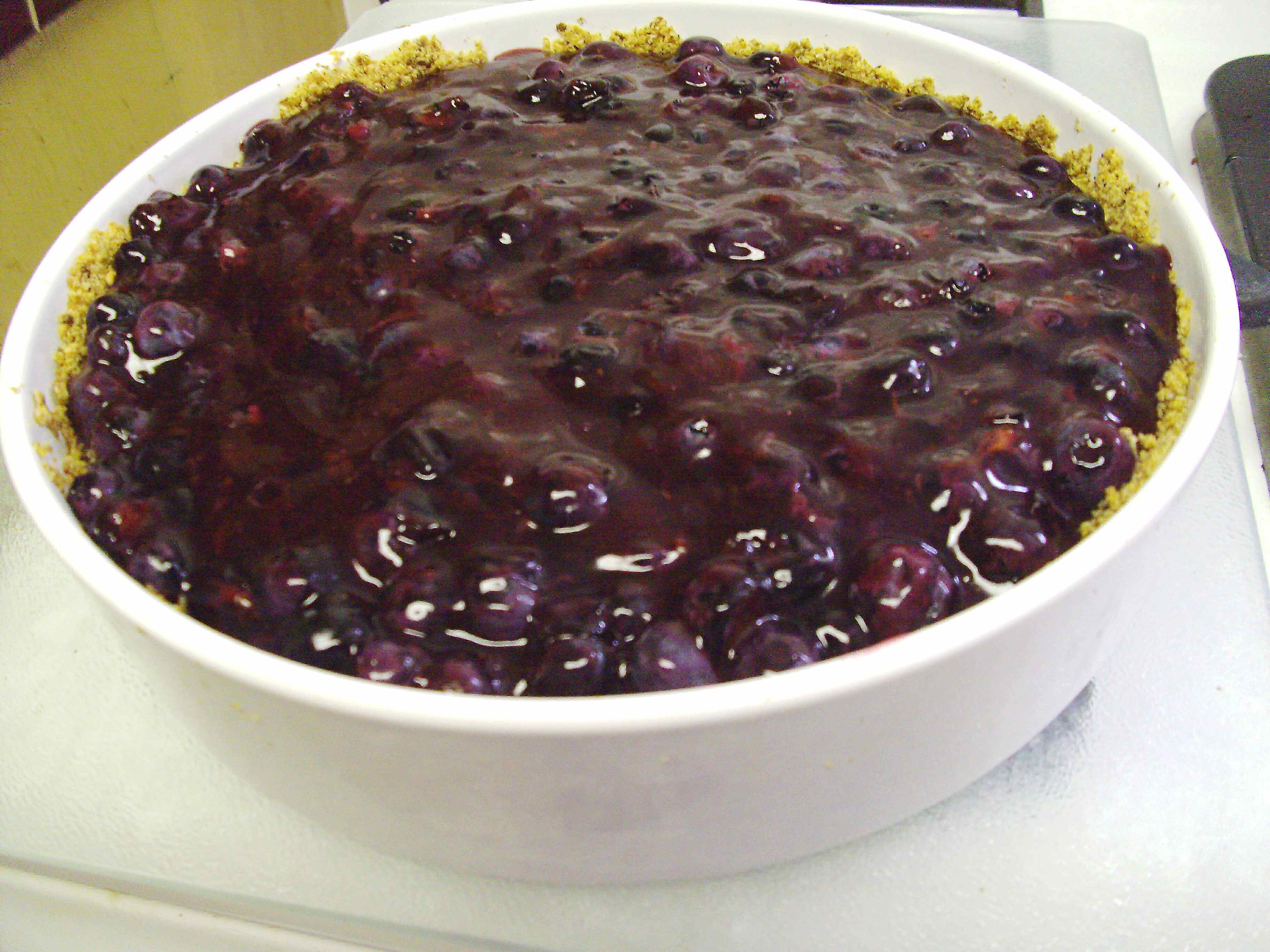
    raw blueberry pie with microwaveable filling and graham cracker crust

    This mostly-raw blueberry pie is a snap to make and very versatile--the filling microwaves in a few minutes, and you don't even have to bake the zippy gingered graham cracker crust--perfect for a hot Fourth of July and all summer long.

  • Recent Posts

  • Contents

  • Archives

  • Now Reading

  • See also my Book Reviews

  • Copyright 2008-2024Slow Food Fast. All writing and images on this blog unless otherwise attributed or set in quotes are the sole property of Slow Food Fast. Please contact DebbieN via the comments form for permissions before reprinting or reproducing any of the material on this blog.

  • ADS AND AFFILIATE LINKS

  • I may post affiliate links to books and movies that I personally review and recommend. Currently I favor Alibris and Vroman's, our terrific and venerable (now past the century mark!) independent bookstore in Pasadena. Or go to your local library--and make sure to support them with actual donations, not just overdue fines (ahem!), because your state probably has cut their budget and hours. Again.

  • In keeping with the disclaimer below, I DO NOT endorse, profit from, or recommend any medications, health treatments, commercial diet plans, supplements or any other such products.

  • DISCLAIMER

  • SlowFoodFast sometimes addresses general public health topics related to nutrition, heart disease, blood pressure, and diabetes. Because this is a blog with a personal point of view, my health and food politics entries often include my opinions on the trends I see, and I try to be as blatant as possible about that. None of these articles should be construed as specific medical advice for an individual case. I do try to keep to findings from well-vetted research sources and large, well-controlled studies, and I try not to sensationalize the science (though if they actually come up with a real cure for Type I diabetes in the next couple of years, I'm gonna be dancing in the streets with a hat that would put Carmen Miranda to shame. Consider yourself warned).

AbFab Mousse au Chocolat: lighter, faster, and still incredibly rich

The Daring Duo–back and brasher than ever in an Alexis Bittar jewelry ad from a couple of years ago. I don’t remember which mag I tore it out of, but who cares? It’s Valentine’s Day, Sweetie, so bling it on!

Preface: Usually I’m at least a couple of days late discussing anything related to New Year’s, Valentine’s Day, or pretty much any celebration involving dessert. Partly because the January and February months–and into maybe April–are always the ones where people struggle to recover from the big food holidays. And obviously it’s been harder on most of us to feel buoyant, celebratory or romantic these past two years. But I worked really hard all last fall writing interviews and moderating high-profile author events for a book festival, then doing and redoing flights for my daughter, who graduated early but her travel program fell through at the last minute. This much later I’m still feeling pretty chewed up and in need of a reward… And my husband has a badly mis-scheduled board meeting tonight and thinks he shouldn’t be the first to bail.

So I don’t know about you, but I’ve decided I could use a kick right about now, something uplifting and energizing and frankly decadent, but without having to work hard now or pay the piper afterward. Something like all the Valentine’s Day-themed chocolate mousse recipes everyone’s starting to trot out in food media, only a lot faster, less bloated and more chocolate-powered, and–of course!–made mostly in the microwave. If I get heart palpitations I want it to be from exhilaration, not indigestion or overwork.

Even though it’s already 3:37 pm here and probably too late to help you much if you’re stuck on a Valentine’s Deadline on the east coast. Go with plain 5-minute ganache instead–and some champagne for tonight, and save this one for the weekend instead–if it’s the real deal, your romance or at least the shopping hijinks you want to get up to will still be there.

I actually came up with this recipe way back in August, as a distraction from my book festival duties, but really–who wants to be thinking about chocolate mousse in August? So I decided to save it for now, when it will do the most good. Or bad, because I’ve been good way too long. And then I came across not only Season 1 but also a book of the published original AbFab scripts. It was practically kismet, I’m telling you! So–pardon my excess while I find some bling to get into character...
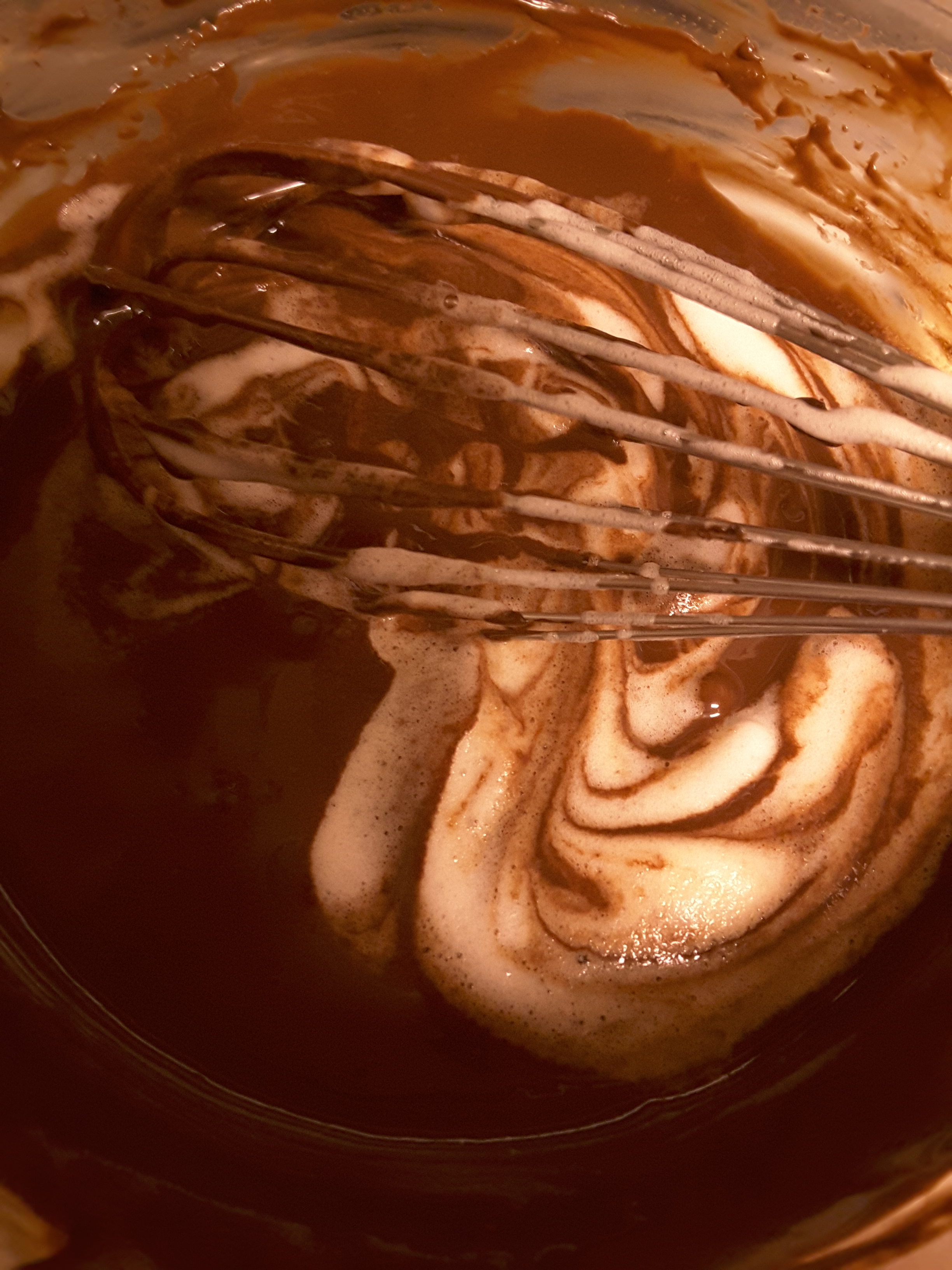
Folding beaten egg whites into the microwaved chocolate base for a lightened-up chocolate mousse.
Mousse au chocolat, Sweetie! It’s what microwaves are for!

THIS IS NOT your typical Meilleurs Oeuvriers de France high-concept mousse au chocolat. It’s not Hervé This, it’s not Pierre Hermé, it’s not Thomas Keller or Dominique Ancel. It’s not even the utter classic back-of-the-French-chocolate-bar-wrapper version that Dorie Greenspan quotes–and so, for that matter, does Alice Medrich. No name-dropping at all here (who, Moi?). Or at least no hyperlinks.

Just a tribute to a pair of troublemaking women who don’t cook at all, as far as I can tell, and a good thing too. But they aspire to everything this mousse is about–taste, time, fortune and fame, fashion superiority, basic naughtiness, and above all, a good time on a plate with no regrets the next morning.

So this is my take in honor of Absolutely Fabulous. It is very, VERY chocolate. And chic, despite my iffy photography and food styling abilities. And yet reasonably svelte. It will leave you quivering and swooning where you stand. This is what it’s all about, Sweetie.

Despite the fact that there’s no butter. No cream. And no crap. It’s not a heart attack in a tiny coupe (it only tastes like it, and maybe feels like it due to the high chocolate content). It’s not 450 calories and a day’s worth of saturated fat that goes right from your gallbladder to your hips, bypassing the heart as a lost cause.

You will not need to struggle into a larger pair of jeans [Season 1, Episode 2] after eating this, even if you manage to eat an entire quarter of it in one sitting without tottering to the couch and wishing you hadn’t and that you’d listened to me about Less being the New More.

This mousse au chocolat is so intense that even a spoonful or two is Almost a Religious Experience. At least if you’ve been fully vaccinated, you’ve been masking up (fashionably, as in, “LaCroix, Sweetie. La. Croix.“) instead of threatening your local chocolate purveyors and flight attendants, and thus your tastebuds still have their mojo. Because as everyone knows, breathing privileges and, just as important, flying privileges, are key to powershopping [Absolutely Special, aka AbFab in New York].

Once you recover from the chocolate rush, you will fan yourself, sip your bitter demitasse and your bottle of overpriced springwater, and leave the premises refreshed, overhyped and ready to shop for something sparkly as illustrated above–either completely garish, overpriced and pulled right from the runways with the tags still on…or, and we hope this is you, effortlessly elegant and sleek and elusively cool and yet still somehow totally rock ‘n’ roll, depending on whether you’re identifying with your inner Eddie or your inner Pats at the moment.

You will feel entitled, because the heady combination of making something like this mousse au chocolat mostly in the microwave, eating a petite portion in tiny refined bites and still being overwhelmed by the utter chocolatude of it all, without fearing the scale or the mirror the next morning, is the holy grail for those of us who worry secretly that we can’t really have it all.

Pardon me, I think Bvlgari is calling my name…

PS–EULA/legal disclaimer: the Management takes no responsibility for the shocking next-day surprise jewelry / footwear / custom marble courtyard sculpture bills you may have racked up in the heat of the moment. Or the return shipping and restock fees thereof.

PPS~~ ~~ THE ACTUAL FINE PRINT, ahem! ~~ ~~

Now…I did claim in the headline that this recipe is “faster” as well as lighter. And that’s…almost true. The key question is, compared to what? Because however you make chocolate mousse, you will have to give it several hours and preferably overnight in the fridge to set up properly. The only ones that set up in much less time contain either enough hard fats to solidify in an hour or so, which they will also do to your arteries, or else enough questionable fillers and thickeners to turn what should be an ethereal chocolate experience into dull, heavy American commercial chocolate pudding.

Part of the intrigue of chocolate mousse is the depth of flavor, but the other part is the texture. Getting it right is a little, though only a little, tricky to achieve with a significantly lighter reduced-fat, reduced-waistline version like this one.

My first attempt was almost right, and definitely fast, and really, really, really–I thought it would rock the first time out of the gate. It almost did. And of course I wish it had, because it would have been completely revolutionary.

I started with microwave ganache, amped up with cocoa powder to sub in for some of the bar chocolate–easy enough. Then I pivoted to microwave custard, easy and superfast, by dropping the egg yolks into the hot ganache and whisking and renuking immediately. So far, so good–thick, rich, smelling beautiful, and with the heat you’re reasonably well covered on the matter of egg safety. Do the same by folding in the beaten egg whites into the hot custard, I thought, waiting a minute and then rapid-cooling in an ice bath, and maybe you don’t have to use prepasteurized egg whites, which are more expensive, or else make a Swiss meringue. About five minutes from start to finish, no chaser, no waste, would be–Absolutely Fabulous. Wouldn’t it? and only two bowls plus the ice bath and a whisk.

I even went so far as to grate a bit of organic orange peel into the egg whites at the last. The dream and the taste–both divine.

The setup in the fridge wasn’t quite there, though, even the next day. It came out a little looser than I wanted, and the ethereal quality of chocolate mousse went slightly missing. Folding stiff egg whites into freshly hot custard had probably killed any risk of salmonella, but it also deflated the structure considerably after a while. It wasn’t completely stable in the fridge–so I froze it for a gelato, which was pretty good, actually, but it wasn’t mousse.

My second try was fussier–I did the near-Swiss meringue method Alice Medrich has used for pasteurizing egg whites, beating them with a spoonful of water and an extra tablespoon of sugar in a bowl over a skillet of simmering water to sterilize and stabilize them, and I also added a spoonful of cornstarch to the chocolate mixture–I know! not traditional!–but I had to test and find out. Would it work or would it end up tasting and textured like chocolate pudding?

This time the mousse stayed puffed beyond a doubt, and the next morning it had firmed up just enough to scoop and stay scooped. It was definitely chocolate mousse, though, not chocolate pudding–the bit of cornstarch hadn’t overdone it. A small test sample–the size of an egg, or maybe something you’d serve in shotglasses at a buffet–was really enough, too. Every millimeter of it was so intensely chocolate that it actually took me a few minutes to finish it in tiny, gelato spoon-style tastes, and I wasn’t automatically reaching for more. A little, or at least a little at a time, goes a very long way here–good news on the svelte front–and makes a big impression in a small cup, especially at the end of a meal.

Continue reading

Crème de X: Purslane and basil dress up a lighter velouté

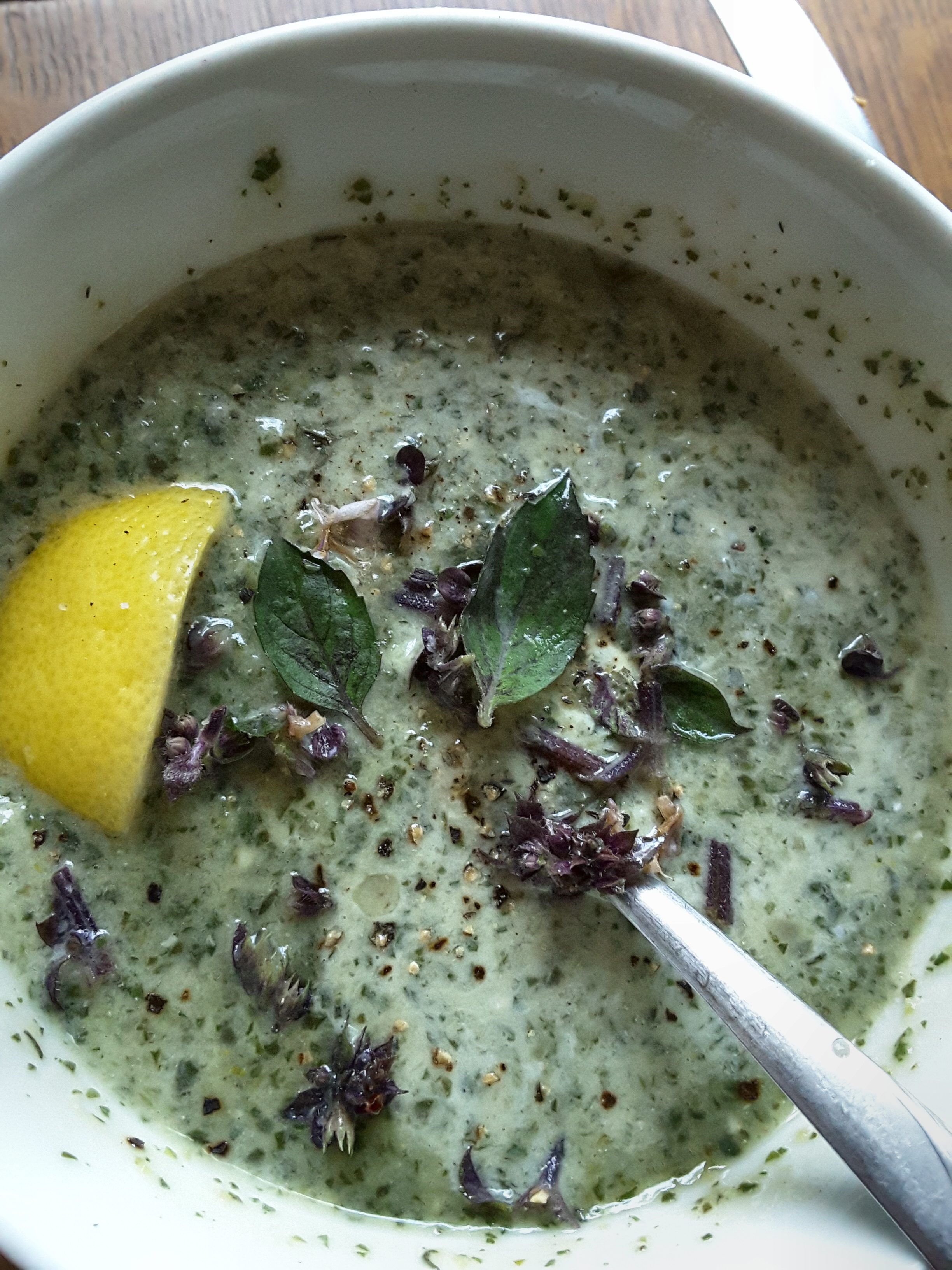
Purslane soup with purple basil garnish
Purslane plus purple basil flowers for that Crème-de-X factor

Sargent’s infamous ballroom portrait of Madame X is today’s inspiration for a soup that, like his subject, breaks a few stodgy rules and dares to produce an elegant but fresher, bolder, more nutritious–and certainly lighter–version of a classic French soup in a few minutes flat. It’s smooth but svelte. And it still keeps you in suspense.

So before we get to today’s featured mystery vegetable (herb? green? Let’s settle on green)–let’s talk about breaking the rules.

Most classic veloutés–vegetable-based cream soups–rely on thorough boiling-into-submission of the vegetables, generally mostly potatoes, to soften them for blending, which used to be done by hand through a mesh sieve back in Madame X’s and John Singer Sargent’s day. They also add a heavy dose of cream to mask any individual or strong flavors so nobody could possibly get upset that they can actually taste the vegetables.

All that cooking softens things but also breaks down most of the vitamins. Reliance on potatoes for bulk makes things starchier and blander as it crowds out the greens as the main ingredient. And I don’t have to tell you what I think about cream–you’re free to disagree but I take statins for a reason, and I’m an inveterate cheese freak. Also chocolate.

So I say save the high-ticket calories for something that packs a bigger punch tastewise even in small, expensive, memorable bites–goat cheese, bittersweet chocolate ganache. Not soup. Make it count.

Method counts too. The modernized French restaurant-approved cookbook methods for veloutés and blended soups in general are stupid, cumbersome and unsafe. There’s no good enough excuse anymore for telling inexperienced cooks–or any cooks–to boil up a vat of something and then try to pour it into a food processor or blender hot–very dangerous, and not the edge we’re seeking here. Scald marks are not chic. Nor is hot flying soup all over the kitchen walls.

In today’s world, you have a blender or food processor AND you probably have a microwave, no matter how many TV chefs may rail against it. You can do this smarter and safer and lighter and faster.

Common sense says blend your veg of choice first, then heat it. If it isn’t soft enough raw to blend smooth before cooking, steam it through first with minimal water and a lid in the microwave for a couple of minutes or, failing that, in a nonstick frying pan or stockpot with a drizzle of water, maybe a quarter-inch off the bottom of the container or pan, and a lid, also for a few minutes. Take it off the heat, pulse a few times in your blender or food processor without most of the liquid to get it started, then add cold liquid gradually as it blends further until it gets to the consistency you’re aiming for. You’re a lot less likely to generate big steam and pop the lid that way.

Then pour it into a microwaveable container with a lid to cook or reheat the soup in a few minutes without destroying every possible vitamin or losing all the color. You won’t scald yourself and you won’t be furious and frustrated and wishing you’d never heard of it before you even get to taste it (this does happen, you know, and cookbooks never mention it)… You’ll be fabulously unruffled (well…at least for this) and ready to dine when it’s ready to eat.

So, enough with the cooking hock-I-mean-hack. What’s with the purslane? What is purslane, anyway?

Fresh purslane in context

You’ve been wading patiently through my diatribe, and the suspense is killing you (but a nice distraction from worrying about the election totals, yeah?)

Purslane–slightly wilted but still worth cooking. I can sympathize.

Purslane, or verdolagas in Spanish, is a slightly tart fresh herb that tastes like a lemony version of watercress or spinach–sorrel? Texture- and looks-wise, it’s a cross between a fresh green herb like basil and a succulent like…like…well, like a jade plant (despite the fact that jade plants are not edible, I’m pretty sure). That is, the leaves are smallish but sort of fleshier than normal herbs. At least when they’re at their peak freshness. Most people who buy and eat purslane put it into a fresh salad and eat it raw. Some stirfry it or chop it and put it into spinach-type dishes. And it’s pretty nutritious–high in vitamins A and C, potassium and other minerals, surprisingly for a vegetable, highish in omega-3 fatty acids if you’re still into those. Grows pretty much throughout the world.

After a week in the fridge, though, it loses a little of its puff and starts to wilt a bit–is it going bad? can you still do something with it?

Continue reading

Ice Cream Therapy

Chocolate Cherry frozen yogurt

Just in time for my daughter’s return last week from college in a part of the northeast where it was still snowing in May, Pasadena entered its first major heat wave of the year–and our AC broke down in honor of the occasion. Fun times!

Today’s topic, as last year and the year before, when I first started this post (and then got side-tracked with all the college application stuff and the very unpleasantly named FAFSA)… and every year at this time, once the heat starts hitting town, is ice cream. Well, ice cream and a couple of lighter, more flavorful and frugal home-brew variations because that’s what’s uppermost on my wishlist, other than cooler air here and cooler heads everywhere. So anyway, imagine it’s two summers ago, not now, for at least the next two parts of this adventure…

Gelato

It started with gelato.

Right before the fourth of July two years ago, I found out that I could take my daughter’s sharps containers to a local sheriff’s office for disposal instead of having to drive to the CleanLA site in west Glendale (not a nice area, and the guys in white hazmat suits make you stay in your car and pop the trunk. They’re not mean about it but it’s still unnerving). When I looked up the Altadena sheriff’s office online, the map showed an unexpected gem across the main street: Bulgarini Gelato, which in 12 or so years of operation and despite its tiny size has become nationally known in the food world.

A friend has been after me for years to visit and try their pistachio gelato, insisting that it’s the real thing because they use Sicilian pistachios and it’s all natural (you know the kind of friend who speaks in italics). Despite or possibly because of how holistic she made it sound, I’d never gotten over there.

It’s a shame, in a way, because Bulgarini is the living result of a rescue operation–the owners did an apprenticeship in Italy to learn the old-style from-scratch processes for making real gelato, just as all the old guys were retiring and all the gelato shops were going to factory-made, synthetically flavored powdered mixes.

My husband and I had been to Italy… 25? can it be? years ago for a conference (the only way we could have afforded it then), when real gelato was still available. We quickly figured out how to order anything at one of the bustling gelaterie in Florence: sharpen your elbows and your tongue, know which of the 30 or 40–or more–flavors you want (spinach? avocado? rose? fior di latte? kiwi? cassata?), get to the front of the throng and have your money ready, because it’s gonna cost you. But a tiny cup–at an outrageous 3000 lire (right before the Euro took over)–held two or three distinctive flavors you ate with a tiny spoon and that didn’t melt as fast as ice cream, so you had more time to keep tasting as you wandered around the city, taking in the sights.

Bulgarini was almost the opposite experience. At mid-afternoon on a hot July day, the whole shopping plaza was silent and dusty and it took some time to locate the gelato shop in a group of new indie businesses off to the side of the deserted RiteAid. The gelateria was dead quiet, just a few customers trickling in at a time, though steadily. No need for elbows or decisiveness. Leo Bulgarini, the owner and artisan gelato maker, stood to the side with his arms folded, not saying anything as he supervised the girl behind the counter, who spoke a tiny amount of English and was obviously pretty new. There were only ten or twelve flavors in the case, reasonable for handmade in such a small shop, and none of them spinach or avocado–also reasonable, since most customers here probably wouldn’t be ready to chance them.

As in Florence, the prices on the chalkboard were authentically astronomical–the smallest cup was $7 for up to two flavors, plus an extra dollar for the Sicilian pistachio. Which I got anyway because that was the mission, even though I kind of gulped as I forked over a twenty, and asked that the second flavor be nocciola–hazelnut. I figured the super-dark chocolate and the fruit flavors were things I already knew I liked, and they might clash or overwhelm the subtleties of pistachio. The hazelnut would be just different enough to be interesting as well as a test of truth in flavor, because chocolate and fruit are easier to be convincing about and because commercial hazelnut flavoring tends to be disappointing–oversweetened and often synthetic.

In any case, I tasted and was floored. Really floored, but too shy in that environment to say anything.

When the silence threatened to become extra-awkward, I ducked out into the shaded courtyard and tasted it again. The Oregon hazelnut was so clean, so crisp, so exactly and precisely hazelnut and nothing else–not faint, not sweet or faked with extracts or overdressed in any way–that it was actually more impressive and possibly more Italian than the Sicilian pistachio that followed. The texture was right too–slightly stretchy, not super-rich, and it didn’t melt right away, so there was time to eat it in small experimental tastes.

Was it worth seven or eight bucks for a 3-4-ounce serving? There’s no way I could make a habit of it–it really is too expensive for a snack. But for a special occasion, the real thing is worth a try. My husband was overscheduled for his birthday that year, and we were away the next, but he’s just going to have to clear his slate so I can drag him back before his next birthday. Maybe tomorrow, actually.

Ice cream parlor ice cream

A few weeks after the Bulgarini experience, we flew east to see my mom and do college tours in Boston and then hung out with my sister in Maine. After a day or so of dank heat we finally admitted it was more than we could handle–what can I say, we’ve gone soft since moving to the land of 10% humidity or less. We gave in to temptation that afternoon and sampled hand-cranked ice cream at a local ’50s-style ice cream parlor. There was an impressive list of flavors on the chalkboard–easily more than 40, including licorice, various berries and several different variations on chocolate, caramel and coffee. We all liked it well enough, but I was the only one who got something other than your basic oversized milk-chocolate-caramel-cappuccino.

I came away with an important realization: Ginger just isn’t as common as it should be, it’s a great flavor that really deserves a comeback. But it shouldn’t be stuck in sweet, bland basic vanilla superpremium ice cream that’s starting to drip before you even get out the door. Even after I told the girl at the counter to give me only half the softball-sized scoop she was aiming at my cone, and she complied, puzzled that anyone would ask for less instead of more, it was just way too much. My husband went for two flavors, two full scoops. I’m still not sure how he possibly managed it, and I was watching (queasily). Oy. Boys are just into stunt portions is how I explain it.

When we got back home to California, our cat was fine, the kitchen hadn’t crawled away, and reality sat waiting on the doorstep: school was only a couple of weeks down the road and it was hot here too–though not as humid, at least. I suggested ice cream (light, not Haagen-Daz)–and my daughter glared; after the excess version from Maine, she was trying not to, which was probably smart for all of us.

The skinny versions

If you can’t get to Altadena or Maine, and you’re not sure a $5+ pint of ersatz supermarket gelato is the real experience (it isn’t) or you want a flavor that’s not so predictable, you can make gelato yourself for not very much money. Cookbooks from the 1990s abound with recipes (though probably not the spinach or rose flavors), and you might be able to find a Brazilian recipe for avocado ice cream online.

The basic idea for gelato is to make an egg and milk custard and blend it with fruit, nut pastes or other flavorings before freezing. Some use cornstarch in addition to or as a substitute for some of the eggs, and that’s as traditional as all-eggs in some parts of Italy. The base ingredients are inexpensive either way. Continue reading

Three-Hour Sourdough

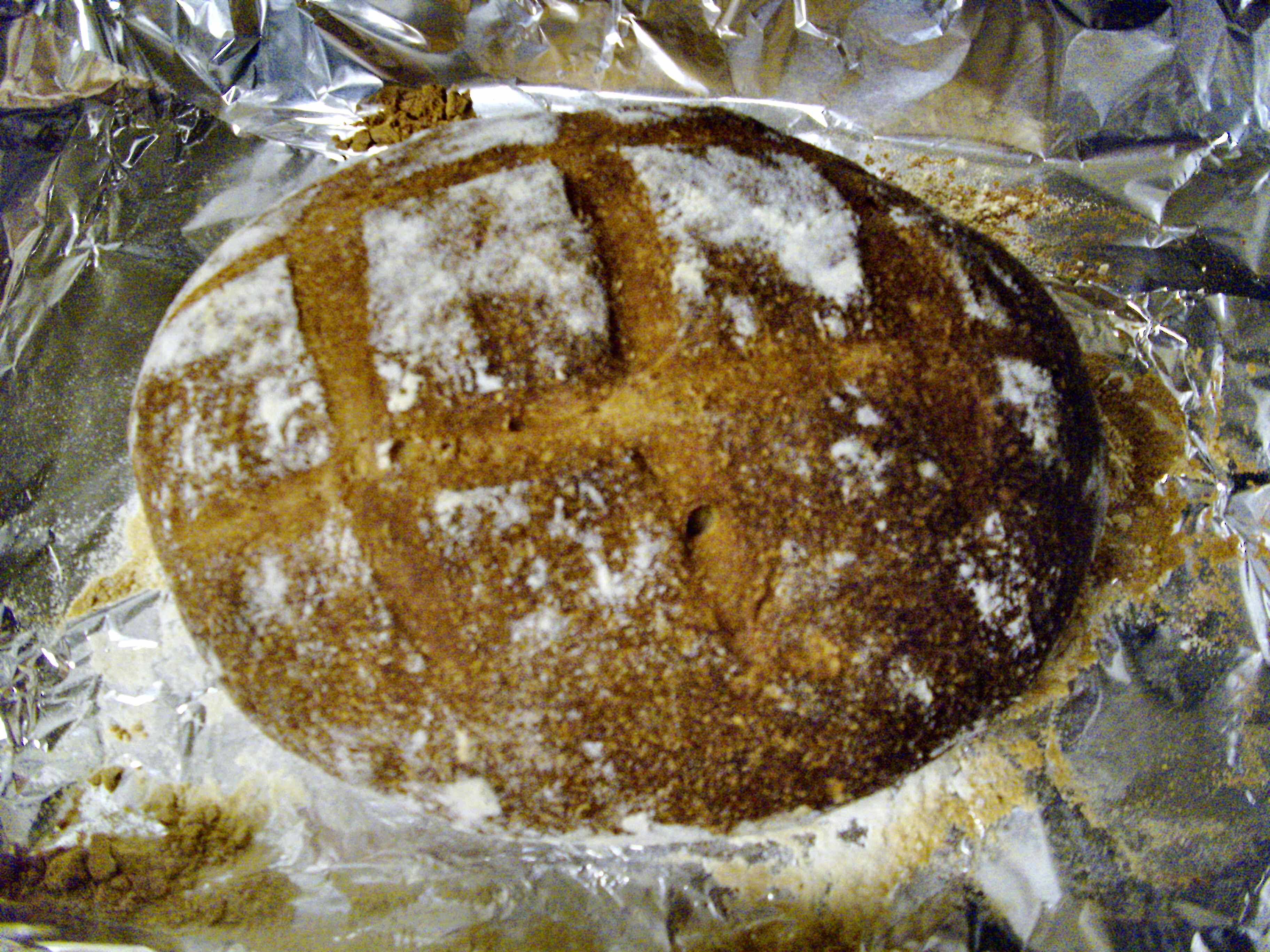
Three Hour Sourdough

I love sourdough–eating it, anyway. Baking? That’s enough of a challenge that I’m elated when it turns out relatively edible. Because even with my standards, which are a bit loose, there are times when the outcome is decidedly not up to expectations. I have trouble getting the dough risen well enough and into the oven before the acid chews up all the gluten. In other words, it tends to overproof and then flop. Few of my loaves–I can face it–have ended up risen enough to consider serving other people, and most of them are a bit coarse inside–partly because I want rye or whole wheat rather than just white bread.

The other challenge is the perennial one for sourdough cultures–it takes several days to build a decent-tasting and stable mix of flour, water, wild yeast and lactobacillus culture with no undesirable bugs or off-flavors and odors. And in the meantime most instructions tell you to take a small bit of the mixture, feed it fresh water and flour, and toss the majority. Wasteful–both of ingredients and time.

So for the past year or so I’ve wondered whether I couldn’t somehow just get a running start past all that by using commercial yeast (a big no-no according to sourdough experts) with some commercial lactobacillus culture–yogurt, maybe?–and flat-out cheating. As in, faux dough. Well, more precisely, perfectly real dough, with a real-enough sourdough taste and texture, only about 4 2/3 days faster. At least. Without just caving and paying 6 bucks at Whole Foods for a small decorator loaf.

Yesterday I wondered it strongly enough to hunt around online and see if the yogurt idea had occurred to anyone else–and it had.

Ladyandpups.com is the food blog of a sometimes cranky, sometimes poetic, impressively prolific and creative baker named Mandy Lee. She has a “fraudulent easy sourdough” recipe that uses more than a cup of plain yogurt with a small amount of yeast and 3.5 cups of bread flour–no added water, apparently–and some salt for a firm dough that rises either 18 hours at room temperature (1/4 t active dry yeast) or 6 hours (3/4 t. yeast) and comes out tasting right and looking beautiful and crackle-crusted via the Jim Lahey no-knead-but-preheat-the-dutch-oven method.

And that’s all to the good.

But I’m even more impatient than that, and most of my sourdough faux pas have to do with letting the dough sit too long before baking. Even a 6-hour rise seems like too much. I also wanted a whole-wheat sourdough (so half whole wheat, half bread flour), which means it’s already comparatively gluten-challenged. So I wanted a really short, sharp rise that would get the dough puffed up and bakeable before the acid got to the gluten too badly. With luck, the yeast would win out just enough to outpace the acid buildup and resulting hopeless flop, but still allow enough to develop a good tang, which is the whole point of sourdough in the first place.

That meant changing things a bit:

1. Less yogurt, only about half what Lee calls for–half would still have plenty of lactobacillus culture to reproduce, but wouldn’t contribute as much acid right up front.

2. Some water to dilute the initial acidity further to delay the inevitable gluten-chewing effect. More water also gets the dough smoother and the gluten developing more quickly even when there’s no acid-producing bacteria to worry about. That’s an added benefit since I was going whole-wheat.

3. Not too much yeast either. Normally, adding more yeast means getting a faster rise. But even 1/4 t. is about what I usually go with for a slower-rising dough with 5-6 cups of flour, and that only takes 3-4 hours to more than double in my kitchen, at least with a hot rise. I didn’t want so much extra yeast at the start that it outcompeted and inhibited the lactobacilli from the yogurt altogether, because no sour culture equals no sour flavor. Continue reading

Days of watermelon and roses

frozen watermelon slices

We spent much of August getting my daughter ready for her first year of college in upstate New York, about as far away from Los Angeles as you can get and still be in the lower 48. Last-minute saves in the kitchen this time around included about a quarter of a small watermelon–5 or 6 inch-thick slices that I stuck in the freezer in a bag with the air squeezed out, hoping they wouldn’t be completely awful to use up somehow once we got home. I assumed it would be as hot when we came back as it was before we left, and that frozen watermelon in any form would be just about right.

Of course, today Pasadena is in the 80s and Boston and points north are in the 90s for a massive heatwave. Everything seems a bit topsy-turvy in this country to tell the truth, and as I’ve remarked more pointedly before, has for some time.

But at this moment, a world without Aretha Franklin in it– daring, flashy, cantankerous, exuberant, frank, funky, ambitious and endlessly talented–doesn’t seem right.

I have a treasure of hers that I picked up from the local Goodwill’s vinyl bins a couple of years ago: a red-labeled 45 whose B side was in perfect, untouched, glossy condition–“Prove It,” a number I only realized later that I had heard before, because honestly it was unremarkable even with her singing it.

The A side, on the other hand–scratched, worn down, dusty grooves, battle-hardened, loved to death and beyond, deservedly so. I quickly snatched it up for $1.99 and took it home, protected inside the cover of a hardback. Would it still play, was there any magic left? I stuck it on the turntable, nudged the needle arm over and lowered it as gently as possible.

Even though our speakers are o-l-d and not that great to begin with, the music just leaped out at me. Hearing the classic twang of the guitar intro and Aretha’s intricate runs on Chain of Fools puts shivers up my spine anyway, but this was the real thing. Vinyl, even old scratched vinyl from the ’60s, when I was three or four years old, is so much more evocative than the sound you can get from an mp3 it’s a sin.

Red is always how I’m going to think of Chain of Fools and Aretha Franklin, but looking back, she often chose a light pink for herself–one of her outfits on Soul Train for a live performance of Rock Steady, several of her later appearances too. I’ve never been a big fan of pale pink or Cadillacs, but I still love her exuberance and a song that full of juice and humor.

And that brings me back to the frozen slices of watermelon and what I did with them yesterday.

I knew that once it was frozen, the watermelon would probably have to stay frozen, because thawing it out would almost certainly cause it to collapse into limp mush, and what a shame (although I didn’t actually test that out, I would put good money on it).

snaplock container of watermelon sherbet

You can’t really buy watermelon ice cream or sorbet in this country, not at the supermarket anyhow, and I’ve never actually eaten any, not even as gelato in Italy, where (at least 25 years ago, when the artisanal gelaterie were still making it traditionally instead of from powdered mixes) they had just about everything you could put in gelato form and all the flavors came out really specific and vibrant and fresh.

I wasn’t sure a watermelon ice I could make at home would actually taste good on its own, and I had something a little more offbeat in mind for the flavor since watermelon is kind of subtle. But it’s popular world-wide, from Africa to east Asia as well as throughout the western hemisphere, which gave me a few ideas.

Right before we left for New York I’d interviewed someone who was born in Iran about his father’s legacy, and then while we were traveling I saw David Lebovitz‘s blog post on “booza”–the Lebanese version of Turkish dondurma or “stretchy” ice creams in exotic flavors. So I was thinking maybe rosewater and a pinch of clove with the watermelon. And maybe a dollop of yogurt in there somewhere for body so it wouldn’t be too much like a granità. And maybe…

Well, it could either be good, inedible or just plain strange–and it turned out something between good and a little strange, so I’m counting it as a good rough draft, and we’ll call it unusual, exotic, still a bit subtle but flavorful, specifically watermelon with rose. And pink.

My experimental ices tend to be low in sugar and fat, so the texture is a bit icy, sherbety or snow-cone-y rather than creamy. They’re still refreshing and I try not to let anything be cloying–rosewater can be, so I kept it to a teaspoon for what made about a quart in volume, and I added lemon juice, which helps a lot and keeps it from becoming “soapy.”

I don’t know–maybe this would be better as popsicles or paletas, but I like the snowiness, and the watermelon flesh definitely contributes that delicacy even without an ice cream maker.

And this one was pretty encouraging–cool, smooth, both down to earth and exotic, unexpected. Maybe a little like the Queen herself.


cup of watermelon rosewater sherbet

Watermelon Rosewater Sherbet

makes about 1 quart

  • 1-1 1/4 pounds (500ish grams) watermelon slices without rind or seeds, sliced and frozen all the way
  • 3-4 T sugar or to taste
  • squeeze of lemon juice and/or pinch of citric acid, sparingly, just to taste
  • 3-4 T nonfat milk-and-cultures only Greek yogurt
  • 1/2-1 c. skim milk, just as needed
  • 1 t. rosewater
  • pinch of ground cloves, optional–this was the part I’m not sure I’d repeat; it wasn’t bad but it wasn’t quite ideal either in combination with the watermelon, the rosewater and the tartness. So probably leave it out.
  • NOTE, a year later: I tried another batch with cardamom instead of cloves and it really freshened and complemented the watermelon and rose. I shouldn’t have been surprised–it’s traditional in both Iranian and Indian cooking to combine rosewater with cardamom. So if you’ve got it, flaunt it.

Microwave the frozen watermelon slices 30 seconds on an open plate, just enough to thaw a tiny bit so you can cut them into inch-or-so chunks for the blender or food processor and not break the blade. Add the lemon juice or citric acid, the sugar, the yogurt and rosewater (and pinch of clove? leave it out?) and a splash of milk, pulse to start it blending. Pour just enough extra milk through the processor spout to create a smooth thick icy milkshake-like blend, then pour the mixture into a 2.5 quart snaplock container with a lid and still-freeze, stirring briefly with a whisk after half an hour and returning it to the freezer.

If you want an actual sorbet with no dairy, make a simple syrup by boiling equal amounts of water and sugar for a few minutes to dissolve and thicken slightly, cool it to room temperature and blend it with the frozen watermelon and flavorings, leaving out the yogurt and milk and regular sugar. The usual sorbet proportions are about 3/4 cup of sugar (so about 3/4 c sugar, 3/4 c water, boiled up to a syrup and cooled) for a quart of finished sorbet. I find that a bit much sweet-wise and not as refreshing but it will deliver the kind of standard texture and cohesiveness you get in commercial sorbets.

A different take on pumpkin “spice”

It’s just past Halloween and soon to be Thanksgiving. The pumpkin bins at the Trader Joe’s will probably disappear next Tuesday morning, very convenient. The worst of it is, the only edible-grade pumpkins they sell are the little pie pumpkins. The gorgeous Cinderella’s carriage ones, a dusky pale orange-gray, are a staple of Mediterranean cooking from soups to couscous to filled fillo spirals and beyond. Even candied pumpkin as a spoon sweet. But the ones the supermarkets here sell are grown for looks only with questionable water, fertilizers and pesticides, and are presumably just for decorating your lawn and attracting rodents.

It would be so nice if they sold edible larger pumpkins like the Cinderella kind–organic ones? even in wedges, as they do in European and North African farmers’ markets. It’s a shame to see so much food potential wasted like that.

Meanwhile, Starbucks, Cinnabon and other mall favorites will no doubt be assaulting the national palate once again with an overload of nutmeg and cinnamon extracts–the gastronomic equivalent of “Rockin’ Around the Xmas Tree” and “Feliz Navidad” played endlessly over the PA system wherever you go shopping. Taste is no object.

So my grumbling has resulted in a couple of searches for pumpkin with spices that don’t threaten anyone’s latte. I’ve been cruising my ever-growing collection of Mediterranean and Near Eastern cookbooks in search of good vegetarian and vegetable dishes that I can speed up with the help of a microwave without losing flavor.

Just by starting with a microwaved butternut or other whole red squash, you can cut the roasting, peeling and chopping time and effort (and danger of self-inflicted wounds) way down. Some decent savory recipe ideas can be done with ordinary cans of plain packed pumpkin too.

Then my preference is to go savory rather than sweet. It’s more interesting, for one thing, and it’s more versatile too. Finally, I look to see if I can make some of the recipes I find faster, svelter–and preferably both.

I see little benefit to using heavy cream, full sticks of butter, and extra egg yolks for “richness,” which mostly means as bulking ingredients more than for actual flavor. My head, my heart, my doctor and my hips are all in accord with me on this one. Besides, I’m a cheese freak. In my world, you need to save up your limited saturated fat allowance for stilton or chevre or camembert–something with funk and flash and that lightningy je ne sais quoi.

My lineup of adaptations so far:

Kolokithopita

Like spanakopita triangles or fillo rolls but instead of spinach and feta, use cooked and fairly dry pumpkin (or in this case butternut squash) mashed with feta, oregano and/or thyme (or fresh za’atar if you can get it), hot pepper flakes, a little tehina sauce or some garlic and lemon.

Butternut squash fryup–just add a little feta and some hot pepper flakes

If you’re only making 4-8 rolls or triangles, you can stick them on a length of foil that fits your toaster oven. Use a sandwich baggie over your hand to dab very sparing amounts of olive or expeller-pressed grapeseed oil or other light vegetable oil on each individual fillo sheet before folding in thirds, putting the filling on and rolling or folding. Brush the tops very lightly with a little more oil, turn down your toaster oven settings to about 400F and bake for about 10 minutes. When the tops are golden brown, turn the pastries over very gently and bake the whitish bottoms a little longer.

Pumpkin Gorgonzola Flans with Toasted Walnuts

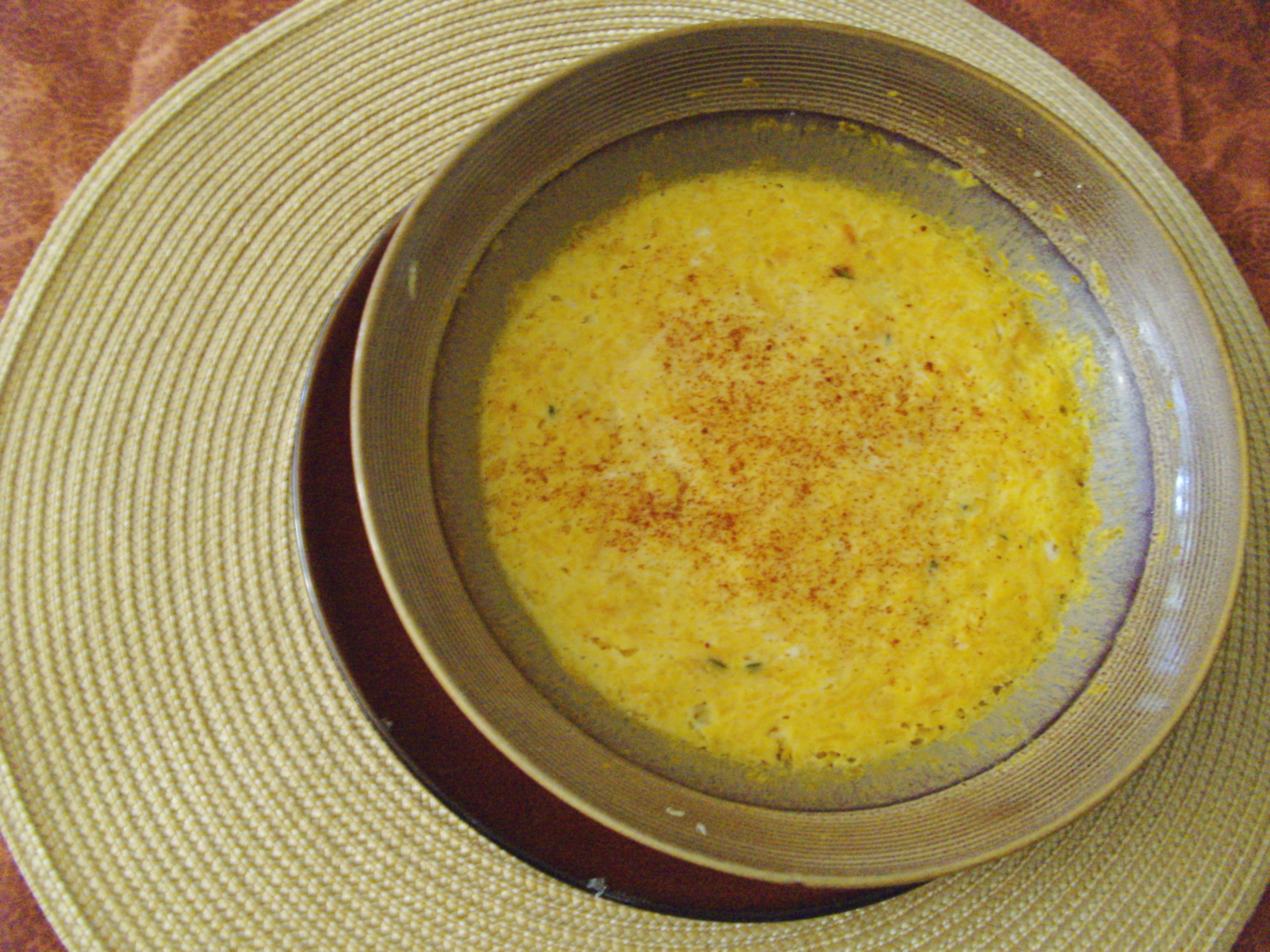
Butternut squash savory flan, slimmed down

adapted from Dorie Greenspan’s Around My French Table

This one has to be microwaveable–it’s a custard base, after all. It also, and I mean this, has to be svelte-able. Really. Greenspan uses 3 eggs plus 2 yolks and half a cup of heavy cream for only one 15-ounce can of packed pumpkin. That’s pretty obscenely rich, especially with 4 ounces or so of crumbled gorgonzola and some toasted walnuts sprinkled over the 6 individual ramekins before baking in a water bath in a conventional oven. And she suggests creme fraiche or sour cream as a garnish? Yikes.

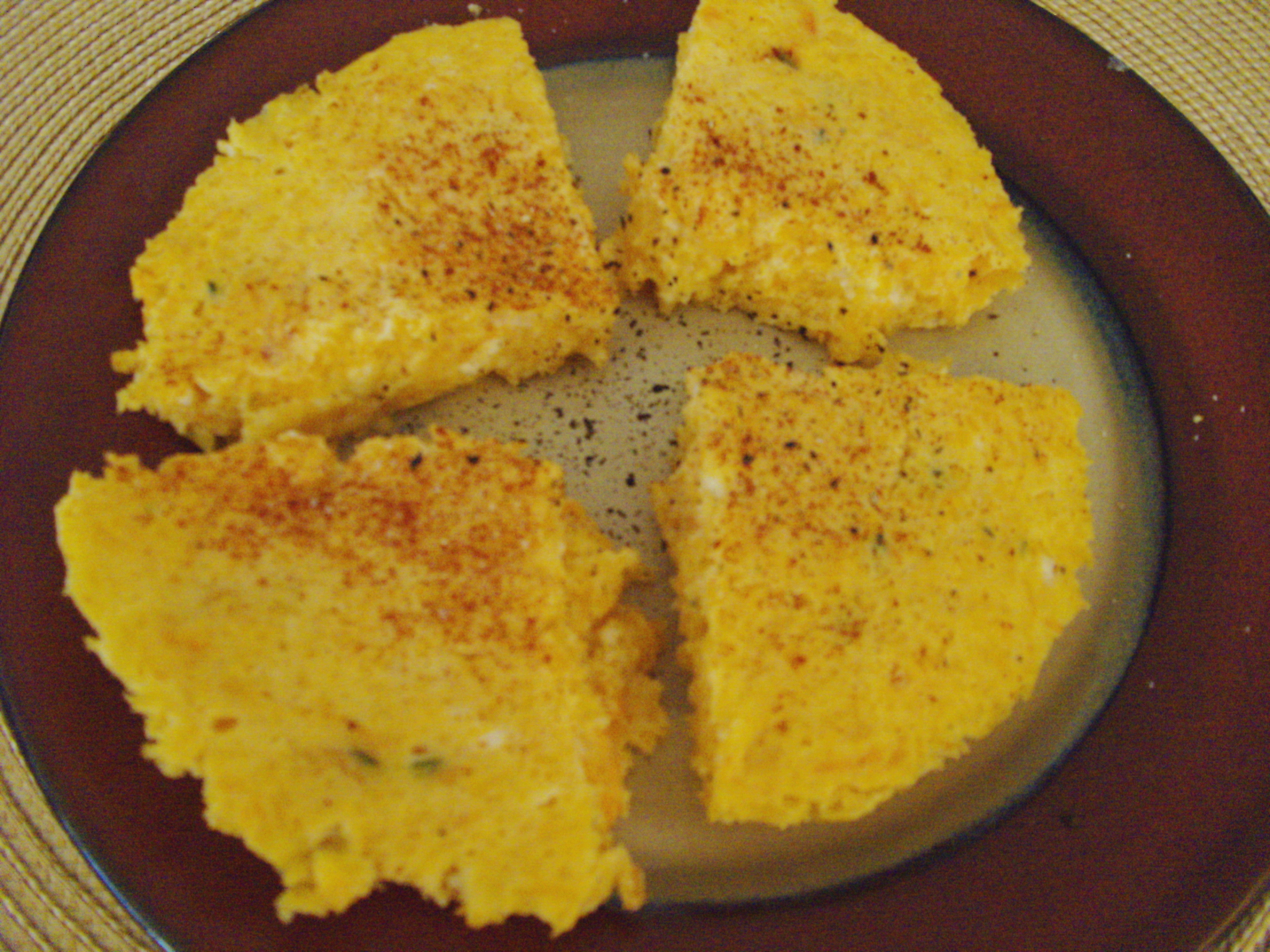
Flan in quarters

Microwave-safe ceramic ramekins are pretty inexpensive if you shop Ross for Less or Target.  I didn’t have gorgonzola or any kind of bleu on hand, so I winged it for concept with some feta.  I will say I’ve noticed that at least Stella gorgonzola melts into a runny sauce in a microwave–good if you want a smooth gorgonzola salad dressing, not so good for a recipe like this where you don’t want it to disappear into the flan. Maybe a more solid bleu like Stilton will melt and run but I’m hoping it stays together better.  Also, nuts in the microwave–maybe not a good idea, at least for big chunks. Even with the moisture from the flan taking the brunt of the energy, I kind of think you’re at risk of scorching them from the inside out, particularly if they’re on top of the flan. Better to roast them separately on a lowered heat in the toaster oven–200-250F for 5 minutes or so while the flan is going in the microwave, then sprinkle them on afterward as a garnish.

My half-recipe test came out pretty delicious on its own merits and I’m going to buy a small wedge of Stilton to try next. Because I mashed the butternut squash with a fork rather than using a purée, it’s a little rougher and less refined but the fresh taste is noticeable and lighter. Using plain nonfat yogurt in place of the heavy cream also made it obviously lighter and played up the tang that gorgonzola and bleu normally contribute. The acidic yogurt  may be counterintuitive if you’re thinking conventional cooking, but the small addition of flour plus the egg plus the starch and fiber in the squash prevent it from separating and curdling under heat.

Half-recipe pumpkin flan for lunch (serves 1-3 for lunch or an appetizer/side dish)

  • 6-7 oz/185 g chunk of cooked (microwaved, roasted, leftover) butternut or other red squash
  • 1 lg egg
  • 1/4 c or large heaping soupspoon of plain nonfat milk-and-cultures-only yogurt (not even Greek! just the cheap regular!)
  • small clove of garlic, mashed/minced/grated
  • pinch or stem worth of thyme
  • 1 t flour
  • 1 oz crumbled feta
  • sprinkle of smoked paprika, grind of black pepper to taste
  • toasted walnuts, optional

Mash everything up to the feta together in a microwaveable soup bowl, sprinkle on a little paprika and/or pepper, cover the bowl lightly with a lid or saucer, microwave 3 minutes on HIGH. Lift the lid carefully to check–it may still be liquidy in the center but cooked towards the outside rim. If the bowl’s very hot, let it sit covered another couple of minutes, jiggle again to see if the center’s cooked. If not, give it another 30 seconds and let sit again to cool down enough to handle. Cut into 3-4 pieces and serve–garnish as desired.

Emergency Éclairs 2.0, Even More Microwaved


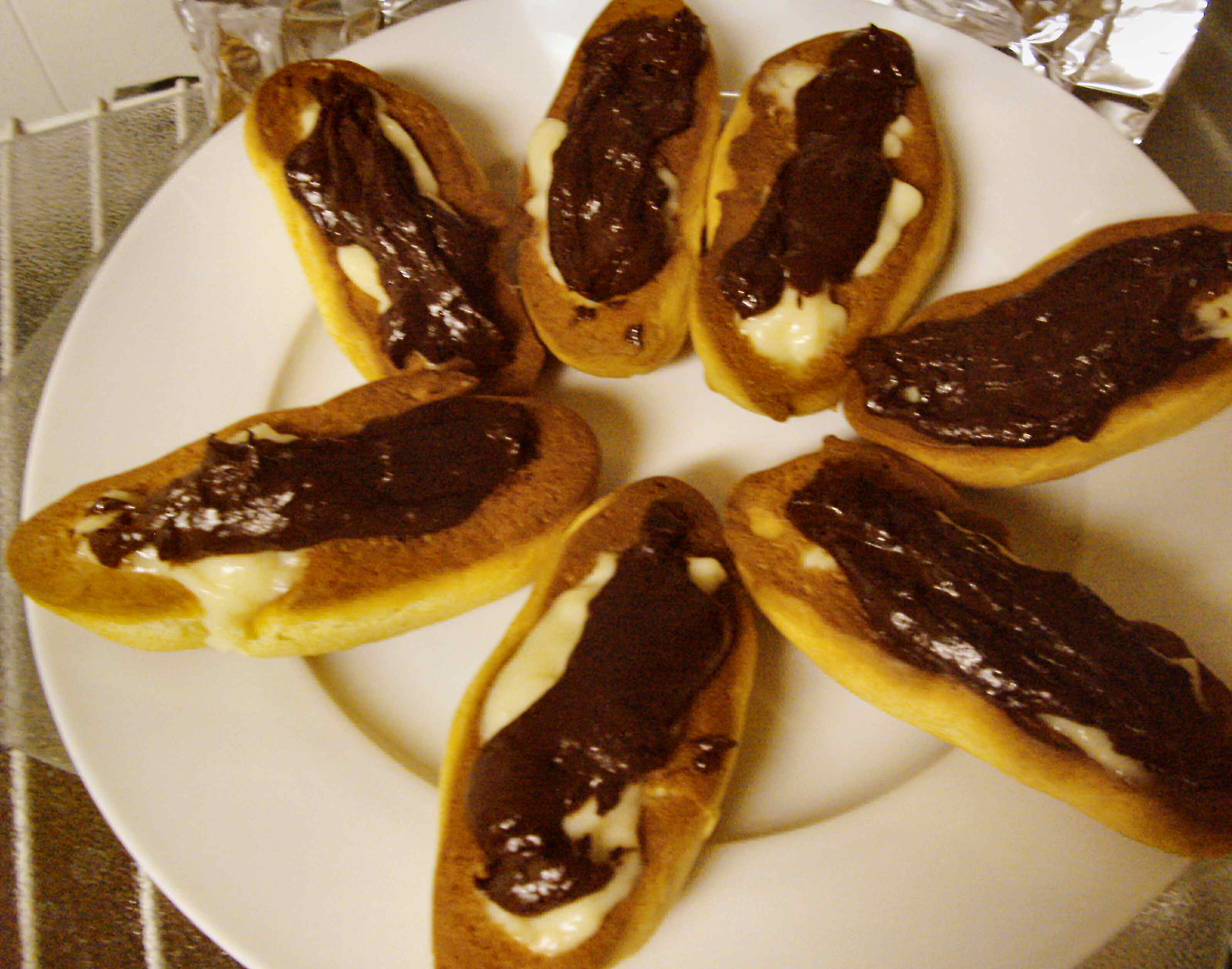
plate of eclairs

All the components of an éclair are at least partly microwaveable, flavorful and pretty forgiving. Even if you have to serve them upside down.

Here we go again, because it’s been Valentine’s Day this past weekend and I have pretty loose time standards for such things…I did actually make these before dinner on the 14th, so it counts. Not that you really need VDay as an excuse.

Éclairs are a lot simpler than they look in the pastry shops, and a lot cheaper than you’d think to make at home–in fact, cheaper than almost any American-style dessert in terms of calories, sugar, fat, salt… A surprisingly small amount of ordinary pantry staple ingredients goes a very long way and makes a bigger show than if you tried making brownies.

If you have a microwave, they can also be a lot quicker than most cookbook recipe specs, even though there are three separate parts to prepare and assemble–the filling, the shell, and the chocolate topping–rather than the usual American one-bowl dump-mix-and-bake scheme.

Éclairs don’t hit you over the head with sweet–they rely on the contrast of textures and flavors between the mostly unsweet pastry shell, the delicately sweet pastry cream, and the deep chocolate (or other flavor, but it has to be an actual flavor to be good, not the typical flavorless, oversweetened canned cake frosting) topping.

Éclairs have also become something of a canvas for artistic expression in Parisian bakeries; David Lebovitz has some great photos of ones with reproductions of paintings screened onto the tops, woodland scenes in colored icing and fondant and flavored marshmallows, fruit fantasias, and I don’t know what else, not to mention the fillings. They’re gorgeous to look at in the glass pastry cases but you couldn’t walk down the street, find a park bench, and just eat them with your fingers. You’d end up wearing them.

So the classic chocolate-topped, pastry cream-filled éclairs are still my favorite, partly because you can’t find them in most of the bakeries here.

Baking the dough is the one part you can’t really do in the microwave, more’s the pity (although you can do it in the toaster oven for a small batch). But otherwise, I can say it was worth it and–although I needed to step on a scale Monday morning to be certain–not that devastating dietwise…or even diabetes-wise. But, as with rugelach, you probably shouldn’t do this too often. Holidays and sharing are a pretty good idea. Leftovers are not. Limit the dietary badness.

Unromantic morning-after nutrition stat check: At the medium-small size I made, they weigh in at about 22 grams of carbohydrate, 160 calories, 6 grams of fat (mostly saturated, from the butter and chocolate plus egg yolks) and maybe 40-50 mg max of sodium apiece. Verdict: Not too shabby for a French dessert. Could be worse and often is. Stick to one apiece, plus some fruit, and eat it with a light supper that includes a green salad and you should be reasonably fine. Also svelte, happy, and able to sing «Non…je ne régrette rien…» the next morning. But please don’t. Not before coffee.

Even if you eat two at a time after supper because you’re not sure how long you can store the extras in the fridge so they don’t go all soggy the next day, it shouldn’t hit you like a ton of lead…well, not too much like a ton of lead. At least they weren’t full sized; they were pretty filling. Afterward, when we were lying in a daze on the couch recovering, my husband suggested just freezing any extras next time. He had a point.

About halving a recipe

I was in a hurry and couldn’t find the lower-saturated-fat recipe I’d used successfully for “Emergency éclairs 1.0” so I went with the recipes for choux paste shells and pastry cream in the “basics” back section of the white Silver Palate Cookbook. The dough and pastry cream worked fine in the microwave, as I think almost any standard recipes would.

Since there are only myself, my husband and our daughter here for dinner and eligible for éclairs (plus the cat, who is miffed that we didn’t count her), I cut both recipes in half–I repeat, limit the dietary badness…

The pastry cream was fine, but I hadn’t read all the instructions for the choux pastry, or I’d have known that the 3rd egg was for a completely unnecessary egg yolk glaze. When I halved the recipe I used an extra egg white as the “half egg,” and when the puffs puffed, they left nothing behind, no base, just a hollow, once I peeled them off the foil. The result was still fine for us but a little awkward for presentation–I had to sit them upside down like boats to fill them, and then cover the filling with the ganache. So definitely go back to the right proportions for the choux recipe (repeated below).

The ganache…is always very chocolate, very microwaveable, very forgiving of awkwardness and therefore perfection itself. It covers a lot of sins and makes you feel much better about them.

Mostly Microwaveable Éclairs

This is half-recipes all the way: it makes 6-7 half-size éclairs, 3″ rather than the standard 6″ monsters at the bakery. We each had two after supper and were completely stuffed.

Timing: If you’re doing the whole thing in one go, start by preheating the (regular) oven to 400 F, then make the pastry cream, which is really fast, and chill and stick it in the fridge, then do the choux paste, because as soon as you make that you need to dollop it out and bake it right away. If you use the microwave for the pastry cream, and you should, the choux will be ready to go just about when the oven beeps. Continue reading

“The Dorito Effect”: Fervor over Flavor

So, the party’s over, the halftime show’s over, Denver won, a variety of pop stars are brushing off media criticism over what they wore, and a nation is figuring out how to deal with the caloric aftermath of buffalo wings and a variety of dips and chips. (My biggest excitement: locating the owner of a red Corvette with a leaking gas tank in time to deal with it and avoid a more dramatic spectacle. Luckily it was mid-afternoon and the owner was alert, sober, and not smoking. She  also wasn’t whining about having to go out to look at the car. As some of the male guests might have been, Corvette or no.)

Mark Schatzker’s recent book, The Dorito Effect, is an energizing read for those of us who aren’t really into the classics of Superbowl Sunday.

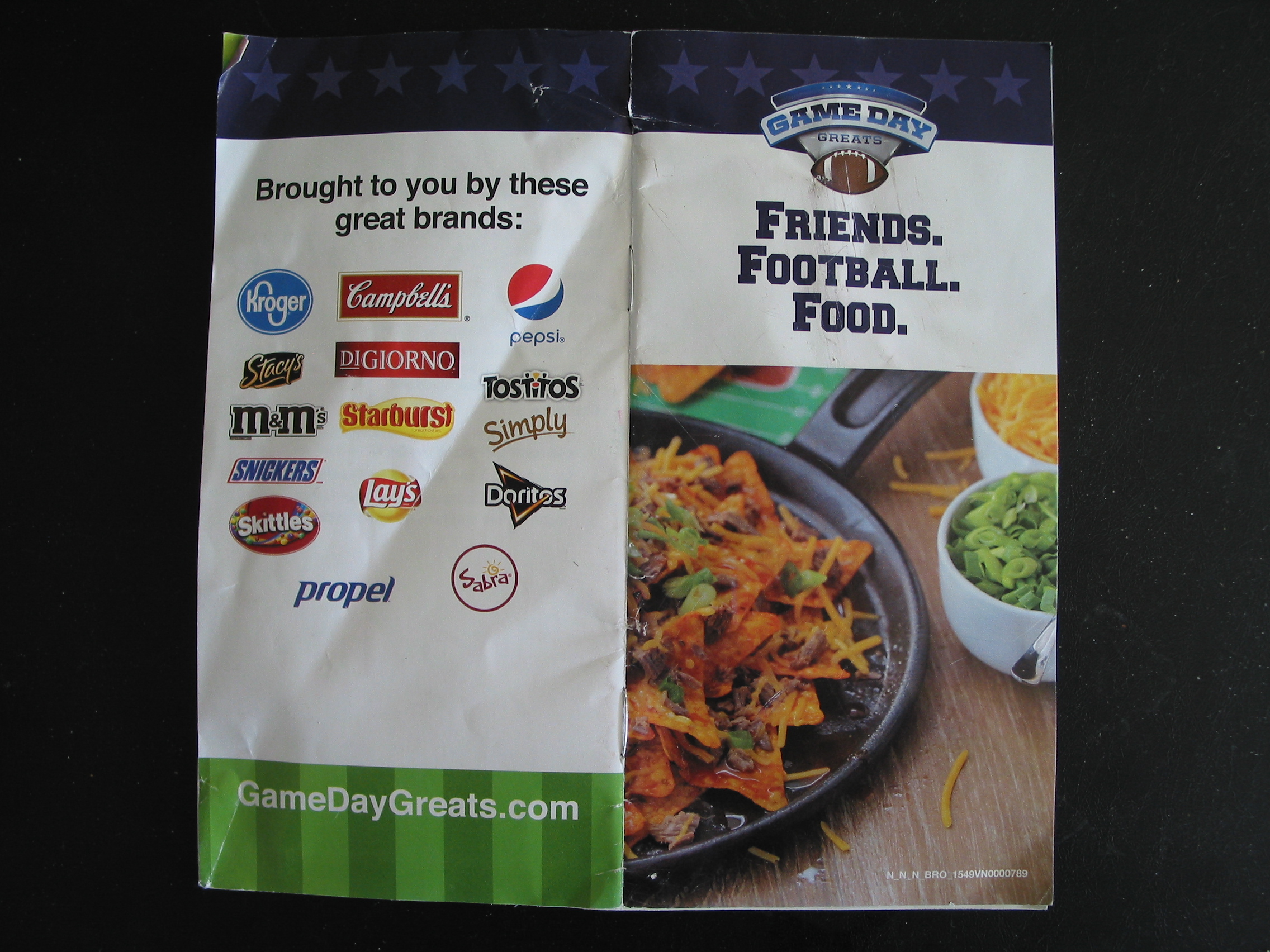
Kroger Superbowl recipe booklet

I’ll spare you the inside pages, but the closest to nutritious was Kroger’s own recipe for double-coated baked cauliflower “hot wings”–ingredients: a head of cauliflower, a little flour and water, garlic powder, Kroger’s store-brand hot sauce, and some melted butter to doll up the cauliflower florets before dipping in…ranch dressing. 

Not that it’s really so much about Doritos, but rather that it takes the 1960s invention of Doritos–a “taco-flavored” taco chip without any actual meat, cheese or salsa, just what has become known to all as orange cheez dust–as the first serious divorce between food and intrinsic flavor.

It isn’t really the first, of course, and Schatzker traces the history of post-WWII mass agriculture as the story of more food, grown quicker, with less and less flavor. Everything from tomatoes to chickens to broccoli to wheat comes under the microscope lens here. Yes, it’s another Michael Pollan-style examination of some familiar complaints about how and why nothing tastes the same anymore.

He collects reactions from champion kvetchers as diverse as Julia Child (she did it first, he claims, calling modern–1960s–American chicken tasteless and with the texture of “teddy bear stuffing”) to the Slow Food Movement (no relation, ahem!) to Michael Pollan himself, to a variety of old bickering couples who remember the flavor of old long-legged breeds of chickens now relegated to the remote gourmet sidelines of the vast factory-farming chicken industry…

Schatzker tells a fairly entertaining version of this tale–how Big Food and Big Agro convened with flavor chemists to alter the course of human gastronomy in the wake of WWII. As we breed livestock and produce to grow more, bigger, faster, he discovers, we lose not only flavor but nutrients and replace them with water and carbohydrate filler even in things like broccoli and tomatoes. And then we try to make up for that by dousing them in ranch dressing and orange cheez dust and artificial flavorings; hence the title of his book.

Coatings, dressings, artificial flavorings, salt, sugar and oils–these, he says, have become the substitute for intrinsic flavor in real foods, and a mainstay of the unsubstantial snack foods–starting with Doritos–that have pushed out bulk produce and unprocessed ingredients in the American diet.

Schatzker takes it a couple of steps further, though, presenting his theory that the loss of flavor in real foods is the key factor to blame for American overconsumption of calories, and that flavor is one criterion we should work to restore at a national level.

Yes, we’ve read much of this before elsewhere, but his interviews are still eye-opening. He interviews flavor chemists at McCormick, which does a lot more of its work behind the scenes of the restaurant and processed food world than you might think. Those little bottles of herbs and spices on supermarket shelves are just the tip of the iceberg.

Schatzker also profiles one of the original breeders of today’s heavy-breasted, fast-grown, efficient-feeding mass market chickens–though the man is still proud of that early work given the economic pressures on postwar America. He gets the inside story on the decline of flavor and nutrition in broccoli, kale, tomatoes, strawberries and other common produce, and learns why some top agriculture researchers eventually quit the corporate world to try and restore some of the diversity and quality that had been lost during the peak years of their careers. Continue reading

Passover Dessert Challenge: No Eggs!

 Passover-eggless-chocolatealmondtorte-halfsheet

Bear with me, I’m still a little hyper (see below). Three days before the first Passover seder, and I’ve been asked to bring a non-fruit, non-macaroon dessert. With a few caveats.

This is the ultimate, I think: a fresh dessert, preferably deep chocolate, with no dairy (serving at a meat meal), no fake stuff (because I can’t stand it) and obviously for Passover, no chametz (forbidden grains like wheat, barley, oats, etc.) or kitniyot (legumes, corn, rice, peas and green beans, some seeds, nuts and spices, plus some vegetable oils derived from them, like sunflower…). Also, for reasons of the requesting family’s allergies, no pistachios, hazelnuts or cashews, or cinnamon.

Or, and here’s the kicker for Passover desserts–eggs. No eggs! And it’s got to be moist and fabulous, or at least obviously better than the standard choke cake box mix, and prettier than the all-real-but-undecorated apple-almond cake I served a couple of years ago. And it’s got to rise and still be kosher for Passover under Orthodox Union rules. Which I had to look up on line for some of the possibilities I had in mind.

It’s not dread in my heart, surprisingly, but a little tinge of excitement at another chance to mess around and come up with something decent.

I’ve done a few home desserts that weren’t bad and that didn’t contain most of the forbidden items. My first best hope is something as close as possible to my favorite, Sacher torte (because I’m unoriginal and because at least I’ll like it). I’ve been working on this for a while and I thought, I can get by without eggs as long as I have some other way to raise the cake and keep it from turning into a rubber brick.

And eggs aren’t the only way to raise a cake or make a cookie without violating the kosher-for-Passover rules. It turns out that some brands of baking soda, including Arm&Hammer and a number of smaller and store brands, are processed under sufficient supervision so there’s no contamination from cornstarch or grains or the like, and are now considered kosher for Passover under O-U rules–it’s worthwhile looking them up. So is all unflavored bottled soda water, even without a kosher certification mark. That one I remember from my student days, when somebody said you could pour seltzer into matzah ball mix to lighten it.

Another item that turns out to be okay is linseed–aka flax. So if you grind linseed and bring it up with water, you could do a kosher-for-Passover dessert without eggs for the kinds of things flaxmeal works for. Consult a vegan dessert book (aside: a lot of the authors are Jewish! Maybe not so surprising), use matzah cake meal and/or almond meal instead of standard flour, and you might be in like Flynn (or at least like Feldman).

Other key ingredients to check are K-leP (kasher lePesach; kosher for Passover)…

The chocolate, obviously. Elite makes so-so quality but certified pareve kosher for Passover bittersweet bars, and they can definitely be put to work. Hershey’s plain (not Special Dark) non-dutched cocoa powder is accepted by the O-U even with just its regular certification mark. Some cider vinegar is probably certified–but fresh lemon juice or orange juice might work too, in case I can’t find an O-U-labeled version. And unflavored raw almonds, walnuts, pecans and almond meal from Trader Joe’s are also all approved, at least this year. Also white cane sugar and non-iodized salt with a regular year-round O-U certification mark.

Other items:

Plain dried fruits as long as they’re not coated with vegetable oils or the like.

Plain fresh fruits other than raspberries and their kin, which are hard to inspect for tiny bugs among the drupelets (but which the O-U has a whole procedure for inspecting at home to make them okay–it boils down to washing and looking carefully. So much for the mystery…).

Spices are more of a pain–some, like caraway and fennel, are considered kitniyot, even though very similar ones in the same family, like anise, are acceptable. Not that I was going to put any of these in a chocolate cake, mind you, but I like to keep my options open for other, non-chocolate, possibilities. Ground spices need to be certified for Passover, and most of the supermarket store brands aren’t.

Finally there’s the taste/texture issue, the 11th commandment: Thou Shalt Serve No Choke Cake (not even before its time, and thank you so much Paul Masson).

You want something raised with seltzer or baking soda and no eggs, you’re taking your chances on a pretty dry item. Almond meal contributes oil and moisture without making things oily as long as you remember to cut down on oil ingredients to compensate. But depending on how light or springy you want your cake, you may need more matzah cake meal for structure, which really dries things out if you go too far with it. Weighing the matzah meal is better than measuring into a cup because it’s dryer–already baked–so it’s denser than regular flour. You need more liquids if you use matzah meal–hence the usual eggs. Without eggs, you want something that will retain moisture in the cake and still give a bit of structure. Apples or applesauce would be my best bet, substituted for whatever oil, margarine or butter your cake recipe calls for, just slightly lower volumes to avoid making the batter too wet.

Pumpkin I’ve also tried in my callow youth. While it’s fine and occasionally impressive for a non-chocolate dessert and for plenty of savory dishes, something about it suppresses the essence of chocolate. The one time I tried canned pumpkin for fat-free brownies, the texture came out near-perfect, but it mysteriously sucked all the chocolateness out of the air while the brownies were baking. And then there was a serious blank in the chocolate department when I tasted, even though the texture was good and I’d put in a lot of cocoa powder. Life is unfair. And on the other hand apples won’t let you down, and even a little applesauce works beautifully instead of oil both in chocolate box mixes and in from-scratch cakes. Should work for Passover versions too.

Lest you wonder whether it’s possible to do a decent pareve frosting suited to a Sacher Torte Occasion, which–no surprise here–is what I’m aiming for, I’ve just done a test run (Wednesday) on the whole cake recipe I had in mind, thinking I might have to adjust before Friday.

This cake is a cocoa-flavored version of the basic gingerbread (cake, not cookie) recipe from the Silver Palate cookbooks. I’ve used it for honeycake at Rosh Hashanah with good results—even in the microwave. I almost always substitute unsweetened applesauce or grated apples for any oil in standard cake recipes or box mixes.

Here I’m also increasing the baking soda a little to compensate for the lack of an egg and substituting almond meal for most or all of the flour (and not adding molasses or ginger, obviously). From the typical nutrition label, I estimate the almond meal is about fifty percent oil by weight, most of it polyunsaturated fats. You really don’t need any more fat in the cake. It’s not low-cal even so, but the advantage healthwise is that most of the oil is polyunsaturated and monounsaturated, plus the almonds have fiber and protein. Beats adding sticks of butter.

The Silver Palate gingerbread method is pretty classic: you mix the dry ingredients together. Stir in the egg and oil (in most recipes) or in this case just the apple or applesauce and extra baking soda. Then you pour on fresh hot coffee or boiling water and stir quickly to get things just mixed to a batter. A little vinegar or in this case, a squeeze of fresh lemon juice, stirred in at the last minute before pouring into a sheet pan and sticking it in the oven, helps the coffee activate the baking soda.

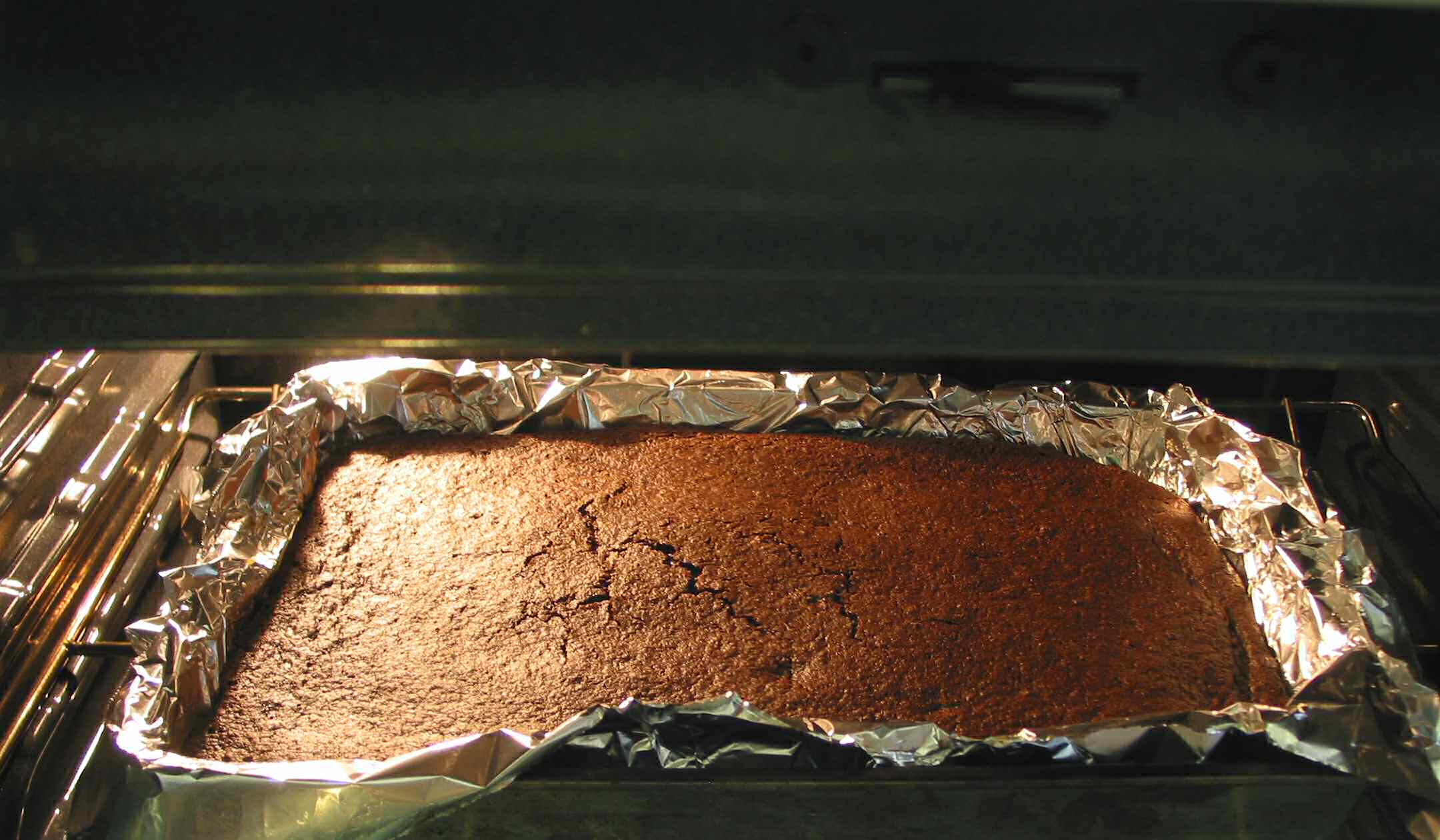
The pareve, egg-and-butter-free chocolate cake didn’t rise a ton, probably because I included exactly zero matzah cake meal, and just a tiny token bit of potato starch, probably not quite enough to keep the rise. The cocoa powder itself provides a little backbone as it cooks, but probably next time I’ll add either another two or three spoonfuls of potato starch or a single sheet of matzah, crumbled into the coffee grinder and turned into fine grind cake meal.

But even as it was, first time around, this cake came out like you wouldn’t believe. Excessively fudgy cake, insanely good, and the attempt at a completely nondairy ganache without nasty creamer or margarine-type additions went so well I’m going to have to patent it or something.

As I’m sure (and sorry) is apparent, due to the serious cocoa-and-hot-coffee content, plus the elation that it wasn’t a flop, I found myself on a caffeine high and completely unable to shut up about it while driving my kid home from school. She discovered I wasn’t wrong. We both recommend thin (half-inch) slices to avoid shock, caffeine highs, and that feeling afterward like you’ve just eaten Monty Python’s wafer-thin mint. You will be satisfied–a little goes a long way.

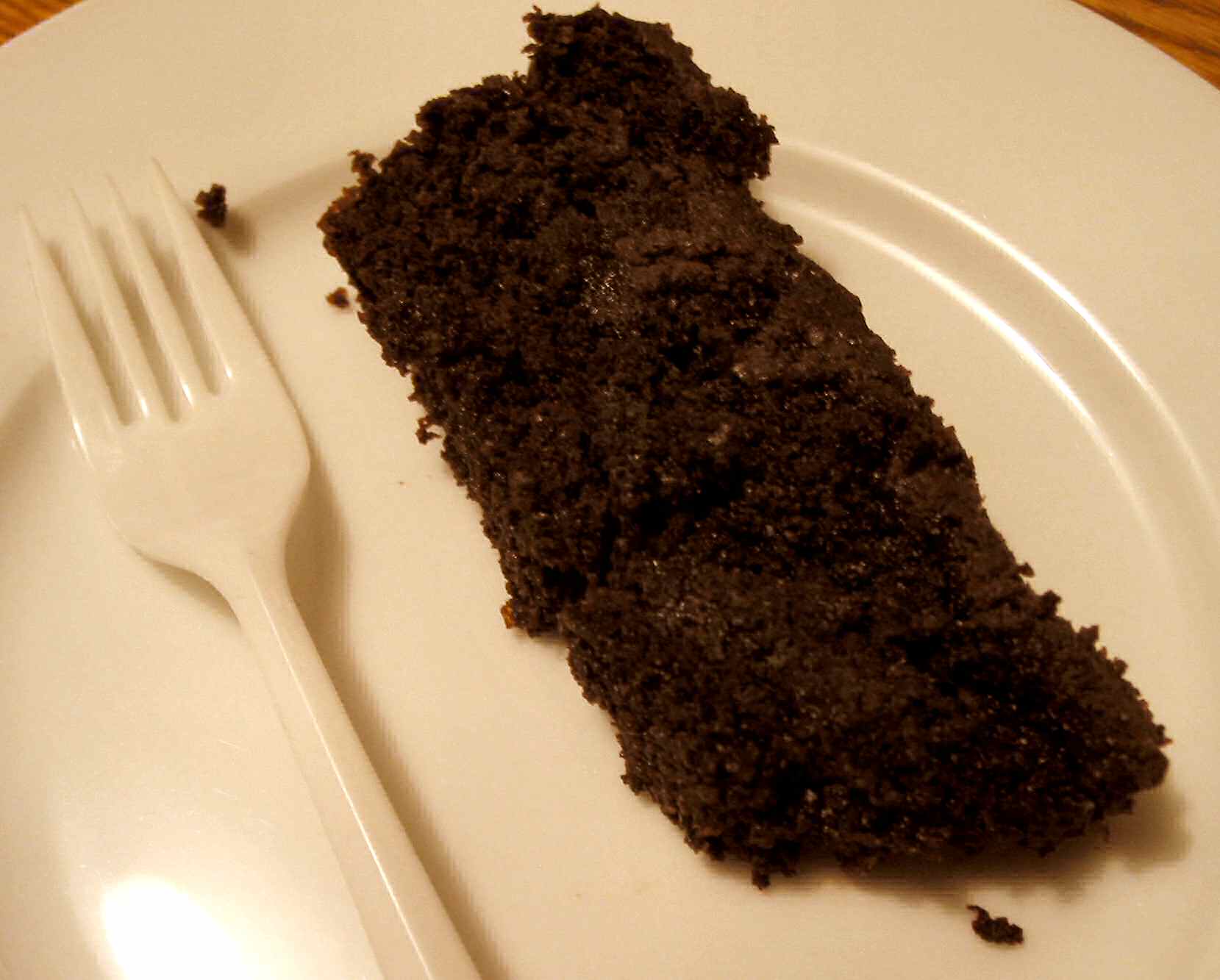
This half-inch slice is seriously enough for a serving. It's that rich.

This half-inch slice is seriously enough for a serving at the seder. It’s that rich.

Anyway, this is going to work and it is SIMPLE. And tastes fabulous. Fabulous, very definitely. If you like flourless chocolate cake and ganache, try this at home. Even though, as I say, it has no butter. No eggs. And no crap. And it’s not too slow (though the baking time kind of is; 40-45 minutes because it’s very moist and stays that way after it collapses back down and shows light cracking–see photo at top of post). Continue reading

Microwave Tricks: Rapid Red Cabbage

microwave sweet and sour braised red cabbage

When I was almost twelve, the year of All the President’s Men (go rent or borrow it from the library if you’ve never seen it), a classmate of mine came back from the weekend raving about a new restaurant his parents had taken him to.

Now, almost no one in my 7th grade math class, particularly not boys, either knew about or talked much about food above the pizza and burger level.

My friend’s family had spent the previous year in Italy–you could tell whenever he grumbled about real soccer with strategy vs. the weak substitute they were teaching us in PE that he was sorry they’d come back. Clearly it wasn’t the only thing he missed–this was the first “real” restaurant he’d been to in the US, and it was way out in the countryside.

The Bavarian Chef (which after 40 years is still open in Madison, VA, and now in Fredericksburg as well, I’m happy to see), had a menu like no other in the area: fondue, a magic word I’d never heard before and which my friend had trouble describing. One fondue with Emmenthal-type cheese for cubes of toasted bread, the other with a red sauce (tomato? redcurrant?) for spicy meatballs. Veal or maybe chicken Cordon Bleu (their current menu still has veal). The side dishes were distinctive as well, particularly the sweet and sour red cabbage…it was gourmet. European gourmet, the real kind, and possibly the first upscale restaurant in our part of Virginia.

In any case, my friend was enthusiastic enough about this place that (and I don’t remember this bit at all) I came home and said something to my parents, who were friends with his parents. The next thing you know, my folks schlepped me and my younger brother and sister out of town–half an hour’s drive and  into the next county–to try it out for my birthday. And my friend was right about all of it.

The cheese fondue was a completely new experience and a lot of fun. So was a glowing magenta side dish of sweet-and-sour red cabbage–it would have been fun for the color alone. Although that has not held true for me and beets, so maybe I shouldn’t say so. But luckily it, unlike beets, was  delicious. And so different from anything else I’d ever eaten that it impressed me even more than the chicken (or veal) with the ham and cheese in the middle, and I can’t remember anything at all about dessert.

Sweet and sour red cabbage, when you think about it, is completely contrary to American standard tastes, even those of 40 years ago when people still ate vegetables and cooked most dinners at home. If you had to describe it to someone at school–what would you even say? The ingredients–and the flavors–are pretty simple individually but surprising together: red cabbage, vinegar, sugar, cloves, salt, maybe black pepper. Maybe a bit of apple or onion in some versions. How could that go together? But it does, and I’ve loved it ever since.

And yet I never ever make it at home, because it takes up to 2 hours of simmering on the stovetop, depending on the recipe you have. The one time I made it, back in my 20s, when I was trying to recreate the experience, the whole apartment smelled really, really sulfurous. It reeked. Even though the cabbage did come out ok.

Too bad I didn’t even own a microwave until my mid-30s. But I’ve been rethinking it since last week, when I saw a picture of it in a Mario Batali cookbook from about 10 years ago. The combination of a German-style dish in an Italian cookbook reminded me of the whole prealgebra food debate and my friend’s unprecedented idea that good food was worth traveling for.

But you don’t have to travel far for this dish, and you certainly don’t have to spend 2-3 hours on it. There’s got to be a way, I decided (as usual). How hard could it be to microwave it?

Well,  it worked almost perfectly, at least as a test case: Continue reading