
• Enter your email address to subscribe to this blog and receive notifications of new posts by email.

    Join 241 other subscribers
  • Noshing on

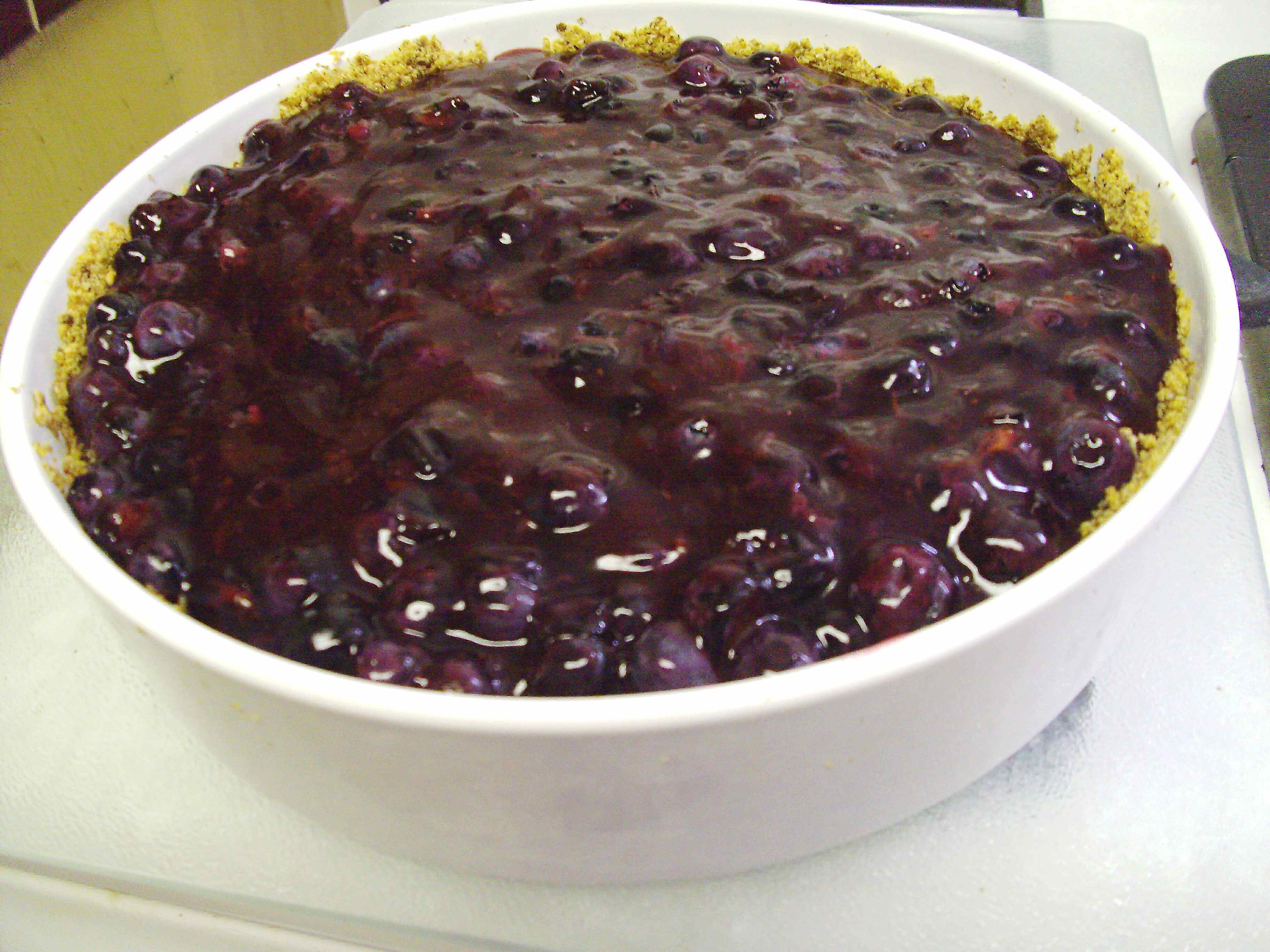
    raw blueberry pie with microwaveable filling and graham cracker crust

    This mostly-raw blueberry pie is a snap to make and very versatile--the filling microwaves in a few minutes, and you don't even have to bake the zippy gingered graham cracker crust--perfect for a hot Fourth of July and all summer long.

  • Recent Posts

  • Contents

  • Archives

  • Now Reading

  • See also my Book Reviews

  • Copyright 2008-2024Slow Food Fast. All writing and images on this blog unless otherwise attributed or set in quotes are the sole property of Slow Food Fast. Please contact DebbieN via the comments form for permissions before reprinting or reproducing any of the material on this blog.

  • ADS AND AFFILIATE LINKS

  • I may post affiliate links to books and movies that I personally review and recommend. Currently I favor Alibris and Vroman's, our terrific and venerable (now past the century mark!) independent bookstore in Pasadena. Or go to your local library--and make sure to support them with actual donations, not just overdue fines (ahem!), because your state probably has cut their budget and hours. Again.

  • In keeping with the disclaimer below, I DO NOT endorse, profit from, or recommend any medications, health treatments, commercial diet plans, supplements or any other such products.

  • DISCLAIMER

  • SlowFoodFast sometimes addresses general public health topics related to nutrition, heart disease, blood pressure, and diabetes. Because this is a blog with a personal point of view, my health and food politics entries often include my opinions on the trends I see, and I try to be as blatant as possible about that. None of these articles should be construed as specific medical advice for an individual case. I do try to keep to findings from well-vetted research sources and large, well-controlled studies, and I try not to sensationalize the science (though if they actually come up with a real cure for Type I diabetes in the next couple of years, I'm gonna be dancing in the streets with a hat that would put Carmen Miranda to shame. Consider yourself warned).

Really? No, not really.

Reason for dismay at the top level restaurants:

(LA Times Food Section) “Three top chefs create more healthful versions of favorite dishes”

They cut down a little on the calories–as in, substituted olive oil for butter, or ricotta for mascarpone, or even ground chicken for ground pork. But only one of them cut down significantly on the sodium–and even then it was 1000 mg for the dish, down from about 1400 mg. Give Daniel Mattern credit where it’s due, but it’s still a lot. Josiah Citrin’s dish, which started out about 650 mg, not horrible for restaurant food, actually went up in the modified version.

In Susan Feniger’s case (and she was far from succeeding or even trying hard on the sodium reduction), the sodium count was more than a day’s worth in one dish–from 2100 mg or more to 1800-plus. Choke. She did skip marinating the ground chicken, but the “mabo” sauce, which she didn’t change at all, contains three different kinds of soy sauce AND fermented black beans. Because you really need a sauce that salty in fine food?

Couldn’t she have done a different sauce, more savory or spicy but less salted? That’s the first thing I would have targeted. I probably would have used my low-sodium prune-based Asian barbecue sauce instead of the black bean sauce–it’s different, but good, and it’s similar enough in texture and flavor density to substitute well.

In fact, none of the chefs tried to go radically different–they were all too fixated on whether diners could tell the difference between the originals and the modified dishes. Well, if they’d changed anything worth changing, I’m sure the diners would have been able to taste the difference. The real question is, would it have been a good dish and would they have liked it? I think the chefs could certainly have gone after bigger, more ambitious changes and made the dishes satisfying–perhaps even better–without choking the diners on salt.

The bad part of the article came at the end. All three chefs just gave an arrogant little shrug when the results were revealed at the end of the test (showing that they hadn’t done all that well). They all said grandly that it doesn’t really matter, because as Josiah Citrin put it, their customers come “to be blown away” by the food.

And so, just like the fast food kings, they put the blame on the diners for not demanding better, saner nutritional standards. Beats workin’.

Pyrex and Anchor Hocking now both unsafe for cooking

I’m not sure how I happened upon Consumer Reports’ disturbing feature from January on exploding glassware cooking accidents in both Pyrex and Anchor Hocking tempered glassware. Since a lot of my microwave directions call for Pyrex bowls, I thought I’d better post about it asap.

Here’s the link explicitly:

http://www.consumerreports.org/cro/magazine-archive/2011/january/home-garden/glass-cookware/glass-cookware/index.htm

Because I’ve used my current Pyrex bowls and bakeware for more than 10 years, I’ve been looking recently to replace and/or add to my collection. But every time I’ve looked for it in the past year or so, I’ve hesitated–the stuff on sale is a blueish color. Or it’s a little thinner than I remember. Or it doesn’t feel or even sound right when I pick it up. And the cardboard overwrap has a lot of new warnings about when and how you can or can’t use it that are different than the old classic Pyrex. It’s confusing–can I use it the way I’m used to or not?

So even though the casseroles and pie plates are bright and shiny and new and usually on sale at my local supermarket and the Target, I’ve passed them up, thinking, “I’ll do it next time.”

According to the Consumer Reports piece, it’s a damn good thing I did. Read the article. Now. Please. Before you put any of this generation of Pyrex in an oven or microwave. Before you give a set to some newlywed as a kitchen gift.

And don’t buy this stuff. If you did, don’t use it for any kind of heating up, conventional oven or microwave (I know, so what good is it if you can’t heat stuff up in it? Wasn’t that the whole point?)

Apparently both companies are claiming that the explosions–which have caused burns and lacerations when the victims took a hot casserole out of the oven or microwave and set it down–are the result of misuse, or perhaps the glassware had gotten dinged or scratched and therefore the flaws had weakened it, and that it was a rare phenomenon. The article authors estimated a fairly high number of incidents in the past few years based on hospitalization records and other outside evidence.

Consumer Reports debunked the companies’ blame-the-victims ploy by testing both brands of glass cookware at various temperatures and setting the pans down on a variety of typical kitchen surfaces.

The results were not pretty–Pyrex had a slight temperature range advantage over Anchor Hocking, but a fairly high percentage of both broke or exploded if they weren’t used exactly within the laundry list of restrictions on the cardboard overwrap that came with the new bakeware.

Altogether, conducting the tests and videorecording them took more guts than I would have without lexan armor and a full face shield.

But, as I’ve said, I’ve been using my mixing bowls and pie plates for years without problems. What’s going on?

The article authors did track down a probable explanation for all this breakage in what’s supposed to be very durable glassware. Both brands have recently switched to a cheaper formulation for their glass. Pyrex–note, no longer made by Corning–at least used to be borosilicate glass but now uses soda lime glass, as does Anchor Hocking’s tempered glass. Borosilicate is the standard for laboratory grade glassware; it’s stronger and somewhat more expensive to produce–probably the mineral shortages of the past few years have made it more so.

Technically, you can temper soda lime glass, but even when tempered it’s not as strong as the old classic tempered borosilicate. It also seems to be less uniform–and the little unevennesses in the material create local instabilities that can cause cracks and even explosions when subjected to rapid or uneven heating and cooling. It only takes a split second in some cases.

Borosilicate is almost certainly what my old Pyrex standbys are made of, and I’m standing by them. I just wish I could have bought more at the time, or that someone else made them now. I wish Pyrex’s current manufacturers in particular had not ruined their product by changing glass to reduce costs, and that their managers weren’t scrambling to deny it.

For now, I’d say please DON’T use the newer Pyrex or tempered glass bakeware items for microwaving. They’re just not the same anymore. Use microwave-safe ceramic instead.

Who the federal spending cuts are hurting: Food pantries

The LA Times reported today on Southern California’s food pantries.  Demand in Los Angeles and Orange County has gone up 70 percent since 2008. Between LA and OC, the food banks are reaching more than half a million people. The LA Regional Food Bank alone is serving something like 1.25 million pounds of food a week. They’ve received increased contributions in that time from the USDA and FEMA, quite a change from the shameful 50 percent cuts the USDA made to food bank aid in the mid-2000s during the Bush administration, but that’s being considered emergency funds, not standard support. Ripe for cutting the moment Obama decides to try and look flexible with the Republican House leaders once again.

And thanks to the repeated budget cuts to domestic federal spending while military spending and bank bailouts continue to be preserved, even that emergency aid is now down considerably from last fall. But the demand isn’t.

The shortfall has to be made up in private contributions. But a lot of the shortfall is just that–shortfall.

Too big to fail? Too good to pay taxes?

Source: Library of Congress

Every so often I review books and movies on Slow Food Fast, but as of yesterday, I’ve dropped my affiliate links to Amazon.com. In the past few weeks they’ve decided to fight tooth and nail not to pay sales tax like everybody else and support the states where they sell. First they cut off any Californians who had joined their affiliate seller program, which is annoying and kind of insulting. Not that I’d been getting anything much out of it, but I’ve also been a customer for years.

They’re even lobbying right now to add a ballot measure reversing California sales tax law for internet businesses. Their excuse is that they’ve built their empire on a tiny profit margin and paying sales tax will ruin the penny-seller pyramid. At the same time, they seem to believe they’ve got favored trading status and that any minor threat to their current model can be countered by threatening to withdraw their hiring. Forget that.

I live in a state that’s bent over backwards to court big business and internet retailers, given them all kinds of tax incentives and concessions for years so they wouldn’t move to Nevada or Delaware, and as a result has been absolutely gutted budgetwise. California takes in about a quarter of the nation’s new immigrants each year, has higher unemployment figures than most of the country, LA County alone has more than 300,000 women and toddlers enrolled in the not-very-generous WIC program,  and basic services are being cut right and left to meet the state’s budget deficit. The poor–and that’s starting to include more of the middle class here too–are paying for Amazon.com’s free ride.

And yet Californians represent one of Amazon.com’s biggest markets.

Even the (now former) California affiliates are thinking Amazon should be ponying up like the rest of us. If you sell here, you should be paying sales tax here.

And our sales taxes have finally gone down recently. For years they were up to 9.75 percent. Two days ago I bought a pair of jeans and was shocked–8.75 percent. Apparently that’s dropping further into the 7 percent range for online purchases.

But Amazon’s looking to sue, as they did (and lost at trial) in New York.

Where can you get the books I recommend on this site? Alibris pays sales tax in California, and I’d recommend them.

Or, if you’re in Southern California, head to Vroman’s in Pasadena. Not only is Vroman’s a century-old independent bookstore, both branches are well stocked for hip, academic and traditional booklovers. And the staff are personable, they do lots of readings events, have a huge cooking section, and do online orders if you need something special. The bigger branch on Oak Knoll has a nice café as well.

Big Food mobilizes against child marketing guidelines

This Washington Post article isn’t the absolute clearest–looks like it was written as a last-minute rush piece, actually, but it’s worth getting to the end.

The basic idea is that in 2009 Congress demanded the CDC, FDA, USDA and FTC come up with a coherent set of voluntary nutrition guidelines for what the food industry can market directly to kids.

I’m not a big fan of voluntary nutrition or safety compliance guidelines for the food industry–mostly because industry players generally feel free to ignore or toy with them and then claim some kind of advertising advantage they haven’t earned. Voluntary guidelines also come with all kinds of soft landings and easy outs, and the proposed guidelines here are no great exception.

But in any case, now the four agencies have done it, and the food and restaurant industry is doing the predictable–throwing big lobbying bucks into a disinformation campaign-slash-tantrum.

How big? The campaign manager won’t say, but the preliminary guidelines report that US food industry marketing to kids 2-17 years old is currently something over $1 billion in three key categories (breakfast foods, restaurant chain food, and snacks).

So it probably won’t surprise you that companies like General Mills, Kellogg, and Pepsico have teamed up with ad-carrying media partners like Viacom (read: Nickelodeon) and Time Warner to try and quash the voluntary industry guidelines. Figure on the campaign to be spending in the mid-millions or more. They’d rather “salt and burn” instead of “cut the salt and learn.” And what a waste.

What will probably surprise you is just who this coalition–calling itself the “Sensible Food Policy Coalition”–?!!–hired to handle the campaign: Anita Dunn, a former Obama communications director whose husband, Robert Bauer, is  still White House counsel. Not a really lovely mashup, there.

Why she’s taking on the food industry campaign so they can keep protecting their ability to market garbage to the young and vulnerable is one question. Why the FDA and FTC, which have the power to decide what nutritional and medical claims, among other criteria, are valid and can be used in advertisements to adults, let alone kids and teens, are bothering with a voluntary measure instead of doing a proposed regulation to limit such marketing to youth is another.

In both cases, the answer is almost certainly money. The food and media industries have it, the federal agencies don’t.

[As it turns out, the FDA and FTC don’t have power to restrict Big Fo0d’s marketing to the under-17 crowd after all. They lost that specific ability in 1981–start of the Reagan administration… Reagan’s “ketchup is a vegetable” declaration was the beginning for drastically lowered nutritional standards and branded fast food concession contracts for public school lunches.]

So the right question under these circumstances is, where do you want to put YOUR money? How about this, if the federal agencies can’t get a decent result and the lobbies are buying off everyone else:

Boycott the Boxes. Hit ’em where it hurts.

Box 1–TV: If you have kids, limit their access to TV, and teach them to turn off the sound during the ads. Do it yourself. Treat the ads like the silly nuisance they are from the minute your kids are old enough to watch. Tell your kids the truth: most of the products advertised on kids’ shows are too shoddy–and overpriced–to market to grownups. The companies make them bright and loud and cheesy because they think kids can be fooled easier (your kids should be beautifully insulted at that if they’re about six or seven years old).  Go with PBS and videos you approve rather than commercial TV as much as you can.

Box 2–Packaged stuff parading as food: Skip almost everything that comes in a cardboard box or a plastic overwrap, or in a can. You can do this. You’ll save an awful lot of money by buying store brands only and cutting out the most pernicious items–sugared and high-salt packaged breakfast cereals, bags of starchy snack extras, and sodas, at least on an everyday basis. Save sodas and chips for parties, not for school lunch or part of dinner.

You’d do even better to go with fresh vegetables and whole fruits for most snacks and make a good habit for relatively cheap. They taste pretty good, don’t take long to fix, last at least a week in the fridge, and your kids won’t get sick overeating them.

There’s a reason the Pringle’s slogan is the very smug  “Betcha can’t eat just one.” No one says that about carrots or broccoli, or even about apples. Ever eaten too many of those in one sitting? Didn’t think so. Vegetables and whole fruits keep you satisfied longer, don’t hyperstimulate your appetite for snacks, and they don’t put on pounds that take a long time to work back off. They don’t promote cavities, either. Even nonsweet junk foods do–all that processed starchy stuff sticks to your molars like glue.

Acai, African mangoes, and the ‘tiny belly’ con

The Washington Post:  ‘tiny belly’ online ad part of scheme, government says

Acai berry distributors have been under scrutiny from the FTC since the spring, but the “tiny belly” and “1 weird old tip” ads that flood the margins of your online newspaper are part of an elaborate scheme to sell you fake diets based on acai, African mangoes, hCG (placenta extract), and other snake oil.

According to the FTC, though, the true objective may be something else–the “free samples” require you to register your credit card.

Google and the other main ad server claim they’re weeding out bad ads, but this one is so prominent on so many sites you just have to wonder what kind of cut they’re getting from it. Because the same damn wiggling abdomen cartoon is everywhere, used over and over, it should be a snap to eliminate.

File this under: unappetizing.

On the inevitable hot dog eating contests

I did something at my in-laws’ Fourth of July cookout that I haven’t done in years: I ate a hot dog. So did my husband. I think my daughter ate two and a half hot dogs (actually, I think she ate more and gave us a story, but her grandfather maintains that someone else may have gotten the extras in the pack). Given how crappy hot dogs generally are, you may be wondering why we did this: because my in-laws made the effort to buy kosher ones for us, and because Hebrew National hot dogs don’t have much in the way of carb, and my daughter is fairly crazy about them (because we don’t cook enough meat for her tastes at home).

What hot dogs, kosher or otherwise, do have–and this is why I have to put in a huge caveat–is sodium. And saturated fat. A regular H-N hot dog has about 490 mg sodium. A knockwurst (which we decided against; the flavor’s not really very different, it’s just bigger) has 810 mg. Plus more calories and saturated fat, though the regular’s no great bargain–as much fat as protein, easily.

I have to admit they taste a lot better grilled outdoors on an actual grill than they do indoors in a grease-laden cafeteria service pan, especially since you can dress them up significantly with sharp mustard, crusty French rolls instead of whitebread buns, and sauerkraut and browned onions instead of the usual insipid cafeteria ketchup. So I can go with the “once a year, enjoy, and just eat a little more carefully the rest of the week” argument.

However. Hot dog eating contests are just wrong. Sixty-two or however many hot dogs appear in the “ain’t it amazing?” recordbreaking stories section of your local newspaper the next morning? Enough hot dogs for 30 people or so? That’s not enjoyment, that’s not even tasting the food–tasting slows one down, and possibly triggers the dire appetite signal to retreat or suffer an immediate reversal of fortune after just a few hot dogs. Even for teenage contestants.

For the non-contestants among us (such as my daughter), I say, two hot dogs is probably the outer limit of sanity in one day–so just figure you’ll eat the other sixty another time. Two is about half your recommended daily max for sodium intake and about the max for saturated fat. And it’s not really delivering much in the way of protein. What’s true of bologna is just about as true for hot dogs–they’re made of meat, but they don’t add up nutritionally to actual meat (about 6 or 7 grams of protein per dog), and they sure have a lot of downsides without delivering the really distinctive flavors and variety of, say, gourmet specialty sausages.

There aren’t a lot of kosher specialty sausages made widely available in the US at this point. Actually, according to my father-in-law, there aren’t enough true (pork) and high-quality bratwurst distributors either anymore, and the owner of the one available to them, who happens to operate in my mother-in-law’s native state of Wisconsin, has openly supported political causes and candidates that are thoroughly repugnant to them.

I suspect that leaves a bad taste in everyone’s mouth on the Fourth of July.


Truth in restaurant menus, one way or another

The LA Times has this to say about restaurant nutrition today–seems like restaurant chains are starting to wake up to the embarrassment of their menu offerings now that California, New York City, Philadelphia and a few other governments have made nutrition info mandatory. The FDA is slated to make restaurant nutrition labeling and disclosure apply across the nation sometime in the coming months–the proposed regulation was released for public comment in April and the comment period has been extended to July 5th, and the finalized regulation is supposed to take effect 6 months after publication.

So chains like Panera, Applebee’s, California Pizza Kitchen and IHOP are hustling to look a little less awful before the big wave hits.

About time, too: the other night my husband rented “Super Size Me” (we’re always more than a little behind the times) and I could only stand to watch about five minutes of it. Somehow, between putting the dishes away and getting a few of my own chores done, I managed to catch the movie’s key scenes–I see a glimpse of director Morgan Spurlock doing pushups and then getting his abdominal fat measured at the doctor’s with a caliper before launching the month of MacDonald’s. A minute or so later I see him eating the first of many supersized burger-and-fries meals while narrating the experience from the driver’s seat of his parked car. He’s burping and starting to sweat about a third of the way through. I was horrified–Spurlock is obviously suffering but he keeps pushing himself anyway (chorus: because he’s a boy). Back to the kitchen and my husband is laughing uncontrollably (chorus: because he’s also a boy). Suddenly the inevitable (and highly appropriate) happens–Spurlock excuses himself, opens the door just in time, and starts vomiting onto the pavement. I just left my husband to it at that point. I think he was starting to weep.

The next day, though, he gave me the upshot of what I’d missed. Despite the hilarity of it all, the outcome was pretty sobering–in about 3 weeks of the Mac-only diet, Spurlock has gained 24 pounds that will take him months to work back off with 4 pounds extra that just don’t want to come off at all, and his cholesterol has shot up from enviable (<180 mg/dL, I think) to borderline high. Do the MacDiet for more than a month–for a whole year, say–and you might be looking at the crossover from fit to overweight to actually obese. So, as much as I make fun of them, sometimes boys can pay attention once they get over the thrill of a good grossout.

But back to the restaurant menu scramble.

Some of the chains’ solutions look reasonable–offering half-sandwiches with a salad or soup, paring down the calories and fat in the salads and soups, for that matter, and–gee, how ever did they come up with this miracle answer?–taking some of the cheese (or “cheez”, depending on the caliber of restaurant) back off everything, or at least going to part-skim.

The half-sandwich thing is a bit of a cop-out, but given how big standard sandwich portions have gotten over the past twenty years, it’s definitely a step back from linebacker troughing.

On the other hand, some of the chains really aren’t working hard enough to make a real change. Personally, I hate any form of plopped scoops of straight grease added purposely as a garnish and I always have, so the move to lower-cal mayo doesn’t impress me, nor does the new-improved strategy of not dolloping whipped cream onto every dessert. Ditto the menu recommendation at IHOP that you don’t have to add pats of butter to your stack of pancakes if you don’t want to. (Whew! Finally!)

I know that in fact these are going to be important steps back to sanity for some people, but tell me the truth, here: does a 120-calorie tablespoon serving of fat make the real difference in an 1100-calorie supersized sandwich with a deep-fried filling and cheese on top? Or a stack of pancakes the size of your plate and the height of your head and loaded with enough gooey canned topping to frost a cake?

For chain restaurants, the real problem here is the serving size–they’ve been working way too hard to keep up with the Joneses because serving bigger is impressive, you can charge more, and it’s almost as cheap wholesale as a proper-sized serving. P.F. Chang’s pasta dishes also currently run something like 1100 calories a plate, and no wonder–each of the bowls holds enough pasta to feed three or four normal adults if they were eating at home and had a salad to go with it.

These restaurants are at least doing something in the right direction (or stopping doing everything in the wrong direction, anyway). But upscale restaurants don’t have the government pressure to change and they’re less likely to look–at first glance–as though they’re overfeeding you for the money. Tiny chic portions, right? Check again, because here’s the other kicker in the LA Times this morning:

Pizzeria Ortica’s budino di cioccolato

This one is actually in the Food section, a “Culinary SOS” request for a layered chocolate and caramel pudding. I’m only linking to the 2nd page of the recipe–so scroll down to the bottom and check out the nutrition on it. If the poor lady who requested the recipe has already seen it, she’s probably cringeing.

Each—that’s EACH–small, elegantly served glass of pudding Continue reading

Bravo to LAUSD

Some actual good news on the school lunch front appeared in the LA Times  yesterday:

L.A. Unified removes flavored milk from menu

The Los Angeles public school district, one of the largest in the nation, had to vote its bigger contracts for things like milk early, so they made the announcement yesterday. They’ve also announced they’re going to drop breaded, fried wastes of space like chicken nuggets and offer more vegetarian options, more farm-to-school contracts for actual fresh produce, all the good things we’ve been waiting decades to see again.

This is all in deep contrast with the frosty reception Jamie Oliver’s “Food Revolution” show has received from actual LA schools in the past few months. And there’s a reason for it that you don’t have to dig too deep to get to. A lot of the fine upstanding revisions to the LAUSD school lunch menus and cafeteria revamps have not actually gone through for budget-crunch reasons. Some of the salad bars were never installed and implemented. As with many pieces of legislation, the intentions were good, or sounded good, but the money never showed up. Benefit: zero.

And a friend of ours who’s a school principal says the federal food subsidy program for poor students–there are an awful lot of them in his school, as in many of the LA area schools–is woefully underserving those kids. Some wouldn’t get a meal at all if they didn’t eat at school, and the food they get today is barely worth the name.

If the LAUSD can actually manage this year’s resolutions right, it’ll be a big step forward. The chocolate milk wars in the city board offices have been surprisingly intense–proponents of keeping the sugared chocolate and strawberry-flavored drinks argued that if they were pulled, most kids wouldn’t drink milk at all, 60 percent drink the flavored milks when available and that there’d be a big drop in milk consumption.

Proponents of going to plain (and Lactaid, and soy, to accommodate everyone, this is California after all) countered with the ugly fact that  the amount of sugar in the flavored milks puts them just about in the range of Coke, and argued that if fast food choices weren’t waved so constantly in the kids’ faces and the cafeterias offered real food instead, rather than alongside, the kids would eat more real food. And they’d get used to plain milk quickly enough.

I can attest to this phenomenon. We don’t keep fast food or junk food in the house, and I’ve been serving fresh vegetables and whole foods rather than prepared or processed things out of a box most of my adult life. I don’t get too many complaints, not only because my husband’s no cook, but because that’s what there is to eat and it’s the way we grew up eating at home.

Our daughter came along and started out with plain unsweetened yogurt, vegetables, bread and plain oatmeal or the lower-salt store brand versions of Cheerios. Also, for reasons that aren’t particularly clear even now, she had a thing for Indian food, spices and all. The maitre d’ at our favorite restaurant laughed when he saw this two-year-old kid tucking into a hot cauliflower dish and saag paneer. He remembered me coming in for a serious feast with my husband when I was very, very pregnant and hoping it would either induce labor or at least last me until I was in shape to come back. I’d never considered that she’d like to eat what I ate while pregnant–I’m still not sure it’s true, but I figure Indian families would have more experience with seeing how their kids develop a taste for vegetables and varied spices. Even now, she likes a wider variety of non-sweet flavors than her friends. I like to think it’s because she’s gotten to taste them, and because we like to experiment.

Part of the comparatively low-sugar diet for her was self defense–she was an up-like-the-rocket, down-like-the-stick kind of toddler if she ate many sweets at a time, even then. Years before, my sister’s older son had gotten stuck in a serious chocolate milk habit at that age, because my sister had given it first as a treat, then as a regular drink, then for comforting him or to appease temper tantrums, then to get him to do the things he should have been doing with or without milk. She had a hell of a time getting them both back out of the vicious cycle. I’m not as organized and can’t fool myself, so I took it as a warning.

My daughter got sweets occasionally, but mostly she was eating the kinds of foods we ate and now that she’s diabetic AND eleven at the same time (pity me!), I’m extremely grateful that she got the taste for nonsweet foods early in life. She only really wants junk foods if they’re right in front of her, or hungers out loud for what she knows are exaggeratedly high-carb items if her blood glucose is a bit high. When she’s in good shape, she goes for vegetables and fruits and cheese and Continue reading

Who’s dissing the lentil?

red lentils

One more point on reactions to the new USDA MyPlate icon, this from foodnavigator.com:

Whether the new food icon was an ‘economic plate’ however, remained to be seen, said Drewnowski. “It’s great that dietary guidelines say we should eat fresh , minimally processed fruits and vegetables, fresh fish and lean meat, but these cost money. Are we asking low income people to adopt a high income diet?

“It’s easy for people to say that people on low incomes should boil up a big lentil and vegetable soup and make it last all week, but who wants to do that?”

Actually, I would. Because it’s really cheap and easy, and you can do it in a microwave, or at least partly. Also because most people used to make some kind of lentil or bean soup on a weekly basis, and in Los Angeles, particularly among the Latino and Armenian communities, a lot of families still do, and do it well. Here are three of my earlier posts, including the first of the infamous “War and Prunes” trilogy (I got a little carried away last summer. What can I say?)