
• Enter your email address to subscribe to this blog and receive notifications of new posts by email.

    Join 241 other subscribers
  • Noshing on

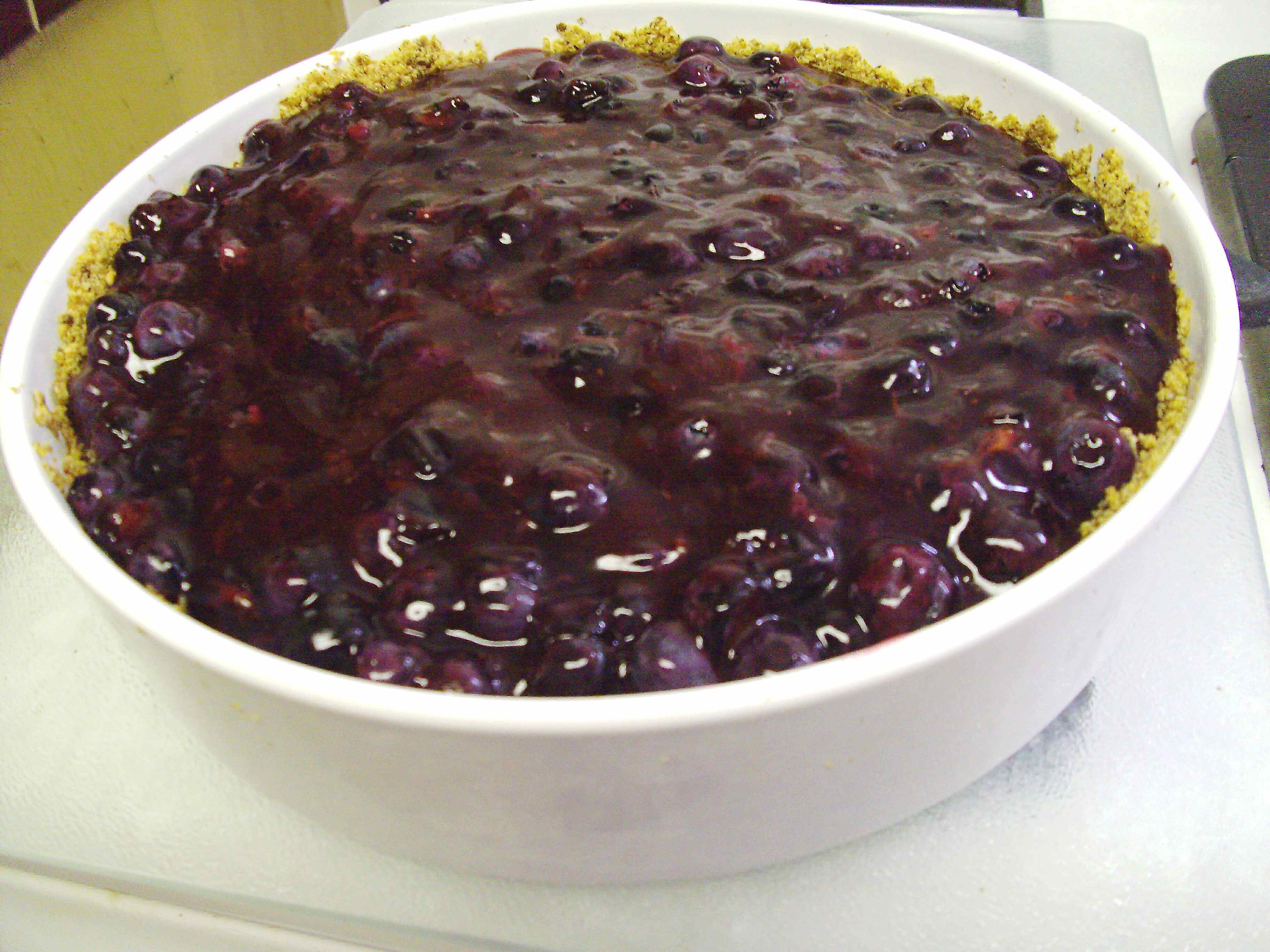
    raw blueberry pie with microwaveable filling and graham cracker crust

    This mostly-raw blueberry pie is a snap to make and very versatile--the filling microwaves in a few minutes, and you don't even have to bake the zippy gingered graham cracker crust--perfect for a hot Fourth of July and all summer long.

  • Recent Posts

  • Contents

  • Archives

  • Now Reading

  • See also my Book Reviews

  • Copyright 2008-2024Slow Food Fast. All writing and images on this blog unless otherwise attributed or set in quotes are the sole property of Slow Food Fast. Please contact DebbieN via the comments form for permissions before reprinting or reproducing any of the material on this blog.

  • ADS AND AFFILIATE LINKS

  • I may post affiliate links to books and movies that I personally review and recommend. Currently I favor Alibris and Vroman's, our terrific and venerable (now past the century mark!) independent bookstore in Pasadena. Or go to your local library--and make sure to support them with actual donations, not just overdue fines (ahem!), because your state probably has cut their budget and hours. Again.

  • In keeping with the disclaimer below, I DO NOT endorse, profit from, or recommend any medications, health treatments, commercial diet plans, supplements or any other such products.

  • DISCLAIMER

  • SlowFoodFast sometimes addresses general public health topics related to nutrition, heart disease, blood pressure, and diabetes. Because this is a blog with a personal point of view, my health and food politics entries often include my opinions on the trends I see, and I try to be as blatant as possible about that. None of these articles should be construed as specific medical advice for an individual case. I do try to keep to findings from well-vetted research sources and large, well-controlled studies, and I try not to sensationalize the science (though if they actually come up with a real cure for Type I diabetes in the next couple of years, I'm gonna be dancing in the streets with a hat that would put Carmen Miranda to shame. Consider yourself warned).

School nutrition opinions and the state of things now

In today’s LA Times, David Just and Brian Wansink weigh in on the behavioral fallout of revamping school cafeteria food choices by eliminating commercial fast food and flavored milks. They contend that giving kids a choice of foods increases the chance that kids will choose healthy foods at least some of the time instead of tossing out the tray and sneaking pizza orders into school.

A few of their observations–that fresh fruit is more appealing and gets chosen more often when placed in an attractive bowl right by the cash register checkout–make sense. Cafeterias could do more to arrange the choices they have in keeping with the way restaurants from banquet-style buffets to the corner Starbucks have found effective. Put the fruit right by the cash register and that impulse-buy instinct will kick in. Now if only they had a better strategy for vegetables. Or at least a more nutritious and less dismal choice than carrots vs. celery.

But what really struck me in this article wasn’t the fact that Wansink, the author of Mindless Eating: Why We Eat More Than We Think, and his colleague David Just seem to be condoning the continued availability of fast food in public school cafeterias.

The most striking thing about this article on an overchewed topic was the picture at the top of the page: a high school cafeteria display with single-serving “Uncrustables” white-bread sandwiches (Smucker’s brand) on a shelf that was labeled “Fresh Apple Slices” (none in sight, but I bet they would have been branded in baggies as well) and little bags of baby carrots (couldn’t tell which brand, only that there was one).

I know the existence of carrots is an improvement. I know that sandwiches are generally less awful than pizza and fries. But the bagginess of the whole thing–wrapping something in plastic pouches at a factory makes it officially dead and stale. Not fresh.

The apples, if they actually exist at that school, are already cut into pieces that are either browning or have had to be treated with ascorbic acid (well, that would be the best option, and would sneak in a little vitamin C) or another anti-browning agent. The sandwiches on white gummy-looking bread have the crusts removed. It’s as though the kids in the cafeteria were four years old and couldn’t handle biting into a whole apple or peeling an orange or eating a sandwich on actual bread with crusts (and I mean really, what about all those hamburger buns?) It’s disheartening.

I realize a lot of school cafeterias got rid of their dishwashers as well as their full-function kitchens a generation ago. But they could be offering food that looks and tastes fresher and less like it had been sitting for ages in a vending machine.

If you’re going to offer sandwiches in the cafeteria, why not let the kids choose bread and fillings at a sandwich line? It would take a staff person to assemble them, most likely for reasons of discipline as well as hygiene, but the food would look fresher and probably be fresher, and the act of choosing and ordering a bespoke sandwich would probably make it more appealing than taking another soulless packet off the shelf. There’d be less plastic trash too.

The labor issue–there’s always a labor issue with hand-assembled sandwiches, assuming you’re not going to let the kids make their own. But you could, maybe as much as once a week, let different clubs at the school take turns running a sandwich line as a fundraiser, get a free lunch that day themselves and charge a nickel or so above the standard lunch price for their cause. Or do a school-wide chili cookoff event once a year with different teams competing. It would be a lot more fun than the dim “choice” of celery vs. carrots (and of course 89% of students will choose carrots over celery–carrots are faintly sweet, while celery is overtly bitter even though it’s a savory bitter).

If the school isn’t already shackled by a year-long exclusive contract with a food-packaging company like Smucker’s, offering a student-run sandwich line once in a while might actually come out less expensive and wasteful.

ANDI Scores, Whole Foods, and diet scheme cha-ching

If you’ve taken a walk through your local Whole Foods Market in the past year, you’ve probably seen a stand with purple and green information sheets listing foods in order of “ANDI Top 10 for Produce”, “ANDI Top 10 Super Foods” and so on. Coordinated recipe cards, a suggested shopping list, and an attractive-looking book round out the offering. And the produce and bulk bins sport matching ANDI score labels. It’s a whole system. But is it right, or just another fad?

What is the ANDI Score system, anyway, and who owns it?

ANDI stands for Eat Right America ™’s Aggregate Nutrient Density Index, a proprietary nutrients-per-calorie scoring system that rates for foods from kale to cooking oil and everything in between on a scale of 1 to 1000 points.

The ANDI scoring system started with Dr. Joel Fuhrman, the author of the diet book Eat to Live. On his home page, Fuhrman describes himself as a family physician and nutrition researcher.  His diet, which he calls “nutritarian” (and you can become a nutritarian too by signing up) is a highly prescriptive weight loss regimen that focuses on high-value vegetables and fruits and eliminates most meats, fats and carbohydrates. His evaluation of vegetables as high-scoring and processed foods, meats, starches and so on as low-scoring seems only common sense.

Fuhrman’s site claims hundreds of articles and interviews as well as numerous appearances as a nutrition expert on national TV. The site also prominently mentions his two US Nationals pairs figure skating wins back in the 1970s. Does he need to have that information on there if what he’s promoting is serious, science-based dietary advice? Altogether, the site has a very infomercial feel about it, with lots of testimonials from members who’ve lost over 75 pounds with before-and-after photos. Fuhrman himself looks very fit and tanned and taut-faced–maybe a little too much? Maybe it’s just the heavy pancake makeup that infomercial packagers are famous for plastering on their experts’ faces.

Eat to Live is a popular book. Fuhrman’s Kindle edition of Eat to Live is the #700-ranked download on Amazon.com. His web site has something on the order of 4000 subscribers, whose questionnaire responses he mines for some of his journal articles. According to one of the journal papers, his audience is about 65% female, 71% married, the largest proportion college-educated with household incomes over$100K.  (At this point, I thought, bingo, the perfect infomercial audience. This is clearly a commercial diet with legs. But wait, there’s more…)

Ahem! Enter Eat Right America, a company started by a businessman who became a fan of Dr. Fuhrman’s. The founder figured there must be a good way to automate the multi-nutrient density calculations for a wider variety of foods and developed a proprietary algorithm based on nutrient values in the USDA’s NAL database. What makes the ANDI algorithm attractive, the company says, is that they weight these calculations per calorie, not per serving. Finally, they claim, you’re getting the “right” comparison of nutrient density for the calories.

But a closer look at the the diet and menus offered on both the Eat Right America and Fuhrman web sites raises a few warning flags. Scan the ingredients list in the Eat Right America 3-day sample menu and you see frequent uses of high-priced fruits, vegetables and grains like quinoa (no surprise there about why Whole Foods might be happy with the shopping list) as well as some trendy and expensive ingredients that don’t sound all that nutritious. Dates? Avocado? Coconut?  Sun-dried tomatoes? Cashews–one of the lower-fiber and more expensive nuts, incidentally. Those are usually extras, snacks, not staples, even in a vegan diet.

More seriously, the menu designers seem to have a penchant for bottled carrot juice. They put 7 whole cups of it in a bean stew that feeds 10. Now, carrots, whole carrots, are fine raw or cooked into a stew. They have fiber and vitamin A and in whole form are relatively low-carb as well. But juice them, and you filter out the fiber. You concentrate the vitamin A and carotenoids about 3-4-fold, well beyond the RDA–risking vitamin A overdose–and you concentrate the sugars. What would ordinarily be a bean and vegetable soup with a reasonable amount of carb per serving–about 15 g per half cup or 30 g for a full cup–quickly rises, with the addition of a big 7-cup dose of carrot juice in the pot (NB also much more expensive than plain carrots) to 75 grams. That’s the amount of carb my diabetic daughter would figure for an entire holiday meal that includes a decent-sized slice of cake or pie.

Some of the Eat Right America recipe nutrition counts look like the ingredients as listed don’t quite account for them. The carb is high–occasionally the sodium doesn’t add up right either. And the overall protein is low. In the vegan versions on Fuhrman’s site, which prescribes a six-week starter regimen of a pound of vegetables a day, a pound of fruit, and a cup of beans, the protein is also incomplete or close to it. No grains, and no dairy or meat or fish. No tofu. Avocado and flax seed, two darlings of the vegan world, are recommended to supplement the caloric intake so you don’t lose too much weight (which I thought was the point, but maybe not for a whole six weeks at a time).

All these recommendations flow from the ANDI scores of the food and produce some logical puzzles. Somehow, you never see plain tofu or fish or cheese or yogurt. Apparently they don’t score as high as avocado. How is this possible? Isn’t avocado pulp high-fat and not too exciting as a vegetable?

So the next thing to check–is the ANDI food-rating method right? If you’re judging solely on the micronutrients list, which is what Eat Right America claims to be weighing into its ANDI scoring formula, no it isn’t. Continue reading

Paula Deen and the diet that bites you back

This week’s “revelation” that Paula Deen, “the Butter Queen” is now a Type II diabetic was a surprise to nearly nobody. Deen, who revealed a harrowing backstory in her memoir of a bootstrapped career in catering, has enjoyed a surprising rise to fame on television. Two weeks ago, following in Emeril Lagasse’s footsteps, she appeared as Grand Marshal for the Rose Parade right here in Pasadena.

Of course, her otherwise ordinary “Southern Cooking” has been exaggerated out of all recognition with extra excess butter and sugar and mayonnaise, and so for years now cads like Anthony Bourdain have called her a scourge on the culinary scene (well, actually, he called her a lot worse than that, but he’s Anthony Bourdain. I’m paraphrasing politely, even though I kind of agree, at least foodwise).

With the revelation that she’s Type II, which everyone knows and fears due to their own increasing girth, Deen is bound to be the butt of predictable jokes this week and next, or until the next big Kardashian “revelation” that newspaper readers apparently care deeply about, or at least they do according to the reality TV networks footing the ad bills. (Even the New York Times has wasted column inches on this kind of drivel this year. Journalistic standards are dropping all over the place, I tell ya.)

But tell the truth, y’all: she ain’t the only one responsible. Not by a long shot. Read any “major” chef’s cookbooks and magazine offerings, other than perhaps those of Nobu, who deals mainly in raw seafood unadorned by carbs or noticeable layers of fat, and you’ll quickly realize that MOST of them exaggerate the salt, sugar and fat content of their dishes well beyond reason. Very few of them deal out plain vegetables on the plate. Very few deal out meats or fish without big sauces.

The other big, big feature stories on food in the New York Times this week:

1. Mark Bittman doing a quasi-deep bankruptcy commentary on Hostess that manages to recount his entire childhood consumption of Twinkies and co. in loving, fine-grained detail. He still attempts to sound self-righteous about it by the end because the ingredients include “ultra-processed flour”.

2. David Tanis of Chez Panisse, waxing lyrical about French lentils (du Puy or Die) as a salad with vinaigrette, hard-boiled eggs (so far, so good), some lettuce and….big fatty slabs of pork belly on top. Five or six of them per plate.

3. “The Miracle of Bo Ssam”–which turns out to be David Chang of Momofuku’s recipe for pork shoulder slathered in salt and brown sugar–twice–and cooked down for six hours in the oven. Caramelized barbecue. In fact, “crack” barbecue, to match Momofuku Milk Bar’s world-famous (to bloggers, anyway) “crack” pie made with most of the same ingredients.

Now people. With all of that going on, with Thomas Keller still boiling his vegetables in brine and poaching his lobster bits in butter, with the Culinary Institute of America instructing its naive young students to salt, salt some more, and salt yet again to achieve that perfect degree of salting in each dish (Coronaries ‘R’ Us), and with Congress sucking its collective thumb about local schools’ move this year to exclude french fries and pizza from the “vegetable” categories in their cafeterias—–

Does anyone really think that Paula Deen is NOT a woman of her time?

She’s nowhere near the worst–she’s just not as fashionable as all the tatted-up young bucks who get picked for Top Chef. She’s also not dishy, like Nigella Lawson, whose cookbooks, which started out about 10-15 years ago emphasizing lighter fare like Vietnamese salads with chiles, have also drifted drastically in the direction of high-calorie “indulgence” foods–some of them utter unmitigated goo-fests (avocado, mayo, roquefort? peanut butter, corn syrup, marshmallow fluff, chocolate bars? puff-pastry chicken pot pies-for-one?). Lawson makes the national news, at least in the UK, when she comes back out in public looking svelte again after puffing up too far past the point where male reviewers are still drooling. Will her next book of recipes slim down commensurately?

Unlike the more fashionable TV chefs on her network, Paula Deen is middle-aged and looks it. She’s fat, she’s gray though beautifully coiffed, she’s politely made up and decently dressed–no orange signature clogs–and she smiles. Maybe a little dippily, but if you didn’t know who she was, Continue reading

LA County gets school lunch program wrong

The LA Times recently reported that the public school cafeteria revamp the county worked so hard on for this year is a dead flop; kids are dumping whole trays of the healthier dishes they approved of in focus groups over the summer.

But there’s a catch: the dishes, which replace the concession-stand burgers-fries-pizza formula, were prepared well over the summer. The students say a lot of the stuff they’re being served now in the guise of “healthy” whole-grain salads and so on in the actual cafeterias is inedible: undercooked or burnt rice and other grains, undercooked meat, moldy bread, milk and other sealed cartons past their due dates, and so on. And when the students brought it to media attention, some of the cafeterias responded by removing the due dates.

The story was so eye-catching the New York Times picked it up last week to throw the issue to its own readers for comment. (Or you could say it regurgitated it–near the truth; the major newspapers seem to be following each other a little too closely these days. What is this, Reader’s Indigestion? what’s the nation coming to???)

The comments–well, as always for newspaper free-for-alls, they’re not generally on the ball. Most bashed the school board for being too liberal and trying to shove ethnic variety dishes like pad thai down the throats of poor kids trained on burgers and fries and pizzas. A lot of them were bemoaning the complete success of the fast food concessionaires in conditioning our kids not to like or even tolerate real food. A few–those who can read and think?– pointed out the spoiled or miscooked food problems mentioned in the LA Times but not in the NY Times digest version.

They all seem to have missed the most serious point, though: the school district may have retooled the menus, but they haven’t restored proper working kitchens to the school cafeterias. There’s no proper cooking facility behind that wall–certainly not for a thousand or so kids in each school. A lot of the new dishes are still being prepared offsite, just as the pizzas and burgers and fries were. Those prepared onsite are handled by staff used to doing nothing more complicated than heating up a bunch of frozen boxes from a concession company using minimal “kitchen” facilities.

The fault in the LA Unified School District healthy food menu plan lies partly in its complexity and partly in its execution. Upscale restaurant-style dishes might not be the best way to go for a first run at better food, and not just because they might repel students used to commercial stodge. They’re a bad starting choice because they’re more complex than the minimally experienced and underequipped cafeteria workers can handle on site, and the facilities that produce them clearly haven’t got their protocols down for “quinoa salads for 1000”.

The freshness factor is another problem. With “just reheat” trays of frozen pizzas, burgers and fries, no one has to think about sell-by dates. Heck, the sodium level is so high they probably don’t even need to freeze the meals. We’ve all seen the blog post where the woman let a Happy Meal sit on one of her shelves for an entire year…and nothing appeared to have changed in all that time. Real food with expiration dates? The school cafeterias are now out of their depth.

But by the same token, the schools shouldn’t have to throw in the towel so easily and go back to pizza, burgers and fries.

What would have been easier to get right–better balanced, and with better buy-in from the students–might have been “build your own” sandwich and/or salad bars.

You see the complicated versions  at any Whole Foods or Souplantation. But pick one theme per day–brown-bag sandwiches, Italian subs or hoagies, felafel and pita, soft tacos… Offer two or three nutritious and fairly familiar choices for protein fillings, one of them vegetarian. Two or three raw, fresh vegetables as accompaniment and a choice of sauces or toppings, and fairly simple bread. Then you’ve got the makings of something students can deal with and find appetizing as well as nutritious, but without a lot of complicated prep.

You don’t have to provide a zillion choices for lunch every day. You don’t have to salt or bread the dickens out of the fillings, and you don’t have to provide sweetened, oversalted sauces for them. Fewer ingredients and processes are better. Just make sure the food is fresh.

I wish to god the school cafeterias and the board members who debate what they serve would stop trying to imitate the  chain restaurants or the upscale restaurants–or indeed any restaurants. It’s lunch, not a field trip downtown to the California Science Center, where the brand-name burger chain running its concession stand/cafeteria sends the smell of frying grease wafting up to every one of the exhibits to make sure you know what you’re really supposed to be paying attention to.

Why don’t school cafeterias do regular sandwiches anymore?


Pecans, Profits, Poverty: reason to remember the gleaners

From the New York Times today:
In Georgia, Pecan Thieves Find Windfall, at $1.50 a Pound

Now I know stealing is stealing, and scrumping is scrumping, but there’s a decent argument in here somewhere for leaving some of the fallen nuts for the poor to gather–even if it’s to sell to local nut brokers at a dollar-fifty a pound. The farmers claim their losses are growing this year–small wonder!–but one of the biggest growers estimates he’s selling 7 million pounds and the thefts total to about 10,000 pounds. Less than one percent. The article quotes $3 per pound as standard wholesale–all I can say is, out here in California our best local price is $9 per pound for shelled pecans (I don’t bother with the ones still in the shells; I’m not that good).

Some of the thieves are stealing amounts large enough to be serious theft–1400 pounds in one case–and cutting fences to break in. You get no argument from me for calling the sheriff on them. But most are genuinely poor–laid off and out of work, trying to make 15 or 20 bucks with the bit they can gather in a bucket or sack from the edges of the local pecan groves. Yes, that starts to add up if you have 50 people doing it, and yes, it’s more than one person would expect to be able to eat because they were hungry, but perhaps the talk of theft should be reconsidered and turned around to a discussion on gleaning, and not trimming the corners of your fields but rather leaving the last bits of the harvest for the poor to gather. The amount of money these small-scale gatherers can expect to make by selling to the local nut brokers is paltry and nowhere near in competition with the price the growers can get per pound.

Ironically, if the growers let locals pay a significant discount price per pound–50 cents a pound? 75 cents? to gather fallen nuts themselves after the main harvest, as many apple orchards do, they might reduce the incentive for break-ins, reduce their financial losses from theft and security costs, and save themselves some labor and wear-and-tear on their expensive ground harvesters. And they might still be seen as generous.

School lunch vs. Congress: Ketchup all over again

The House and Senate’s reconciled spending bill–surprise, surprise–now strips out the new USDA rules on school lunches. You know, the new rules to lower sodium, limit potatoes as in french fries, and debunk the idea that the smear of tomato paste on a commercial frozen pizza slice sold to the school through a fast food concession contract somehow counts as a vegetable. Those rules.

The spending bill is due for a final vote later this week and you won’t be surprised at all to find that the “no new lunch” provisions come primarily from the hands of a number of Republicans in both houses. Worse, one of their chief arguments is that because vegetables other than potatoes, corn and other starches are expensive, the schools shouldn’t have to comply.

But who made–and keeps making, take a look at the other parts of the spending bill–greens so much more expensive to grow than wheat, corn, soy, potatoes…the big heavily-subsidized commodity crops? You got it.

The shamelessness is everywhere though. While trying to verify the details of the bill in the Washington Post article, I looked up “House Budget Committee” (which isn’t exactly it; the official spending bills for the House come from the Appropriations Committee, but I wasn’t thinking official terminology first thing before coffee this morning).

I was disgusted to find an official House committee page apparently dedicated to singing the outsized praises of one party’s platform rather than to presenting actual public business–bill texts and status, committee assignments and mandate–conducted by and representing the work of all the members of the committee, whatever their party affiliations.

The Budget Committee’s chair, Paul Ryan, has commissioned a web site so grossly propagandist and silly it should be a public embarrassment. Go visit it. Am I wrong? Or does almost every single item on the front page mention Paul Ryan prominently in tones that suggest he led the Battle of the Bulge or launched NASA or some equally visionary achievement?

Given his performance in the GOP debates and the many polls that show his true popularity among voters, I shudder to think how much he had to spend out of the committee budget to get someone to put up such a flattering page.

If the House wants budget cuts, maybe this is where the supercommittee (and is that ever an overrating) should start. And then they should get back to work and put some actual food on the tables in public schools. $6.8 billion to improve school lunches and the federal breakfast program for low-income students is a pittance. It’s not enough to do everything students need, but it would do a lot if it weren’t wasted battling the processed food lobbyists over salt, potatoes, pizza, tomato paste and ketchup.

As it is, the food lobbies are likely to win this round in the legislature, or so the newspapers predict.

What power is left? Your purse. Your vote. Your phone calls to your senators and congressional representatives.

Likewise your ability not to pay for garbage. Boycott frozen pizza. Boycott french fries. Boycott soda. Stop buying this stuff for home and tell your kids why. These shameful food substitutes are a lot more expensive than they look. Pack your kids a real lunch–it could be leftovers or a sandwich, but pack something with protein, a little whole-grain starch, and actual vegetables. Maybe a fruit. Keep it cheap and whole–apples/oranges, not passionfruit.

I would also like to see students whose families can afford it to chip in by bringing a bag of apples to school, or a bag of carrot sticks, or a can of tuna, or a pound of cheese or a loaf of bread. Not every day, but every week or month. I have the idea that if all of that donated food went into a kitty for the low-income students, they might eat better than the way they do now.

Tomato paste rules…

School lunch debates now apparently hinge on the 30-year-old question: if tomatoes are a fruit and not a vegetable, what’s tomato paste?

The American Frozen Food Institute is quoted as objecting to new proposed government rules that a quarter-cup of tomato paste can no longer qualify as a serving of vegetable in public school cafeteria lunches. I’m shocked that it has up to now.

The organization’s spokesman actually tried to argue that putting enough tomato paste to qualify as a vegetable would swamp the pizza, which he called “a big part of school lunches”.

Well, yes. That’s one of the big contributing factors to the push for better nutrition guidelines. And in complaining so hard about the tomato paste rule, the spokesman effectively admitted that tomato paste isn’t incredibly nutritious in the quantities most people can consume. It may be vegetable in origin, or it may be “a fruit and not a vegetable” if you want to get prissy about it, but mostly, it’s just a condiment, like ketchup or mustard.

Anyone who’s managed to fool the public this far that the little smear of tomato sauce on a commercial pizza is a sufficient serving of vegetabalia for growing kids deserves every possible food-related and financial comeuppance.

And on the other hand…mustard. Hey. Wait a minute! Mustard is a Vegetable! (well, mustard leaves, anyway).

–  –  –  –  –

Actually, what all the hue and cry boil down to is money. The trade organizations for processed and fast food concessions to public schools stand to lose a lot of their profits if they have to provide nutrition along with the colored sawdust they sell as “pizza” and the greasy mush they sell as “french fries”.

They turn around and threaten the school districts with increased cost per meal, perhaps above what the Federal Government will pay per student.

The school districts panic and shake their heads, complaining that $2.79 government reimbursement per student per lunch isn’t enough as it is, and maybe the Federal Government should drag its heels even further on requiring low sodium meals and fewer potatoes and less tomato paste and more vegetables of worth.

–  –  –  –  –

Step on the brakes a second. $2.79 for lunch? Does that include labor and dishwashing? Or just the food?

If that’s just for the food, I have great news for the school districts. A peanut butter and fruit spread (disclaimer: doesn’t meet govt. standards for a full serving of fruit; this too is just a condiment) on whole wheat bread, with carrots and an apple, maybe if we’re feeling fancy some raw cabbage or green beans or cauliflower, comes to significantly less than $2.79 per serving.

And that’s retail with unpaid labor (mine), and it takes less than 5 minutes to prepare in the morning, even including all the standard parental yelling, “Let’s go, we’re gonna be late, it’s already 5 after, where are your socks?!” Believe me, if I can manage it before benefit of coffee, so can the schools.

Surely the school district bursars can figure out how to drive a harder bargain from their suppliers with so much at stake? Surely lunch should be a simpler thing to prepare?

Artificial sweeteners–false promise for lower carb counts?

Last Saturday night my family visited a couple from our congregation and had dinner in their sukkah. When we broached the question of what there would be for dinner so my daughter could get an idea of how much insulin to take, the husband announced that he too was diabetic–Type II, for several years. What followed was a bit of a culture clash.

I’m sure he meant to be encouraging as he declared that through a combination of self-discipline and exercise and not eating more than a very limited number of carbs per day (and they really were about half of what our daughter is supposed to eat) that his A1C tests were down in the normal range and he only had to test his blood sugar twice a week. Which of course is fine and nearly ideal for a Type II diabetic if it actually works.

I’m not entirely sure how my daughter took all of this, but he went on to dismiss another Type I diabetic we know as “paranoid and overdoing it” because she tests 6 or 7 times a day, which he assumed was unnecessary since he didn’t need to do that.

He had the shining confidence of someone for whom not much had ever gone awry and, having no idea how lucky he was, assumed it was down to his own skill rather than the fact that he had a working pancreas, wasn’t growing anymore, and wasn’t a girl. All big factors for blood glucose control. Clearly he’d never had a bad low with shakes from an overdose or hormonal surge, or a really sharp unexpected high from a shot that just didn’t get where it was supposed to go.

I was more tactful than I’ve ever been in my life when I pointed these things out. You wouldn’t have recognized me, I swear!

Oddest of all was his insistence that the real secret was his use of artificial sweetener, which let him enjoy all kinds of great desserts. I was puzzled–baked apples sprinkled with xylitol? Surely the apples themselves were pretty carby–as well as pretty sweet on their own. The carb difference between using artificial sweetener, a tablespoon–or even two–of table sugar for the pan, or just leaving the apples to bake without sweetener, would be pretty minimal per serving.

And indeed our host only took two wedges for himself.

The other dessert–and it did taste decent–was chocolate ice cream sweetened with xylitol. Given that the ice cream in question was a plain flavor from my usual brand, I was able to compare it with the ordinary version for carb with reasonable confidence.

It was plenty sweet–maybe sweeter than normal, for that matter. But for carbs?

There was no difference. 17 grams per 1/2 cup serving, xylitol or no.

Which brings up a sobering question: why use artificial sweeteners if they don’t lower the carb count significantly? Continue reading

Dressing (or not) for Dinner

Los Angeles news outlets tend to go for mildly racy or otherwise sensationalized “human interest” tidbits, preferably ones in other cities, so they can get a double benefit from publishing trashily attractive stuff and tsking over it at the same time.

Restaurant nudity to be debated in San Francisco is a practically perfect example of such a nonstory. Frankly, in this teched-up age, the phone/iPad/wallet fannypack looks strikingly silly on someone with no other adornments but a hat. Surely nudists should be a little less materialistic? Surely such a fashion faux pas rules them out of being a big threat?

Everyone interviewed seems to be worried about whether nudists, who are allowed to roam the streets of SF legally, are going to observe decent etiquette in restaurants and put paper down on the seats first. I think they’ve got it wrong.

The real issue is not whether anyone leaves a few tushie germs on seats that haven’t been cleaned properly since the Kennedy administration anyway.

No, the real safety issue comes down to the Seinfeld Syndrome. Two words here: hot soup. Or hot coffee. Take your pick, it’s gonna be a field day for law firms.

Food that’s fit to print–but is it fit to eat?

It’s the next “brilliant” thing. In the wake of Grant Achatz, Ferran Adrià et al, the now common your-photo-in-icing cake decorations made using an inkjet printer and soy-based and other edible inks have given way to 3D printable food–or at least that’s what the researchers at Cornell are calling it.

Hydrocolloid Printing: A Novel Platform for Customized Food Production (PDF)

Hydrocolloids are suspensions of fine particulates in liquids–in common terms, gels. Also pastes, like cake frosting or masa. Basically uniform goos. The Solid Freeform Fabrication (SFF) unit squirts the stuff through a computer-programmable injector needle onto a platform based on the design you feed in, and it goes in layers so you get an engineered form. Cool, right? Food, any shape you want, and they contend it can be any flavor too.

But it has to be made of goo. And it can’t clog the needle. And it’s not all that new–the Italians have been extruding pasta shapes for over a century. French pastry chefs did all the heavy lifting with choux paste and fondant flowers even longer ago. And in modern times Wilton makes all those fancy-looking metal tips for pastry bags that they sell in the craft chain stores and that will likely be tried out once and then sit forever in the back of your kitchen drawer.

But pastas, pastries and frostings are all about goo as a starting material. These guys are talking about fish.

Most of all, it isn’t all that appetizing, particularly when you see that they’re trying to sell you on a machine that can make what they’d like you to think of as a tomato with a goo composed of 1% gelatin, 8% xanthan gum and some tomato flavoring. Haven’t we had enough of synthetic tomatoes? Isn’t that what the heirloom movement is all about?

Apparently not. Here are the last couple of paragraphs of the paper I linked to above. See what you think.

It should be noted, however, that even if subtle differences are perceptible, it is not necessary in all cases to perfectly reproduce the original food; there is still great value in simulating the original food.

Regardless of whether a hydrocolloid approach is taken to food-SFF, or some other molecular gastronomic platform is employed, the potential future applications of food-SFF remain the same. From culinary professionals to laypeople, individuals from all walks of life will be drastically affected by food-SFF. Artistic boundaries will be pushed in fine dining and industrial producers will explore mass-customization. Laypeople will have housework time reduced and benefit from direct culinary skill injections. Web 2.0 will tackle the next great frontier as people from all over the world experience food in new ways, while forming social bonds and mass-collaborating.

Now that major barriers have been broken, such as high printer cost and proprietary restrictions, the stage is finally set for tremendous growth of food-SFF. Few things are more central to humanity than food, and therefore [it] should come as no surprise when food-SFF gains prominence as one of the 21st century’s important domestic technologies.

excerpted from:

Hydrocolloid Printing: A Novel Platform for Customized Food Production
Daniel L. Cohen, Jeffrey I. Lipton, Meredith Cutler, Deborah Coulter, Anthony Vesco, Hod Lipson

http://creativemachines.cornell.edu/sites/default/files/SFF09_Cohen1_0.pdf, accessed 9/12/11

Now tell me, is this future palatable to you? Or do you somehow, almost inconceivably, not relish the thought of a xanthan gum conglomerate taking over the world’s food supply and driving us fresh-food conspiracists underground? Dan Brown, where are you?