• Enter your email address to subscribe to this blog and receive notifications of new posts by email.

    Join 241 other subscribers
  • Noshing on

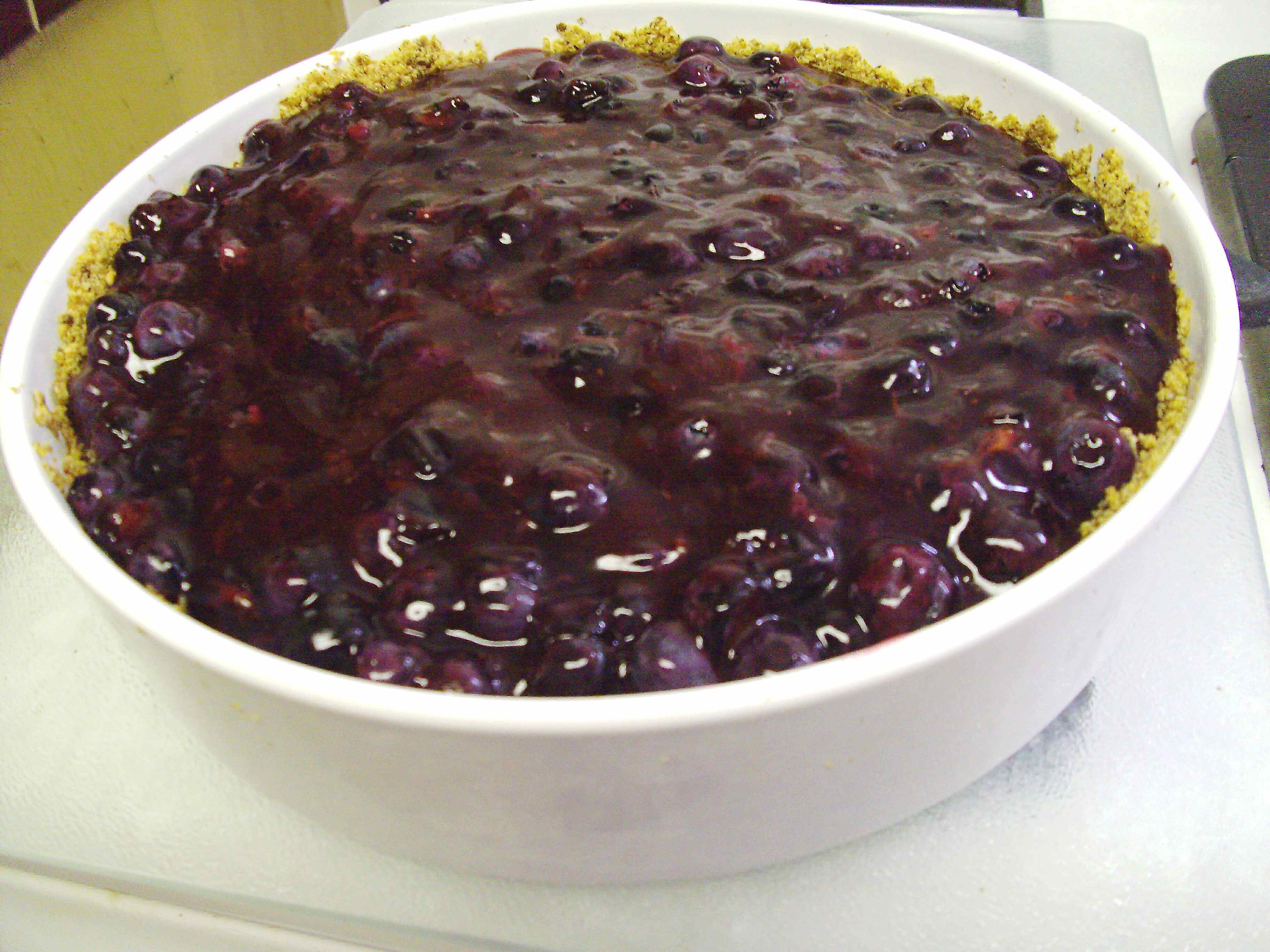
    raw blueberry pie with microwaveable filling and graham cracker crust

    This mostly-raw blueberry pie is a snap to make and very versatile--the filling microwaves in a few minutes, and you don't even have to bake the zippy gingered graham cracker crust--perfect for a hot Fourth of July and all summer long.

  • Recent Posts

  • Contents

  • Archives

  • Now Reading

  • See also my Book Reviews

  • Copyright 2008-2024Slow Food Fast. All writing and images on this blog unless otherwise attributed or set in quotes are the sole property of Slow Food Fast. Please contact DebbieN via the comments form for permissions before reprinting or reproducing any of the material on this blog.

  • ADS AND AFFILIATE LINKS

  • I may post affiliate links to books and movies that I personally review and recommend. Currently I favor Alibris and Vroman's, our terrific and venerable (now past the century mark!) independent bookstore in Pasadena. Or go to your local library--and make sure to support them with actual donations, not just overdue fines (ahem!), because your state probably has cut their budget and hours. Again.

  • In keeping with the disclaimer below, I DO NOT endorse, profit from, or recommend any medications, health treatments, commercial diet plans, supplements or any other such products.

  • DISCLAIMER

  • SlowFoodFast sometimes addresses general public health topics related to nutrition, heart disease, blood pressure, and diabetes. Because this is a blog with a personal point of view, my health and food politics entries often include my opinions on the trends I see, and I try to be as blatant as possible about that. None of these articles should be construed as specific medical advice for an individual case. I do try to keep to findings from well-vetted research sources and large, well-controlled studies, and I try not to sensationalize the science (though if they actually come up with a real cure for Type I diabetes in the next couple of years, I'm gonna be dancing in the streets with a hat that would put Carmen Miranda to shame. Consider yourself warned).

How to Eat Vegetables and Lose Weight and Save the Planet (Without Really Trying)

One of my favorite stops at the New York Times online is Mark Bittman’s “The Minimalist” column, a series of 5-minute videos in which he demonstrates simple but pretty good cooking with clear and manageable directions and an easy close-up view of the pots and pans in action.

I’d say he takes a no-nonsense approach to cooking, but that would be misleading. He takes a full-nonsense, marble rye approach to the patter while doing some very basic common sense things like cutting up, mixing, and sauteing. And he features vegetables prominently.

Bittman,  recently seen schmoozing around Spain in a top-down convertible,on PBS yet, with Gwyneth Paltrow and Michael Stipe and occasionally Mario Batali and trying to look interested in the food (which somehow got upstaged, can’t imagine how), is the author of several big yellow cookbooks, notably How to Cook Everything in both meat-eater and vegetarian editions.

This year he’s come out with a new, slimmer volume called Food Matters: A Guide to Conscious Eating* (and the asterisk leads to: *With More than 75 Recipes).

Unfortunately, we have to disregard the fact that Bittman’s title manages to evoke both Phil McGraw’s Self Matters and David Reuben, M.D.’s 1970s classic romp, Everything You Always Wanted to Know About Sex* … *But Were Afraid to Ask (or, more happily, Woody Allen’s movie send-up of same). This is a Serious Book. And like many Serious Books today (and anything at all with a “go green” theme), it’s a hybrid vehicle.

Between the asterisks on the cover sits a Granny Smith apple photoshopped with a map of the world and a red label, “Lose Weight, Heal the Planet.” The back blurb reads, “…the same lifestyle choice could help you lose weight, reduce your risk of many long-term or chronic diseases, save you real money, and help stop global warming…”

Food Matters is Bittman’s argument for getting the lard out and the greens in, for the sake of health, looks, and planet (quick, look holistic and place your hands reverently over your heart, if you can find it). The first half of the book is a set of essays reporting on the state of Big Food in the U.S., the state of obesity, the state of greenhouse gases and the global cost of raising a serving of beef as opposed to a serving of broccoli or tomatoes or whole grains.

Following Michael Pollan’s now-famous dictum “Eat food. Not too much. Mostly plants,” and citing him heavily, Bittman sets out to encourage readers to replace at least some of the earth-taxing meat and dairy in their daily eating with…plants. Which makes sense, of course.

The second half is a primer, with recipes, on how to eat more vegetation. Given that his pitch is geared at least partly to a male audience (he also writes a food column for Men’s Health, and the tone here is similar), you’d think his advice on the quickest route to getting vegetables into one’s diet would involve the least fuss: just wash and nosh. But no.

Bittman used to edit Cook’s magazine and the cookbooks he writes today do tend to feature recipes. It’s a common downfall, but what can you do? Continue reading

Best new (fantasy) fresh produce ad

A few posts back I was daydreaming of a new campaign by the Ad Council promoting fresh produce. I’d thought the “Got Milk?” campaign would be something to model it on.

Washington Post columnist Paul Farhi, who was doing live chat with readers this week about why, when, and how fast food ads on tv started turning so skanky, has a more inspired take. After a fair number of comments on the increase in raunchiness of burger ads targeting 15-35 year old men, we get this exchange:

Okay, all this talk about burgers : is about to ruin my diet. I’m leaving the chat to go find some healthy fruit to snack on.

Paul Farhi: Opening scene: Long shot of Scarlett Johanssen strolling a city street. She stops at a corner grocer.

Close up: Apples, bananas, pears, etc.

Scarlett fondles the fruit seductively as wah-wah music rises up in background.

Close up: Scarlett enjoys eating fruit, in a kind of lascivious way.

Voiceover (Scarlett): “Fruit. It’s so sexy.”

End of ad.

So there you go. I wonder if Colin Firth is available for something involving asparagus?

Suing for Salt

The Center for Science in the Public Interest is supporting a New Jersey man’s class action lawsuit against Denny’s Restaurants after private talks apparently failed to convince the chain to lower the exaggeratedly high sodium content in its meals. Apparently CSPI combed through the nutrition data on the Denny’s web site. A couple of sample readings:

Denny’s double cheeseburger–3880 mg
Denny’s Meat Lover’s Scramble–5,690 mg
Denny’s “senior” menu scrambled eggs and cheddar cheese meal–2,060 mg
Spicy Buffalo Chicken Melt, and a side of seasoned fries–6700 mg sodium, 1700 calories

The lawsuit was filed in Superior Court of New Jersey in Middlesex County, and seeks to compel Denny’s to disclose on menus the amount of sodium in each of its meals and to place a notice on its menus warning about high sodium levels.

Brand Me! Or, How to Commercialize Cabbage

Earlier this year I made a joke about the marketing campaign for fresh bulk vegetables, along the lines of “Red Cabbage. It’s What’s For Salad.” I was thinking how nice it would be if people could be motivated to buy ordinary fresh bulk vegetables–no brand names, no packages–every week as a matter of habit the way they did 30 years ago, instead of the way they now fill their carts with brightly colored boxes of processed stuff. I thought it would probably take a satirical approach like the Ad Council’s Got Milk? public service ad campaign.

Clearly I wasn’t thinking hard enough about the real issue driving the relentless replacement of food with boxes. As with the Internet, it’s branding. And not surprisingly, there’s an awful lot of spam out there (hints of The Viking Song in the background…and a word of caution: as with many Monty Python sketches, this one contains more than a few off-color lines and screeching in addition to the main ingredient.)

The packaged food industry is way ahead of me and has been for years. They’ve figured out how to put brand names on cabbage or broccoli or carrots so they can charge more for it–several times more per pound. And they’re doing enormously well with this ploy.

Ordinary shoppers — your neighbors, your co-workers, your mom, and you too, I bet— have in the past week or so bought a little packaged bag of pre-washed spinach, Euro Salad Mix, baby-cut carrots, or broccoli and cauliflower florets. To save time, you tell yourself. Because it’s more gourmet, perhaps. And you’re getting your vegetables in, you think. But it becomes a habit, and a needlessly expensive one.

This kind of thinking about vegetables is becoming dangerously ingrained among American shoppers. People think they’re eating healthy without the fuss, but then they complain how expensive vegetables are. And no wonder, if they shop like this.

Because the few vegetables you get in the precut packs in pristine plastic bags are less than a pound. 12 oz. is typical for broccoli and cauliflower florets, 5-6 oz. for pre-washed mixed lettuces. Prices are at least $2.00 per bag, and often on up to $3.50 or more. Yes, Virginia, that’s anything between $3 and $9/lb for the “convenience” of just opening a bag.

I bring this up here because packaged, pre-shredded cabbage, an 8-oz. bag no less, was listed, actually listed, as a key ingredient in a recent (and no I didn’t really mean to be picking on them again so soon) Bon Appetit feature recipe online. One for “Fishcakes and Coleslaw”. It was part of a slideshow series illustrating “gourmet cooking on a budget”, glossy photos with convincing price tags included–but this one recipe cost $14 for four servings!

Continue reading

“But it’s organic! But it’s vegetarian!”

Vegetarian and organic foods are gaining popularity in supermarkets around the country–it’s been happening for at least a decade. Vegetarian- and organic-seeking customers assume they’re getting something closer to fresh if it’s labeled vegetarian or organic, and most of them also assume that vegetarian automatically means healthy. So, apparently, do nutrition researchers when they’re not really thinking hard enough.

The American Dietetic Association recently announced–again, updating from 1997–that vegetarian and vegan diets can be healthful at all stages of life from infancy onward and posted suggestions for getting started. Keyword here is “can”.

The idea of easing into a less-meat diet in stages by cooking familiar foods and familiar ingredients as far as possible is understandable. The Vegetarian Nutrition practice group of the ADA is trying to reach people they think are likely to panic at the suggestion of not eating meat. Unfortunately, the suggestions that top the list are mostly for processed meat substitutes, jarred pasta sauces, canned beans, boxed rice mixes and the like, rather than a dietary framework for eating fresh whole-ingredient vegetarian foods.

In the health section of the LA Times online, where I first read about the ADA’s statement last week,  many reader comments objected to this approach primarily because the major brands of veggie hot dogs and hamburgers tend to have long, improbable ingredient lists and very high salt. After a casual tour of the sauces-soups-and-rice-mixes section at my local Whole Foods, it’s an objection I second even more strongly.

For several years now I’ve had reservations about the processed food industry’s tendency to throw salt at anything and everything. Vegetarian and organic food is supposed to be better. Fresher, better-tasting, realer, more nutritious, healthier, more responsible for the planet, the animal world, and the customer. In a word, BETTER.

Nice intentions aside, most of the vegetarian and organic products companies these days seem to be trying as hard as they can to keep up with or even surpass the meat-eating Joneses–the big-brand pantry staples from Stouffer’s, Swanson’s, Kraft Foods, Campbell’s, and so on.  They’re still claiming the health and planet virtues of vegetarian and organic, but they’re actually processing the hell out of their foods, adding all kinds of laundry-list mystery ingredients, and salting them out of all reason. And health-and-planet-conscious consumers are flocking to them without bothering to look hard at the nutrition labels. How have we come to such a pass? Continue reading

Naked Lunch: Nutrition labeling law in effect for California Chain Restaurants

California’s not the first state or municipality to require restaurants to declare their nutritional stats to customers, but as of today, the state will require chains with more than 20 in-state locations to post calories, carbs, sodium and fat information for each menu offering. The new law also bans sales of soda and junk foods to students at public schools–a big step toward reducing empty calories and sodium consumption among children and teens.

Patt Morrison of Pasadena-based public radio station KPCC interviewed the California Restaurant Association’s senior vice president for government affairs and the executive director of the California Center for Public Health Advocacy.

Surprisingly enough, the CRA’s representative said the association actually backs the legislation in its current form. When asked whether similar New York City legislation had had any effect so far, the CCPHA director said it had–chain restaurants had started reformulating popular high-calorie foods back downward. He also gave demographics: 89 percent of Democrats and 78 percent of Republicans polled said they were in favor of the new law. Most of the callers to the show also said they wanted or needed to know what was at the end of their forks.  A fascinating interview all the way around.

Misunderstanding Salt Research: Bon Appetit’s Shameful “Health Wise” Column

I started this blog last spring more or less just to test out blogging lightheartedly about food. However, I have just read Bon Appetit‘s appalling “Health Wise” column from the May issue, “The Saline Solution” by John Hastings.

I do actually love to cook and eat well, and that’s my main purpose for this blog, but seeing this kind of blithely irresponsible “health” advice on salt makes my blood boil (not appetizing). Worse, it starts dragging me back to my work roots and up on my soapbox (also not appetizing, though kind of fun), because I trained as a biochemist and worked for several years as a science journalist. I worked for the National Heart, Lung, and Blood Institute at NIH at the time some of the bigger studies Hastings refers to were first being published. It was my job to know about them and write about them in plain (and preferably short) English for Congress and the public. To do it I talked to national experts, interviewed the leaders of the National High Blood Pressure Education Program, and combed through a century’s worth of research on salt and high blood pressure.

But you don’t have to be a scientist to find this stuff out. Descriptions of the studies AND their updates AND the reasoning behind the basic public health guidelines calling for Americans to watch their salt AND how to do it without eating a restricted diet of cardboard and baby cereal are all easily available from the NHLBI web site or the American Heart Association.

Hastings, a former editor of Prevention and health column contributor to O, the Oprah Magazine, is someone you’d expect to be reasonably accurate in reporting health research findings. But here he gets the science on salt and high blood pressure just about as backwards and upside down as he possibly can.

Worse yet, he does it in a strangely breezy, cheerleading tone that’s really hard to believe.

Hastings’ argument goes something like this:

…here’s a little secret: salt isn’t a problem. If that sounds crazy, it’s because the public health message about salt causing high blood pressure has been very, very effective, and it’s backed by reams of scientific research…Upon this, nearly everyone agrees. The controversy arises when you ask experts about the connection between salt intake and high blood pressure…All of this is fantastic news for those of us who are already cooking with high-quality meats and farmers’-market produce…

Did you follow all that? Probably you felt like you did for the few seconds you were reading it, but look again and you start to pick out the self-contradictions–“If it sounds crazy” that salt isn’t a problem, “it’s because the public health message that salt causes high blood pressure… is backed by reams of scientific research.”

Well, yes it is. The way Hastings phrases it, you’re supposed to think that was a bad thing, that health research in general and carefully designed tests of the effects of diet on cardiovascular health in particular are part of some kind of unnamed conspiracy against the public’s right to eat every bit of salt it can get.  Personally, I’d rather that broad public health messages were backed by reams of scientific research rather than by some diet guru or brand-name chef’s nutritional fantasy that will help sell his next book or tv program, or–more realistically–by corporate marketing and pressure campaigns from big pharma and big agro. Of course, it’s less profitable if people simply eat less salt–and less processed food–and never develop hypertension in the first place than if they eat salt like it’s going out of style and call it gourmet, and then have to make up for their diet by taking hypertension pills…hmm. Food, Inc., anyone?

“Upon this nearly everyone agrees”, but somehow there’s still a great controversy over it? Really? No. Not really.

The vast majority of salt researchers look at the bulk of the study results and conclude–repeatedly, for decades now–that salt is, in fact, a direct and modifiable risk factor for hypertension (high blood pressure). Which is both a disease in its own right and a leading risk factor for heart disease, stroke, and chronic kidney disease. Combine that with the fact that the average current salt intake is about twice what the consensus guidelines recommend and that more than half the adult population in the U.S. is crossing the line into overweight and obesity–and…well, yes.

Salt IS actually a health problem for most people. Gee.

The Bon Appetit article is a jumble of self-contradictions and serious misinterpretations of the findings from two older salt research studies, one of which has since been revised,  plus a cherry-picking recent review that comes to a different conclusion about salt than most of the other reviews of the same data on diet and health. That one comes from the lab of Mickey Alderman, an otherwise eminent researcher who just happens to be a long-time, much-trumpeted advisor and consultant for the Salt Institute.

Hastings  doesn’t indicate that he interviewed the man or even recognized his name on the journal article, but he should have. Anytime somebody in the media wants to come up with the magical–and really, really popular–conclusion that lots of salt, any day, any time, anywhere, please add more, is perfectly harmless and even good for you, they go to Mickey Alderman because they can paint him as a lone hero against the Food Police (the typical name they give the National Institutes of Health and the American Heart Association in such cases). Because what Alderman will say–with precision, but with disregard for the bigger public health picture–is that high salt intake isn’t directly proven to cause death from cardiovascular disease.

And it isn’t. It can’t be proven directly in a well-controlled diet study large enough to reach statistical significance, because that would require thousands of participants to follow a carefully prepared diet throughout their entire lifetimes, with no deviations for dates, wedding receptions, pizza parties, etc., and it would take 50-75 years to collect the majority of the data. You’d literally have to wait until most of the participants died before you could make a public health recommendation about salt. And the cost of doing that study “right” would run into the billions. It would bankrupt the federal science budget. And maybe a few other budgets as well.

That’s why the NHLBI and the AHA have sponsored studies that look at signs of developing cardiovascular illness–heart attacks, stroke, phlebitis, high blood pressure, kidney disease–rather than death. When you look at these ailments, you find that dietary salt actually matters quite a bit–contrary to what Hastings thought he understood from the studies he mentions.

Continue reading

What’s in YOUR restaurant’s dumpster? David Kessler uncovers the addictive side of chain restaurant eating

David Kessler, the FDA commissioner who fought to bring the cigarette and tobacco companies to heel in the 1990s–has taken on the next big fight by doing something you wouldn’t think a man that eminent needs to do: he’s gone dumpster diving in the parking lots behind the fast-food chain restaurants in California. In a suit, according to his wife.

What’s in the dumpsters? Kessler’s new book, The End of Overeating: Taking Control of the Insatiable American Appetite, reveals a dirty secret. Kessler went in search of the nutrition labels on the boxes of food shipped to individual chain restaurants like Chili’s to find out what’s really in the food they serve and why people have so much trouble stopping at a normal portion and normal calorie intake when they make fast food a part of their lives.

He found the labels. Even ordinary-sounding foods were pumped abnormally, exaggeratedly, unconscionably high with fat, salt, and sugar. One appetizer–the Southwest Eggrolls–contained 910 calories, 57 grams of fat and 1,960 milligrams of sodium. Basically half a day’s calories for a normal healthy woman’s diet, about twice the recommended amount of fat if most of it was saturated, and nearly all of the recommended maximum for sodium.

Not really a big surprise–fat, salt and sugar are the three things most likely to provide a “quick hit” of satisfaction when you eat them, and all of them are cheap substitutes for actual flavor or (dare we dream) fresh ingredients you might otherwise expect in food. Most packaged snacks rely on at least one and usually all three–think Snickers; think Chees-Its; think just about any kind of vending machine item–fat, salt, sugar. It’s a hit.

But we know packaged snacks are junk food. We thought dinner at Chili’s — or Bennigan’s — or TGI Fridays — was an actual meal. It LOOKS like a meal. It looks like meat and vegetables and rice or potato. What Kessler discovered on the nutrition labels makes them seem more like giant-sized, glorified, salted, sugar-coated, oiled-up snack foods parading as meals.

That’s not a shocking kind of report anymore–the Center for Science in the Public Interest has been putting out shocker nutritional reports on all kinds of popular foods since it blasted into the headlines by calling fettucini Alfredo “a heart attack on a plate”. But since the CSPI Alfredo debacle, Americans have been swarming to fast food restaurants and sit-down chains in record numbers–not as a weekend jaunt but as a staple of their diet, reportedly eating out an average of 6 times a week.

Kessler ties these trends together with recent physiological research on fat, salt, and sugar consumption. Instead of satisfying hunger, the fat-salt-sugar combo acts as a stimulant, hitting up the dopamine receptors in the brain and triggering release of opiates as a “quick relief” response to eating the first bite of a fast food. Followed shortly, we would guess, by a let-down. And then a vicious cycle as the body suffers rapid hunger for more, even though you’ve just eaten.

So fat-salt-sugar really is a drug. Something we already knew,  but not in such detail. The fact that it’s being exploited not just in vending machine snack packs but in what we thought was real food, just restaurant-prepared, goes some way to explain why reports in the past year have clocked Americans eating 3800 calories a day.

The fact that that mass-prepared food has been manipulated to exaggerate the fat-salt-sugar content and encourage people to eat more than is reasonable in a chain restaurant sitting is even more insidious. The fact that high-class restaurants with big-name chefs are resorting to similar tactics–often unwittingly–to “boost flavor” and compete with chain food is just depressing.

Or in other words: Restaurant food is the new tobacco.

The 3800 Calorie Diet?

If anyone’s still wondering why Americans have gotten so fat on average, the mystery is over. According to a Reuters article published today,

Portion sizes in the United States not only exceed those in less-developed countries, but also in the developed world. In fact, Americans have the highest per capita daily consumption in the world, eating 3,770 calories a day, more than a Canadian at 3,590 calories or an Indian at 2,440, according to data from the U.N. Food and Agricultural Organization.

3800 calories? Per day??? Can that possibly be right? That’s about double the recommended healthy calorie intake for an adult–certainly for an adult woman under 6 feet tall. Double. And that’s supposedly the AVERAGE, not the maximum–I shudder to think about the calorie counts for the people who eat more than that. If the UN isn’t counting food wastage or otherwise misinterpreting the trends, then we are in Deep Trouble. Of course, so is Canada, but really.

The article goes on to relate American fast food consumption, and overstuffed restaurant portions, to the burgeoning world food crisis. It claims Americans eat out 6 times per week on average and consider that an important part of their lives. It’s not like they’re eating gourmet food, either. Most of it is from your standard 3 burger chains. I can’t imagine eating at those except if I were stranded along a highway with a broken-down car for more than four hours. Maybe six.

Our lunches tend to be a sandwich, some vegetables and an apple or orange. Maybe some soup. Dinners are usually something like a piece of fish, a large handful of broccoli or cauliflower, some sliced tomatoes or green beans or a salad. Not glamorous, but not bad. Maybe some rice or noodles or boiled potatoes or corn to go with it, but not as the majority of the food. Maybe a quarter of the plate. Maybe some fruit and/or–this is summer, after all–a cup of (ordinary, non-premium) ice cream for dessert. Is any of this so hard? Does any of it take more than half an hour total? Not really. Does it cost the earth? Not really–maybe 5-6 bucks for dinner for 3. A lot less if we have eggs or beans as the main protein instead.

But even with dessert, our dinners are rarely more than 600-700 calories, and we’re not exactly starving. Continue reading

How to Cook a Wolf, 21st Century Version

Two years ago, my husband and I took our young daughter to Paris during an engineering conference. It was our first time there, and in about five days, we spent the equivalent of 10 weeks’ grocery money on food. Just food. We couldn’t cook there, and even modest cafés charged such ridiculously high prices for mediocre food–$14 for a potato omelet or a tuna sandwich? $6 for lemonade or a bottle of water?!–that we had little money to spare for anything else. The next 10 weeks, I told our friends, we were going to be living on beans and rice. I was only joking a little.

Back in 1942, in How to Cook a Wolf, MFK Fisher’s idea of how to cook cheap was to use one’s last few francs to make a pasty, flavorless mixture of ground beef and barley-the cheapest high-nutrient ingredients she could think of at the time-and eat it sparingly throughout the week. It was not her idea of how to eat when you had the choice of anything–anything–better, but it would serve when the wolf was well and truly at your door.

Today, gas prices are double what they were two years ago. The housing market is on the edge of collapse. As a result, the once-insulated and well-educated middle class is closer than ever to the edge of poverty but almost completely unschooled in how to cope. All you have to do is look at the average ratio of credit card debt to savings.

Hence a new trend in food activism-the Food Stamp Challenge. Heartening? Disturbing? You make the call. First taken by a panel of congressmen last spring to “research” the food stamp program monthly allowances for individuals and families, the Food Stamp Challenge tests your ability to stretch $514-the amount currently allotted by the ever-generous federal food aid program–to feed a family of four for a month.

The congressmen couldn’t do it at all. Continue reading