• Enter your email address to subscribe to this blog and receive notifications of new posts by email.

    Join 241 other subscribers
  • Noshing on

    raw blueberry pie with microwaveable filling and graham cracker crust

    This mostly-raw blueberry pie is a snap to make and very versatile--the filling microwaves in a few minutes, and you don't even have to bake the zippy gingered graham cracker crust--perfect for a hot Fourth of July and all summer long.

  • Recent Posts

  • Contents

  • Archives

  • Now Reading

  • See also my Book Reviews

  • Copyright 2008-2024Slow Food Fast. All writing and images on this blog unless otherwise attributed or set in quotes are the sole property of Slow Food Fast. Please contact DebbieN via the comments form for permissions before reprinting or reproducing any of the material on this blog.

  • ADS AND AFFILIATE LINKS

  • I may post affiliate links to books and movies that I personally review and recommend. Currently I favor Alibris and Vroman's, our terrific and venerable (now past the century mark!) independent bookstore in Pasadena. Or go to your local library--and make sure to support them with actual donations, not just overdue fines (ahem!), because your state probably has cut their budget and hours. Again.

  • In keeping with the disclaimer below, I DO NOT endorse, profit from, or recommend any medications, health treatments, commercial diet plans, supplements or any other such products.

  • DISCLAIMER

  • SlowFoodFast sometimes addresses general public health topics related to nutrition, heart disease, blood pressure, and diabetes. Because this is a blog with a personal point of view, my health and food politics entries often include my opinions on the trends I see, and I try to be as blatant as possible about that. None of these articles should be construed as specific medical advice for an individual case. I do try to keep to findings from well-vetted research sources and large, well-controlled studies, and I try not to sensationalize the science (though if they actually come up with a real cure for Type I diabetes in the next couple of years, I'm gonna be dancing in the streets with a hat that would put Carmen Miranda to shame. Consider yourself warned).

Ice cream, enhanced

Sometimes your kid sees a new flavor of Dreyer’s ice cream at the store and decides she has to try it because “It’s Black Raspberry, Mom!” and it’s on sale. But mostly because it’s a trendy light purple (“Orchid or thistle?” I asked, calling on my distant memories of the Binney & Smith guide to the universe.  “Lavender” she retorted. I caved to her superior fashion sense.) It was made with real raspberries–that’s a plus, I suppose. And it came in a “half-the-fat” version, and it was enough on sale that I could get a safety flavor as well.

It’s been over 100 degrees here in Pasadena this week, so ice cream is practically a medical supply.

When we got it home though, it tasted sweet and kind of dull. The fruit flavor was there but not particularly strong, and the overall effect–particularly the smell, for some reason–reminded me suddenly of those horrible “berry-flavored” motion sickness lozenges my mother used to foist on us just before long car trips. Bonamine? I’m still shuddering forty years later.

My daughter, blissfully free of Bonamine-induced associations, still thought it had merit, though, so we kept the lavender-tinted ice cream and I wondered whether anyone else would eat it without having to be threatened. What was wrong with it and could it possibly be fixed?

I’ve been potschkying around with store bought ice cream pretty much ever since I was old enough to buy it for myself–adding extra cocoa powder and some mint or almond extract to chocolate, leftover coffee and cinnamon to vanilla, and on and on. Not many people do this, or do this enough, I’ve discovered. You have to wonder why not, because most non-super premium ice cream in America is a little, or a lot, bland.

In fact, the only flavor I never messed with was Ben & Jerry’s Coffee Heath Bar Crunch, which was perfect and sublime and needed no help ever, other than a spoon. My husband and I were such devotees that when we had a chance to spend a late-summer week in Vermont and New Hampshire one year (way back when, in our 20s), we made sure to stop in at the factory in Stowe for a tour. CHBC was such a supreme flavor that I only gave it up when Ben and Jerry both retired and a new CEO took over. Somehow, the next pint I bought tasted a little off–weak on coffee flavor or something, hmmm…I looked at the ingredients and sure enough, they’d changed the formula and flavorings. It had also been monoglycerided down, even though the fat count was still in the stratosphere. I’m sure my ice cream snobbery saved me from a decade of extra arterial damage, but I’ve been sullen and resentful ever since (or at least that’s the explanation this week).

So anyway–back to the prosaic purple ice cream. It needed something–tartness–to liven it up, and probably would have been better as a frozen yogurt. Come to think of it, would yogurt work? Naah. Messy. Plus refreezing time. Lemon? Maybe, maybe not–it might end up seeming too sweet. Then I found a lime in the fridge–from who knows how many weeks ago; it had already lost its green, but it was still fine inside. Sometimes where lemon’s pure acidity underscores the sweetness and makes it more apparent, lime’s aromatic edge undercuts it and makes the flavor seem fresher. Works for ginger ale, works for blueberry jam…

A squeeze, a stir–from lavender to…raspberry pink (what else?) and I have to say, a BIG improvement in flavor. Much more like actual black raspberry. That’s all it took? Why couldn’t they have done that at the ice cream factory? But they didn’t.

I have another reason for punching up my storebought ice creams, and it’s not just boredom or fidgetiness (though those are obviously tops).

A long-ago-and-far-away gelato-eating expedition in Florence (it didn’t start out that way, but it’s the fulltime occupation in the summer–even more of a medical necessity when you’re wandering outside all day as a tourist) taught me the difference between Italian and American standards for ice creams: Americans expect big portions and don’t really pay attention to the flavor. Bland and sweet is acceptable. Italians are happy enough with small 1/3 cup portions as long as the flavors are wild and adventurous and vivid. If you can taste it well with one of those tiny gelato spoons, a gram at a time, it’ll last you.

Makes you wonder whether the lack of flavor punch in American ice cream (and maybe our other food as well) is the reason we typically eat biggish portions at a sitting, or seek out seconds. If it doesn’t taste like much, you eat it without paying attention, and end up not feeling like you’ve really eaten it. Interesting and vivid flavor seems like a good idea for health and portion control as well as pleasure–if you’re going to have ice cream, after all, you may as well taste it. Otherwise you could just suck on ice cubes.

So–a few suggestions for upping the flavor of store bought ice creams.

Go for plain flavors as your base

Try to find ones that are relatively low in carb and fat for a half-cup serving. Low here means about 15 grams of carb per half-cup, and maybe 2-3 grams of saturated fat.

Not only don’t the dressed-up flavors with loads of mix-ins need (or take well to) further tinkering at home, they’re not always as high in quality. Dreyer’s (Edy’s on the east coast), seems to try to keep the nutrition stats consistent across the line–ice creams with lots of mix-ins and/or caramel-type ribbon swirl are a bit higher in carb, up to maybe 22 grams per serving.

To keep things consistently low, though, the components or the ice cream itself have to compensate–so Reese’s Cup-style peanut butter and chocolate chip swirl has iffy peanut butter and iffier quality chocolate chips (well, so do the real Reese’s ™–don’t know whether authenticity is such a good thing in this case), plus the ice cream’s a bit icy, maybe even a little stale-tasting on occasion. You’d get more intense flavor from vanilla bean ice cream with a few squares of good dark chocolate chopped in and some peanuts or a bit of peanuts-only peanut butter.

Make flavors you can’t buy

Sometimes these are ones you grew up with, like Rum Raisin–I think only Haagen Daz still makes this. People got kind of prissy about feeding ice cream with rum flavoring in it to kids, I guess. Or raisins got too expensive.  So did pistachios, except in super premium ice creams.

No one makes ginger, or lemon-ginger, even though I’m pretty sure those were two of Bon Appétit‘s and Gourmet‘s big summer standbys for at least a decade (and I know because I once bought a decade’s worth of each magazine from my friends-of-the-library auxiliary at about a dime an issue. The seasons change, the same 10 recipes repeat…)

And no one makes Sabra (chocolate orange), or fig, or liquorice, or marzipan, or rose. Or pear. Or chocolate hazelnut with sour cherries.  Or even just plain bittersweet chocolate. There are home recipes for all of Continue reading

Really? No, not really.

Reason for dismay at the top level restaurants:

(LA Times Food Section) “Three top chefs create more healthful versions of favorite dishes”

They cut down a little on the calories–as in, substituted olive oil for butter, or ricotta for mascarpone, or even ground chicken for ground pork. But only one of them cut down significantly on the sodium–and even then it was 1000 mg for the dish, down from about 1400 mg. Give Daniel Mattern credit where it’s due, but it’s still a lot. Josiah Citrin’s dish, which started out about 650 mg, not horrible for restaurant food, actually went up in the modified version.

In Susan Feniger’s case (and she was far from succeeding or even trying hard on the sodium reduction), the sodium count was more than a day’s worth in one dish–from 2100 mg or more to 1800-plus. Choke. She did skip marinating the ground chicken, but the “mabo” sauce, which she didn’t change at all, contains three different kinds of soy sauce AND fermented black beans. Because you really need a sauce that salty in fine food?

Couldn’t she have done a different sauce, more savory or spicy but less salted? That’s the first thing I would have targeted. I probably would have used my low-sodium prune-based Asian barbecue sauce instead of the black bean sauce–it’s different, but good, and it’s similar enough in texture and flavor density to substitute well.

In fact, none of the chefs tried to go radically different–they were all too fixated on whether diners could tell the difference between the originals and the modified dishes. Well, if they’d changed anything worth changing, I’m sure the diners would have been able to taste the difference. The real question is, would it have been a good dish and would they have liked it? I think the chefs could certainly have gone after bigger, more ambitious changes and made the dishes satisfying–perhaps even better–without choking the diners on salt.

The bad part of the article came at the end. All three chefs just gave an arrogant little shrug when the results were revealed at the end of the test (showing that they hadn’t done all that well). They all said grandly that it doesn’t really matter, because as Josiah Citrin put it, their customers come “to be blown away” by the food.

And so, just like the fast food kings, they put the blame on the diners for not demanding better, saner nutritional standards. Beats workin’.

Stolen!

Toucan-beaked finjanim (coffee pots) from the Ethnographic and Folklore Museum in Akko, Israel

Brass finjanim (coffee pots) and tin plates from the pioneer days in Israel. Exhibition at the Ethnographic and Folklore Museum, Akko, Israel

Can’t decide whether I’m more heartbroken or flattered–maybe just surprised?

The Wall Street Journal 

a) has a food section (who knew?)

b) which is currently featuring a 4-part series of recipes by Yotam Ottolenghi.  (I’m actually in favor, and hoping for his book Plenty for my birthday–my husband  floated the suggestion a few weeks ago and I was really flabbergasted that he’d even heard of Ottolenghi. Must have been listening to  something on NPR.) Why is Ottolenghi favoring the WSJ, though, of all food column venues?

c) Said series is calling itself “Slow Food Fast” — the goniffs; can I charge them for it? wouldn’t you? — but it probably shouldn’t.

I’m not just saying that for my own sake (though that’s a big part of it, don’t get me wrong. I’m–the heck with neutrality–too annoyed to be giving a link to this).

Ottolenghi’s recipes aren’t really either slow-slow (stews, beans from scratch, etc.) or incredibly fast (microwave)–a lot are lightly fried or grilled, with a sharp mix of flavors, a lot of herbs, middle Eastern sauces and a tossed salad of some kind on the side. Soft-boiled eggs in a salad, corn latkes with a salad, pan-grilled mackerel on a pita with pistachio pesto and Greek yogurt (bet he’d rather have labaneh but can’t find it in New York or London)–etc.

Which makes them good eating, Israeli and Arab style. But not really slow food done fast.

Most Israeli cooking that’s still Israeli (and not nouveau-Italian, complete with oversized bowls of pasta and seven different cappuccino/macchiato/etc. kinds of coffee drinks) falls into three categories.

The old-fashioned stuff is long-cooked roasts or stews for meats and poultry, maybe stuffed vegetables or an eggplant or spinach casserole or couscous or pilaf. Traditional Romanian, Hungarian, and Moroccan restaurants and some home chefs (usually older women) serve these sorts of long-cooked dishes, but there’s no real shortcut for them.

Israeli street food (not western, engineered “fast food” like McD’s) mostly appears at lunch counters and road stops that specialize, but again the ingredients are real. Felafel, shawarma (even though they’re mostly using a mixture of turkey and beef instead of lamb these days), lahmajoun (ground-meat pizzas). Or else burekas, trays and trays of puff-like flake pastry layered with cheese or eggplant or potato or mushroom filling, and you stop in for lunch and have a huge slab of one with maybe a bit of salad on the side and some tea. All of these take some preparation–the fast part is you walking up to the counter and getting takeout.

In between these extremes are cafés that serve individually-cooked dishes–more informal than casseroles and stews, less casual and more varied than street food. Grilled or fried vegetables (peppers, onions, eggplants, tomatoes, zucchini, pumpkin? potatoes?–more eggplant) and beans, grilled fish or chicken, hummus and baba ghanouj, assortments of cooked salads,with a fresh salad and dishes of olives, turnip and eggplant pickles. A lot of olive oil and garlic and lemon and cumin, yogurt, vegetables, and water-flour-yeast-salt kinds of flatbreads. Street food stand sauces like tehina, salat turqui, harissa, and hilbe (sour yellow fenugreek sauce, kind of mustardy) are still part of it, but so are vinaigrettes and more complex flavorings, and a lot of fresh herbs make an appearance.

This is Ottolenghi’s kind of cooking, and I love it, but it’s neither slow food nor slow food done faster. It’s rustic, village-style food, even though he’s dressed up his version for London diners. At its best you feel like you could walk into the restaurant and fit in fine whether dressed for a theater evening or still dusty from hiking with a water bottle still hanging off your backpack. As though if you walked to the back you wouldn’t be that surprised to see the chefs squatting down over a little pine fire in the courtyard, grilling the food Bedouin-style,  on the back of a broad, battered skillet or skewered on a long thin stick.

They’re not really doing that in Tel Aviv or Haifa, of course, but desert camp cooking is still a key part of the local food lore. People still grill things like chicken hearts and livers outside on little pine fires in their courtyards at home with great pride. Or char eggplants and peppers directly on the gas stove–sort of smelly but undeniably authentic. They point out  za’atar, hyssop and other forageable herbs on wilderness hikes; they know how to make a quick camper’s flatbread of flour and water and a few sprigs of foraged maluakh (a salty plant found in the Negev) over the back of a frying pan. And they know how to brew botz — Turkish coffee–with a flourish.

It’s a part of Israeli life I fervently hope won’t disappear with all the new software companies and car dealerships and cappuccino joints that have popped up over the last couple of decades.

As for the use of my blog’s name, I’m thinking I should take the attitude Monty Python did one time when Margaret Thatcher made free with their Dead Parrot Sketch in a political speech for the Eastbourne by-elections: they announced that given the results of the elections, they thought it not only served her right, but that she had suffered adequately and publicly from her folly that they could save themselves the barristers’ fees for a lawsuit.

Me? I’m waiting til Tuesday. Somewhere else in the WSJ online was an editorial actually praising John Boehner’s plan for the debt ceiling. Feh.

Big Food mobilizes against child marketing guidelines

This Washington Post article isn’t the absolute clearest–looks like it was written as a last-minute rush piece, actually, but it’s worth getting to the end.

The basic idea is that in 2009 Congress demanded the CDC, FDA, USDA and FTC come up with a coherent set of voluntary nutrition guidelines for what the food industry can market directly to kids.

I’m not a big fan of voluntary nutrition or safety compliance guidelines for the food industry–mostly because industry players generally feel free to ignore or toy with them and then claim some kind of advertising advantage they haven’t earned. Voluntary guidelines also come with all kinds of soft landings and easy outs, and the proposed guidelines here are no great exception.

But in any case, now the four agencies have done it, and the food and restaurant industry is doing the predictable–throwing big lobbying bucks into a disinformation campaign-slash-tantrum.

How big? The campaign manager won’t say, but the preliminary guidelines report that US food industry marketing to kids 2-17 years old is currently something over $1 billion in three key categories (breakfast foods, restaurant chain food, and snacks).

So it probably won’t surprise you that companies like General Mills, Kellogg, and Pepsico have teamed up with ad-carrying media partners like Viacom (read: Nickelodeon) and Time Warner to try and quash the voluntary industry guidelines. Figure on the campaign to be spending in the mid-millions or more. They’d rather “salt and burn” instead of “cut the salt and learn.” And what a waste.

What will probably surprise you is just who this coalition–calling itself the “Sensible Food Policy Coalition”–?!!–hired to handle the campaign: Anita Dunn, a former Obama communications director whose husband, Robert Bauer, is  still White House counsel. Not a really lovely mashup, there.

Why she’s taking on the food industry campaign so they can keep protecting their ability to market garbage to the young and vulnerable is one question. Why the FDA and FTC, which have the power to decide what nutritional and medical claims, among other criteria, are valid and can be used in advertisements to adults, let alone kids and teens, are bothering with a voluntary measure instead of doing a proposed regulation to limit such marketing to youth is another.

In both cases, the answer is almost certainly money. The food and media industries have it, the federal agencies don’t.

[As it turns out, the FDA and FTC don’t have power to restrict Big Fo0d’s marketing to the under-17 crowd after all. They lost that specific ability in 1981–start of the Reagan administration… Reagan’s “ketchup is a vegetable” declaration was the beginning for drastically lowered nutritional standards and branded fast food concession contracts for public school lunches.]

So the right question under these circumstances is, where do you want to put YOUR money? How about this, if the federal agencies can’t get a decent result and the lobbies are buying off everyone else:

Boycott the Boxes. Hit ’em where it hurts.

Box 1–TV: If you have kids, limit their access to TV, and teach them to turn off the sound during the ads. Do it yourself. Treat the ads like the silly nuisance they are from the minute your kids are old enough to watch. Tell your kids the truth: most of the products advertised on kids’ shows are too shoddy–and overpriced–to market to grownups. The companies make them bright and loud and cheesy because they think kids can be fooled easier (your kids should be beautifully insulted at that if they’re about six or seven years old).  Go with PBS and videos you approve rather than commercial TV as much as you can.

Box 2–Packaged stuff parading as food: Skip almost everything that comes in a cardboard box or a plastic overwrap, or in a can. You can do this. You’ll save an awful lot of money by buying store brands only and cutting out the most pernicious items–sugared and high-salt packaged breakfast cereals, bags of starchy snack extras, and sodas, at least on an everyday basis. Save sodas and chips for parties, not for school lunch or part of dinner.

You’d do even better to go with fresh vegetables and whole fruits for most snacks and make a good habit for relatively cheap. They taste pretty good, don’t take long to fix, last at least a week in the fridge, and your kids won’t get sick overeating them.

There’s a reason the Pringle’s slogan is the very smug  “Betcha can’t eat just one.” No one says that about carrots or broccoli, or even about apples. Ever eaten too many of those in one sitting? Didn’t think so. Vegetables and whole fruits keep you satisfied longer, don’t hyperstimulate your appetite for snacks, and they don’t put on pounds that take a long time to work back off. They don’t promote cavities, either. Even nonsweet junk foods do–all that processed starchy stuff sticks to your molars like glue.

“The Trip”: supposedly about the food?

Steve Coogan and Rob Brydon have paired up again in a new movie called The Trip  and I actually got to see it in an actual movie theater Thursday! First time I’ve been in a theater since Ratatouille came out. (Hadn’t realized that was going to be a foodie movie; at the time I just wondered why they didn’t make good movies like that for grownups anymore.)

I was going to see The Trip anyway because I’d seen Tristram Shandy several years ago on disk and got bitten by Coogan and Brydon’s backstage banter. I was looking forward to seeing how the pair,  who had played exaggerated versions of themselves in the first movie, were planning to stretch their dueling Robert deNiro and Al Pacino impressions from the end credits of Tristram Shandy–by far the best shtick in the whole thing–to a two-hour buddy road trip format.

And The Trip was also supposed to be about food–specifically, the current state of northern England’s upscale eateries (now apparently as haute as anywhere on the continent) and the shockingly savage and comical food reviewing traditions of British news media.

So I dragged my husband with me to the matinee and promptly started disregarding the “please, no talking during the film” signs. What fun is it to sit there not giggling horribly as Coogan and Brydon get on the road north to Yorkshire, or saying nothing to my mate as they try to correct each other’s Michael Caine impressions and improve on them in increasingly loud voices while being served all manner of square food on long rectangular plates lapped with flavored foams à la Adrià? With the inevitable scallops for starters, and a number of historical interludes–a sleep in one of Coleridge’s beds, visiting the church ruins in a town where Ian McKellan did not actually grow up, but it’s got the same name, so it counts?

The truth is, of course, that The Trip is much less about food (despite several spliced-in foodie snippets of what’s going on in the kitchens and pans where tasting menus are being prepared) than about love, loss, what’s left to look forward to in one’s encroaching middle-40s, and how to impress girls with your Michael Caine (or Al Pacino) impressions at a 3-star restaurant in the Yorkshire dales or the Lake District.

Of course, the sixth or seventh rendition of Michael Caine (interspersed with Pacino and friends) starts to wear even on our intrepid actors-almost-playing-themselves as they grapple with the hearts they refuse to admit are pinned to their sleeves. It turns out there’s a solid reason for this: Continue reading

Truth in restaurant menus, one way or another

The LA Times has this to say about restaurant nutrition today–seems like restaurant chains are starting to wake up to the embarrassment of their menu offerings now that California, New York City, Philadelphia and a few other governments have made nutrition info mandatory. The FDA is slated to make restaurant nutrition labeling and disclosure apply across the nation sometime in the coming months–the proposed regulation was released for public comment in April and the comment period has been extended to July 5th, and the finalized regulation is supposed to take effect 6 months after publication.

So chains like Panera, Applebee’s, California Pizza Kitchen and IHOP are hustling to look a little less awful before the big wave hits.

About time, too: the other night my husband rented “Super Size Me” (we’re always more than a little behind the times) and I could only stand to watch about five minutes of it. Somehow, between putting the dishes away and getting a few of my own chores done, I managed to catch the movie’s key scenes–I see a glimpse of director Morgan Spurlock doing pushups and then getting his abdominal fat measured at the doctor’s with a caliper before launching the month of MacDonald’s. A minute or so later I see him eating the first of many supersized burger-and-fries meals while narrating the experience from the driver’s seat of his parked car. He’s burping and starting to sweat about a third of the way through. I was horrified–Spurlock is obviously suffering but he keeps pushing himself anyway (chorus: because he’s a boy). Back to the kitchen and my husband is laughing uncontrollably (chorus: because he’s also a boy). Suddenly the inevitable (and highly appropriate) happens–Spurlock excuses himself, opens the door just in time, and starts vomiting onto the pavement. I just left my husband to it at that point. I think he was starting to weep.

The next day, though, he gave me the upshot of what I’d missed. Despite the hilarity of it all, the outcome was pretty sobering–in about 3 weeks of the Mac-only diet, Spurlock has gained 24 pounds that will take him months to work back off with 4 pounds extra that just don’t want to come off at all, and his cholesterol has shot up from enviable (<180 mg/dL, I think) to borderline high. Do the MacDiet for more than a month–for a whole year, say–and you might be looking at the crossover from fit to overweight to actually obese. So, as much as I make fun of them, sometimes boys can pay attention once they get over the thrill of a good grossout.

But back to the restaurant menu scramble.

Some of the chains’ solutions look reasonable–offering half-sandwiches with a salad or soup, paring down the calories and fat in the salads and soups, for that matter, and–gee, how ever did they come up with this miracle answer?–taking some of the cheese (or “cheez”, depending on the caliber of restaurant) back off everything, or at least going to part-skim.

The half-sandwich thing is a bit of a cop-out, but given how big standard sandwich portions have gotten over the past twenty years, it’s definitely a step back from linebacker troughing.

On the other hand, some of the chains really aren’t working hard enough to make a real change. Personally, I hate any form of plopped scoops of straight grease added purposely as a garnish and I always have, so the move to lower-cal mayo doesn’t impress me, nor does the new-improved strategy of not dolloping whipped cream onto every dessert. Ditto the menu recommendation at IHOP that you don’t have to add pats of butter to your stack of pancakes if you don’t want to. (Whew! Finally!)

I know that in fact these are going to be important steps back to sanity for some people, but tell me the truth, here: does a 120-calorie tablespoon serving of fat make the real difference in an 1100-calorie supersized sandwich with a deep-fried filling and cheese on top? Or a stack of pancakes the size of your plate and the height of your head and loaded with enough gooey canned topping to frost a cake?

For chain restaurants, the real problem here is the serving size–they’ve been working way too hard to keep up with the Joneses because serving bigger is impressive, you can charge more, and it’s almost as cheap wholesale as a proper-sized serving. P.F. Chang’s pasta dishes also currently run something like 1100 calories a plate, and no wonder–each of the bowls holds enough pasta to feed three or four normal adults if they were eating at home and had a salad to go with it.

These restaurants are at least doing something in the right direction (or stopping doing everything in the wrong direction, anyway). But upscale restaurants don’t have the government pressure to change and they’re less likely to look–at first glance–as though they’re overfeeding you for the money. Tiny chic portions, right? Check again, because here’s the other kicker in the LA Times this morning:

Pizzeria Ortica’s budino di cioccolato

This one is actually in the Food section, a “Culinary SOS” request for a layered chocolate and caramel pudding. I’m only linking to the 2nd page of the recipe–so scroll down to the bottom and check out the nutrition on it. If the poor lady who requested the recipe has already seen it, she’s probably cringeing.

Each—that’s EACH–small, elegantly served glass of pudding Continue reading

Bravo to LAUSD

Some actual good news on the school lunch front appeared in the LA Times  yesterday:

L.A. Unified removes flavored milk from menu

The Los Angeles public school district, one of the largest in the nation, had to vote its bigger contracts for things like milk early, so they made the announcement yesterday. They’ve also announced they’re going to drop breaded, fried wastes of space like chicken nuggets and offer more vegetarian options, more farm-to-school contracts for actual fresh produce, all the good things we’ve been waiting decades to see again.

This is all in deep contrast with the frosty reception Jamie Oliver’s “Food Revolution” show has received from actual LA schools in the past few months. And there’s a reason for it that you don’t have to dig too deep to get to. A lot of the fine upstanding revisions to the LAUSD school lunch menus and cafeteria revamps have not actually gone through for budget-crunch reasons. Some of the salad bars were never installed and implemented. As with many pieces of legislation, the intentions were good, or sounded good, but the money never showed up. Benefit: zero.

And a friend of ours who’s a school principal says the federal food subsidy program for poor students–there are an awful lot of them in his school, as in many of the LA area schools–is woefully underserving those kids. Some wouldn’t get a meal at all if they didn’t eat at school, and the food they get today is barely worth the name.

If the LAUSD can actually manage this year’s resolutions right, it’ll be a big step forward. The chocolate milk wars in the city board offices have been surprisingly intense–proponents of keeping the sugared chocolate and strawberry-flavored drinks argued that if they were pulled, most kids wouldn’t drink milk at all, 60 percent drink the flavored milks when available and that there’d be a big drop in milk consumption.

Proponents of going to plain (and Lactaid, and soy, to accommodate everyone, this is California after all) countered with the ugly fact that  the amount of sugar in the flavored milks puts them just about in the range of Coke, and argued that if fast food choices weren’t waved so constantly in the kids’ faces and the cafeterias offered real food instead, rather than alongside, the kids would eat more real food. And they’d get used to plain milk quickly enough.

I can attest to this phenomenon. We don’t keep fast food or junk food in the house, and I’ve been serving fresh vegetables and whole foods rather than prepared or processed things out of a box most of my adult life. I don’t get too many complaints, not only because my husband’s no cook, but because that’s what there is to eat and it’s the way we grew up eating at home.

Our daughter came along and started out with plain unsweetened yogurt, vegetables, bread and plain oatmeal or the lower-salt store brand versions of Cheerios. Also, for reasons that aren’t particularly clear even now, she had a thing for Indian food, spices and all. The maitre d’ at our favorite restaurant laughed when he saw this two-year-old kid tucking into a hot cauliflower dish and saag paneer. He remembered me coming in for a serious feast with my husband when I was very, very pregnant and hoping it would either induce labor or at least last me until I was in shape to come back. I’d never considered that she’d like to eat what I ate while pregnant–I’m still not sure it’s true, but I figure Indian families would have more experience with seeing how their kids develop a taste for vegetables and varied spices. Even now, she likes a wider variety of non-sweet flavors than her friends. I like to think it’s because she’s gotten to taste them, and because we like to experiment.

Part of the comparatively low-sugar diet for her was self defense–she was an up-like-the-rocket, down-like-the-stick kind of toddler if she ate many sweets at a time, even then. Years before, my sister’s older son had gotten stuck in a serious chocolate milk habit at that age, because my sister had given it first as a treat, then as a regular drink, then for comforting him or to appease temper tantrums, then to get him to do the things he should have been doing with or without milk. She had a hell of a time getting them both back out of the vicious cycle. I’m not as organized and can’t fool myself, so I took it as a warning.

My daughter got sweets occasionally, but mostly she was eating the kinds of foods we ate and now that she’s diabetic AND eleven at the same time (pity me!), I’m extremely grateful that she got the taste for nonsweet foods early in life. She only really wants junk foods if they’re right in front of her, or hungers out loud for what she knows are exaggeratedly high-carb items if her blood glucose is a bit high. When she’s in good shape, she goes for vegetables and fruits and cheese and Continue reading

Who’s dissing the lentil?

red lentils

One more point on reactions to the new USDA MyPlate icon, this from foodnavigator.com:

Whether the new food icon was an ‘economic plate’ however, remained to be seen, said Drewnowski. “It’s great that dietary guidelines say we should eat fresh , minimally processed fruits and vegetables, fresh fish and lean meat, but these cost money. Are we asking low income people to adopt a high income diet?

“It’s easy for people to say that people on low incomes should boil up a big lentil and vegetable soup and make it last all week, but who wants to do that?”

Actually, I would. Because it’s really cheap and easy, and you can do it in a microwave, or at least partly. Also because most people used to make some kind of lentil or bean soup on a weekly basis, and in Los Angeles, particularly among the Latino and Armenian communities, a lot of families still do, and do it well. Here are three of my earlier posts, including the first of the infamous “War and Prunes” trilogy (I got a little carried away last summer. What can I say?)


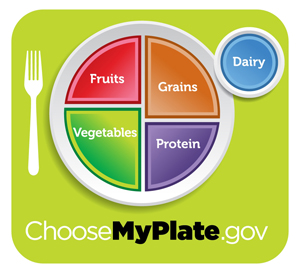
The new MyPlate icon–fantastic or plastic?

Everyone in the food press seems to be weighing in on the new replacement for the much-cursed USDA Food Pyramid in all (both?) its glorious confusion and obfuscation of real nutritional goals that might have (and should have) undermined the beef, corn, pork, corn, sugar, corn, and soy industries if they’d ever been presented honestly.

So where does that leave us? With ears of fresh corn that are more than 50 cents apiece in Los Angeles supermarkets, and the new…

USDA MyPlate logo

Already, the USDA’s MyPlate web site is in a certain amount of branding trouble (and of course, that’s what counts most in America): the Texas DMV had already bagged “MyPlates.com” for its vanity license plate division (highly unappetizing), and Livestrong.com already has its own well-established “MyPlate” food calculator and fan base. And those items come up first on Google searches. As in, the whole first page or more. The government site ranks way down the list and had to water down the impact of its original name choice with “choose” just to get a URL. Can it elbow out the competition just by bolding the “MyPlate” part?

What really counts are the food and nutrition opinion maker comments, though. And a lot of those are detracting in a nitpicking way that I think kind of misses the point.

The first thing they all have to say is that the plate looks dumbed down. Forgive me, but wasn’t the Food Pyramid’s unreadable and unusable design a large part of the problem? The MyPlate icon is simpler and more direct, and it names real food groups, not “Big Mac” or, on the haute side of things, any of Ferran Adrià’s foams. No wonder foodies and populists alike are wondering what it has to do with them.

A small sampling of the main arguments:

MyPlate: The Food Pyramid for dummies? (LA Times): Dr. Andrew Weil and others discuss what’s still wrong with the new icon. Weil says “fruits” could still include fruit juice, which is usually a useless sugar bomb in comparison with whole fruit, and he worries that the protein section, which comes with a guideline to eat 8 oz. of fish per week, might encourage unthinking people to increase their mercury intake since swordfish is on the guideline menu, as are some of the generally overfished popular species of fish. Weil’s not wrong about the fruit juice vs. actual fruit, but his hand-wringing about fish is really geared for well-off readers who can afford to eat much of it. All the fishes he names are Continue reading

A Closer look at Einstein Bros. Bagels

A few weeks ago I bought a challah from Einstein Bros. Bagels, which had taken over from the Noah’s in my town sometime last fall. Noah’s had supplied my daughter’s school on Fridays and their challah was pretty good for store-bought–this tasted the same. I hadn’t been in the store since the takeover so I didn’t really know what to expect, but other than the name change outside, it looked the same and had more or less the same offerings as ever.

I’m not sure what prompted me to go online and look for their nutrition information sheet, but I wanted an idea of what was in the challah, so I looked. I couldn’t find it on the Einstein Bros. site, but there was a pointer to the Noah’s web site–still up after the takeover, apparently, and that had the challah listed. What I found for the challah itself wasn’t incredibly shocking or anything, ingredients more or less kosher, not too bad on any of the nutritional factors. In fact, it’s probably one of the best bets at our former Noah’s, although you have to order a couple days ahead for Friday morning pickup.

On the other hand, the bagels and other menu items really stood out for sodium–most were over 500 mg per bagel, and some of the “gourmet” varieties of bagels were in the 700-900 range, even without lox. A few sandwiches soared as high as 3500 mg sodium (more than a day’s worth even for today’s average intake, and about two days’ worth according to the CDC and AHA guidelines)–just for a sandwich. Anything with chicken on it was astronomical as well–above 1600. Which sounded like Denny’s or Chili’s to me.

I started to wonder just who designed the food and how “designed” it was. Were we talking mostly bagel joint, or were we talking fast food with a highly engineered, set-in-stone formulation? If I wanted to contact them to ask about lowering the sodium in their dishes, was there a real person I could talk to?

The Einstein’s web site doesn’t have a lot on it other than Flash bells and whistles–the site is extremely corporate as far as information goes. The only thing I found that seemed worth noting here is the management team, and even that–maybe it was the Flash, or maybe there was some programming in the web site, but after three management biographies it failed to load any others. I had to shut my browser, clear my cache, and try again.

What I found surprised me (I’m kind of naïve, I know it). Even with all the evidence to the contrary–my sister once did a comprehensive marketing survey of west coast bagelries and concluded none of them had the real, crackle-crusted thing, it was all just ring-shaped white bread–I still harbor a faint hope that if it’s a bagel shop, it must be Jewish. Especially since the founder of Noah’s is, and Einstein Bros.–well, what would you conclude? But you would be wrong. Continue reading