
• Enter your email address to subscribe to this blog and receive notifications of new posts by email.

    Join 241 other subscribers
  • Noshing on

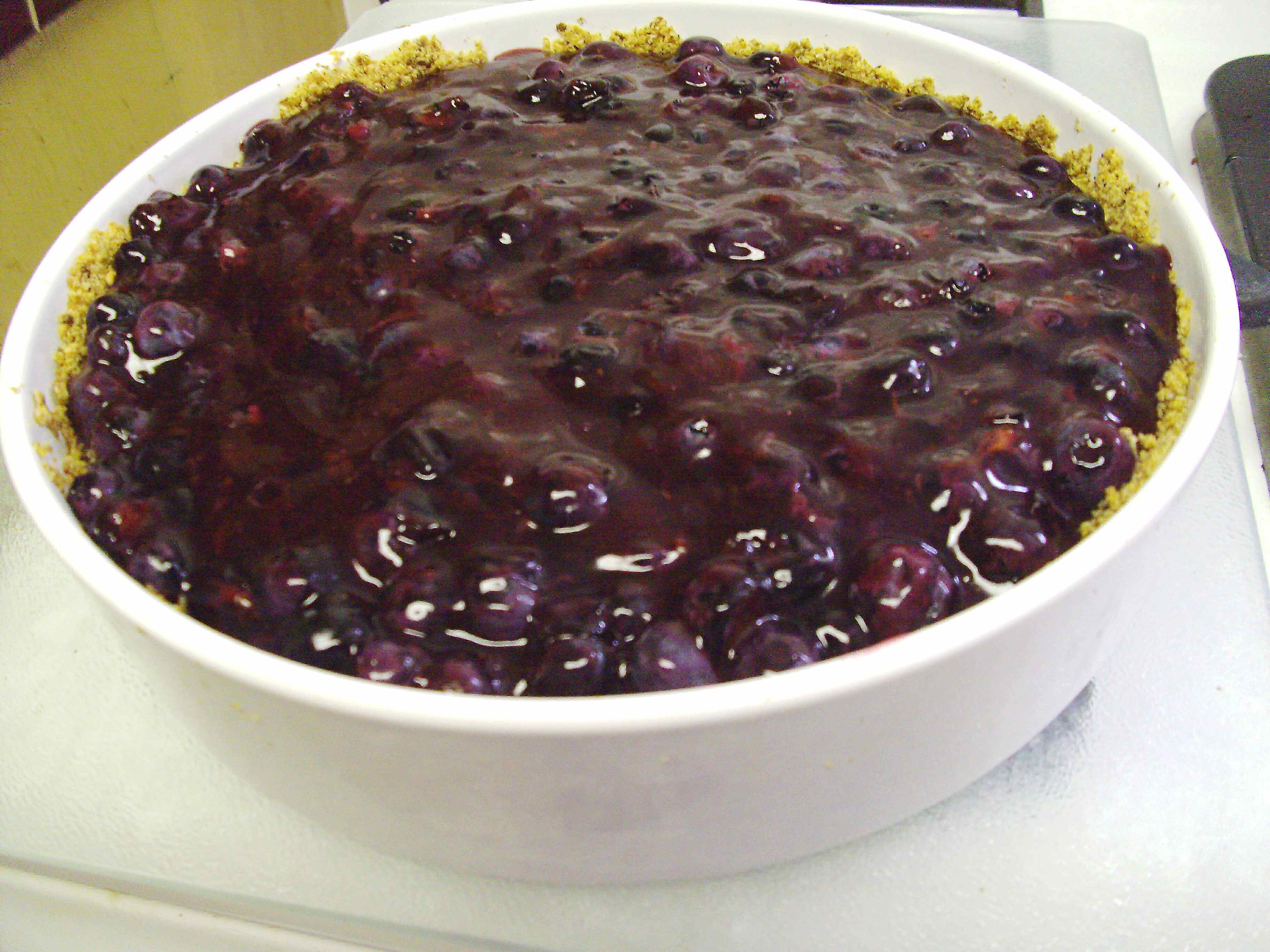
    raw blueberry pie with microwaveable filling and graham cracker crust

    This mostly-raw blueberry pie is a snap to make and very versatile--the filling microwaves in a few minutes, and you don't even have to bake the zippy gingered graham cracker crust--perfect for a hot Fourth of July and all summer long.

  • Recent Posts

  • Contents

  • Archives

  • Now Reading

  • See also my Book Reviews

  • Copyright 2008-2024Slow Food Fast. All writing and images on this blog unless otherwise attributed or set in quotes are the sole property of Slow Food Fast. Please contact DebbieN via the comments form for permissions before reprinting or reproducing any of the material on this blog.

  • ADS AND AFFILIATE LINKS

  • I may post affiliate links to books and movies that I personally review and recommend. Currently I favor Alibris and Vroman's, our terrific and venerable (now past the century mark!) independent bookstore in Pasadena. Or go to your local library--and make sure to support them with actual donations, not just overdue fines (ahem!), because your state probably has cut their budget and hours. Again.

  • In keeping with the disclaimer below, I DO NOT endorse, profit from, or recommend any medications, health treatments, commercial diet plans, supplements or any other such products.

  • DISCLAIMER

  • SlowFoodFast sometimes addresses general public health topics related to nutrition, heart disease, blood pressure, and diabetes. Because this is a blog with a personal point of view, my health and food politics entries often include my opinions on the trends I see, and I try to be as blatant as possible about that. None of these articles should be construed as specific medical advice for an individual case. I do try to keep to findings from well-vetted research sources and large, well-controlled studies, and I try not to sensationalize the science (though if they actually come up with a real cure for Type I diabetes in the next couple of years, I'm gonna be dancing in the streets with a hat that would put Carmen Miranda to shame. Consider yourself warned).

A Closer look at Einstein Bros. Bagels

A few weeks ago I bought a challah from Einstein Bros. Bagels, which had taken over from the Noah’s in my town sometime last fall. Noah’s had supplied my daughter’s school on Fridays and their challah was pretty good for store-bought–this tasted the same. I hadn’t been in the store since the takeover so I didn’t really know what to expect, but other than the name change outside, it looked the same and had more or less the same offerings as ever.

I’m not sure what prompted me to go online and look for their nutrition information sheet, but I wanted an idea of what was in the challah, so I looked. I couldn’t find it on the Einstein Bros. site, but there was a pointer to the Noah’s web site–still up after the takeover, apparently, and that had the challah listed. What I found for the challah itself wasn’t incredibly shocking or anything, ingredients more or less kosher, not too bad on any of the nutritional factors. In fact, it’s probably one of the best bets at our former Noah’s, although you have to order a couple days ahead for Friday morning pickup.

On the other hand, the bagels and other menu items really stood out for sodium–most were over 500 mg per bagel, and some of the “gourmet” varieties of bagels were in the 700-900 range, even without lox. A few sandwiches soared as high as 3500 mg sodium (more than a day’s worth even for today’s average intake, and about two days’ worth according to the CDC and AHA guidelines)–just for a sandwich. Anything with chicken on it was astronomical as well–above 1600. Which sounded like Denny’s or Chili’s to me.

I started to wonder just who designed the food and how “designed” it was. Were we talking mostly bagel joint, or were we talking fast food with a highly engineered, set-in-stone formulation? If I wanted to contact them to ask about lowering the sodium in their dishes, was there a real person I could talk to?

The Einstein’s web site doesn’t have a lot on it other than Flash bells and whistles–the site is extremely corporate as far as information goes. The only thing I found that seemed worth noting here is the management team, and even that–maybe it was the Flash, or maybe there was some programming in the web site, but after three management biographies it failed to load any others. I had to shut my browser, clear my cache, and try again.

What I found surprised me (I’m kind of naïve, I know it). Even with all the evidence to the contrary–my sister once did a comprehensive marketing survey of west coast bagelries and concluded none of them had the real, crackle-crusted thing, it was all just ring-shaped white bread–I still harbor a faint hope that if it’s a bagel shop, it must be Jewish. Especially since the founder of Noah’s is, and Einstein Bros.–well, what would you conclude? But you would be wrong. Continue reading

Going retro for real croissants

I’m not really a follow-the-recipe-in-the-cookbook kind of person. But I love looking through cookbooks that have interesting techniques. Learning to cook means, for me, being willing to eat your mistakes or half-good attempts and try again with tweaks. It also means playing with your food until it works for you.

So croissants are one of those things I try out again every once in a while, because the dough is really not as much trouble to put together as it sounds. Most of the time is just letting the dough rest in the fridge.

Mostly I keep trying because I’d really like it to work well eventually, as opposed to half-right. It’s something about the baking that’s always giving me trouble–the outside will be hard and the inside will be steamed and still doughy. Or else the things will puff up  enormously but will be more like a popover with absolutely no layering inside because the butter layers melted away into the dough during the long rise. Or if I roll them and bake them right away straight out of the fridge they won’t rise at all in the oven and they’ll be tough. Or they’ll be gummy. Or flat tasting. Or even a little bitter.

None of this would be so bad if it were just my own fault for noodling around with a classic. But the last few times I’ve tried to follow Dorie Greenspan’s instructions from Baking with Julia more dutifully than usual, and it just hasn’t worked out right at all. Worse, in fact, than some of my offhand attempts a couple of years ago when I changed nearly everything there was to change, starting with cutting the fat in half and ending with an almond-flour attempt that actually didn’t come out so far off. Except, of course, for the gummy insides.

Julia Child, "The French Chef" DVD from PBSBut last week I stumbled across the elusive two-part The French Chef series of DVDs from…not PBS, which is probably still out of stock, but…my local library. The disks (2 and 3 disks, respectively) are a bit scratched up and tend to halt at awkward moments unless you fast-forward or skip or rewind or whatever tricks I could come up with.

But there was a croissant episode from the late 1960s in black-and-white, just as I remembered the show from when I was 4 or 5 years old. So I watched it, wondering how dated it was, whether the old recipe was anything like the one she lent her cachet to in the mid-1990s with all her guest expert bakers, and what the results would be like. At the time of this early show, she’d been home in the States less than 10 years, had just delivered Mastering the Art of French Cooking a few years before, and was still extremely rigorous about everything. Or was she?

For the croissant show, she discusses different flours, the toughening effect they might have on the dough and how to counteract it with a bit of salad oil or by mixing 2 parts pastry flour to 1 part all-purpose. But then she includes a frozen commercial bread and pizza dough as a possible alternative to making your own yeast dough. Not the tenderest choice, she says, but for someone who doesn’t yet feel at ease making their own, it’s an encouragement to try making croissants at all, and it works all right. She’s astoundingly practical in these early shows even though some aspects of her cooking aren’t (exaggeratedly rich sauces for sole, for example). And I remember that back in those days, you couldn’t get real croissants in American bakeries. If you wanted them, you had to make them at home.

Dorie Greenspan’s modern, supposedly streamlined, layering process calls for cutting the butter into cubes and mixing them into the dough before rolling out, doing six “turns” with three rests in the fridge, cutting, stretching and rolling the croissant triangles in an elaborate way with some extra scrap dough in the middle for shaping, rising them for 2 1/2 – 3 hours, gilding with egg wash and baking at 350 F for about 20 minutes.

Julia’s 1960s version is somewhat different–more aggressive, and probably much closer to classic boulangerie technique. It’s also simpler. She makes a very simple milk-based yeast dough in a bowl with her hand and kneads it a couple of minutes, picking it up and slapping hard on the work surface, all while talking flour grades (you could talk Yankees versus Red Sox if you want–she probably could have too, come to think of it).

She takes a stick of butter and bashes it into a softened flat mess with a big solid rolling pin, then scrapes it up and flattens it into a square and rechills it. She lets the dough rise until double on a heating pad, then chills the dough. Then she takes the butter and the dough out of the fridge, wraps the square of butter in the larger piece of dough and then rolls and folds and turns and chills for a full 2 hours each time, but only for a total of 4 turns–2 sets of 2–before rolling and cutting out the croissants.

She doesn’t put an extra lump of dough in the middle when she rolls the croissants. She doesn’t stretch them a lot. And she does let them rise in a relatively cool room, but only for an hour or hour and a half until just Continue reading

Rising Expectations for Rosh Hashanah

Just a quick word to say L’Shanah Tova U’metuka! May you have a good and sweet New Year!

Here’s what my daughter and I baked the afternoon before the start of Rosh Hashanah. You can find the basic recipe here.

Crown challah for Rosh Hashanah

Crown challah for Rosh Hashanah

It’s the first time I’ve baked bread since my daughter became diabetic in February, but by now, six months along, we both feel like we have the approximate carb counts down well enough. I tend not to make my challah very sweet anyway, but this year I also left out the raisins, which are about a gram of carb each, to make things a little easier until we were sure we knew how to figure portions. It still came out pretty and tasted good.

Without raisins, we figure, a baked piece of challah is like most other bread, about 50% carb by weight in grams, and it seems to work. Using a simple ratio like this is a lot easier (when we’re home and have a scale handy, anyway) than worrying about exactly how many cups or grams of flour I put in the dough and calculating exact portion carbs–something I still tend to do for desserts and treat foods like berry scones since they’re so variable. Or as our endocrinologist said, “Everyone guesses wrong for birthday cake.” Next time, we’ll try it with raisins and see how it goes.

Challah birds

One thing we like to do with the extra dough–I make sure there is some–is to let my daughter make challah birds. Usually we shape these by making a small 6-inch rope of spare challah dough and tying it into an overhand knot. You can press a raisin into one of the ends for an eye, and the other end becomes the tail, which you can leave alone, stretch out a bit, or score with a knife tip for “feathers”. This year, my daughter went free-form so the rolls came out looking more like bollilos, but she liked them, which is the important thing.

Mine: A lot of people make spiral challahs for Rosh Hashanah with a single thick rope curled around in a turban shape. Tunisians and some other North African and Mizrahi Jews shape the top end into a hand shape. I like to braid my round challahs into a crown, though I admit they’re not always the most even at the joined end. They still seem to even out as they rise to the occasion.

Braided crown challah rising in the oven for Rosh Hashanah

Braided crown challah rising in the oven for Rosh Hashanah

Challah dough is so easy to put together (2 minutes by food processor, plus cleaning, or 5-7 minutes by hand and letting it rise right in the mixing bowl) that if you get the dough ready in the morning and have a couple of hours in the afternoon free for braiding (10-15 minutes unless you’re having too much fun), the second rise (40ish) and baking (another 40ish), it’s a lot of fun and less expensive than store-bought, and more individual too.

B’te’avon! (bon appétit!)

New Page Up: Carb Counts and Ratios

I’ve just uploaded a new page (see the top menu tabs) with a couple of tables of the most useful rules of thumb I’ve found for carb counting. Since my daughter became a Type I (insulin-dependent) diabetic back in February, we’ve both had to become pretty familiar with the amounts of carbohydrate in a given amount of different foods.

Although the American Dietetic Association’s “Choose Your Foods” carb count guide for diabetics is pretty helpful (and pretty inexpensive, about $3 per copy if you order from them direct on www.eatright.org), it’s written from the perspective of the eater, not the cook.

So (as the cook in the family) I’ve worked out the approximate ratios of carb grams per total weight of some common foods I serve routinely. Rice and beans are easy enough to remember. But when I want to know how much of a given potato my daughter can eat as one carb serving (15 g), it helps to be able to know that a regular potato is about 1/6th carbohydrate. Then all I have to do is weigh it on the food scale in grams and divide by 6.

The 2/3 carb ratio for moderately sweet baked goods like pie, scones, cookies and muffins is also pretty helpful if we’re home and can weigh a portion for my daughter. Sweets are one of the hardest things to guess right consistently by eye, even when you’ve made them yourself. If there’s a nutrition label, by all means go with it; if not, weighing a portion and figuring 2/3 has been a pretty good approximation so far.

Ice cream is its own thing–again, hard to figure. Dreyer’s 1/2-the-Fat is our standard home brand, and hovers around 15-18 grams per half-cup (small scoop). But Baskin Robbins 31 Flavors are all over the map–when you go in for a cone, you really need to ask them to look it up for whatever size scoop, then figure the cone separately. A junior scoop in a cake cone for pistachio almond turned out to be something like 25 grams, plus 4 grams for the cone. Almost double what a plain scoop would have been at home.

Over-the-top caramel-syrup-fudge-frosting types of confections are a little out of my league, closer to candy bars than cakes, and would probably be more like 80-90% carb by weight (or mass, if you’re being excessively metric about the properties of grams).  I haven’t listed them because they’re so laden it’s hard to think of serving them very often, but I do have a basic rule-of-thumb candy list at the bottom of the carb counts page (saving the best for last) and a link to a much better, more comprehensive one so kids don’t have to feel completely shut out at Halloween or Valentine’s Day. Or birthdays.

I also have a short (for me) bit of hard-won advice on how to strategize with a (school-aged) diabetic kid before they have to face candy-prone situations where their friends are free to eat right away and they aren’t. Good for braces-wearers too…actually maybe we should all take the hint.

In any case, I hope you find this new page helpful whether you’ve got diabetics in the family or you just want to know what you’re eating.

Let me know what you think!

Salt reduction vs. hypertension meds–which would you choose?

One of the big complaints processed food companies, physicians in clinical practice, and the great gourmet media all have in common is that cutting back on salt would make food taste flat, and you as an individual wouldn’t necessarily get a big drop in your personal blood pressure from doing it. They argue that only “salt-sensitive” people have to worry about their intake, and anyway, a few points lower, they all say, isn’t really impressive enough to give up your 300-mg serving of sodium in a bowl of Kellogg’s raisin bran or 390 in a slice of La Brea sourdough. And don’t, for g-d’s sake, ask your favorite name brand celebrity chefs to stop salting early and often in each dish!

A big statistical modeling study in the New England Journal of Medicine this week knocks all this wishful thinking on the head, and does it very nicely. The study looked not at individual blood pressure drops but the health and cost benefit of dropping average salt intake by 3 grams a day over the entire U.S. population.

The researchers found that if everyone drops their salt intake back down, the benefits start to look like the ones from quitting smoking, cutting cholesterol and saturated fat, and losing weight to get to a normal BMI.

That’s because even when individual blood pressures drop by only a few points, they’re not going up (as they are today), and when a small average drop happens in a very large group, the big bell curve of disease shifts toward lower risk of consequences and later starts for developing heart disease and high blood pressure. After the first national cholesterol lowering guidelines were issued in the late 1960s, the nation’s heart disease and stroke risk dropped by about a third, and at least until obesity and blood pressure started to cause a back-reaction, the average age for a first heart attack went from 50 to 60 in men. That’s a huge kind of benefit.

The combined drop in heart disease and stroke deaths from cutting salt would be something like 200-400,000 people per year, a lot more than can be saved by simply putting everyone on blood pressure medications–the study made that comparison directly.

Altogether, a solid recommendation for dropping sodium levels in processed and restaurant foods, which make up about 80% of today’s sodium intake. And for not imitating processed food and chain restaurant thinking in your professional or home cooking, as Francis Lam seems to in his Salon.com commentary on the new NYC Department of Health initiative. And if there was any doubt that the Culinary Institute of America has been training Continue reading

Challah

Two nights ago I brought a couple of homemade loaves of challah to some friends’ house for Shabbat dinner, which was also the last night of Chanukah. Their mother, a fairly well-known kosher caterer, was there and my jaw dropped when she said she’d never learned how to make this classic bread. Challah looks beautiful once it’s baked even if you’re not a champion braider (I’m definitely not), but it’s not such a big deal.

Challah was the first bread I ever made. I was nearly eleven years old the summer Nixon resigned and a camp counselor asked me to help braid loaves from a huge bowl of dough in the kitchen one Friday afternoon. Later, I made all the challot for my bat mitzvah, baking and freezing them week after week. During my last two years at university, I made challah most Friday afternoons  and whenever I was baking I suddenly got proposals from other students along the lines of “Would you please be my mom?” (gee, thanks) Then I graduated, and I just stopped. I had no oven in Israel (a “WonderPot” doesn’t count), and when I came back I had a lab job with long hours. But every once in a while, for the High Holidays and at odd Fridays throughout the year, I still put my hand to the dough and lately it’s been coming out really well.

There are only a couple of smallish tricks to working with the egg-based dough. As long as you have the time to rise and bake the bread within a day or so of making the dough, the actual work time for a pair of two-foot loaves–kneading, braiding and glazing them with egg–is about half an hour altogether. Everything else is letting it sit and rise, or sit and bake. BUT you should figure about 3 hours for the first rise at room temperature (or overnight in the fridge if that’s handier, but I haven’t tried it personally for challah), and after the braiding, which takes maybe 20 minutes for 2 loaves, about another hour to rise covered and then a little less than an hour for baking.

This dough is not overtly sweet, not salty, and not too heavy on either eggs or oil. I find that the bread is lighter, more feathery, and less like a dried-out dish sponge the next day if you don’t exaggerate the rich stuff and just use water rather than more eggs or oil to make up the difference. So this is a lighter, more home-style challah than the kind you get at the bakery or in your grocery store, and less day-glo yellow too–they use turmeric, the cheats. Also much less expensive–I think the total cost is something like $2 for a pair of loaves, and the most expensive ingredient gram-for-gram is the yeast. Continue reading

A Bowl of Dough in a Book

For anyone who’s read my previous post, A Bowl of Dough in the Fridge, a quick recommendation:

Artisan Bread in Five Minutes a Day, by Jeff Hertzberg and Zoë François, is gaining a big following among people who’ve tried out the recipes. This bread book, developed by an avid home baker and a professional pastry chef, uses the same basic strategy I do, but they’ve worked out quite a number of variations on a couple of master recipes, and they’ve come out with a general formula that works pretty well.

They have a basic white boule with a crunchy crust–something to shape a variety of classic ways, French through Italian, with or without olives or olive oil. They have several whole wheat and pumpernickel and rye versions with a thinner shiny crackled crust. They have challah AND brioche, and they have classic bagels AND Montreal sweet bagels. And they have chocolate babka. And they have demonstration photos and tips at the right points in the recipes to be helpful.

Among the differences between their basic white boule recipe and my typical  dough are much more yeast for the amount of flour and water–they use a packet and a half for 6 cups of flour and 3 of water–and a lot more salt as well–a tablespoon and a half. The initial rise is faster–about 2 hours instead of 5 or so–but I’m not sure what the true effect of the salt is other than taste and reflexive habit–François is CIA-trained, and that school tends to emphasize salt, judging from the chefs who’ve graduated from there and gotten into print.

The other factor that’s different is they don’t call for kneading at all–once you’ve stirred the flour into the liquids and everything’s more or less uniform, that part’s done. Rise and chill.

That’s solid enough for the chewy hard-crusted no-knead bread style of bread, but will it work for challah, which usually calls for extensive kneading to develop the classic long feathery crumb? Inquiring minds want to know.

So I’m going to try their white boule and their challah (though here I’ll cut the salt back for my own taste) and let you know how it goes. I’m looking forward especially to see if the challah crumb can really be achieved without the 10-minute knead and multiple rises.