
• Enter your email address to subscribe to this blog and receive notifications of new posts by email.

    Join 241 other subscribers
  • Noshing on

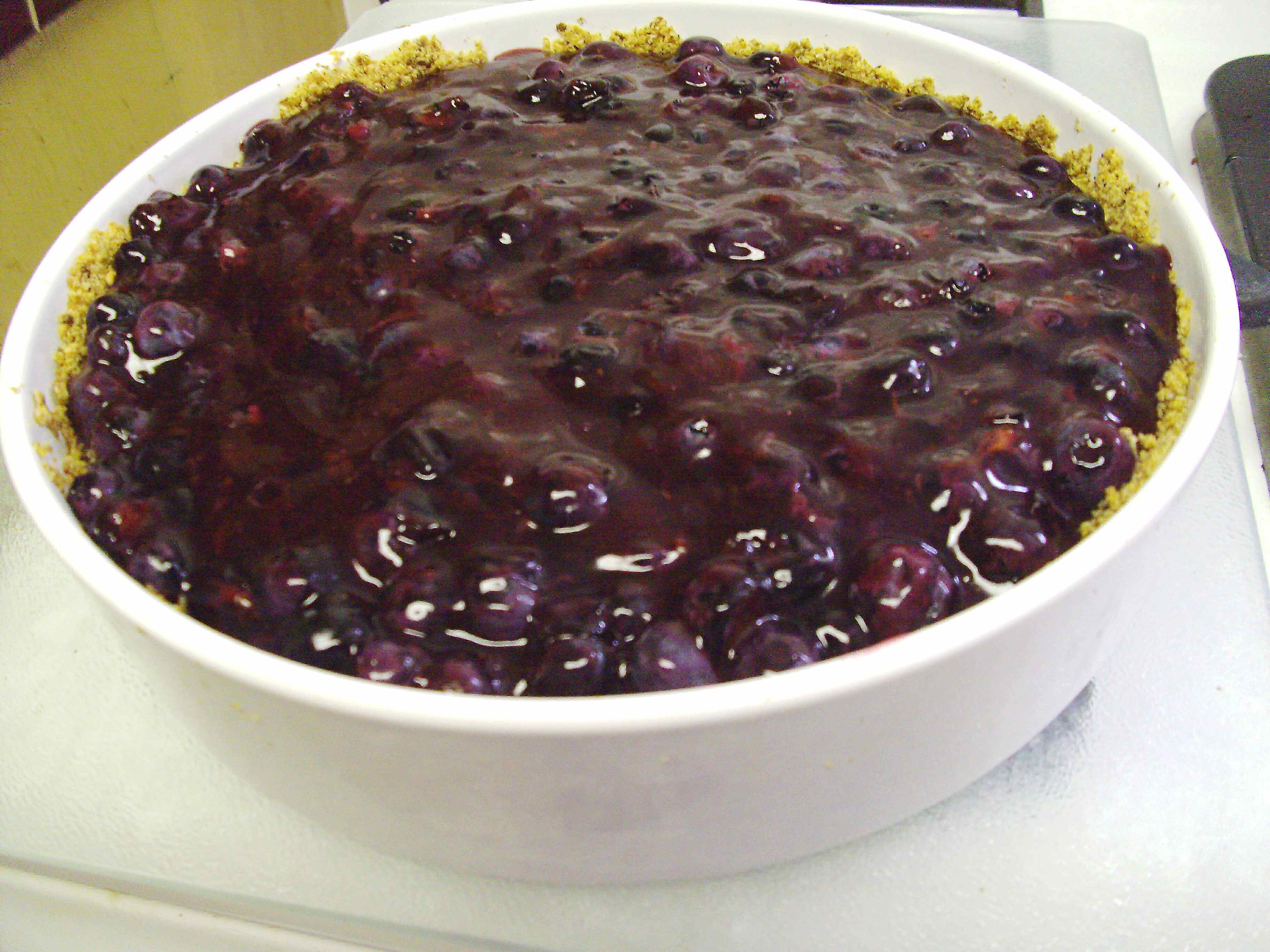
    raw blueberry pie with microwaveable filling and graham cracker crust

    This mostly-raw blueberry pie is a snap to make and very versatile--the filling microwaves in a few minutes, and you don't even have to bake the zippy gingered graham cracker crust--perfect for a hot Fourth of July and all summer long.

  • Recent Posts

  • Contents

  • Archives

  • Now Reading

  • See also my Book Reviews

  • Copyright 2008-2024Slow Food Fast. All writing and images on this blog unless otherwise attributed or set in quotes are the sole property of Slow Food Fast. Please contact DebbieN via the comments form for permissions before reprinting or reproducing any of the material on this blog.

  • ADS AND AFFILIATE LINKS

  • I may post affiliate links to books and movies that I personally review and recommend. Currently I favor Alibris and Vroman's, our terrific and venerable (now past the century mark!) independent bookstore in Pasadena. Or go to your local library--and make sure to support them with actual donations, not just overdue fines (ahem!), because your state probably has cut their budget and hours. Again.

  • In keeping with the disclaimer below, I DO NOT endorse, profit from, or recommend any medications, health treatments, commercial diet plans, supplements or any other such products.

  • DISCLAIMER

  • SlowFoodFast sometimes addresses general public health topics related to nutrition, heart disease, blood pressure, and diabetes. Because this is a blog with a personal point of view, my health and food politics entries often include my opinions on the trends I see, and I try to be as blatant as possible about that. None of these articles should be construed as specific medical advice for an individual case. I do try to keep to findings from well-vetted research sources and large, well-controlled studies, and I try not to sensationalize the science (though if they actually come up with a real cure for Type I diabetes in the next couple of years, I'm gonna be dancing in the streets with a hat that would put Carmen Miranda to shame. Consider yourself warned).

How to Eat Vegetables and Lose Weight and Save the Planet (Without Really Trying)

One of my favorite stops at the New York Times online is Mark Bittman’s “The Minimalist” column, a series of 5-minute videos in which he demonstrates simple but pretty good cooking with clear and manageable directions and an easy close-up view of the pots and pans in action.

I’d say he takes a no-nonsense approach to cooking, but that would be misleading. He takes a full-nonsense, marble rye approach to the patter while doing some very basic common sense things like cutting up, mixing, and sauteing. And he features vegetables prominently.

Bittman,  recently seen schmoozing around Spain in a top-down convertible,on PBS yet, with Gwyneth Paltrow and Michael Stipe and occasionally Mario Batali and trying to look interested in the food (which somehow got upstaged, can’t imagine how), is the author of several big yellow cookbooks, notably How to Cook Everything in both meat-eater and vegetarian editions.

This year he’s come out with a new, slimmer volume called Food Matters: A Guide to Conscious Eating* (and the asterisk leads to: *With More than 75 Recipes).

Unfortunately, we have to disregard the fact that Bittman’s title manages to evoke both Phil McGraw’s Self Matters and David Reuben, M.D.’s 1970s classic romp, Everything You Always Wanted to Know About Sex* … *But Were Afraid to Ask (or, more happily, Woody Allen’s movie send-up of same). This is a Serious Book. And like many Serious Books today (and anything at all with a “go green” theme), it’s a hybrid vehicle.

Between the asterisks on the cover sits a Granny Smith apple photoshopped with a map of the world and a red label, “Lose Weight, Heal the Planet.” The back blurb reads, “…the same lifestyle choice could help you lose weight, reduce your risk of many long-term or chronic diseases, save you real money, and help stop global warming…”

Food Matters is Bittman’s argument for getting the lard out and the greens in, for the sake of health, looks, and planet (quick, look holistic and place your hands reverently over your heart, if you can find it). The first half of the book is a set of essays reporting on the state of Big Food in the U.S., the state of obesity, the state of greenhouse gases and the global cost of raising a serving of beef as opposed to a serving of broccoli or tomatoes or whole grains.

Following Michael Pollan’s now-famous dictum “Eat food. Not too much. Mostly plants,” and citing him heavily, Bittman sets out to encourage readers to replace at least some of the earth-taxing meat and dairy in their daily eating with…plants. Which makes sense, of course.

The second half is a primer, with recipes, on how to eat more vegetation. Given that his pitch is geared at least partly to a male audience (he also writes a food column for Men’s Health, and the tone here is similar), you’d think his advice on the quickest route to getting vegetables into one’s diet would involve the least fuss: just wash and nosh. But no.

Bittman used to edit Cook’s magazine and the cookbooks he writes today do tend to feature recipes. It’s a common downfall, but what can you do? Continue reading

“But it’s organic! But it’s vegetarian!”

Vegetarian and organic foods are gaining popularity in supermarkets around the country–it’s been happening for at least a decade. Vegetarian- and organic-seeking customers assume they’re getting something closer to fresh if it’s labeled vegetarian or organic, and most of them also assume that vegetarian automatically means healthy. So, apparently, do nutrition researchers when they’re not really thinking hard enough.

The American Dietetic Association recently announced–again, updating from 1997–that vegetarian and vegan diets can be healthful at all stages of life from infancy onward and posted suggestions for getting started. Keyword here is “can”.

The idea of easing into a less-meat diet in stages by cooking familiar foods and familiar ingredients as far as possible is understandable. The Vegetarian Nutrition practice group of the ADA is trying to reach people they think are likely to panic at the suggestion of not eating meat. Unfortunately, the suggestions that top the list are mostly for processed meat substitutes, jarred pasta sauces, canned beans, boxed rice mixes and the like, rather than a dietary framework for eating fresh whole-ingredient vegetarian foods.

In the health section of the LA Times online, where I first read about the ADA’s statement last week,  many reader comments objected to this approach primarily because the major brands of veggie hot dogs and hamburgers tend to have long, improbable ingredient lists and very high salt. After a casual tour of the sauces-soups-and-rice-mixes section at my local Whole Foods, it’s an objection I second even more strongly.

For several years now I’ve had reservations about the processed food industry’s tendency to throw salt at anything and everything. Vegetarian and organic food is supposed to be better. Fresher, better-tasting, realer, more nutritious, healthier, more responsible for the planet, the animal world, and the customer. In a word, BETTER.

Nice intentions aside, most of the vegetarian and organic products companies these days seem to be trying as hard as they can to keep up with or even surpass the meat-eating Joneses–the big-brand pantry staples from Stouffer’s, Swanson’s, Kraft Foods, Campbell’s, and so on.  They’re still claiming the health and planet virtues of vegetarian and organic, but they’re actually processing the hell out of their foods, adding all kinds of laundry-list mystery ingredients, and salting them out of all reason. And health-and-planet-conscious consumers are flocking to them without bothering to look hard at the nutrition labels. How have we come to such a pass? Continue reading

Red Lentil Dal

Ideally, I should have been posting this sometime in the winter, but I like it all year round–except for Passover week. Which is the real reason I’m posting it now: I bought a 2.5 lb. bag of red lentils from my corner grocery (Armenian, in this case) a month or so ago and have only used half. And Passover’s coming in a week.

Dal or rasam–depending on your Indian restaurant of choice–is a tangy thick soup of red lentils and tomatoes, with a variety of spices and either tamarind (traditional) or lemon juice (my personal preference). A lot of restaurant-style and westernized Indian recipes call for fairly shocking amounts of salt in savory dishes. This recipe doesn’t include salt at all or ghee (clarified butter) and doesn’t really need it. Like a lot of home-cooked soups and stews, it gets better overnight as the spices meld with the vegetables. Put in a good amount of garlic, lemon, cilantro and savory spices and see how it is–you can always add salt to your own dish at the table, but by day 2 it should be pretty good on its own.

I’ve given approximate amounts for the spices because you might add more lentils or have older or fresher spices–whole spices are usually more potent, especially if you grind them up just before you cook with them. You need to taste for yourself and adjust–this is easier if you’ve eaten dal before, obviously. Standard curry powder has a lot of spices in it but this tastes better if you add some extra coriander and cumin, and a sprinkling of something sweeter–cardamom plus cinnamon or 5-spice powder or garam masala.

Unlike most beans, lentils don’t need presoaking. Red lentils in particular are usually already split and cook up pretty well within about half an hour. I cook this dish in a big deep-sided teflon frying pan, but it gets a bit awkward to dish out–use what works best for you.  A regular soup pot is fine too.

Red Lentil Dal — Makes about 2 quarts

Spices:

  • 1/2 med yellow onion, chopped
  • 1″ chunk fresh ginger, grated, if you have it–don’t sub in anything if you don’t
  • 1 large T unsalted curry powder (Indo-European or other decent brand)
  • 1-2 t ground coriander or 1 t coriander seeds, crushed
  • 1/2 t cumin either ground or seeds
  • A good pinch of cardamom seeds crushed, or a teaspoonful of whole pods tossed in after the tomatoes (below) to stew with the lentils and then plucked out by the diners…
  • pinch cinnamon or 1/2 t garam masala or Chinese 5-spice powder
  • 1/2 t black mustard seeds if you have it
  • pinch nigella (“black caraway” or “kalonji” or “black onion seed”) if you have it–a little goes a fairly long way, because the flavor develops overnight in the fridge, so a pinch is enough
  • Hot stuff–add according to your own taste or leave it out: 1/2 t crushed hot pepper flakes, a bit of cayenne pepper, or 1/2-inch dab of z’khug (hot pepper/garlic/cilantro paste)

Tomatoes and lentils with liquids

  • 3-4 roma tomatoes (canned is fine) or 1-2  medium salad tomatoes, chopped or broken up
  • 1-2 fat clove(s) garlic grated–you might add one, then more later once the lentils are mostly cooked
  • ~2 c. red lentils, washed well and picked over. If you pour water over them to soak a bit while frying the spices, expect them to stick together–break them up with a fork to add to the pan.
  • Enough water to cover the lentils
  • juice of 1-2 lemons (add one first, stir and let cook and taste, then add more lemon as needed)

Adjustments and garnishes

  • additional garlic, coriander, curry powder, hot peppers or lemon juice to taste
  • fistful cilantro sprigs chopped

To a large teflon frying pan or soup pot, add the ingredients in stages:

  1. First, fry the spices in the oil with the onion and ginger, stirring for a minute just until they’re starting to smell fragrant, but don’t let them burn.
  2. Add the tomatoes and garlic, then the lentils, and water to cover. Add the lemon juice. Let the pan simmer uncovered, stirring occasionally, until the lentils have turned from red-orange to yellow and fluffy.
  3. Add more water as necessary and when it seems cooked, taste it and adjust for any additional spices, garlic, or lemon juice to  taste. I tend to add a bit more lemon and coriander as things go, and sometimes more garlic if it seems to need it.
  4. Stir in or sprinkle on the chopped cilantro leaves and serve with rice as a thick curry or in a bowl as a soup–a little chopped raw onion and tamarind chutney are also pretty good with this. Have hot pita bread or naan at the ready and maybe another sliced-up lemon.