



On the lighter side of Passover, now that it’s the last day for anyone outside Israel, I did catch Terry Gross’s wonderful Fresh Air interview with Adam Sandler and the Safdie brothers on NPR back in December and was delighted to hear that the brothers included the first-ever mention of the afikomen in an English-language film. It’s about time! I mean, bagel and chopped liver references can only take you so far with Jewish culture. Afikomen is the real insider stuff.
Then, of course, Terry realized that all four of them, herself included, were talking inside matzah-ball or at least Aramaic amongst themselves on-air, and the uninitiated radio listenership who had never even been to a Passover seder might need some enlightenment on the subject of afikomen. Yes, it was exactly like having to explain a joke, and no, the great mass of society probably still didn’t get why a broken matzah is more important than a whole one, or why you’d bribe the kids to give the other half back once you’ve hidden it somewhere cleverly during the meal.
But Sandler and the Safdies ran with it and tried not to make it any more like explaining a joke than they had to. At least Terry didn’t pick the Hillel sandwich to riff on. (Partly because no matter what the Haggadah says about it, there really is no good logical or culinary explanation for eating a combination of apples, nuts and horseradish all together on matzah. It just is, you know? Tradition!)
Anyway, the interview was actually enlightening and smart, and the link is still up online, so go listen to it and donate to your local NPR station while you are wondering, as I am, where we go from here.
I look back to where we were only a month ago and realize that I am thankful my daughter is with us, that my mother and sister and their families and my in-laws are all well if a bit frustrated at home, especially the younger generations with young kids. Back then I was starting to wonder if there was actually going to be matzah in the stores by the time we needed it or whether I would have to enlist my daughter for some not-quite-kosher-but-best-we-can-do homemade matzah from the leftover bag of flour that I couldn’t bring myself to throw away this year–it seems like more than a sin to throw away anything you could use later, anything you might need, or that someone else could use now.
I mentioned this to a friend back east when Governor Hogan of Maryland decided to declare a statewide a lockdown a week or so after California’s, and we were comparing notes about having college-age kids stuck at home for the duration. It was about a week before Passover started, and a few days later not only was there finally some matzah available at the store, just in the nick of time, but a big mystery box arrived at our door later the same day. When we opened it, we discovered she’d sent us two boxes of Streit’s matzah, just in case. She’s really something else!
As mentioned above, today is the last day of Pesach (Passover in English) if you live outside Israel. My husband is hoping for pizza tonight but since the stores are closing before sundown, I somehow doubt it’s going to happen tonight. Plus we have two whole boxes of matzah left and a bunch of rice, which I cooked starting with the second night. Turns out many, many American Jews other than us have also decided this year to expand their Passover cooking options to Sefardic traditions that include rice.
I even have most of a packet of quinoa, which is so recent in the Jewish world that rabbis everywhere have declared it kosher for Passover. Somehow that declaration annoys me. Quinoa’s an expensive grain compared to rice and the major importers and cultivators probably paid someone off under the table to get this vegan-trendy chic grain declared ritually different from all other grains, cereals and seeds including rice. Call it Dizengoffia or Beverly Hills Syndrome, and yes, I’m really that much of a cynic, but put it this way–nobody’s bribing anyone about rice as far as I know. Rice is common, inexpensive and traditional, and it’s already approved for Sefardim and most Mizrahi Jews as well.
Small wonder a lot of us have decided to go Sefardi this year, and possibly every year from now on.
Anyway, since this is me, I made some of the quinoa last night in the microwave just to see how it would go–answer, not bad, and pleased my daughter, who along with her college housemates is more conversant with quinoa than I am. I think it’s twice or three times as expensive as rice; they’re still young and excited and into brandname olive oil, gourmet coffee, designer vinegars and and vegan-chic ingredients because they’re all so new to cooking on their own and still a bit gullible.
It takes time, practice and ruining a few expensive buys on your own dime to realize that fancy-label ingredients won’t make you a great cook automatically. You can go online all you want–even here, if you have the patience to read through all my grumbling and occasional bouts of wild enthusiasm. The fact is there’s no substitute for trying it yourself and being willing to eat your mistakes as far as they’re edible and figure out from them how to fix them up now and do better next time.
But in any case, the quinoa, microwaved or not, is still quinoa, with an earthy, bitter edge similar to buckwheat (kasha). So definitely squeeze on some lemon or mix in some vinaigrette; instant improvement. My kid agrees–there’s vegan chic and then there’s too chic. And if you’re going to buy it and try it anyhow, you need to be willing to work with it and make it good or else. At least not waste it.
More to the point of frugality, I have been trying mostly to practice what I preach and buy and use cheap vegetables plentifully this week instead of reaching for yet more matzah and cheese at every turn, or using up more eggs at once than is wise in a time when you’re limited to two cartons a customer when you can even get them, and where a lot of supermarkets are now stocking medium-sized eggs when they can’t get enough large ones.
My standard Israeli-style spinach and feta flan for Passover (or any other time) calls for 6 large eggs for a pound of squeezed-out spinach, but you can reduce the eggs to 3-4 and increase the milk to 1.5 c and/or add a bit of bread or flour (if you’re not cooking for Passover), rice, matzah meal, grated or mashed cooked potato etc. –the starch absorbs some of the excess liquid and acts as a binder. And you can use a different vegetable as the main ingredient.
Zucchini are some of the common inexpensive fresh vegetables being neglected most often at the Ralph’s (Kroger affiliate here in the west). I bought a bargain bag for a dollar on my last shop (still doing that where possible) and washed them carefully à la COVID-19 precautions (spritz with dilute dish soap along with all the other groceries, rinse well, airdry, hope for the best). Today I decided it was time to use them for the last Pesach lunch and that they were better to use up now for a crustless quiche than the bags of frozen spinach which cost twice to four times as much and can stay in the freezer.
Zucchini has become popular because it’s very bland and works nicely in a spiralizer to make low-carb, low-cal noodle substitutes that people think are fun. But you don’t need to do all that fussing with expensive one-use gadgets just to shred them. If you have any kind of food processor with a shredder disk, that’s plenty good enough. If all you have is a cheap box grater or old-fashioned flat grater, you can grate enough zucchini on the big holes to fill a casserole dish in only about 2 minutes total using nothing more exotic than elbow grease, and it’s less effort and it comes out fine for a quiche.
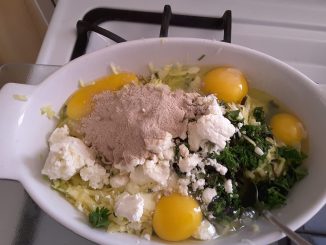
Because zucchini contains a lot of liquid, you can either squeeze some of it out after shredding or, preferably, not squeeze it, so you don’t lose bulk, and just use less milk in the quiche mix, and add a little fine-ground matzah meal, some leftover cooked potato or rice. Possibly even leftover quinoa, though I wouldn’t bank on it. The only thing is that with the extra moisture, it will take a bit longer to bake or microwave.
Zucchini Flan for Passover
- 3-4 grated zucchini (standard 7-8 inch long x 1-2 inch wide), rinsed well, peeled or unpeeled, depending on the condition of the outsides, and grated or shredded but not squeezed out
- quarter onion chopped or grated
- 1/2 sheet “Turkish fine-grind” matzah (or small grated potato, or 1/4-1/2 c. cooked rice)
- 4 large eggs or 5-6 medium ones
- 4-6 oz crumbled feta or queso fresco, or grated cheddar, swiss, mozzarella or other hard, flavorful but relatively inexpensive and straightforward cheese of choice (i.e., not bleu or other really funky cheese; you don’t want to stink out your house OR waste an expensive cut of fromage)
- splash of milk (1/4-1/2 c)
- 1 large clove garlic, grated or minced
- handful of mixed chopped herbs (parsley, basil, oregano, thyme, sage, dill if you have it, mint sparingly if you like it)
- Tiny sprinkle of nutmeg
Microwave: Center a microwaveable saucer upside down on the turntable. Mix all the ingredients together in a 2-3 quart microwaveable ceramic casserole dish and cover with a microwaveable dinner plate (Corelle plates are good). Center it carefully on top of the saucer–this raises the bottom of the casserole a little off the turntable so it catches more of the microwave energy. Microwave on HIGH for 6-7 minutes, let sit about 5 minutes, use a kitchen towel or oven mitts to carefully lift the plate off away from your face, and poke down into the middle of the quiche with a knife to make sure the center is fully cooked to the bottom of the dish and there’s no remaining liquid egg mixture hiding under the innocent-looking cooked top surface.
If it needs more time, cover again and microwave another minute at a time until the center is risen a bit and springy to a light touch, the bottom is not still gooey, and the quiche is just pulling away from the casserole at the sides. When you cut into the quiche, or if you let it stand any length of time, it will probably start to release clear liquid from the cooked zucchini into the bottom of the casserole dish–as long as it’s clear and not actually undercooked egg custard, you should be fine and can just drain it off gently, and the added matzah meal or other starch does help.
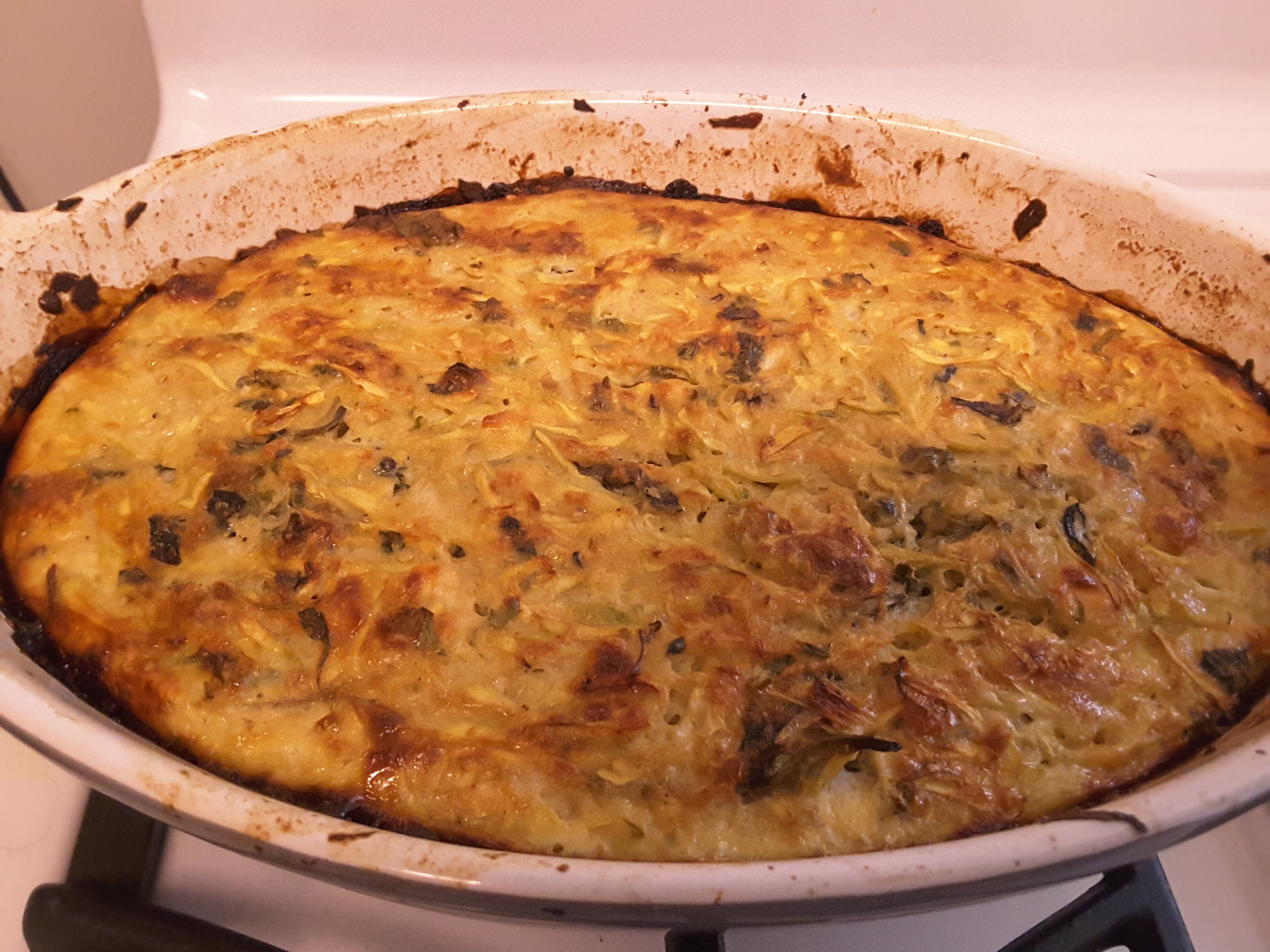
Conventional Oven: Preheat the oven to 375°F (175-180°C). Bake the casserole without a cover for whatever time it takes to cook fully, which could range from about 45 minutes up to about an hour and a quarter. You want it puffed, golden-brown on top, and cooked through, so that a knife poked into the center down to the bottom of the dish comes out clean and there’s no raw egg mixture under the surface. The quiche may still wobble a little in the center as you take it out of the oven, and there will still probably be a little clear liquid in the bottom of the dish once you cut into it but baking should evaporate a lot of the excess.
Filed under: cooking, Dairy, frugality, holiday cooking, Vegetabalia | Tagged: food, movie reviews, recipes, vegetarian cooking |
 Slow Food Fast