

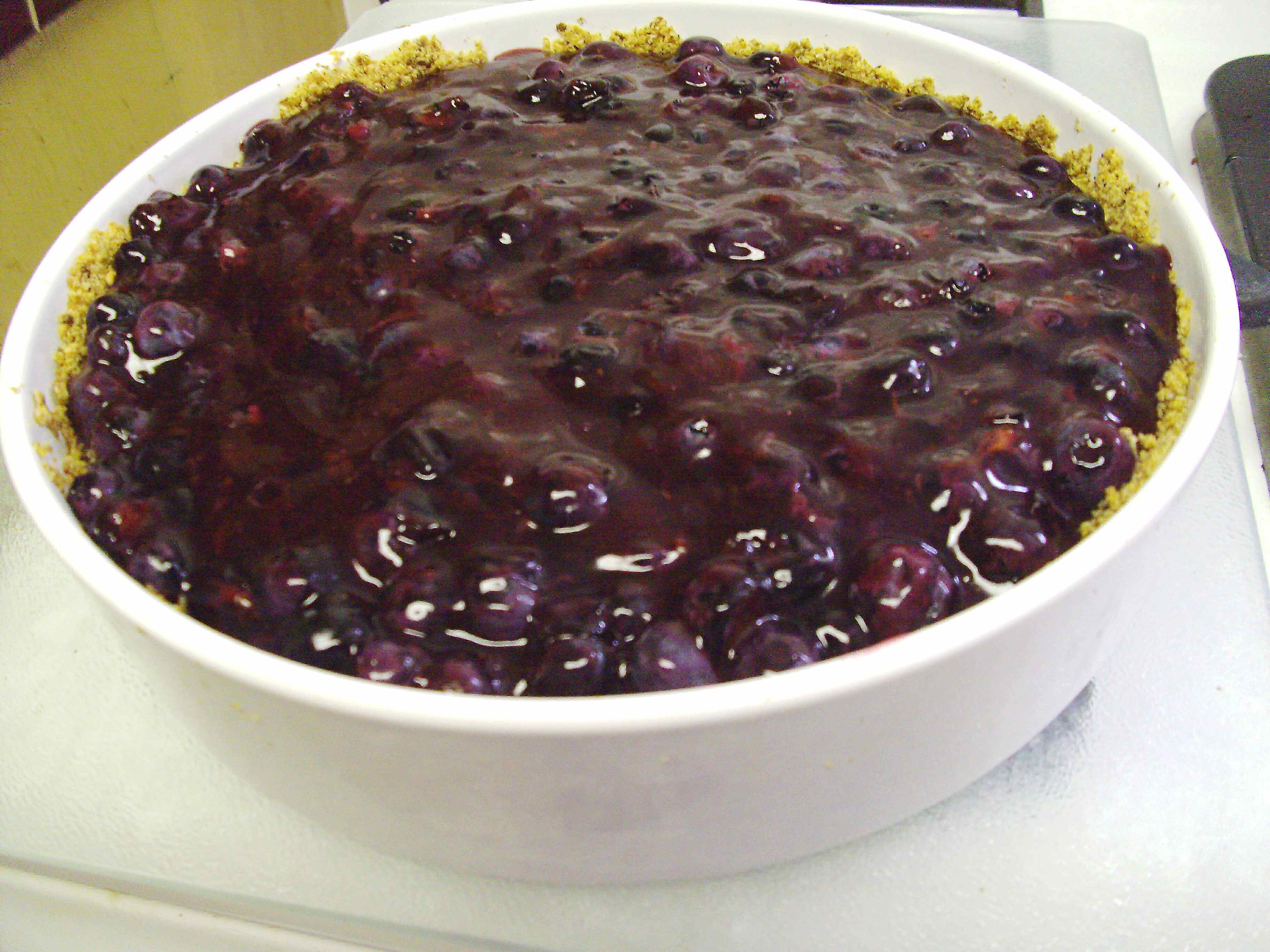


I always have such good intentions–and end up writing about them much later than I should. Let’s face it, it’s almost Thanksgiving. But not quite yet.
In late September, at the start of the High Holidays, we were finally starting to feel fall weather in Pasadena–one week quite cool, the next hot again, but at least for a while we were generally out of the 90s, so it was time to experiment in the kitchen, doing things I’ve wanted to try out for years.
Only it’s been a surprisingly busy month or two, so I’m just getting back to posting now. We traveled several times this summer visiting family, taking our kid back to college on the east coast, and heading up to Portland for a wedding–very impressive hotel with actual good food (it is Portland, after all) and its own kitchen garden with massive tomato vines.
Then I came home to articles due and a life-changing decision to make: after 25 years with the last of the noncomputerized Corollas, which I loved with or without adequate suspension and shocks, it was finally time to get on it and buy a new(er) and hopefully more fuel-efficient hybrid at a reasonable price if at all possible. (Note to the Resident: who in their right mind would want a new car that gets worse mileage? Get real.) But I’m going to miss the crank windows of my old car something fierce.
But on to new food for the New Year–this is still occasionally a food blog!
I had a 25-oz (1.5 lb or 700 g) bag of giant fava beans, gigantes in Greek, and decided, what the heck, it would be nice to have a large batch I can eat cold or hot during the week for lunch or a casual-elegant side with some salad at dinner. Once my kid was off at school, you know, I could count on supper leftovers to stay uneaten until I took them back out of the fridge. I like to cook but really, it’s been handy doing the “cook once, eat at least twice more” thing.

So I microwaved the whole thing in two batches, switching two snaplid containers in and out of the microwave for a couple of rounds, letting one cook a few minutes in water to cover while the previous one sat to let its beans absorb hot water. Once both were done and the beans were tender, I drained them and started pinching off the loose dark gray skins. Great–well, I had enough for two different recipes. One was going to be the marinated beans with rosemary and rosé. The other batch–well, I could freeze it for later. Or…
And then I thought about two striking recipes I’ve meant to try for years, both for cabbage rolls very different from the sweet-and-sour stuffed cabbage my great-aunts used to make, and which I don’t really like very much even now that I’m a supposed adult.
One version from Rena Salaman’s The Greek Cook: Simple Seasonal Food (Anness, 2001) has a chunky filling of smoked pork and an avgolemono sauce, which I’ve wanted to do a vegetarian or at least kosher riff on for years. Combining lemony sauce with a smoky filling is right in line with my love for Middle Eastern food…and speaking of, the other cabbage rolls, the ones that first stopped me in my tracks, came from The Turkish Cookbook: Regional Recipes and Stories by Nur Ilkin and Sheilah Kaufman (Interlink Books, 2010) and were vegetarian to begin with.
What makes a cookbook worth trying are the foods and flavors you don’t already know. The first photograph I saw the first time I opened The Turkish Cookbook, from somewhere in the middle of the book and the region of Marmara, was a beautiful plate of vegetarian cabbage rolls so translucent you could see the filling–roasted chestnuts and rice. These were flavored with cinnamon and allspice, mint, parsley and dill, stewed in olive oil and served cold, like most dolmas, with lemon wedges. Quite a combination of flavors, and unexpectedly beautiful.
Here was something I’d never seen in another Turkish or Middle Eastern cookbook, but I could tell from the description that the flavors would work. My imagination started running away with me and when I first saw them, I thought…chestnuts? Can I get them? It is fall–maybe they’re in my greengrocer’s this week. If not, is there something a little less expensive that tastes similar–a little potatoey, tinged with sweet–how about those giant dried fava beans? But it took me more than five years to try it. Now (meaning, back in September) seemed a pretty good time.
Bridging the gap between the two versions–Greek and Turkish–I decided to make a fava filling and flavor it more or less as for the Turkish version, but add the lemon and smoke factors of Rena Salaman’s cabbage rolls by saucing mine with tehina and sprinkling with paprika and caraway seed.
And of course, I was going to do most and frankly all of it in the microwave. Except for the rolling–microwaves don’t make that step shorter! But steaming the cabbage leaves, cooking the beans (already done), and stewing the cabbage rolls in sauce–all nicely microwaveable.
The only thing I didn’t do was add rice or currants and pine nuts to the bean filling. The rice might have held the cabbage rolls together a bit better when trying to eat them. But they were pretty delicious hot or cold and lasted me a couple of days.

Cabbage Rolls with Giant Favas and Tehina
Loosely adapted from The Turkish Cookbook and The Greek Cook Simple, Seasonal Food as noted above. You might want to stir in a bit of cooked plain rice to help keep the rolls together.
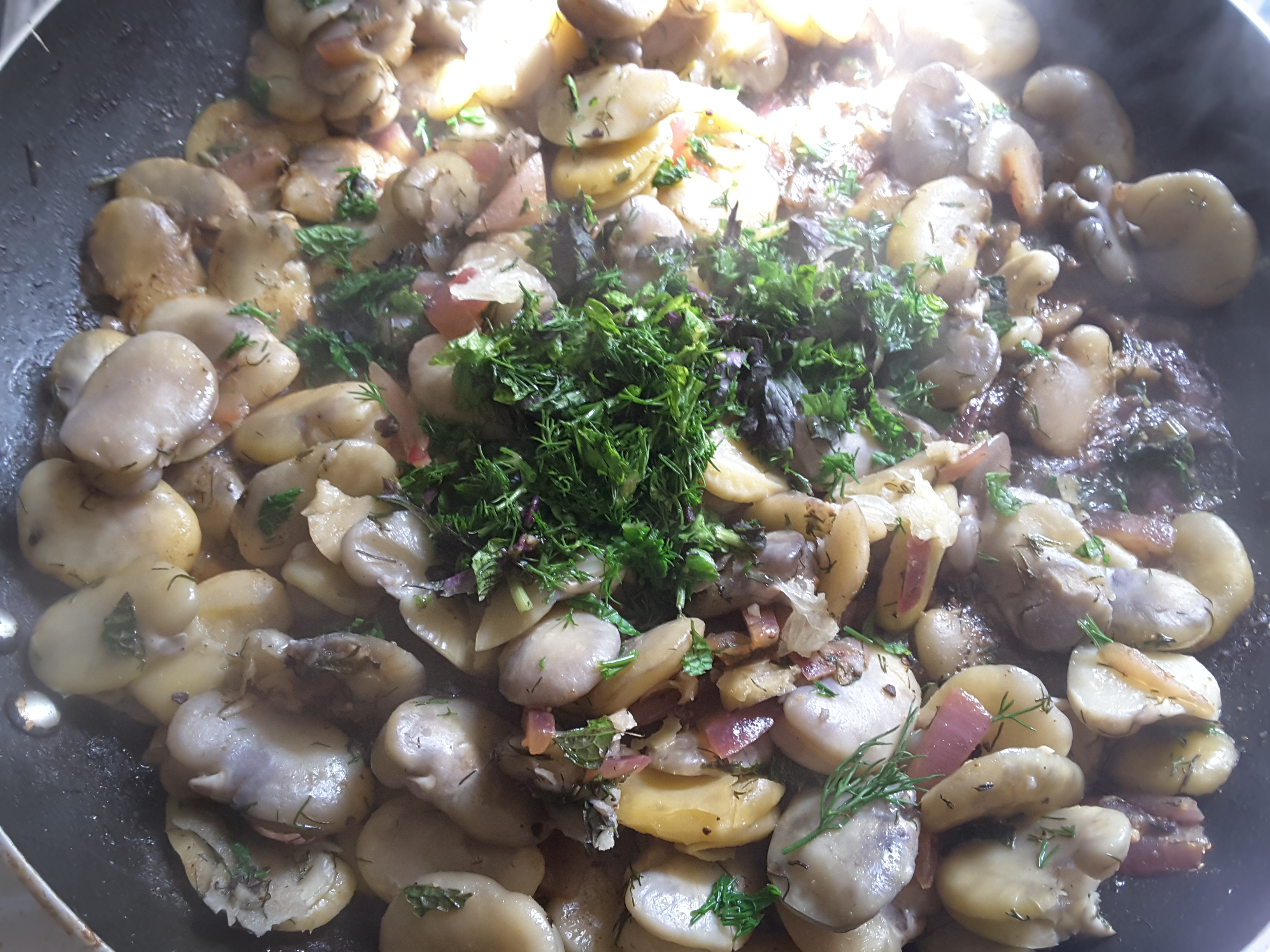
Filling (flexible on amounts here, but let’s say for a couple of cups of cooked beans):
- cooked, peeled giant fava beans
- chopped onion
- Allspice, cinnamon, coriander, fennel seed, black peppercorns, (salt)
- Mint, dill–chopped fresh if possible, about a small handful each, 2-3 sprigs
- Garlic–minced/mashed/grated, 1 fairly sizeable clove or to taste
- Olive oil
- Lemon juice
Heat a couple of tablespoons of olive oil in a nonstick pan with about half a chopped onion, a teaspoon each of ground allspice and cinnamon, half a teaspoon each of coriander and fennel seed and a good grinding of fresh-ground black pepper. Stir occasionally until the onion starts to brown. If needed, add a quarter-cup of water, stir, and let cook down to keep things from sticking and to get the onion cooked so it can start browning. Squeeze on a bit of lemon juice, then add the cooked, peeled favas and more juice and more olive oil. Add the garlic and the chopped fresh herbs and continue to stir/toss in the frying pan until the beans are coated but not swimming in liquid, and they’re quite tender–you can add bits of water once or twice and let it all cook down. Taste for salt before adding any.

Green Cabbage Leaves
1 head of green cabbage, for about 10-15 leaves, worth about half the head (do more if you want; you’ll probably have to microwave-steam in batches though).
Rinse, peel off the two outermost leaves, and core a green cabbage with a sharp knife. Gently pry the next sets of leaves off the head of cabbage and set them in a large microwaveable container with a lid. Add a drizzle of water and the lid, then microwave 3-4 minutes on HIGH for ~10-15 leaves to steam them enough to roll without overcooking. Drain and cool the leaves.

Tehina Sauce
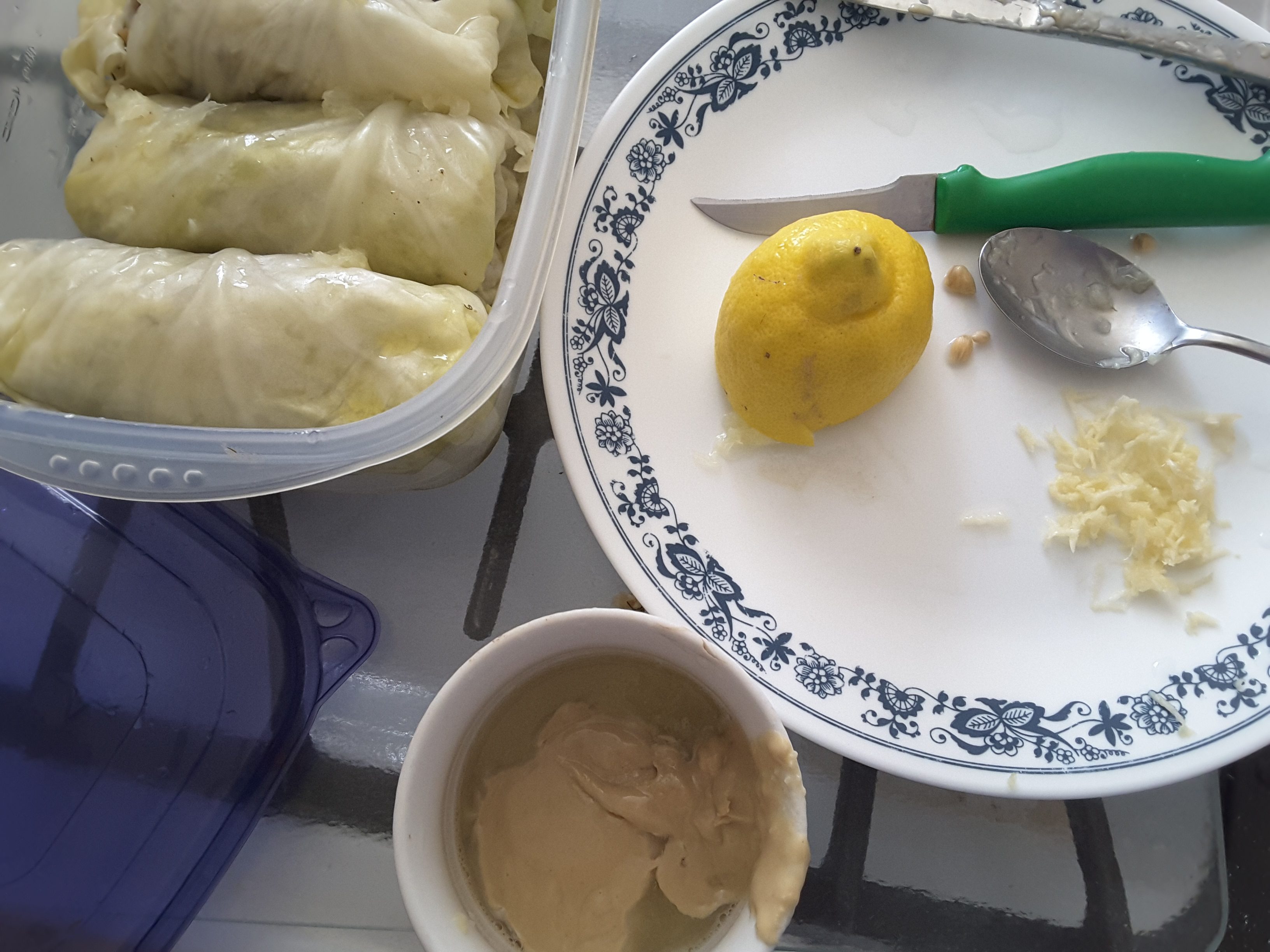
Mixing tehina is not just a throw-it-all-together process–as with mayonnaise or hollandaise sauce, the oils in the sesame paste make it tricky to emulsify if you dump in water–it’s very easy to misjudge the amount. To do it right, start with the tehina and add the liquids very gradually so you get a rich flavorful sauce and not a runny watery mess.
- 3-4 T tehina (plain sesame paste)
- 1 clove garlic, minced, mashed or grated
- 1 lemon worth of juice
- pinch of salt
- water just as needed to thin the sauce
Mix the lemon juice with the tehina–slowly, try not to splash–until the mixture seizes up in a thick brownish paste, then add the garlic and salt and stir in just enough water a spoonful at a time–again stir slowly–to get a medium-thick sauce. The sauce will lighten as it emulsifies with the water.
Assembly:
- Steamed cabbage leaves
- fava bean mixture
- tehina sauce
- smoked paprika
- whole caraway seed
- more lemon (about half a lemon)

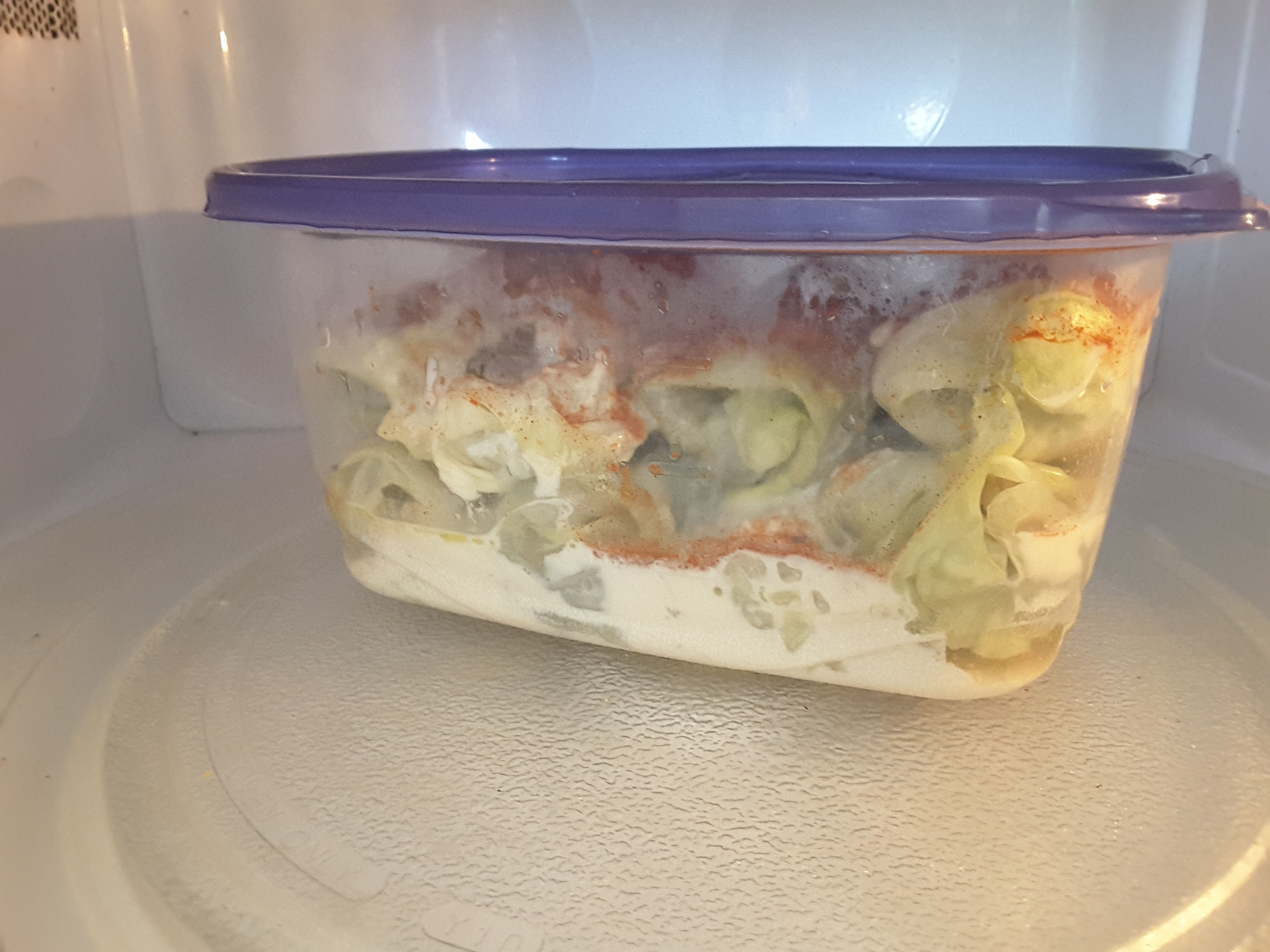
Spoon 1-2 T of fava beans onto the thick end of a steamed cabbage leaf and start rolling up. Fold the side edges over the filling and roll up as tightly as possible like an egg roll, dolma or blintz. Set seam-side down in a snaplid or other microwaveable container with a lid. Roll up as many cabbage leaves as you have and set them in tightly. Squeeze the lemon over it all, spoon on the tehina sauce , sprinkle on paprika and caraway seeds. Put the lid on and microwave about 7-8 minutes on high. Serve hot or at room temperature.
Microwaving fava beans:
I know I’ve covered this before–but for reference, this is my current best method and uses the least active cooking time even though it’s kind of multi-step.
1 lb. (450 g) dried fava beans, preferably ones with the skins on (gray/green/brown) rather than peeled (yellow)
- Rinse and pick over the beans in a colander and add them to a 2.5 qt snaplock container.
- Add water just to cover by about 1/4 inch (0.5 cm) and add a pinch of baking soda.
- Put the lid on and microwave on HIGH for 5-7 minutes until the water starts seething up toward the lid–keep an eye on it toward the end so you know whether to add 30 s or so or if you need to jump in and stop before it boils over.
- Let it sit 5-10 minutes with the lid on so the beans start to absorb the water and swell. Open the container. The top layer of beans will probably be wrinkly and drying out a bit above the waterline.
- Stir up the beans from the bottom, add enough water to cover the beans again, put the lid back on and microwave another 3-4 minutes until the water bubbles up again. Let sit a second time with the lid on.
- Depending on the freshness of the beans, you may need 2-3 more short rounds of microwaving and letting soak up. The beans are done when there’s no more raw bean smell and when you pop a bean out of its skin, the bean itself is tender.
- Rinse and cool the beans, then pop them out of their skins.
Filed under: Beans and legumes, books, Revised recipes, sauces and condiments, Vegetabalia | Tagged: food, recipes, vegetarian cooking |
 Slow Food Fast