• Enter your email address to subscribe to this blog and receive notifications of new posts by email.

    Join 241 other subscribers
  • Noshing on

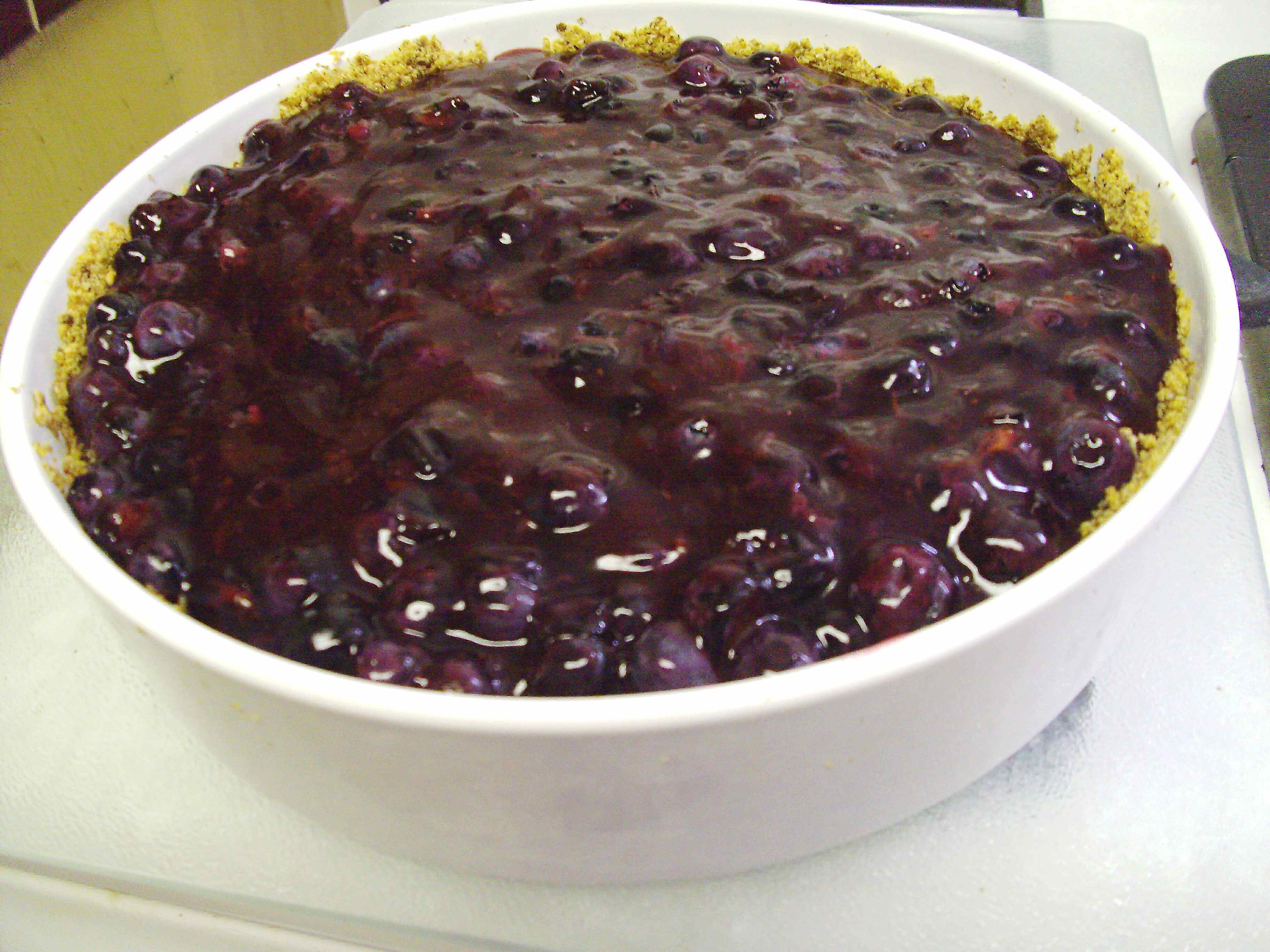
    raw blueberry pie with microwaveable filling and graham cracker crust

    This mostly-raw blueberry pie is a snap to make and very versatile--the filling microwaves in a few minutes, and you don't even have to bake the zippy gingered graham cracker crust--perfect for a hot Fourth of July and all summer long.

  • Recent Posts

  • Contents

  • Archives

  • Now Reading

  • See also my Book Reviews

  • Copyright 2008-2024Slow Food Fast. All writing and images on this blog unless otherwise attributed or set in quotes are the sole property of Slow Food Fast. Please contact DebbieN via the comments form for permissions before reprinting or reproducing any of the material on this blog.

  • ADS AND AFFILIATE LINKS

  • I may post affiliate links to books and movies that I personally review and recommend. Currently I favor Alibris and Vroman's, our terrific and venerable (now past the century mark!) independent bookstore in Pasadena. Or go to your local library--and make sure to support them with actual donations, not just overdue fines (ahem!), because your state probably has cut their budget and hours. Again.

  • In keeping with the disclaimer below, I DO NOT endorse, profit from, or recommend any medications, health treatments, commercial diet plans, supplements or any other such products.

  • DISCLAIMER

  • SlowFoodFast sometimes addresses general public health topics related to nutrition, heart disease, blood pressure, and diabetes. Because this is a blog with a personal point of view, my health and food politics entries often include my opinions on the trends I see, and I try to be as blatant as possible about that. None of these articles should be construed as specific medical advice for an individual case. I do try to keep to findings from well-vetted research sources and large, well-controlled studies, and I try not to sensationalize the science (though if they actually come up with a real cure for Type I diabetes in the next couple of years, I'm gonna be dancing in the streets with a hat that would put Carmen Miranda to shame. Consider yourself warned).

Baking with “Inside the Jewish Bakery”

A few weeks ago I reviewed Stanley Ginsberg and Norman Berg’s new book, “Inside the Jewish Bakery” for my local Jewish book festival committee by testing out the key recipe: bagels. Ginsberg and Berg give the inside scoop on what bakeries do and don’t do to make things work better than you usually can at home. Along the way–and the most interesting part for me–they give a huge helping of Jewish Bakery history. Not just nostalgia (“Weren’t those marble ryes worth wrestling over?”) but the fascinating cultural developments that gave rise to such things the Bagel Maker’s Union (local 338 [number corrected thanks to Stan Ginsberg]) in Brooklyn, and they’d break your legs if you tried to make nonunion bagels, at least through the 1960s.

Ginsberg’s the son of a baking family and Berg is a professional baker; between them they tell the story of Ashkenazi baking and the inside story of what it’s like to start work at 10 pm and head for home around 7 in the morning, all the while giving what turn out to be great technical baking notes.

And yet the recipes themselves are full of errors–and yes, this is the print edition we’re talking about, not an advance reader’s copy. The authors have a 6-page correction sheet (errata) up on the book’s web page, so if you’re going to get to it and try it out–and why not, if you’re ambitious about baking–check it out carefully against the recipe in the book, read everything over very carefully first, and then get to it in a way that won’t send you scurrying for specialty ingredients. NOTE: per Stan Ginsberg (see comments below) the 2nd edition’s recipes have been corrected so things should be easier.

If you can read between the lines and have some experience with bread under your belt, you’ll find the recipes do work (once corrected). My bagels came out very well, with that crunchy crust and dense, chewy bite all of us ex-New York types have missed for decades out here in California (actually, I’m posting this from Montreal, where the bagels are lighter and sweet? have to try, probably won’t love them).

I do have pictures to post (once I can get home and edit them down) of the bagels proofing slowly overnight in the fridge and one of the last remaining survivors–my daughter still had it in her bookbag when we came east this week. Ten days, obviously not still fresh, but not spoiled either. As tough as the dough it came from (which, again with the asides, is very tough compared with regular pizza or challah doughs, and you have to knead it by hand unless you have the dough hook of the century. If not, you’ll develop the right hook of the century.)

So here are my notes to the local Challah Club, which was interested in trying out some of the other recipes. Good luck and eat nice!

Notes for the Challah Club members up for a challenge:

1. Read all the instructions several times first and double-check the errata sheets. It’s 6 pages of corrections for the whole book and it’s up at the Inside the Jewish Bakery web site under a top menu link on the right (Errata). Hopefully we can get the second edition in soon.

The book web site also has lots of info, interviews, links to other related stuff.

Also check notes on special ingredients in the front for unfamiliar names–diastatic malt in the bagels and elsewhere is defined up front; it’s just malt. I think they get a little technical on flour grades–they’re tied in with an aggressively technical bakers web site/forum (NY Bakers, you don’t expect them to be laidback, do you? but most of it’s just futzing around with professional stuff). Chernushka seed is nigella seed–available here at the Armenian groceries. And then do whatever makes best common sense and doesn’t have a huge cash layout just for one loaf!

2. The recipes in this book are weighable on a food scale in grams, which is how I did the bagels (just this once, just to see if it needed me to be that nerdy). Some of the flours are technical grades beyond what you can easily get in the grocery store; you can mix flours to get the right consistency. For example, bread flour is 13% protein, but I added a teaspoon of vital wheat gluten to bring it up to the 14% protein specification for the bagels, and for something that really needed stretch, like rye, maybe, I would have added a little more. Don’t know that you really need to, but if you’re gonna be nerdy, a food scale and a calculator are handy tools.

3. If you go for the pastries, some have a mix of butter and shortening-plus-butter-flavoring. I’m not a shortening fan; I’m just not; I prefer butter or margarine. The laminated doughs add these things in stages, so read the errata pages and double-check the recipe instructions for how much fat to put into the pastry dough when. Gets confusing occasionally.

4. One thing that’s not in the corrections pages: watch the salt. You do not need as much as they throw in for the breads–not for flavor, not for texture. The bagels I made with only half the salt in the recipe because the original would have been 400-500 mg. of sodium per bagel, which is getting up into Campbell’s Tomato Soup territory (or half a South Beach Diet frozen microwaveable “lunch”). And they tasted fine without it and did most of the right things without me having to join the bagel-makers’ union.

Broccoli IS a conservative political bogeyman!

This exposé from yesterday’s New York Times goes into the longish history of how conservatives started waving broccoli stalks at any issue they don’t like…

Just as I suspected when Justice Antonin Scalia started spouting broccoli-tinged party-line nonsense this March, the Republicans really DID originally decide to blame broccoli based on George Herbert Walker Bush’s stated hatred of an innocent green. Yeesh! You can’t make this stuff up. And I was really, really trying to!

New York big-soda ban, long overdue

All the food behavioral experts on both coasts seem to be whining that New York City’s new ban on oversized sodas “won’t work”. Well, all the experts in New York and LA. Even Michelle Obama has backed off delicately from taking a position on it. Oy. People!

The Washington Post‘s columnists Ruth Marcus and Alexandra Petri have two different takes–one more serious but employing Yiddish to describe the psychology of the whole protest, the second, despite lack of Yiddish, funnier about people who insist on their right to drink a whole tubful of soda at a go. So I’m going to take the middle road–oh, screw it, I’m going to use Yiddish if I feel like it and still be hilarious despite my gravitas. Because it really is hilarious. If only it weren’t so sad.

Jon Stewart is quoted as kvetching that Mayor Bloomberg’s proposed ban is the only thing that can make him agree with conservatives. David Just, partner expert to Brian Wansink, says people “want” their big drinks and will surely just find a way to work around the restrictions.

Well, maybe a few will really want 20+ ounces of soda at a sitting badly enough to go back to the concession stands and wait in line three times to get 3 separate drinks of 8 ounces or so. Or juggle 3 small bottles back to wherever they’re drinking it all. But I’m betting most people won’t.

Why do people supposedly “want” such huge drinks in the first place? The oversized Big Gulp-style cups were a marketing ploy that started about 15-20 years ago at the burger franchises and the 7-Elevens. They were supposed to look like a huge bargain–for an extra however many cents, they’d double the amount of soda they gave you. What a deal! And the ploy worked–created a habit.

Most people don’t really need or even want that much soda, but as many of my coworkers–women especially–used to say, shrugging helplessly, “Well, I don’t really want this much, but this is the only size they sell.” And you really can’t split a 20-ounce with ice back at the office unless you have cups. Everyone will wonder whether you got tempted on the way back and started sipping from it. Eeeewww. You can’t save it in the fridge for later either because it goes flat pretty quickly.

The soda companies got the concessions for school cafeterias–why not brand the captive audience early–in exchange for money the schools have lost from their cities and states anytime those governments wanted to hand out tax relief to corporations–like soda bottling plants. A different version of “eat local”.

By now, people are so used to the soda bloat they’ve started to decide it’s their right to drink bigger than their stomachs–or bladders–can handle. And it is–you’re allowed to be stupid if you want to.  Only problem is, did the soda companies also offer to build more bathrooms to handle the outflow?

So I say Mayor Bloomberg, who’s in charge of the biggest city in America, is doing his city a huge favor by trying to get the soda industry’s claws back out of them. There’s no way the industry will scale back its sizes voluntarily, especially not if they can get experts like David Just to voice their incredible “the-consumer’s-the-one-who-wants-the-elephant-sized-drinks-we’re-just-providing-it-for-them” act.

When you get the big gulp-style Coke, how much of it are you really tasting? Maybe the first third of it? Maybe less. After that, are you drinking it while reading your computer screen? Driving? Watching tv or a movie? Would you really want someone to film–and then post on YouTube–footage of you slurping mindlessly throughout the day?

If you’re not paying attention to what you drink, is it worth drinking just because it’s there? Same for eating. And David Just and Brian Wansink–weren’t these the guys who did all that people-eat-30-percent-more-when-parked-in-front-of-a-tv-screen-than-at-the-table research? I do believe they were.

So getting back to a small Coke that you’ll actually pay enough attention to to taste? That might be worthwhile. Then you can think about what you’re tasting and decide if it’s good enough to keep drinking. Or whether, like me, you’d rather wait until next Passover, when Coke and other big soda manufacturers put out limited editions made with cane sugar instead of corn syrup.

I haven’t been a big soda drinker for years, and I usually don’t miss it at all. It was astoundingly easy to give up, and my teeth have thanked me ever since. On the rare occasion when I have a little at a party, my preferred soda is and always was definitely root beer or ginger ale, not cola, and usually I can only take about half a glass–it’s all way too sweet, even with ice. So I’m not the right person to sympathize with habitual soda drinkers–I just can’t get into it, and diet is gross.

But having tasted the sugar version of both Coke and Pepsi, I can say the difference it makes to both versions is amazing–much cleaner flavor, and a little is enough to be happy with it.

Meanwhile, a better idea would be to drink water instead of the big-3 flavors and save your shekels for small niche sodas with better, realer, more interesting flavors as an occasional treat.

Case in point: a summer soda tasting event in Los Angeles to raise money to reopen exhibitions from the shuttered Southwest Museum in Highland Park. The Southwest museum had wonderful Native American collections–kachinas, headdresses, Bakelite jewelry of the 1930s, photos, and much more. It was taken over by the Autry Museum a couple of years ago, but has remained dormant since then with a lot of its collections in storage and out of the public eye. I was fortunate enough to have taken my husband and daughter there about 10 years ago, before it closed.

Galco’s Soda Pop Stop, an independent soda market run by curator John Nese in Highland Park, is hosting the soda tasting–his second–with something like 500 different small brands, including plenty of nostalgia brands (though no NeHi Grape–don’t know if they’re still around) and imports.

According to a profile of Nese in The Quarterly Magazine, Galco’s motto is “Freedom of Choice”, with flavors like coffee, bananas, spruce, cucumber, mint julep, and many others–check out their huge soda list, which includes ingredients, prices and bottle sizes! Amazing. Maybe that’s the kind of freedom soda fans should be going for. Amazingly enough, most of these flavors don’t come in 20-ounce monstrosities, or even in plastic.

If you’re in Los Angeles on July 22, check it out–tickets are only $12 in advance, $15 the day of the event, and you can get them at Galco’s on York Blvd. or through the Friends of the Southwest Museum web site.

Eat the City, Read the Book

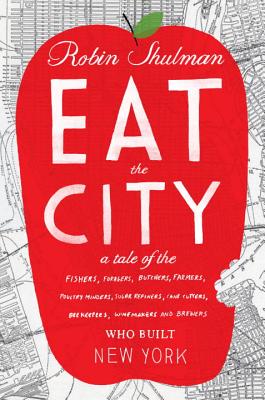
Robin Shulman's "Eat the City" bookcoverI’ve just received an advance copy of Robin Shulman‘s forthcoming book, Eat the City: A Tale of the Fishers, Foragers, Butchers, Farmers, Poultry Minders, Sugar Refiners, Cane Cutters, Beekeepers, Winemakers and Brewers Who Built New York.

[Or at least that’s the title on the cover art–the copyright info page version of the book title squeezes in even more food trades–what, or rather who, the heck are “hungers”? People who “curate” aged hanger steaks?]

Shulman, a well-known reporter who has worked for the New York Times, the Washington Post, the Los Angeles Times, Slate and other venues, has covered hard-news beats from city politics and urban blight to Middle East diplomacy. In Eat the City, Shulman explores the neighborhoods of New York, where she lives, and from hundreds of interviews, she harvests seven key stories to tell in depth: Honey, Vegetables, Meat, Sugar, Beer, Fish and Wine.

Each chapter, rich and multilayered, cuts across decades of urban history, whether development or decay, recounts conflicts and unexpected cooperation between would-be urban farmers and the neighborhood factories or city agencies they deal with, and uncovers the not-so-obvious ways these individual entrepreneurs bring a sense of connection and vitality to the city.

So we meet a man who after returning not entirely whole from a stint in Iraq, got enthusiastic about beekeeping when it was still illegal. In 2010, he rallied New York’s clandestine beekeepers to convince the city to rescind its ban on rooftop hives, and started training hundreds of apprentices. The retired numbers runner who farms vacant lots in Harlem–something he started as a cover for his gambling operations in the ’60s and turned into one of the first urban community garden projects–is still going strong in his 70s, but he’s seen several of his neighborhoods fall silent over the decades as buildings crumbled and the city neglected the people. The Manhattan ad exec risks her health and her freedom sneaking into taped-off areas to fish striped bass from the East River–she’s not sure it’s safe to eat, but she’s as hooked as her catch, and often announces her triumphs on Facebook. And somewhere toward the end of the book is the true and presumably unvarnished story of Manischewitz, the first big brand of kosher wine in America (and actually, probably anywhere, since before the 20th century most people made their own kosher wine at home).

Eat the City is due out in July, and all I can say is get out there and reserve yourself a copy, or clamor at the cash register of your local bookstore to order you one. Because this is the best book I’ve read in quite a while on the history and present fortunes of small independent food growers in one of America’s largest urban landscapes.

Like Michael Pollan’s books, it has depth and thoughtful analysis of the meaning of food in modern life. Unlike Pollan, Shulman isn’t advocating a lifestyle choice, she’s giving you a window on individuals as they elbow their way into a crowded city to make room for themselves.

Food is the medium here, but the impulse is universal, and the result is a better understanding of both food entrepreneurs and the meaning of city life itself. If you want to know what’s really happening beyond the wide-eyed grow-your-own-tomatoes-in-Brooklyn blogs, just pick a chapter and start digging in.